by Jason Keil | Photography by Jill McNamara
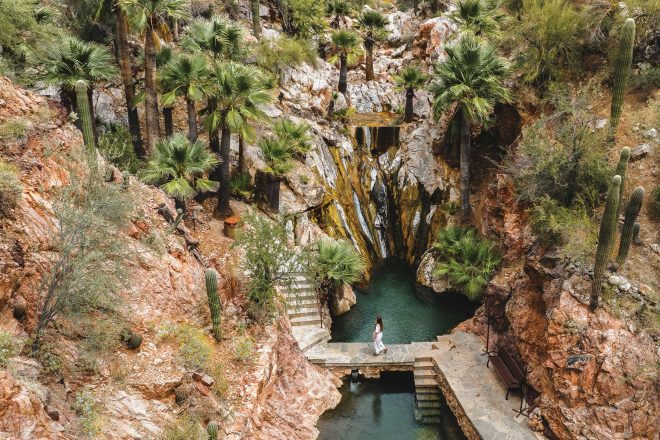
location at S’edav Va’aki Museum
Chelsey Luger believes any place where you hang your hat, even a college dorm room, can become a healing space. In her 2026 book, Native Home: The Ancestral Art of Creating Healing Spaces, the Mesa native and wellness advocate shows that interior inspiration can come from your family’s heritage, not HGTV. “I remind people to ask their ancestors,” says Luger, who’s an enrolled member of North Dakota’s Turtle Mountain Band of the Chippewa Indians. “They always have answers.”
She believes transforming your home into a more therapeutic, culturally grounded place doesn’t require a costly makeover, and her book challenges readers to let go of the idea of the perfect home and work to make it a more peaceful place. We spoke to Luger about how culture shapes home and why living in one is a commitment.
What ignited that passion for sharing your ancestry?
It’s definitely cultural. Most Native people today like to emphasize how diverse our cultures are, but almost every Indigenous community upholds a really strong, ongoing connection to elders and ancestors. That’s what I was raised with.
What inspired you to write a book about home?
As I got more settled into the Valley, and into my marriage and having children, the concept of home became further centered for me. For years we had been teaching about sacred space as one component of a healthy lifestyle, and it’s a topic that interested me for a long time, even before getting to this stage of life. Around the same time, we got the ball rolling on our house-building process.
What can we do to reclaim the tradition of home as a center for wellness and culture?
There are two main things to consider when designing and caring for your home. [They are] your cultural heritage – where you come from, where your ancestors come from – and the local environment where your house currently sits. You can create a space that feels authentic, feels good and respects the land. I know that’s a pretty broad answer, but a lot of people will interpret it differently.
Are there regional traits we can look to for inspiration?
Be inspired by the materiality, the colors and the naturally occurring elements of the desert. Why have your lawn covered in Bermuda grass… when we’re in a drought? Look to the people who lived here for thousands of years and built homes that were not as detrimental to the environment. [Also, take] pride in smaller spaces. The American dream is to have a bigger house. I think we should be proud when we can reel in that instinct. It’s better for the environment and our health, and it makes it easier to take care of our homes.
Was it intentional to include only a few images in the book?
I don’t think it’s right that people of certain incomes are excluded from home content. I come from a community that has been historically disenfranchised, and that’s something my people are still very much actively recovering from. It’s not right to tell readers their home has to look a certain way, or that their home won’t be good enough until it’s a certain size or has certain finishes. I’m much more interested in letting people use their imaginations.
Did any personal experiences make it into the book?
One chapter I wrote is called “Bare Medicine,” and I talk about how building and living in a home requires a lot of patience and perseverance. I had to teach myself to stay grateful just to be in the process. It’s easy to lose sight of that if you don’t center yourself in gratitude. It is amazing that I get to live in a house and have any control over building it and making it right for my family. I know it’s going to be a lifelong commitment, but it’s also a worthy commitment.