by Craig Outhier | photography by Camerawerks
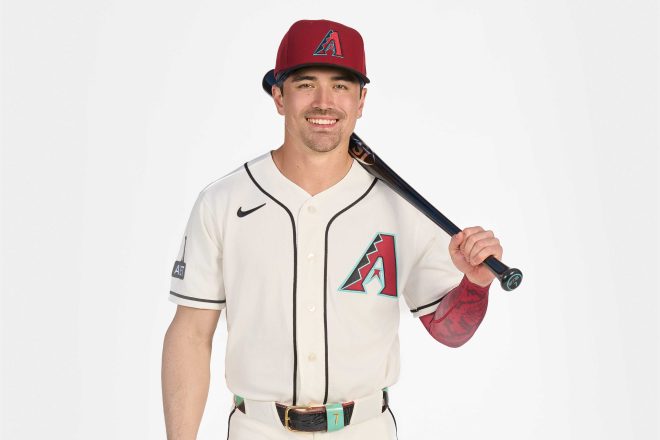
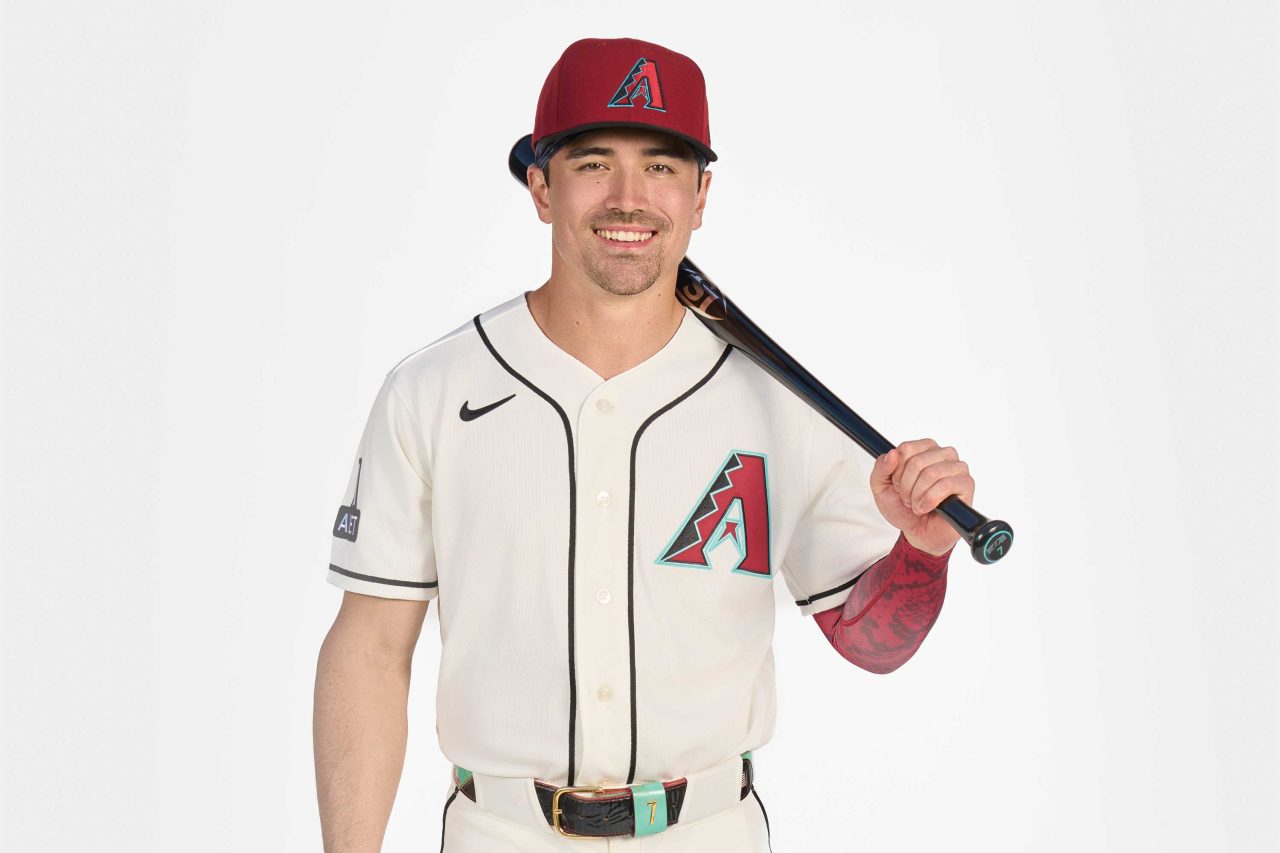
Blessed with baseball’s mythical “five tools” of performance – contact hitting, home run power, basepath speed, arm strength and fielding prowess – Arizona Diamondbacks outfielder Corbin Carroll has always had the look of greatness.
It was true when the Seattle native came to the organization as a teenage first-round draft pick in 2019 and continued through his groundbreaking 2025 season, when he joined Major League Baseball’s also-mythical 30-30 club for single-season home runs and stolen bases.
But the one-time Rookie of the Year also has a less-acknowledged attribute, a sixth “tool,” if you will – elite conditioning sense.
Embarking on his fourth MLB season, Carroll has utilized training tools and medical know-how to get the most out of his twitchy, 170-pound frame – and will do so this spring as he mends from a broken hamate bone in his right hand, incurred during a February batting practice session.
If history gives any indication, it will be a quick recovery.
A big watchword in medicine these days is “preventive” health care. Is that also a big part of being a pro athlete? Addressing things before they’re things?
Yeah, for sure. Something [the D-backs] do a really good job of is making sure we’re on top of it, and if something starts to squeak a little bit, make sure that things are getting looked at. Have the squeaks looked at.
Like a car. Replace the timing belt, oil change.
Yeah, but that’s not the way baseball has always been. There’s a lot of pride in playing through [injuries], but I just think we need to do a good job of keeping our guys healthy by making sure we’re on top of the small stuff.
Do you have any kind of rules with diet? Do you eat a lot of meat and fish? Do you try to avoid too much meat? What’s your philosophy?
Yeah, I mean, I just really try to eat five meals a day, four of which [involve] a meat and a carb, making sure that I’m getting protein goals for the day, and then a smoothie, which is all-inclusive for me. By which I mean: all the stuff I don’t want to eat, but if I blend up, it doesn’t taste too bad [laughs].
And then outside of diet, any kind of body work that you like to do? There are some pretty amazing therapy gizmos on the market today, for inflammation and recovery.
Yeah, I’d say one of the biggest [tools] that I believe in are the PEMF machines. It’s electromagnetic pulse, through certain parts of your body or through your whole body. So, that’s a big one in that the team pushes [it], and I’ve liked it enough to get my own units.

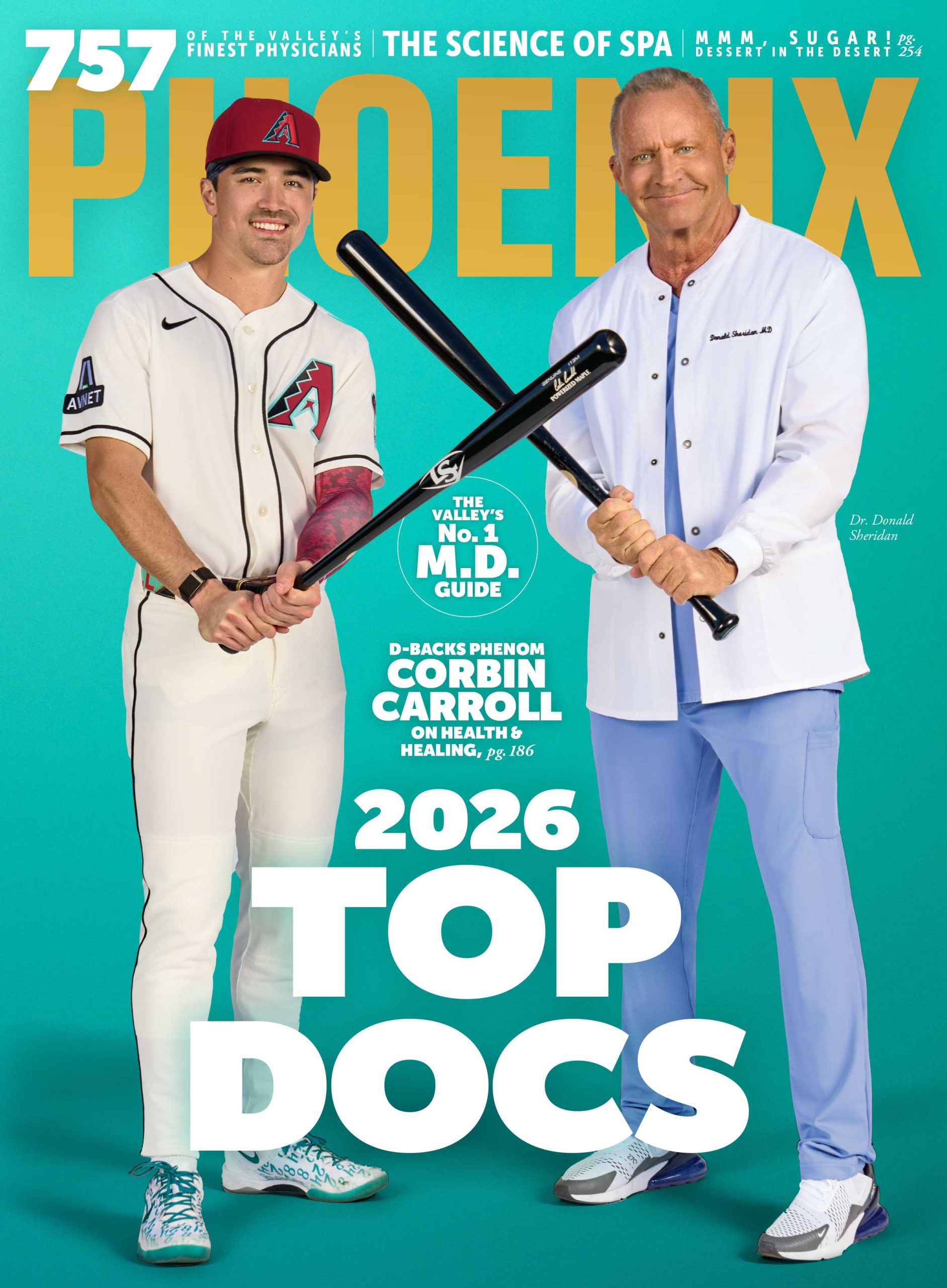
You and your fellow cover model [23-time Top Doc hand surgeon Don Sheridan] know each other pretty well. Last year, you had that wrist injury.
Yeah, capitate fracture.
Right. And people were thinking, “Oh, boy, he’s going to be out for a while.” But you weren’t. You were only out for a couple weeks. That was astounding. Like, how’d you recover that quickly?
Well, it still didn’t feel great [when I returned], but it was manageable. I came back [to the Salt River Fields training facility] and saw Doc. And we made a real game plan from there. I think that his recommendations were a little bit, you know, more conservative at first than I was hoping for. But we worked through it. Because I’ve seen him a couple times now. Not always for stuff as serious as a fracture… also for little things, like physicals and such. You know, we developed the relationship where he put enough trust in me to push the pace a little bit. And it worked.
Early in your career, as a minor leaguer, you also had a pretty serious shoulder injury. Was it the worst injury you’d ever had at that point?
Yeah, yeah. I mean, it was definitely a serious injury. It was labrum and posterior capsule. And, yeah, I did all my rehab here. I felt like it was definitely a shaping experience, because I’d never taken that much time away from baseball. Ever. And I viewed it as an opportunity to really attack my body and make sure that I came back stronger. Honestly, in the long run, I might have been better for it.
Is there a mental part of it, too, that was a challenge to absorb?
The info I got from my doctors was, if this rehab goes well… your shoulders should be better than 100 percent of what it was before. So, I think there was a little bit of relief in hearing that.
In the early days of baseball, that might have ended a career, right? We’re fortunate to live in this era.
Yes. 100 percent. I definitely agree with that.