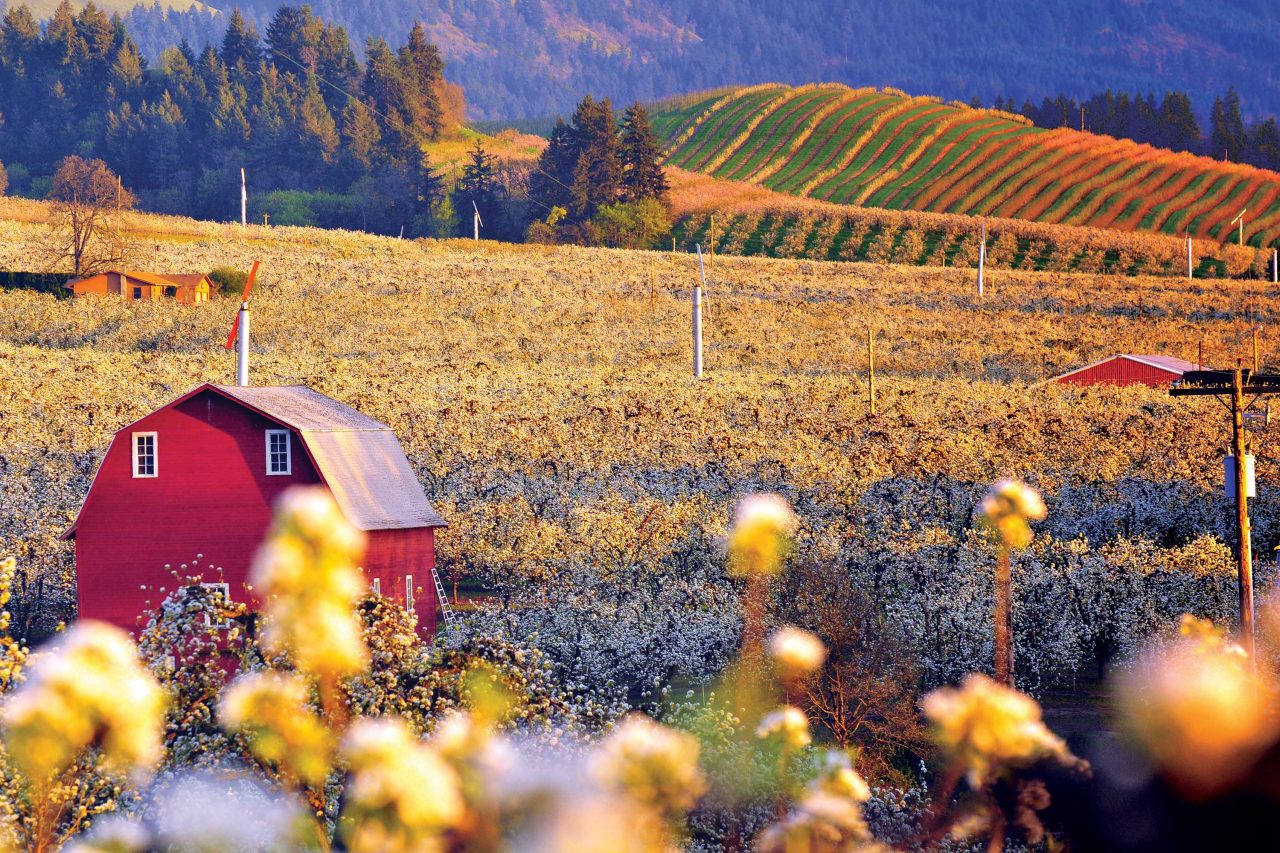
Go aggro for agriculture – and cider and wine – in the Hood River Valley.
“Oh my gosh, this might be the best apple I’ve ever tasted,” the woman from California marvels through a mouthful of insanely crisp apple flesh.
“Wow, that is a good [expletive] apple,” another person from the group chimes in, as whale-like cumulus clouds sail by peacefully overhead, in a radiant fall sky the color of a Caribbean lagoon.
Murmurs of agreement. Enthusiastic nodding. And the crunching. So much crunching.
These are all seasoned travel writers, mind you, accustomed to Michelin-starred meals and gratuitous resort-spa pampering. It takes a lot to snap them out of their default state of resting-snob-face jadedness.
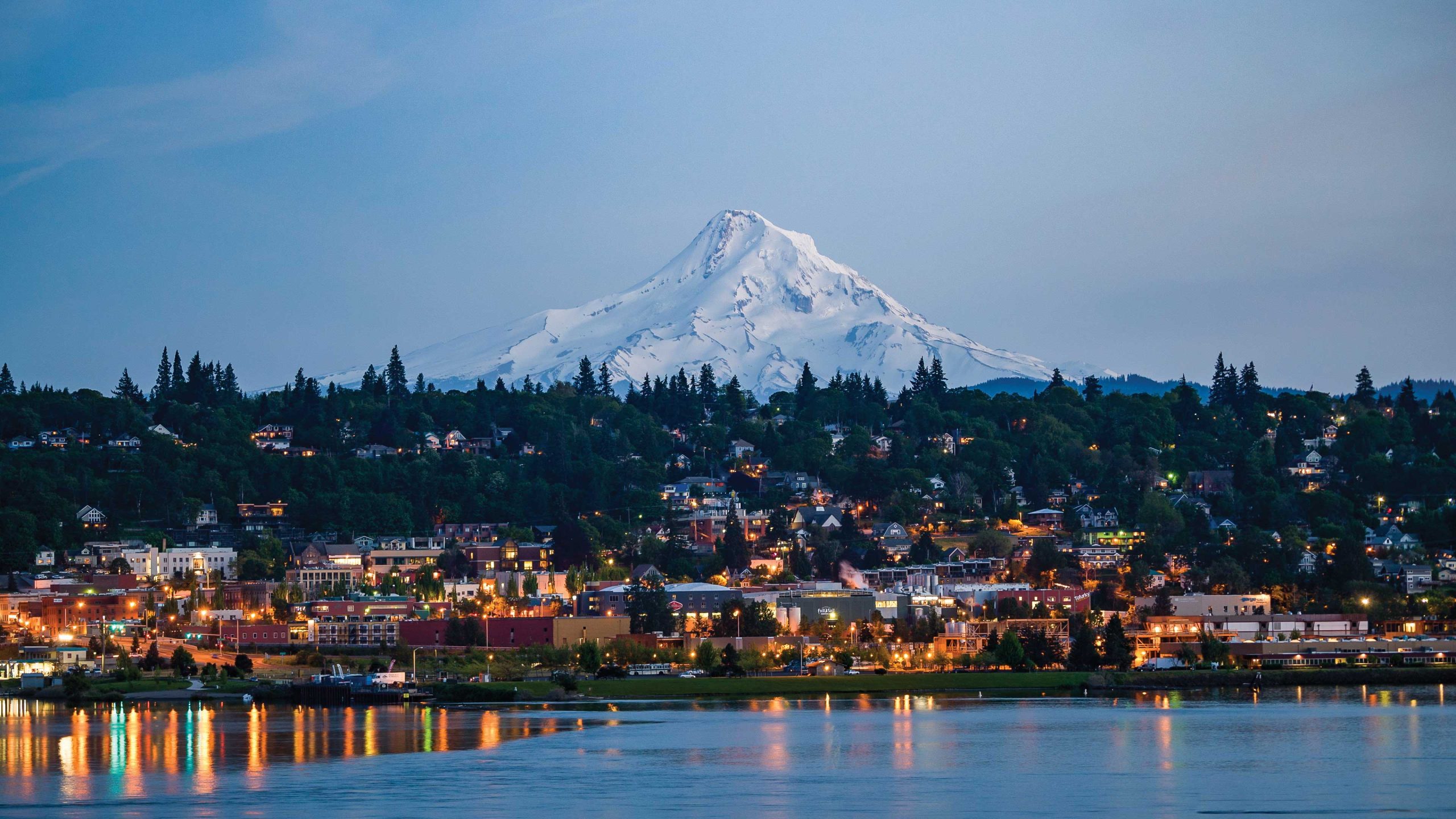
But these [expletive] fantastic Sansa apples from Kiyokawa Family Orchards (kiyokawafamilyorchards.com) are definitely doing the trick. Splayed across 25 gorgeously fertile acres under the snow-capped gaze of Mt. Hood – an 11,200-foot behemoth that boasts the continent’s only year-round ski resort – this third-generation family farm is one of the agritourism gems of Oregon’s Hood River Valley.
Set roughly 30 miles east of Portland, in an excitingly rough-hewn weald that’s equal parts forest, rolling hills and granite, the Hood River Valley is like a Paleolithic version of Portland’s famed “makers” culture. It’s full of farmers, mushroom foragers, winemakers, cheese smiths, cider brewers, DIY chefs and other assorted food-and-beverage breeds – all of whom make it one of the country’s most satisfying destinations for fans of agricultural craft.
Over three days, I’ll experience the region in its absolutely ideal state – harvest season – when cool breeze, warming sunlight and intermittent drizzle conspire to wash away the accumulated spiritual grit of a long Arizona summer. If you’re anything like me, you’ll like them apples – and everything else that springs out of the ground here.
Day 1: Columbia and the West Gorge
Like the San Pedro River in Southern Arizona, the Hood is a rare north-flowing waterway, formed by tributary runoff from Mt. Hood that races due north to neatly intersect the mighty Columbia River in a perfect, perpendicular delta.
And this, fittingly, is where we begin our exploration of the region, first at Thunder Island Brewing Co. – a seven-barrel craft brewpub in the nearby town of Cascade Locks where you can enjoy a post-flight IPA tranquilizer while admiring fetching views of the Columbia (thunderislandbrewing.com) – then at Brigham Fish Market (brighamfish.com), also in Cascade Locks, where sisters Terrie Brigham and Kim Brigham-Campbell serve po’ boys, ceviche, chowders, and fish and chips plates from a fast-casual lunch counter, all made from fresh hauls of sockeye, chinook and steelhead pulled from the Columbia by their family fishing nets.
Afforded privileged access to the Columbia through Umatilla Indian Reservation fishing rights, the market also sports a delectable deli selection of by-the-pound raw and smoked fish, and makes for a novel launching-off point for an informal tour of the area’s agricultural endowments, known as the Gorge Food Trail (gorgefoodtrails.com).
Since Brigham Fish Market sits in the west half of the river valley, collectively nicknamed “the Gorge” by locals, it’s part of the West Gorge Food Trail, a distinction it shares with a dizzying constellation of you-pick-farms, wineries, breweries and markets. You can find a bunch of them in the town of Hood River itself. As the sole incorporated town in the valley, Hood River – which straddles the Columbia delta – is its unofficial cultural capital. It’s also where you’ll find Wilderton Botanical Spirits (wildertonfree.com), a craft “distillery” that daringly attempts to synthesize non-alcoholic vodka, gin and whiskey styles for the emerging mocktail market, and Celilo Restaurant and Bar (celilorestaurant.com), a farm-to-table New American restaurant that emphasizes seasonal dishes like spaghettini with summer vegetables and goat cheese spaetzle with roasted squash, along with all-season standbys like steak frites in a red wine demi.
But save some room – we still have another gorge to explore.

Day 2: The East Gorge
Breakfast is religion for some people – a fact that assumes literal implications at The Riv Café (therivcafe.com), located a few miles east of Hood River in a town known as The Dalles.
Set in a 120-year-old stone church, The Riv was an immediate hit when Noah and Lauren Blakely opened it in 2017, serving soul-food-inflected breakfast standards in a converted chapel that retains an energy of sparse Pentecostal piousness as a fast-casual dining room. Will you connect with God biting into fried chicken over buttermilk waffles, the crispy, clingy mantle of fried batter dripping in maple syrup; or a plate of fresh biscuits blanketed in a thick, peppery bacon gravy? Maybe not, but you might feel a certain reverence. It’s easily the A.M. dining highlight of the trip.
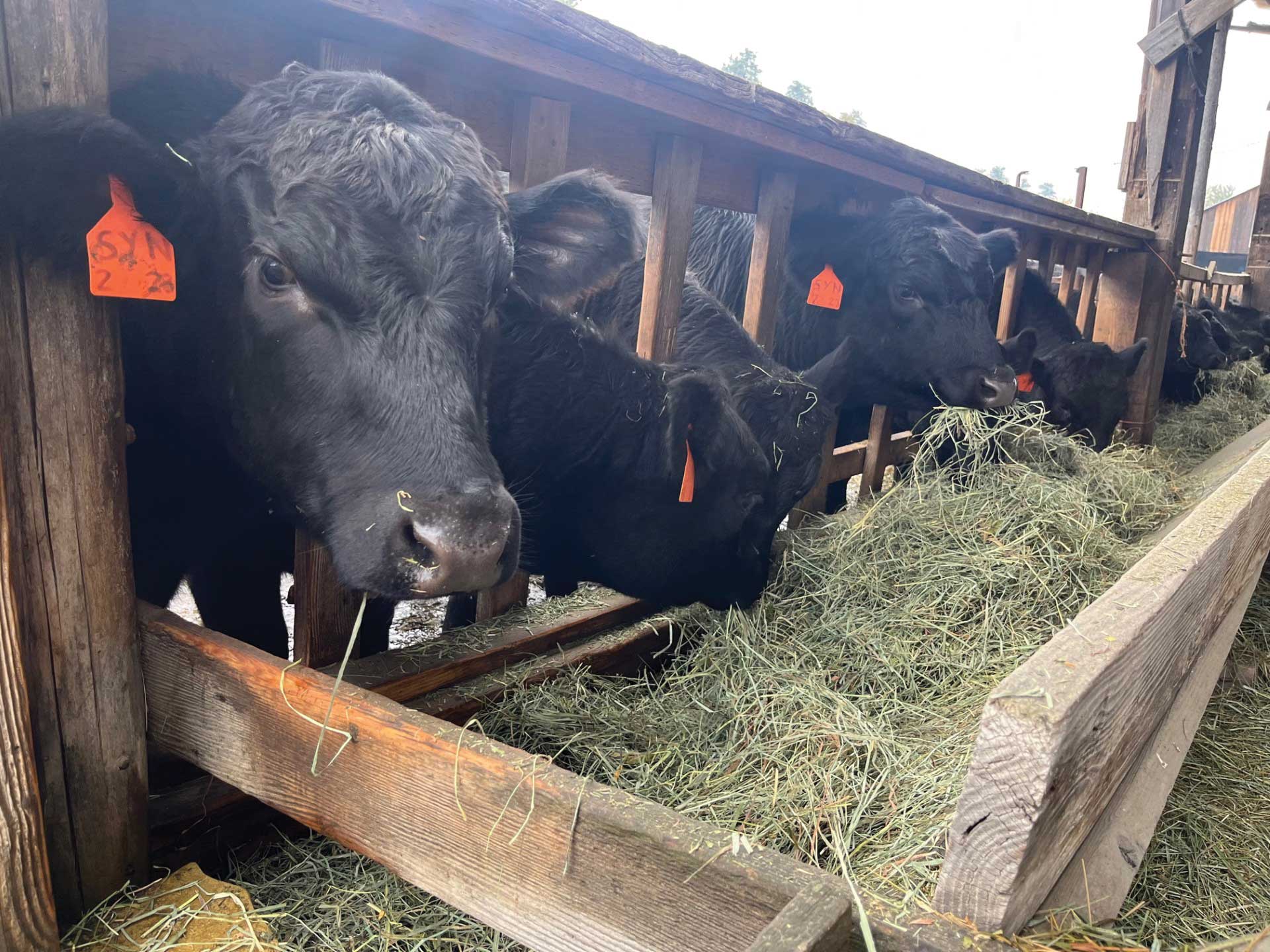
Part of the East Gorge Food Trail, The Riv fuels us up for East Gorge stop No. 2: Sandoz Farm (sandozfarm.com), which makes and sells jams and various pickled goodies in addition to its central business as a small-production beef and pork ranch. Call ahead for tours if you want to meet its content, cud-chewing inhabitants.
Plunging deeper into the East Gorge, we break the day’s wine-tasting seal at Tierra De Lobos (tierradelobos.com), an organic winery run out of a 500-foot tasting-room-production combo by a pair of industrious Mexican immigrants. Grown just across the water in Dallesport, Washington, the grapes yield a firm Tempranillo and luscious Syrah, to name two of the winery’s roughly dozen styles.
Any proper wine-tasting excursion feeds on momentum, so we continue our East Gorge wander at Analemma Wines (analemmawines.com), a gorgeous estate winery set in the rolling hills and supple folds of the nearby Mosier Valley. In addition to flights of its biodynamic wine, Analemma offers visitors the 20-Mile Picnic pairing lunch – so named because every ingredient, from the Pine Street Bakery baguettes to the Stamboom Meats cured pork loin to the house-marinated cremini mushrooms, is made or farmed within 20 miles of the winery, in keeping with its strict sustainability ethos. It makes for a pitch-perfect wine lunch ($35/person), followed by a beatific, light-headed stroll of Analemma’s hillside vineyards, with primo photo-op views of the gorge.
Following a necessary afternoon siesta, we cheat on the East Gorge a bit and cross the Hood River to Hiyu Wine Farm (hiyuwinefarm.com) for dinner. A micro-winery, farm, avant-garde salon and tasting-menu-driven culinary retreat ($150 lunch/$250 dinner) all rolled into one, Hiyu is the creation of artist-chef China Tresemer and her partner, Nathaniel Ready, a master sommelier who also makes Hiyu’s fetching arsenal of natural wines. Hardly a mere wine expert, Ready also proves a raconteur of the highest order, regaling us with agricultural philosophy, culinary lore, metaphysics and Coen Brothers movie quotes as bowls of roasted oxheart carrots and salsa-verde-braised beef make their way to the banquet table from Tresemer’s open kitchen.
So there we are – eating Tresemer’s food and gobbling up Ready’s hospitality in their groovy, glass-and-steel hilltop aerie and thoroughly enjoying the group-dining experience the way the couple obviously intended. It’s like a segment outtake from No Reservations, and we all agree it will probably be the highlight of the trip.
Day 3: Mt. Hood and the Fruit Loop
Oh, but them apples. Family-owned since 1911, Kiyokawa Family Orchards anchors the Hood River Fruit Loop (hoodriverfruitloop.com) – an amusingly named collection of 30 fruit stands, cideries, farms and wineries that form a drivable noose around the Hood River, north of Mt. Hood. Offering more than 150 varieties of apples, pears, cherries and peaches during its high season between late August and early November, Kiyokawa might be called the Russian River Brewing of apple farms in Oregon – which is to say, a destination for hard-core enthusiasts. Pardon the pun. Like a craft brewery, the orchard even maintains an online status board so you can see which varieties are “on tap” at any given time (kiyokawafamilyorchards.com/new-apple).
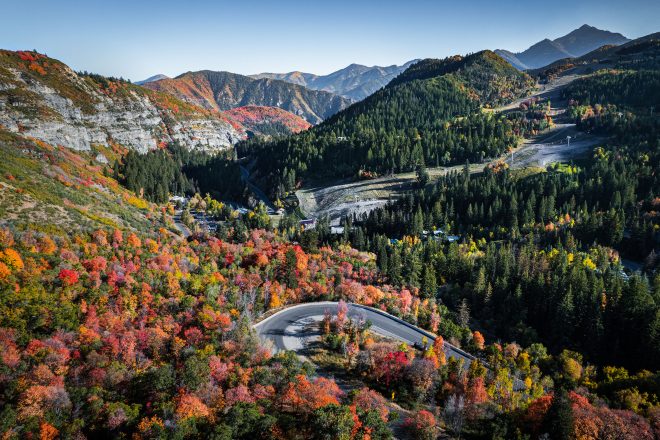
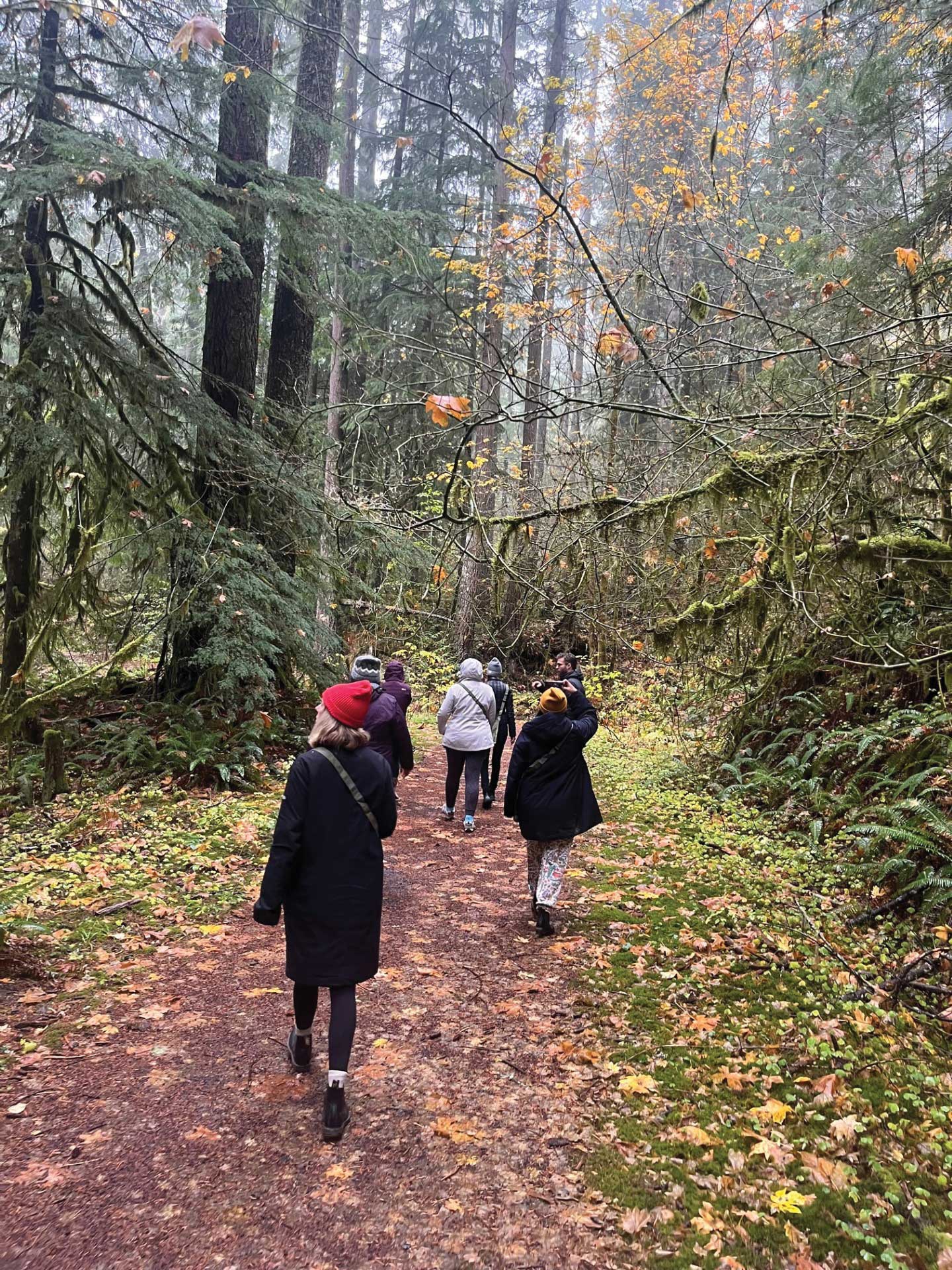
The warm deciduous forests surrounding Mt. Hood are also fabled mushroom-hunting hot spots – a classic agritourism adventure that can be undertaken independently, or with the help of experts like First Nature Tours (firstnaturetours.com), a Portland-based outfitter and experience broker. After an invigorating, high-elevation drive across the southern flank of Mt. Hood and lunchtime interlude at the historical Timberline Lodge (see Where to Stay), we glide into Mt. Hood National Forest, located on the wetter – and, thus, more mushroom-friendly – western slope of the mountain.
“Look for the creviced cap, like a sponge,” First Nature guide Daniel Wild – score one for nominative determinism! – tells us as we tiptoe through a sultry glen in the forest, searching for morels. “Look for deadfall and dying trees. That’s the media they prefer.”
Sadly, we fall well short of our gallon-per-person mushroom limit – foraging is a competitive game in sustainability-obsessed Northern Oregon, and it’s possible other shroom-pickers beat us to the punch. Still, it was fun and edifying.
With the trip drawing to a close, we lean back into apples at Stone Circle Cider (stonecirclecider.com) an all-in-one farm, cidery and event space located in the western Mt. Hood foothills, just outside the national forest. Brewed in the classic style of the English West Country, Stone Circle’s Farmhouse Dry cider is crisp, nuanced and altogether crushable – a fitting coda to our apple-centric afternoon.
They tell us Stone Circle will have live music in the evening – another regional passion embraced by Greater Portlanders. Though we can’t stay, we do end up getting our live-music fix that evening at Skyway Bar & Grill (skywaybarandgrill.com) near Mt. Hood Village. A family-friendly roadhouse, Skyway specializes, per its own menu, in “Northwest-style barbecue,” which ignites my inner smart-ass. What does it mean? Little bits of pinecone in the sauce? Coffee-smoked oysters?
The server doesn’t exactly know, and that’s OK. The brisket has nice rings, the “lumpy mashers” are tasty and the menu – somewhat refreshingly – contains no mention of foraging, sustainability or hyper-local sourcing.
It’s the perfect palate-cleanser after a three-day farm tour. And it rocks into night.
Where to Stay: Hood River & Mt. Hood
Three distinct overnight options for your Hood River food tour.
Hipster Paradise: Hood River Hotel
Look up “quintessential Oregon hotel” in the dictionary and you’ll find this vintage historical property staring back at you. Recognized by the National Register of Historic Places, it has the feel of a co-op, with original appointments and fixtures, plus chef-driven Scandinavian breakfasts at on-site café Broder Øst. Located in downtown Hood River, it’s also ideal for food tours. hoodriverhotel.com
Mountain Escape: Timberline Lodge
Perhaps most famous as the exterior stand-in for the Overlook Hotel in Stanley Kubrick’s The Shining, this National Historic Landmark was dedicated in 1937 by President Franklin D. Roosevelt and reigns as Oregon’s premier ski lodge, with doorstep lift lines and hiking trails aplenty. Executive chef Nate Dahrens oversees a primo dining program in the hotel’s Cascade Dining Room and four other on-site bars and restaurants. timberlinelodge.com
Forest Dwelling: Mt. Hood Tiny House Village
Talk about stylish downsizing. An adorable colony of trailer-size domiciles abutting the Mt. Hood National Forest, these two- and three-bed mini-cabins feel lifted from a German fairy tale. Perfect for family reunions and groups, with communal grills, a gym, swimming pool and other amenities. mthoodtinyhouse.com