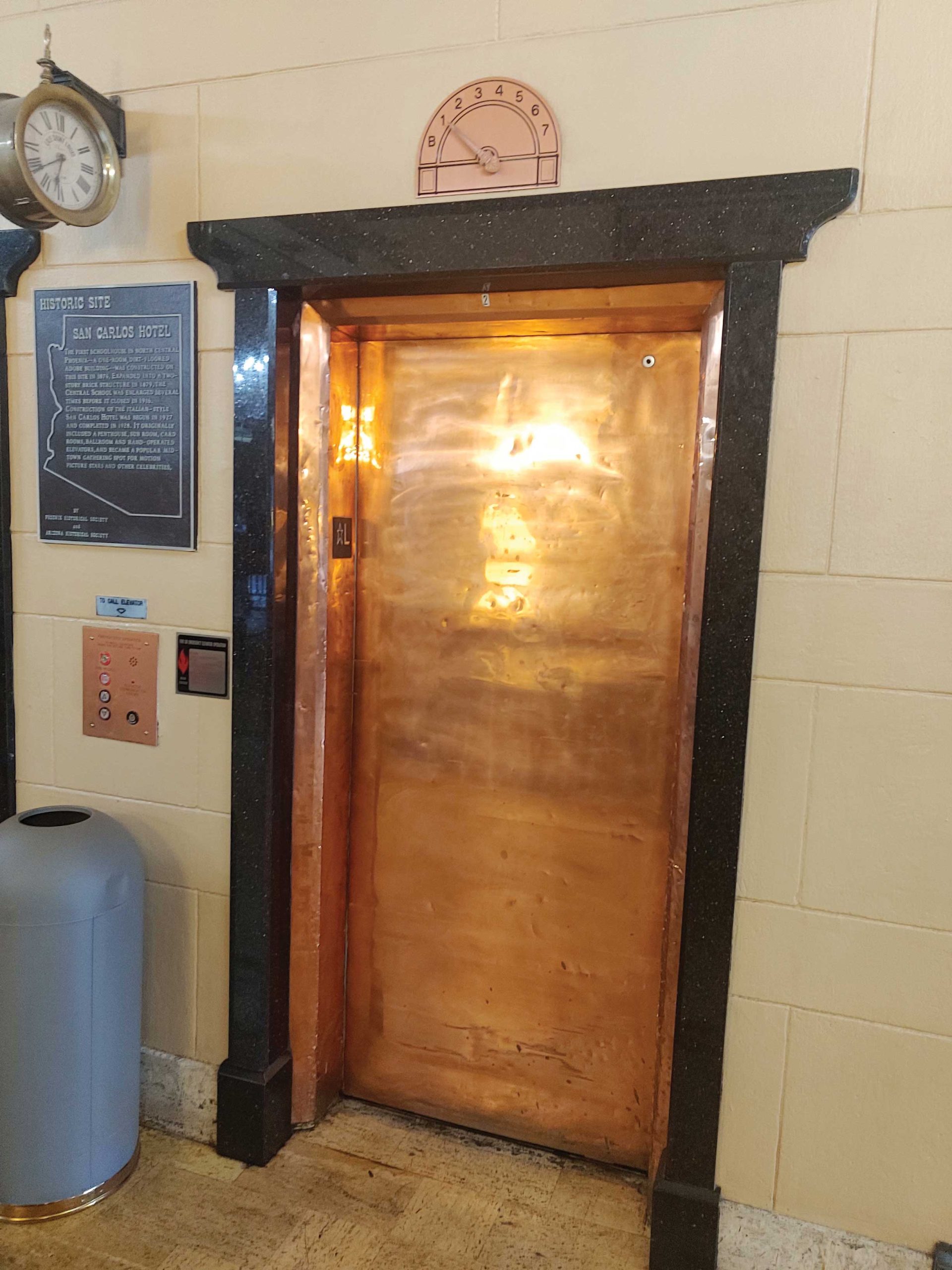
The ornate San Carlos Hotel is slated for upgrades to restore the splendor that made it the city’s finest hotel when it opened in Downtown Phoenix during the Roaring Twenties.
“Dreamers, philosophers, drunks and addicts were all a part of the San Carlos,” says Robert Melikian, whose family owned the hotel for 48 years, from 1973 to 2021. Among its guests were oddball long-term tenants, including gurus, reporters, gumshoes, politicians and a Chicagoan known only by the alias “Wally Roberts,” who was holed up in the hotel’s penthouse throughout the 1970s as part of the Federal Witness Protection Program. “I had to fight the other bellmen to take drinks up there to see the numerous parties and half-naked girls,” Melikian says.
These shadowy aspects of the San Carlos are all part of its remarkable legacy, as described by the 69-year-old Melikian. But dealing with mob turncoats and other human dramas, along with an aging infrastructure, finally took its toll on the Melikian family, who sold the hotel three years ago.
The new owners aim to restore the Italian Renaissance-style building to better reflect its glamorous past, having hosted Hollywood icons such as Mae West, Clark Gable and Marilyn Monroe, whose names are set in terrazzo stars along its sidewalks.
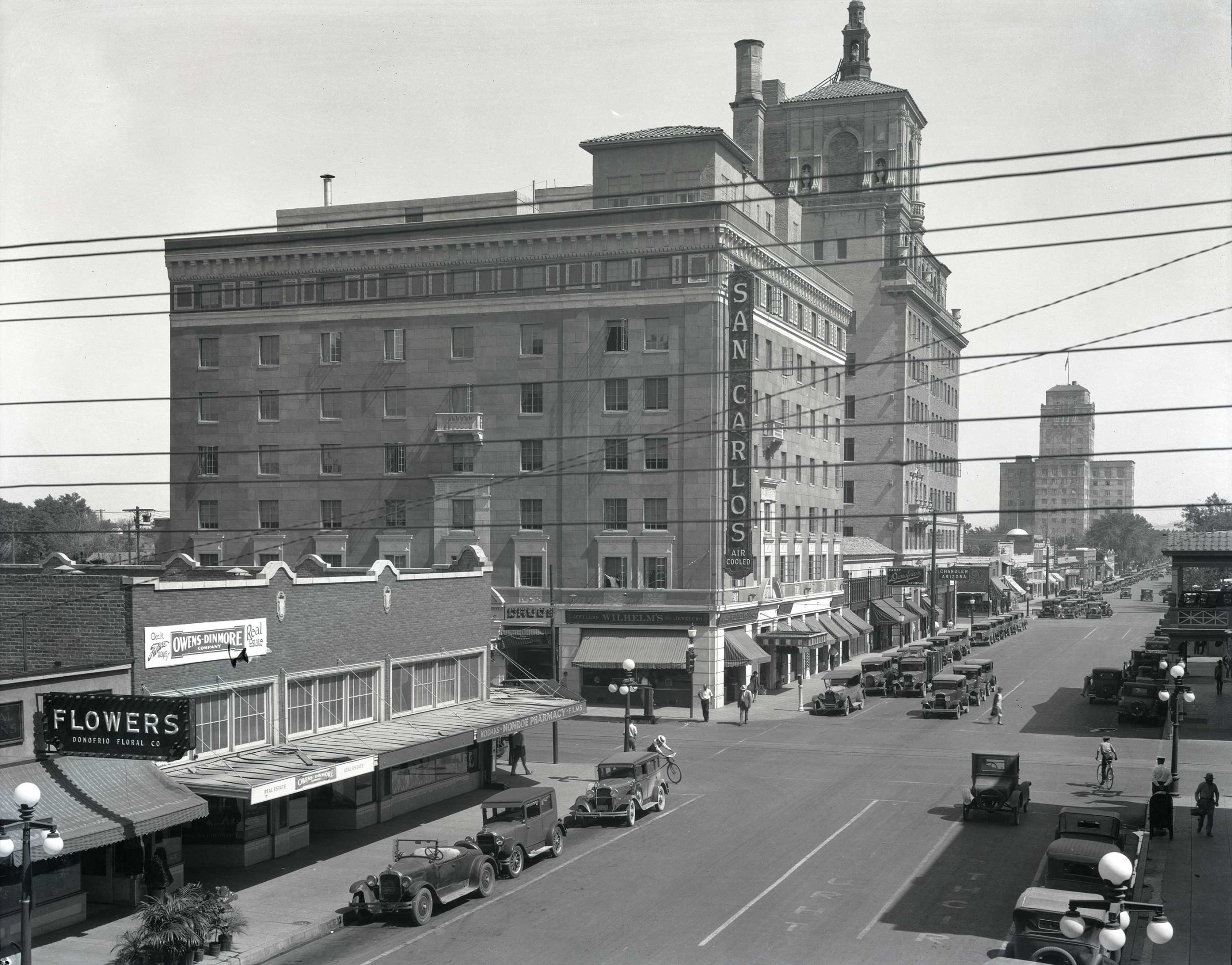
Located on the northwest corner of Central Avenue and Monroe Street, the San Carlos has survived myriad challenges since it opened in 1928, when an orchestra serenaded guests in its opulent lobby, illuminated by Austrian crystal chandeliers.
With Arizona enjoying a pre-Depression boom, newspaperman Dwight B. Heard and Los Angeles hotelier Charles Harris broke ground on what they touted would be the finest hotel in Phoenix. The seven-story building, the city’s first high-rise hotel with air-conditioning, was completed in just 10 months, each of its 175 rooms outfitted in luxurious fashion by Dorris-Heyman Furniture. “[The furnishings are] among the best in use anywhere,” San Carlos architect G. Whitecross Ritchie told The Arizona Republic (which Heard happened to own).
But a month later, a forlorn guest named Leone Jensen jumped to her death from the hotel’s roof. In a last-minute note, addressed to “Undertaker, Phoenix,” she requested to be buried in “my tan dress and tan high-heeled slippers.” This tragedy sparked decades of ghostly sightings of a similarly described young lady. The San Carlos Hotel is listed as one of the most haunted places in Phoenix by several paranormal websites.
Soon, the hotel encountered another nightmare: the Great Depression. The San Carlos survived the downturn and prospered into the mid-1950s, when Downtown was still Phoenix’s commercial hub. When Melikian’s father bought the aging hotel in 1973, new development in Midtown had drained the city center’s vitality.
Gregory Melikian, an attorney without any hospitality background, enjoyed claiming he ended World War II because he was the radio operator who announced Nazi Germany’s surrender. He believed the San Carlos would be revitalized by the opening of Arizona’s tallest building, the 40-story Valley Bank Center, now the vacant Chase Tower, across Central Avenue. Though Downtown’s rebirth took decades, the odd and indelible moments at the now second-tier hotel never ceased.
In 1978, Michael Finney, a hotel bellman and professional comedian, was kidnapped while driving two guests to the airport. The culprits later left him tied up in a motel closet in Tucson. “Finney managed to perform a magician’s escape and used his tongue to dial a rotary phone to call my father, and they eventually discussed whether Michael was still on the clock or whether his shift had ended,” Melikian says. “They came to a compromise: Michael would still be paid, but he had to return immediately.”
Four years later, Melikian’s father asked some tattooed, long-haired men wandering through the lobby what they were doing. “‘We’re U2,’ they said,” according to Melikian. “To which my father responded, ‘You’re a submarine? Get out!’”
In the mid-1990s, an early-morning pedestrian entered the hotel lobby to report an unusual sighting in the alley. Melikian went outside and found a horse tied to a pole behind the hotel, with no saddle or identification. “So, we figured somebody abandoned it during the night,” he says. “My father wanted to sell it, but he was from New York and didn’t know anything about horses, so he gave it to an employee in lieu of a bonus.”
But the kooky stories occasionally turned tragic, particularly when Melikian checked in solitary men at the front desk, gauging their suicide risk for a possible fatal leap from the tall building. Red flags included paying in cash, lacking luggage and requesting a high floor. “I’d take a long look into their eyes,” Melikian says. “It was a terrible feeling to have been wrong, but I was, more than I’d like to remember.”
After almost a half-century devoted to caretaking the hotel, the Melikian family sold the San Carlos, fittingly, on Halloween in 2021. The new owners, Rockbridge Capital, are planning an $80 million renovation of the boutique hotel. Melikian, one of the city’s leading advocates for historical preservation, subsequently authored the 2025 book Forgotten Phoenix or The Art of Hotel Management, weaving family memoir with local history.
“Twenty-four hours a day, seven days a week, we witnessed the best and worst of the human condition,” Melikian wrote, reflecting on his San Carlos experience. “It was a show.”
Room, Please!
These Downtown hotels have played a prominent role in Phoenix history.
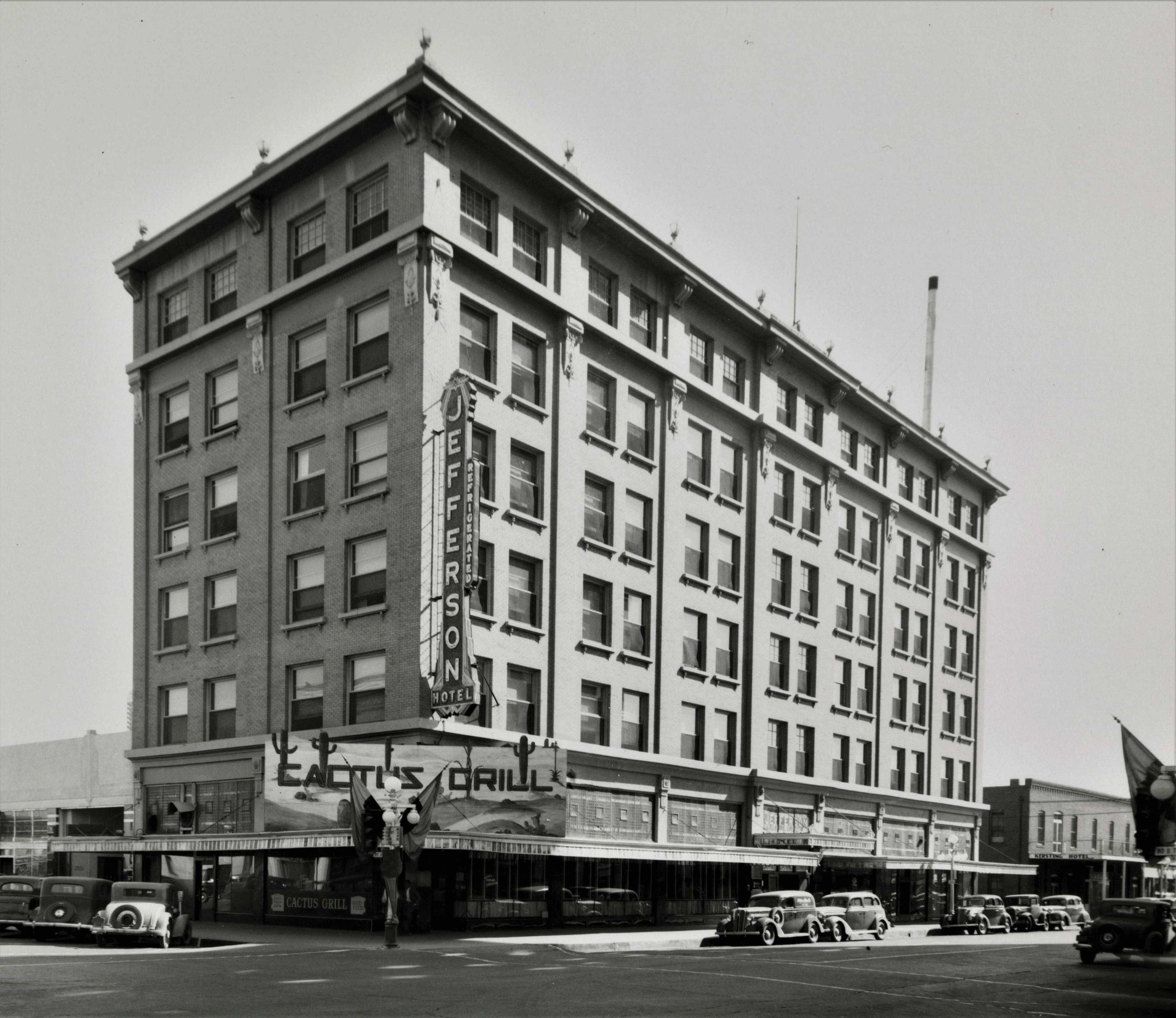
Jefferson Hotel
People around the world have looked through an open fourth-floor window of the Jefferson Hotel on Central Avenue, though most don’t realize it. The six-story building, Arizona’s tallest when it was completed in 1915, appeared in the opening scene of Alfred Hitchcock’s 1960 movie, Psycho. The film pans the city’s skyline before zooming into a room where a secretary meets her lover. The hotel closed in 1975 and the building remains vacant, despite proposed redevelopment.
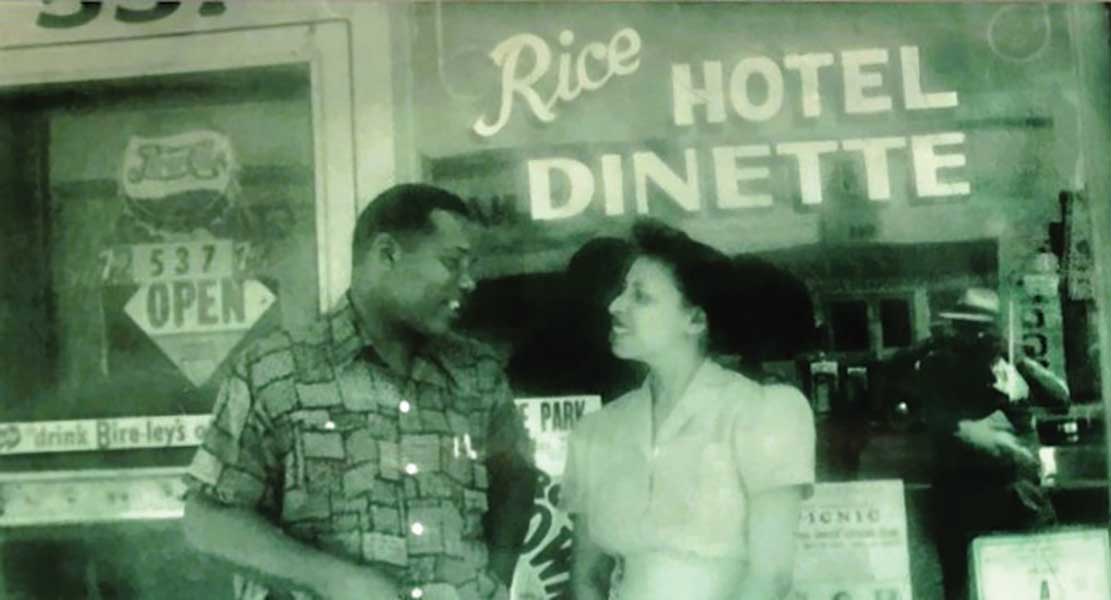
Rice Hotel
In 1928, Hugh “Hughie” Rice opened the Raymond Hotel to serve Black travelers in segregated Phoenix on Jefferson Street. Rice renamed the Raymond the Rice Hotel in 1935. It was listed annually in The Negro Motorist Green Book. Guests including Louis Armstrong, Lionel Hampton and Jackie Robinson stayed there before it closed and was demolished in the 1980s. A storyboard at the Valley Metro Rail Washington/Central Avenue Station celebrates the hotel’s legacy.
New Windsor Hotel
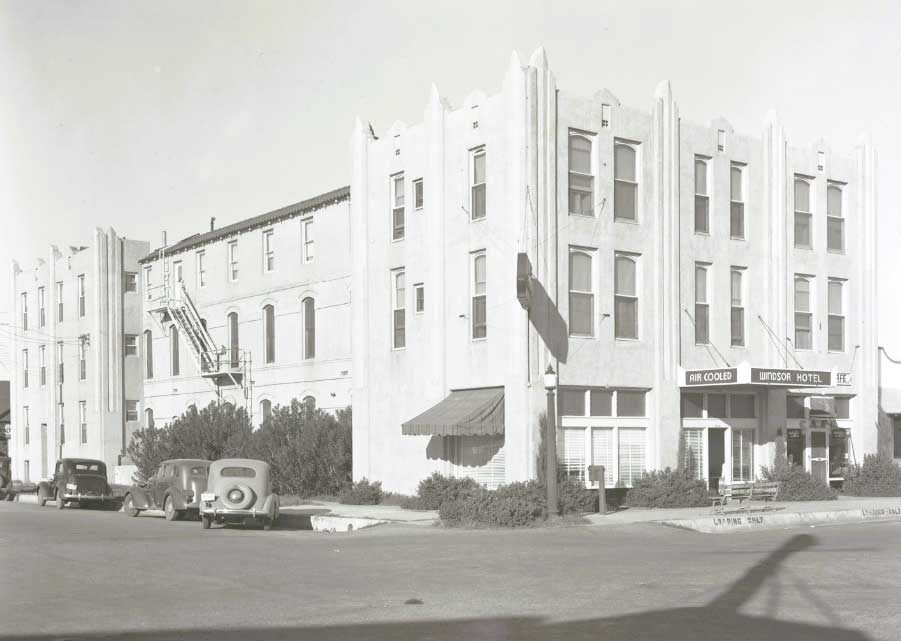
Buzzing with neon and advertising amenities like “Air Cooled” and “Bell System Public Telephone,” the New Windsor Hotel at 546 W. Adams Street remains a popular film noir backdrop. Opened in 1893 as the Sixth Avenue Hotel, it was renamed the Windsor Hotel in 1925, a name still visible as a ghost sign on the east wall. The building retains its elegant exterior, but now offers affordable housing.