
Design a sophisticated space where you can store and savor your favorite varietals in style.
Whether you’re a serious oenophile or a casual tippler, an in-home wine room just might be the perfect addition to your house. “These amenities are common in luxury residences and they’ve been popular for many years, but they’re becoming much more accessible to all kinds of people,” explains architect Erik Peterson. “Drinking wine has always been and will always be such a beloved pastime for many, so it’s exciting to see these designated rooms and cellars become more adaptable and approachable.”
We asked a trio of experts to share their advice on creating a luxurious space in your own home where you can enjoy a bottle or two of your favorite vintage.
Pick the Placement
According to the pros, the first consideration you must make when dreaming up your wine room is the amount of square footage you can devote to it. “Before you even start drawing up plans, you have to assess the number of bottles you want to display and/or store,” Peterson says. “Once you have a solid estimate in place, then you can start mapping out your space to accommodate the full scope of your collection.”
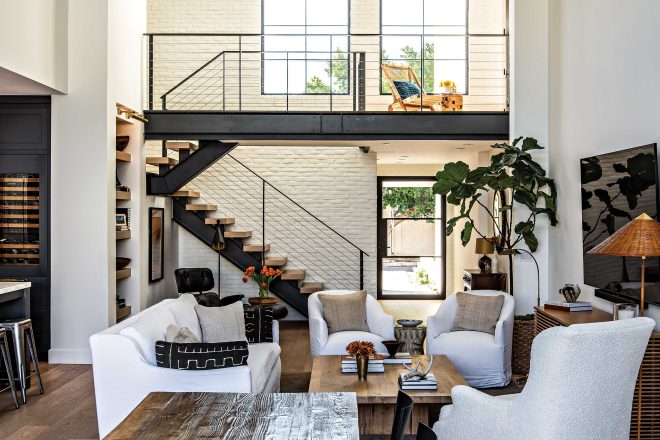
If you are not able to build a whole room or show-stopping feature, look around your house for a small nook or underused storage space. “A devoted wine area can take so many shapes. It could be tucked under stairs or in an old closet, become a room divider or maybe take the place of a dining buffet that is never used,” asserts interior designer Angelica Henry. “Don’t get too locked into the typical installation locations; just get creative with what might work for your own home.”
Tailor to Your Taste
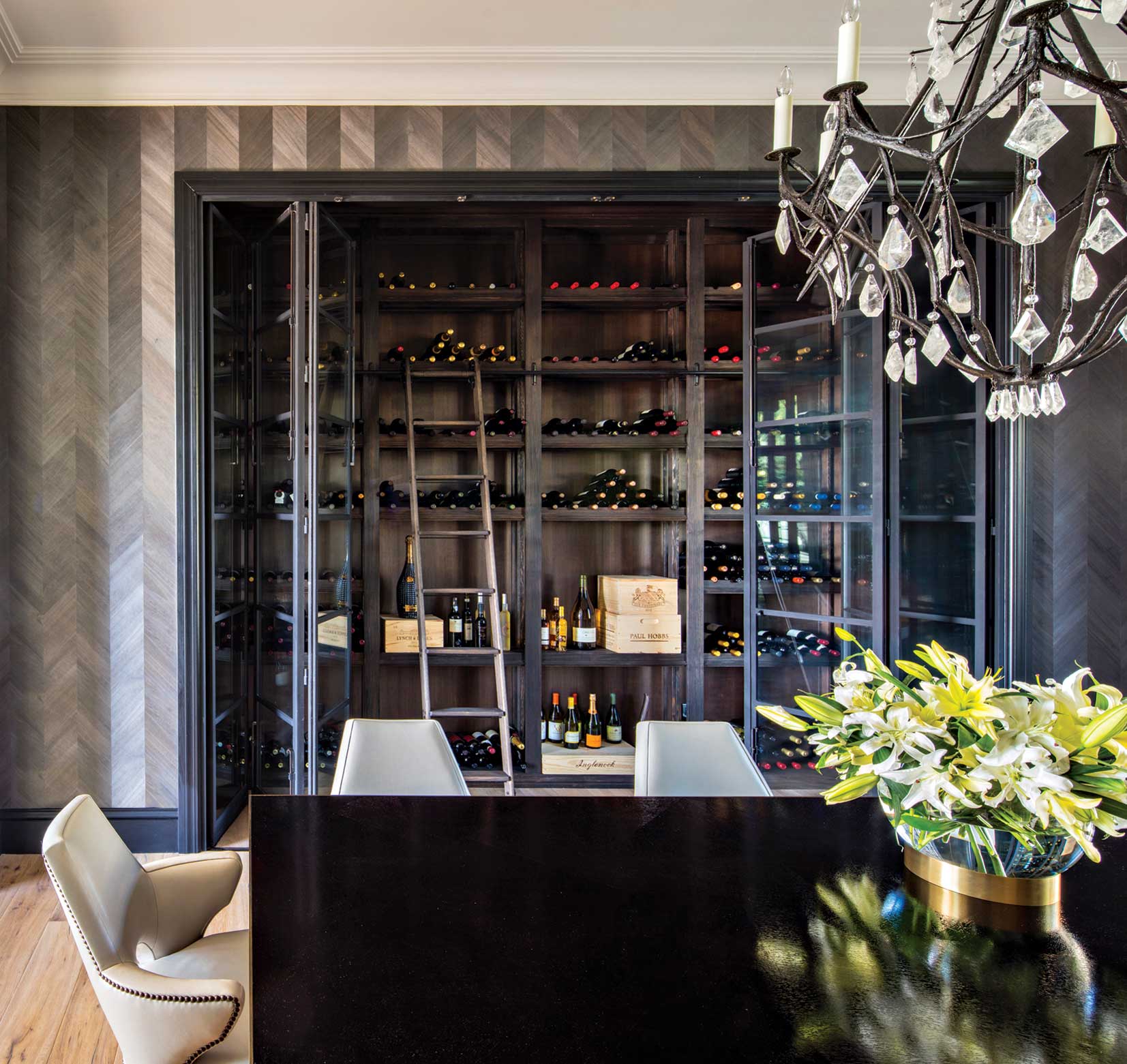
After determining your spatial requirements, it’s time to decide what style you’re drawn to. “With the rising popularity of transitional interior design schemes, wine rooms are embracing streamlined finishes and lighter color tones,” explains interior designer Janet Kauffman. “However, there is still the draw of a classic cellar feel. Stone or brick floors and ceilings, wood racking and iron lanterns will always be cornerstones in these kinds of amenities. A darkened, chilled space just emits a feeling of Old-World romance.”
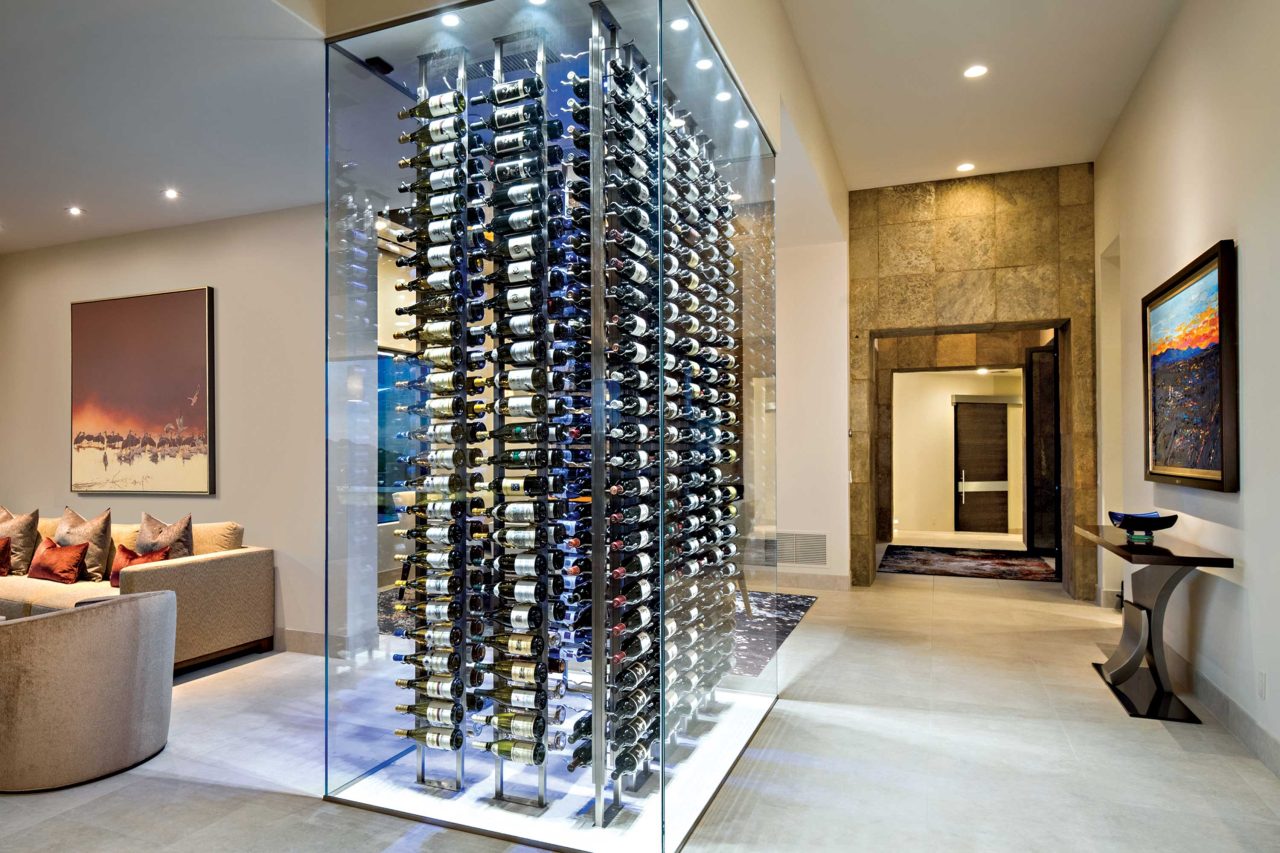
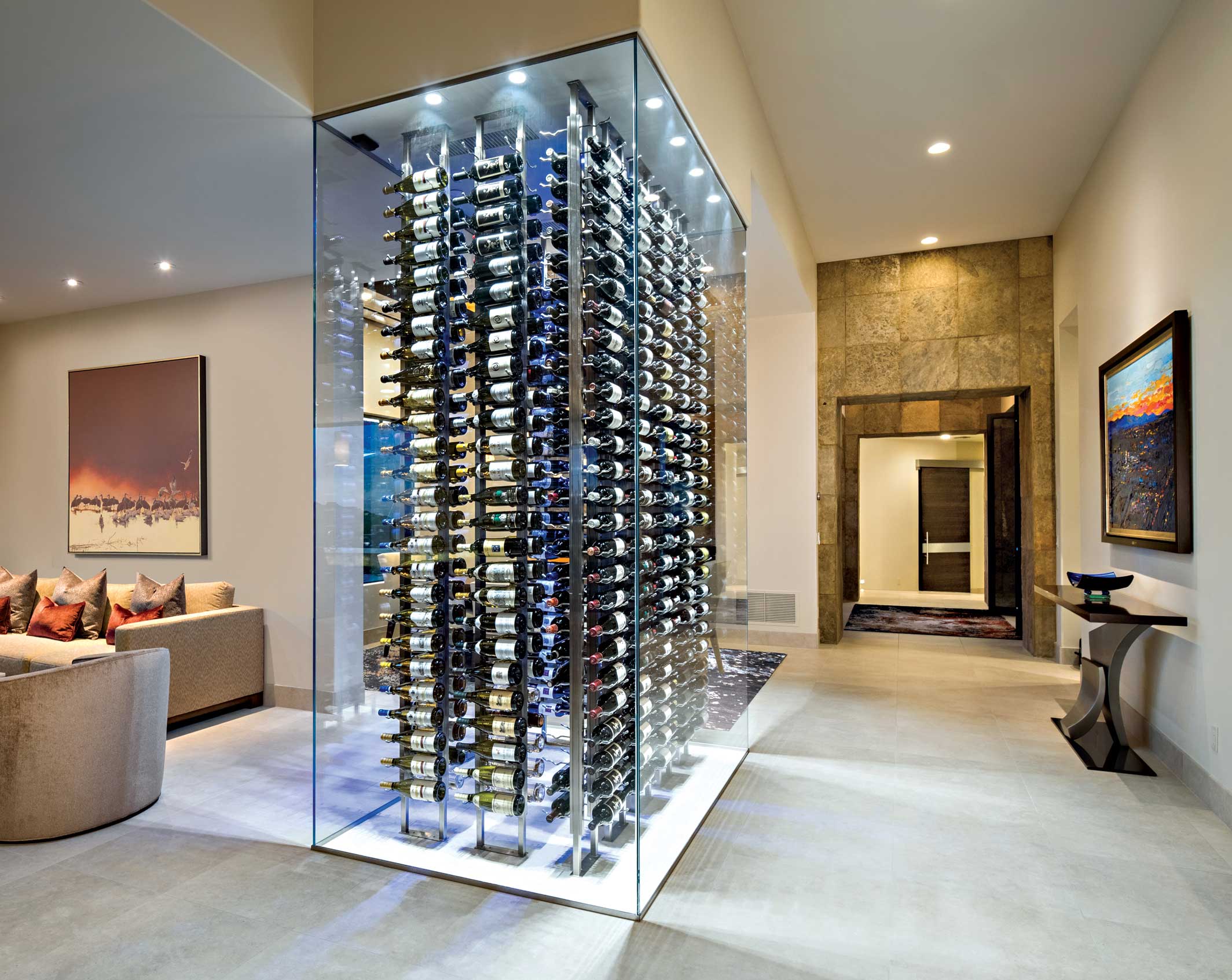
While rustic cellars are fitting for traditional and transitional homes, contemporary abodes might be better suited to the sleek, streamlined works of art that are becoming more common. “Modern glass enclosures are a very popular style nowadays,” notes Henry. “The jewel-box look is ideal for entertaining, as it becomes part of the experience instead of being tucked away in a remote location that is rarely seen.” Peterson agrees, explaining that, “In these structures, the wine is typically presented as an artistic display rather than just a storage unit.”
Sorting Out Storage
Due to the sensitive nature of its contents, a wine room needs specific equipment and storage solutions to keep your bottles in prime condition. “If you are going for the classic chilled space, then the capability to add refrigeration is the No. 1 priority,” says Kauffman. “You will also need to have a door that properly seals to maintain the right temperature for your particular collection.”
Peterson adds humidity control and proper insulation to the list of requirements for a top-notch wine room. He also encourages wine lovers to get innovative with the style of racking they choose to hold their bottles. “You don’t have to opt for traditional wood,” he says. “There are really cool iterations to pick from these days, including metal or cable structures.”
Add Some Glow
Lighting is at the core of creating ambiance, so whether you’re aiming for a romantically lit cellar or illuminated monolith, incorporate layers of luminescence with various types of fixtures, including concealed rope lighting, gallerylike cans or even a stunning chandelier.
Make it Personal
Though wine rooms do require some specialty considerations and professional installation work, don’t let the logistics take all the fun out of your new luxe amenity. “Your space should invite you to have an experience every time you go to pop a bottle,” says Peterson. Include artwork, favorite photographs and candles to create coziness and evoke cherished memories, or even wire in a sound system so you can enjoy your favorite tunes alongside your best super Tuscan.

SOURCES
Architect: Bryan Rains, Rains Design, Phoenix, rainsdesign.com. Builder: Michael Brown, Taylermade Homes, Scottsdale, taylermadehomes.com. Interior designer: Janet Kauffman, Janet Kauffman Interiors & Design, Scottsdale, janetkauffman.com. Architect: Erik Peterson, AIA, PHX Architecture, Scottsdale, phxarch.com.