More than 2 billion people live in the countries collected under this culinary umbrella – about a fourth of the world’s population, spanning the cap of Hokkaido to the tip of East Timor. Trying to visualize all the permutations of fermented chile paste, stir-fried eggplant and lemongrass soup encompassed in this mighty mass of land and humanity is frankly mind-boggling, so we’ll focus on the modest portion of it that has found Phoenix.
by Nikki Buchanan, Leah LeMoine, Craig Outhier & Madison Rutherford

China
China is enormous, covering nearly a quarter of Asia’s land mass, and each region, province and municipality (31 in all) has its own history, culture and cuisine. We’re not always privy to China’s incredible diversity here in Phoenix, where Cantonese and Sichuan cuisines have dominated the restaurant scene for more than 40 years. However, a recent groundswell of owner-operated eateries – primarily in the East Valley – have thrown the curtains wide open on exciting delicacies from lesser-known Chinese regions. But if silky bao and spicy tripe salad aren’t your bag, don’t worry – most of them still have General Tso’s chicken on the menu.
Map It: China
Where to find regional Chinese delicacies in the Valley.
1. Liaoning
Potatoes and wheat are staples in hearty, approachable Liaoning cuisine. One of the region’s most popular late-summer dishes, di san xian, is available year-round at Chou’s Kitchen (chouskitchen.com) in Chandler. It’s a garlicky stir-fry of potatoes, eggplant and bell peppers that’s straightforward and satisfying.
2. Beijing
Served in imperial courts for more than 400 years, Peking duck is China’s labor-intensive rock star, prized for its ultra-crisp skin and moist interior. Midtown favorite China Chili (chinachilirestaurant.com) presents it pre-carved on a huge platter – along with pancakes or steamed buns, hoisin sauce and spring onions.
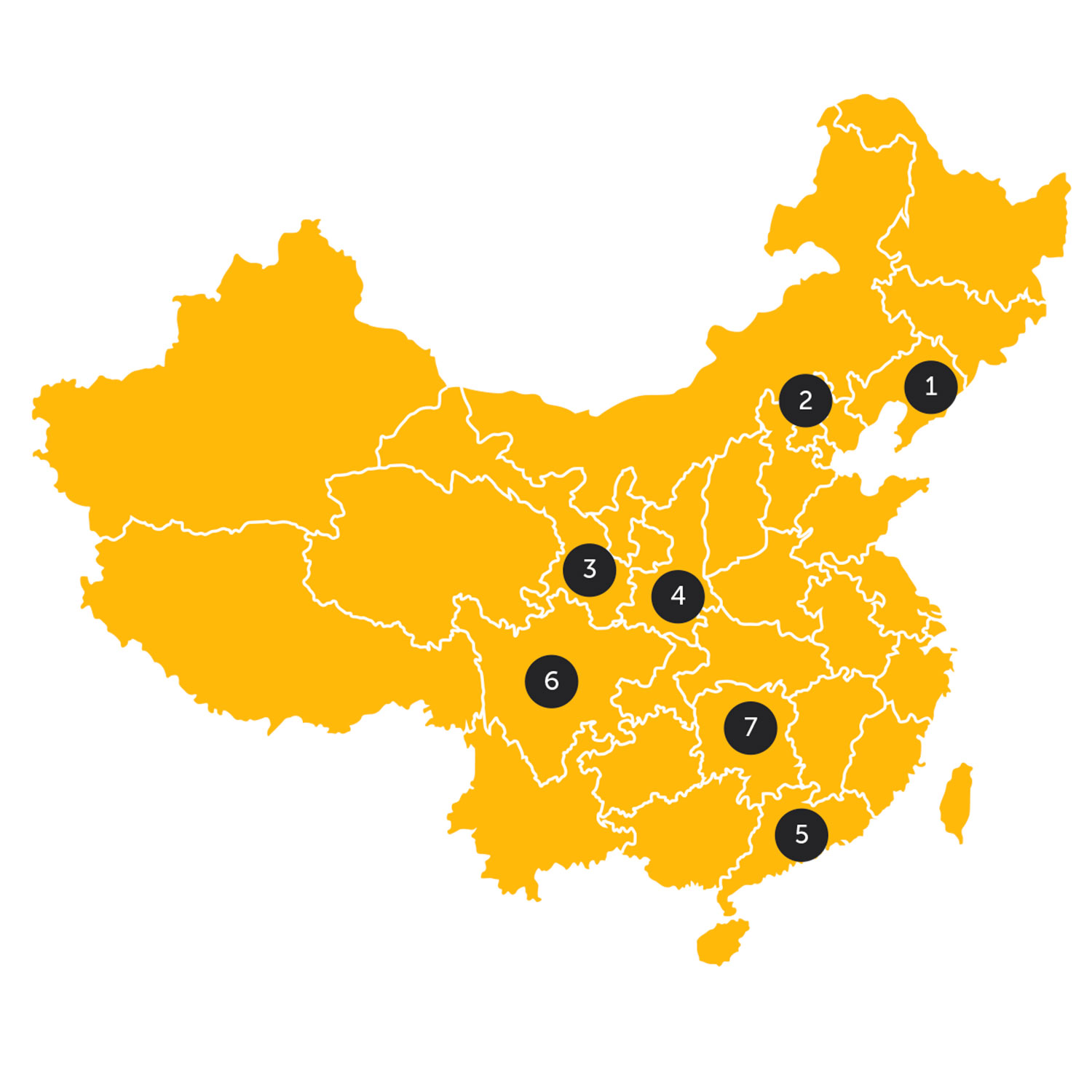
3. Lanzhou
The city of Lanzhou in Gansu province is famous for hand-pulled noodles and noodle soups, both offered in dizzying array at Kungfu Ramen (phoenixramen.com). Derived from Chinese-Muslim cooking, the mile-long noodles are paired with lamb and set afloat in a sultry broth enriched with sesame. Magnificent.
4. Shaanxi
Shaanxi shares culinary traditions with Northwest China, characterized by noodles, lamb and an emphasis on cumin and other strong flavors. The hand-pulled biang biang noodles at Shaanxi Garden (shaanxibiangbiang.com) in Mesa – set in vinegar-sharpened broth with slow-cooked pork and bok choy – are said to be as long and thick as a belt.
5. Canton/Guangdong
When most Americans think of Chinese food (see sidebar below), the mild, familiar dishes from this central region are what most likely spring to mind. Red Dragon Chinese Cuisine (reddragon.website) does a bunch of them well, including wonton soup, brimming with fat, translucent rice dumplings stuffed with pork and shrimp.
6. Sichuan
Liberally strewn with dried red chiles, Chongqing spicy chicken threatens to be scorching, but it’s more tingly and tongue-numbing than blistering hot, thanks to Sichuan’s legendary peppercorn called mala. The nugget-like rendition at Tempe sensation Old Town Taste (oldtowntaste.com) is downright addictive – light, crispy and spicy at once.
7. Hunan
Hot, sour and salty flavors are a hallmark of Hunan cuisine, considered “dry spicy” in contrast to Sichuan cuisine’s inherent oiliness. Hunan specialties can be found at Spice Spirit Chinese Cuisine (azspicespirit.com), including hot and sour chicken gizzards, which live up to their name in the best possible way.
Why is Cantonese food so popular in the U.S.?
When the Civil War created a labor shortage, the Central Pacific Railroad hired 12,000 Chinese workers, most from Guangdong – then Romanized as Canton – to complete the Transcontinental Railroad. They brought their cuisine with them, adapting it to ingredients they found on hand. Over time, the immigrants moved into service industries such as restaurants, serving the Cantonese food we eat today – a sweeter, saucier, boneless version of the original, created to appeal to the American palate.

Chef Chat
Sunny Zhao & Lulu Zhou of Chou’s Kitchen
In 2011, Sunny Zhao (left) and Lulu Zhou (right) opened Chou’s Kitchen, a Chandler restaurant specializing in the cuisine of Northeast China (particularly Liaoning province, their former home), expanding to a second location in Tempe in 2016.
You sold your Tempe location last January. Why?
Lulu Zhou: Having two restaurants was just too much. We make everything from scratch – our own dough, our own wrappers. It’s a lot of work, and we want time to visit family in China.
When you opened Chou’s, did you worry that customers might not understand or appreciate your food?
Sunny Zhao: We didn’t think about that. When we came here, there were no restaurants offering dishes from Northeast China. We just said, “We will make our traditional food.”
What are typical dishes and flavors found in Northeast Chinese cooking?
SZ: Hot pot, beef pies, steamed dumplings and scallion pancakes are a few of the dishes we’re known for. We pickle cabbage and other vegetables in preparation for cold winters. Our flavors are strong, but balanced – sweet, sour, salty and spicy.
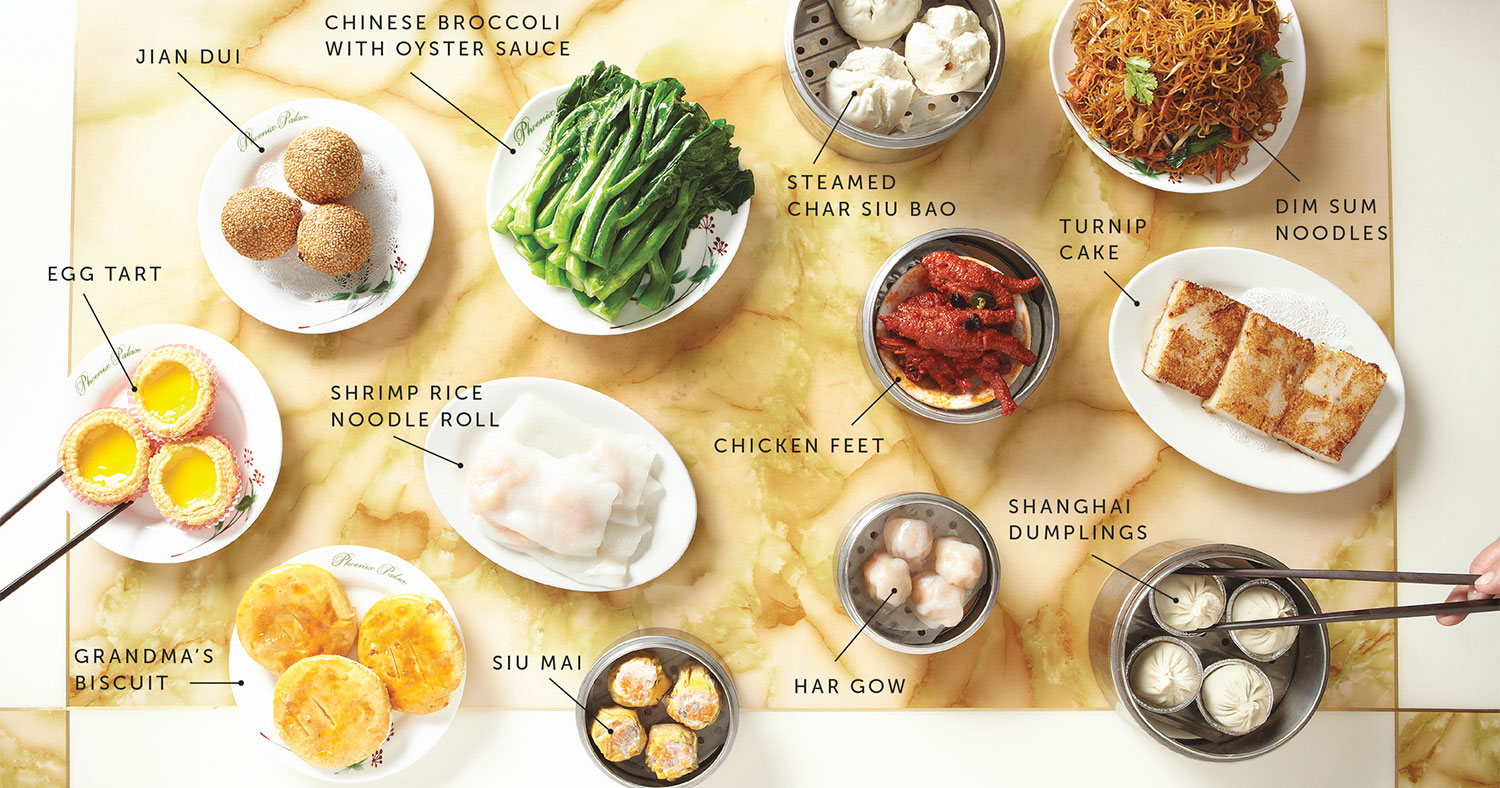
Dim Sum
What began as dainty tea-time snacks in China has become a full-blown brunch affair here in the U.S., where diners select dishes from steam carts which servers continuously roll past the table. In Guangdong (aka Canton), where dim sum originated, there are more than 1,000 varieties. Here in Phoenix, you’ll be tempted by a mere 45-75 dishes. The Valley has three primary dim sum depositories: Great Wall Cuisine (greatwallcuisineaz.com), Mekong Palace Dim Sum Chinese Restaurant (mekongpalace.com) and Phoenix Palace (pictured below, phoenixpalacechandleraz.com).

Cambodia
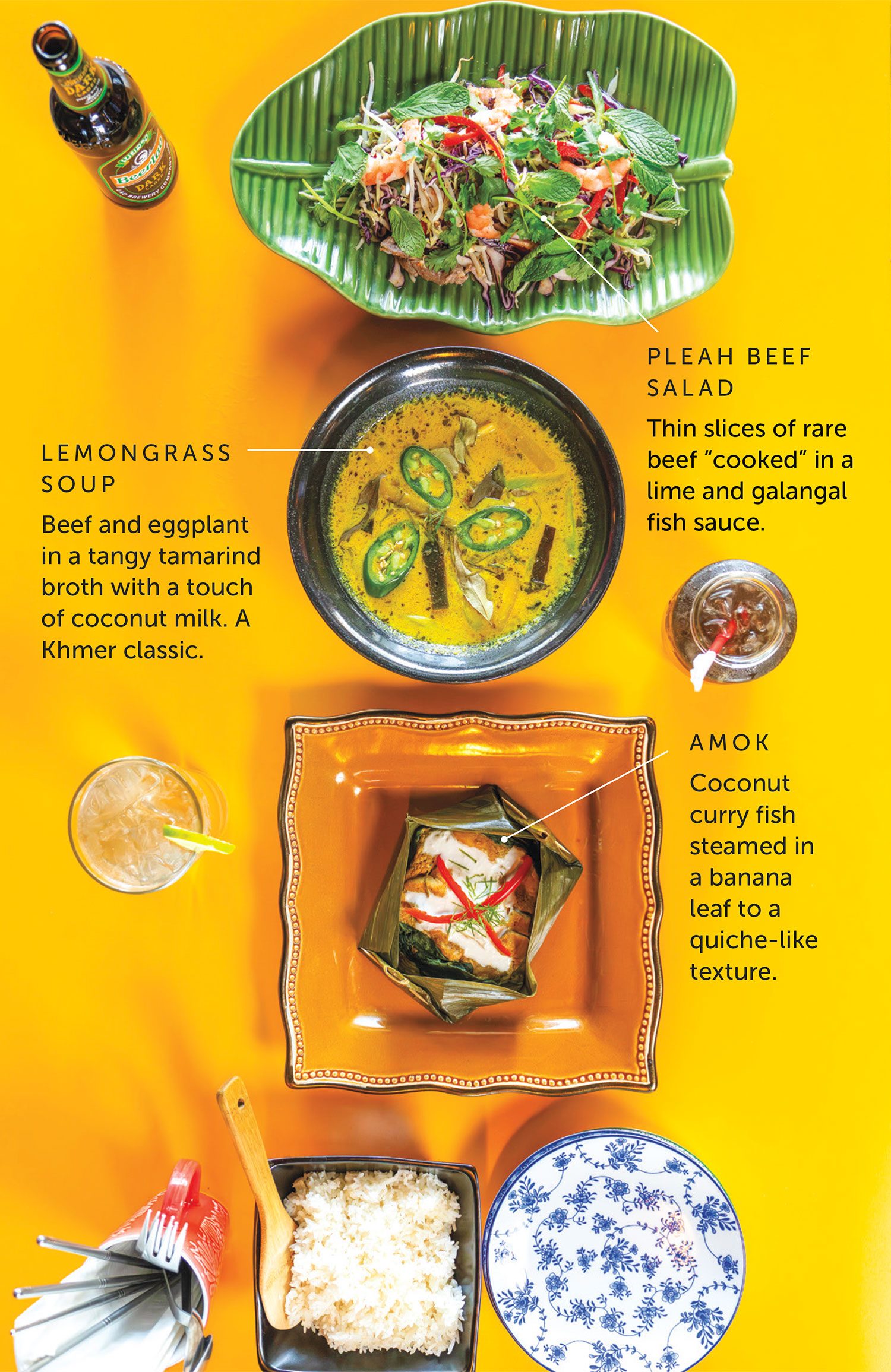
Our vote for the Valley’s MVC (Most Valuable Culinarian)? It might be Reathrey Sekong (1312 E. Indian School Rd., 602-451-9792) owner-chef Lakhana In, who opened Phoenix’s lone Cambodian restaurant in 2011 after finishing a career at Intel. Inspired by traditional Khmer cooking, it remains the one place in Greater Phoenix where you can dip grilled steak into thuk prahok, a pungent, sweet dressing of fermented fish paste and lemongrass; or sip on Phnom Penh soup, in which a light, ethereal broth is scandalized by chewy filaments of pork tripe, powerfully flavored beef liver morsels and other goodies. Find three more Khmer classics below.

No Love for… Indonesia
Here it is, friends, the Valley’s greatest collective shame as a dining culture: Our inexplicable lack of an Indonesian restaurant. Eventually, someone will open one, delight everyone with a Padang satay or juicy ayam bakar (red chile chicken), and everyone will be, like, “Why didn’t that happen sooner?”
glossary
rendang /ren-DANG/
The Middle East has hummus. South America has the empanada. Eastern Europe has borscht. And here is the dish that intersects Southeast Asia from Malaysia to Brunei to Indonesia: a panang-like flavor bonanza of slow-cooked beef in a spicy braise of lemongrass and coconut milk. The closest we could find in the Valley: the panang curry at Glai Baan (glaibaanaz.com).

Japan
Seasonal, nuanced and elegant in its restraint, Japanese food has been popular here in Phoenix since the mid-’80s, when sushi bars and teppanyaki restaurants gained widespread popularity. These days, there are sushi bars galore, but Japanese restaurants with a large selection of traditional cooked fare are few and far between.
3 Sushi Geek Favorites
If you cringe at the thought of cream cheese and crave something more exciting than a rainbow roll, here are three sushi-joint deep cuts that make true devotees swoon.
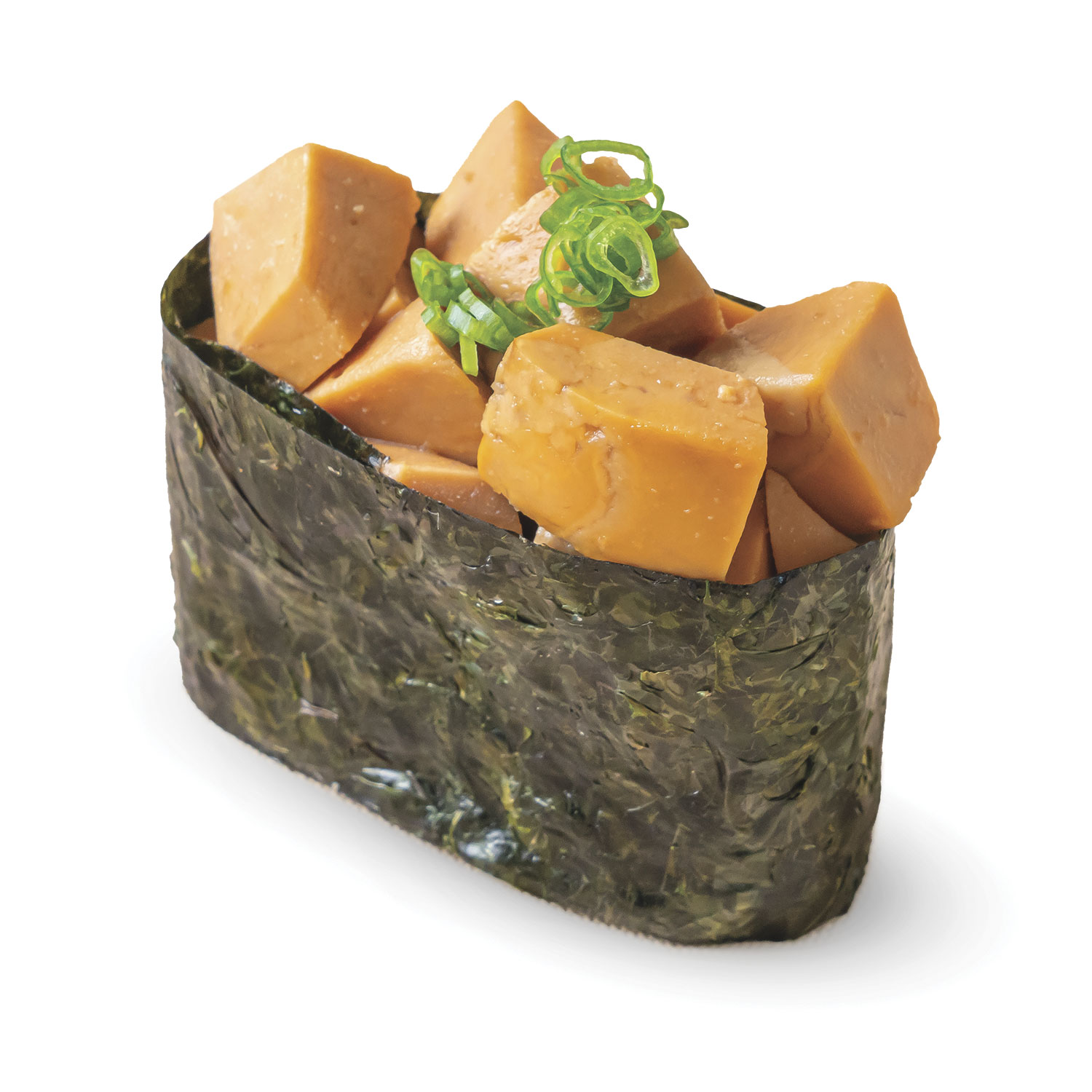
Ankimo
Or monkfish liver, to us Yanks. Usually served as pâté, high fat content, creamy on the palate, the foie gras of the sea. Find it consistently at Scottsdale legend Hiro Sushi (hirosushiphx.com).
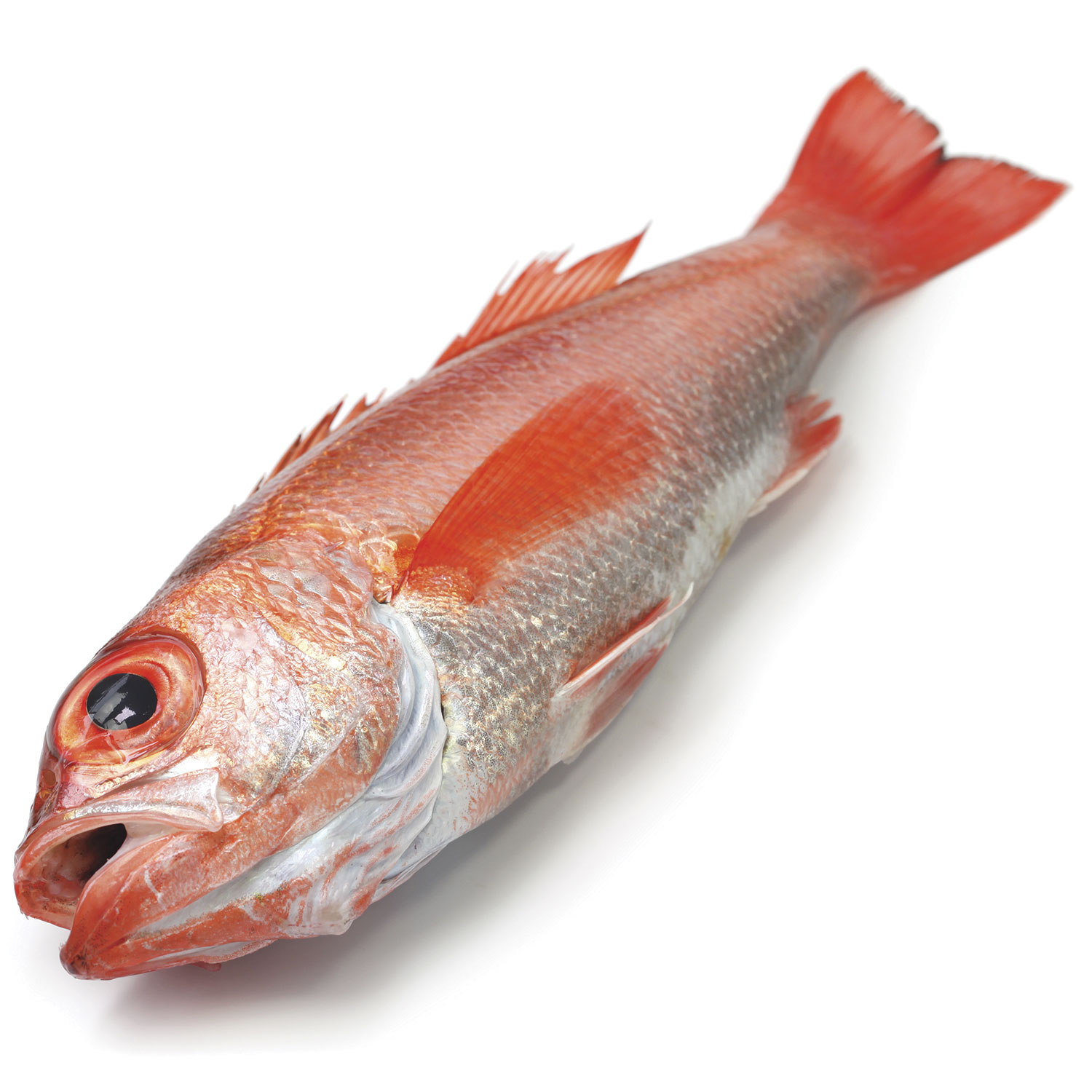
Nodoguro
Also known as blackthroat, it’s an extremely rare deep-sea fish, with rich and fatty flesh. Shimogamo (shimogamoaz.com) in Chandler often carries it, as does ShinBay (shin-bay.com) in Old Town.
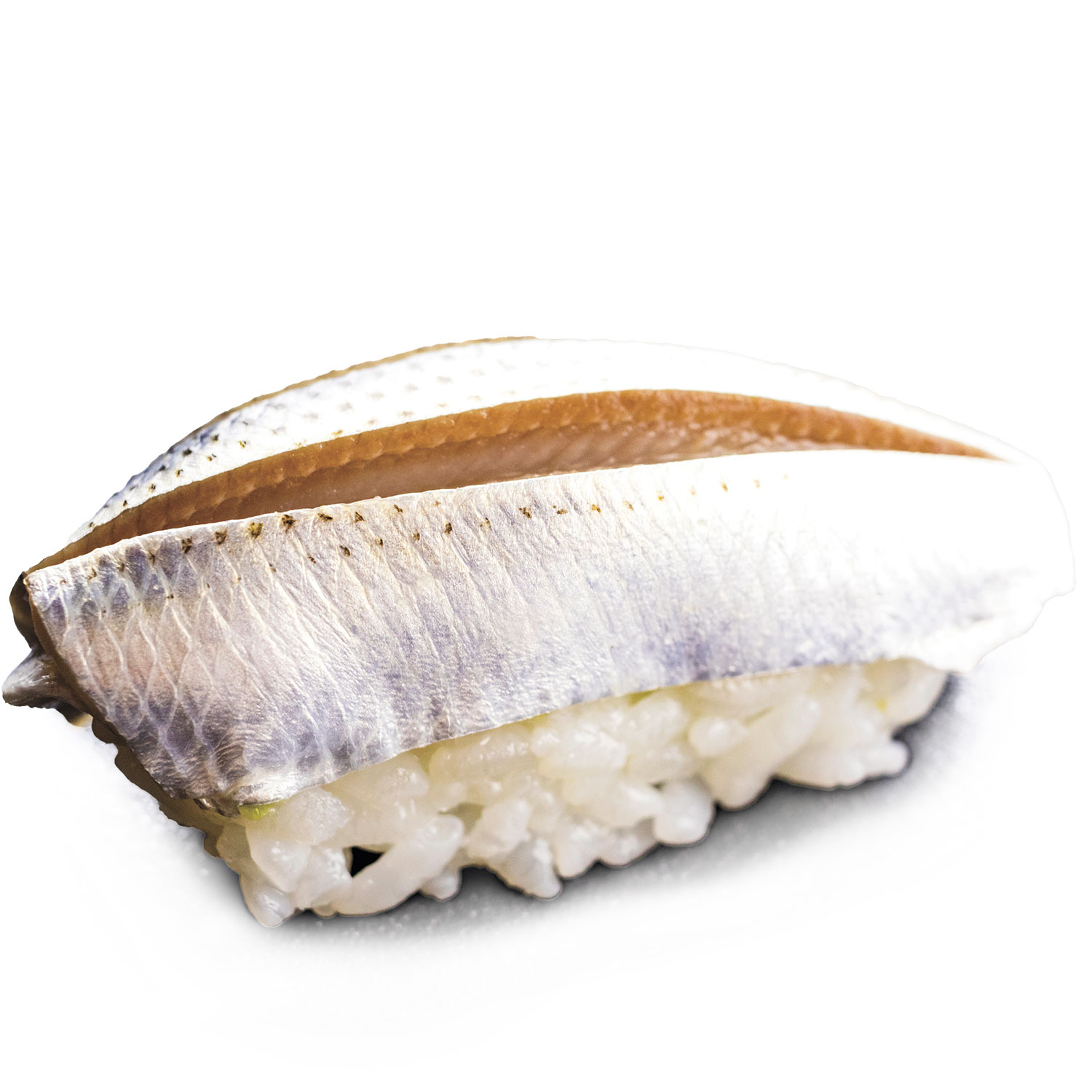
Kohada
This small, silvery fish, also known as gizzard shad, is jam-packed with umami and slightly sweet. Demands “meticulous knife skills,” according to Shimogamo chef Daisuke Itagaki.
Sushi 101
For centuries, both the Chinese and Japanese preserved fish with salt and fermented rice, throwing the rice away. At some point, the Japanese began eating the two ingredients together, but the fermentation process was incredibly slow. In the 1820s, Hanaya Yohei, who opened a fish stall on the banks of the Sumida River in Edo (now Tokyo) invented modern nigiri sushi, adding vinegar and salt to freshly made rice, then topping it with a slice of raw fish, fresh from the bay. Voilà! Japan’s first fast food.
OMG Omakase
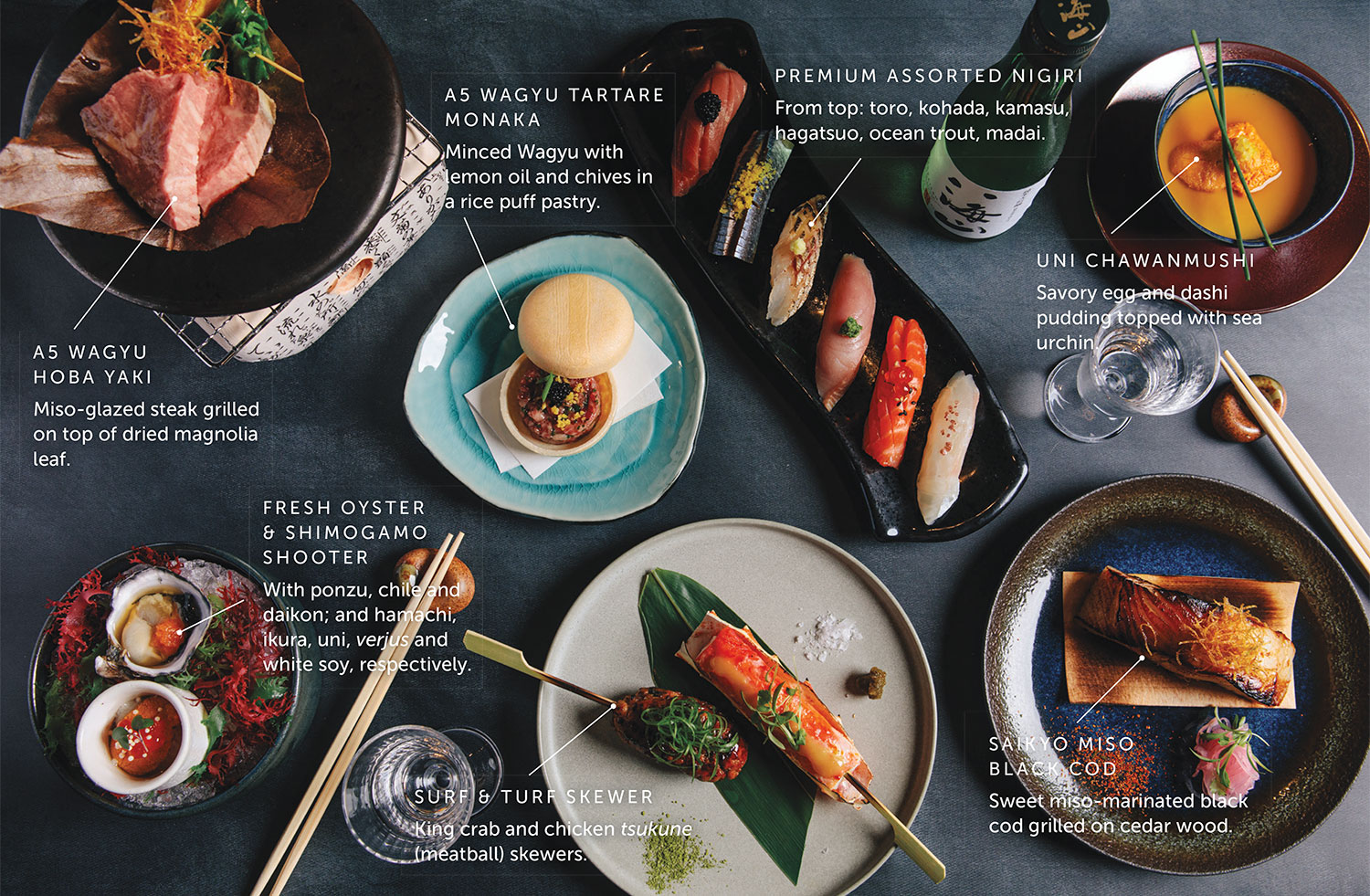
Derived from the Japanese verb makaseru (“entrust”), omakase obliges the diner to “trust” the sushi chef to create an off-the-cuff menu of the day’s best ingredients. It has also come to mean elegant and pricy multi-course tasting menus founded upon seasonality and rare ingredients – à la this masterpiece from Chandler sushi palace Shimogamo (shimogamoaz.com).
Chef Chat
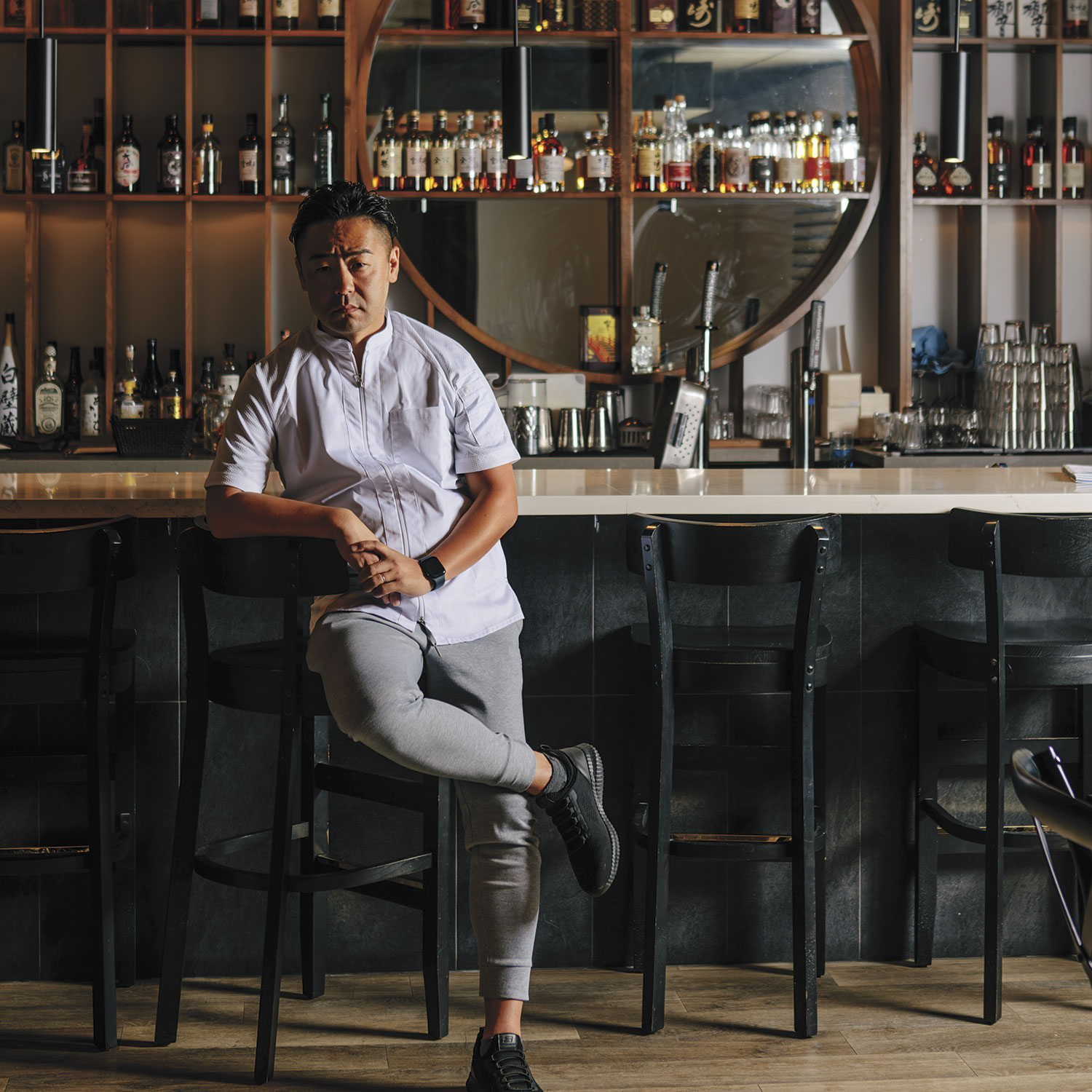
Daisuke Itagaki of Shimogamo
Itagaki, who owns Shimogamo with his wife, sommelier Mika Otomo, has taken the venerable Chandler restaurant to the next level, procuring top-quality Wagyu beef and rare fish while Otomo curates premium sake.
Shimogamo offers two types of Wagyu – Miyazaki and Hokkaido Snow Beef. Explain their differences and why Snow Beef is more expensive.
Miyazaki Wagyu is a franchised brand of Wagyu raised on various farms in Miyazaki Prefecture. Snow Beef, on the other hand, is a farm-specific Wagyu raised exclusively at Chateau Uenae in Hokkaido, Japan, a small-scale operation raising around 40 cows at a time.
So, Snow Beef is more rare?
What sets [it] apart is that the fat has a remarkably low melting temperature, resulting in a creamy texture and faster “melt in your mouth” experience. This is achieved by increasing the cows’ unsaturated fatty acid [intake]. The cattlemen at Snow Beef also minimize the cows’ stress through daily brushing and limiting the number of people who tend them.
Name a fish every sushi lover should try.
Kamasu [Japanese barracuda], a flavorful silver fish and seasonal delight, enjoyed summer and fall, when the meat boasts a desirable fat content. Toasting the skin enhances the experience, creating a blend of charred and sweet flavors. I enjoy it as nigiri.
Hello, Vegetable
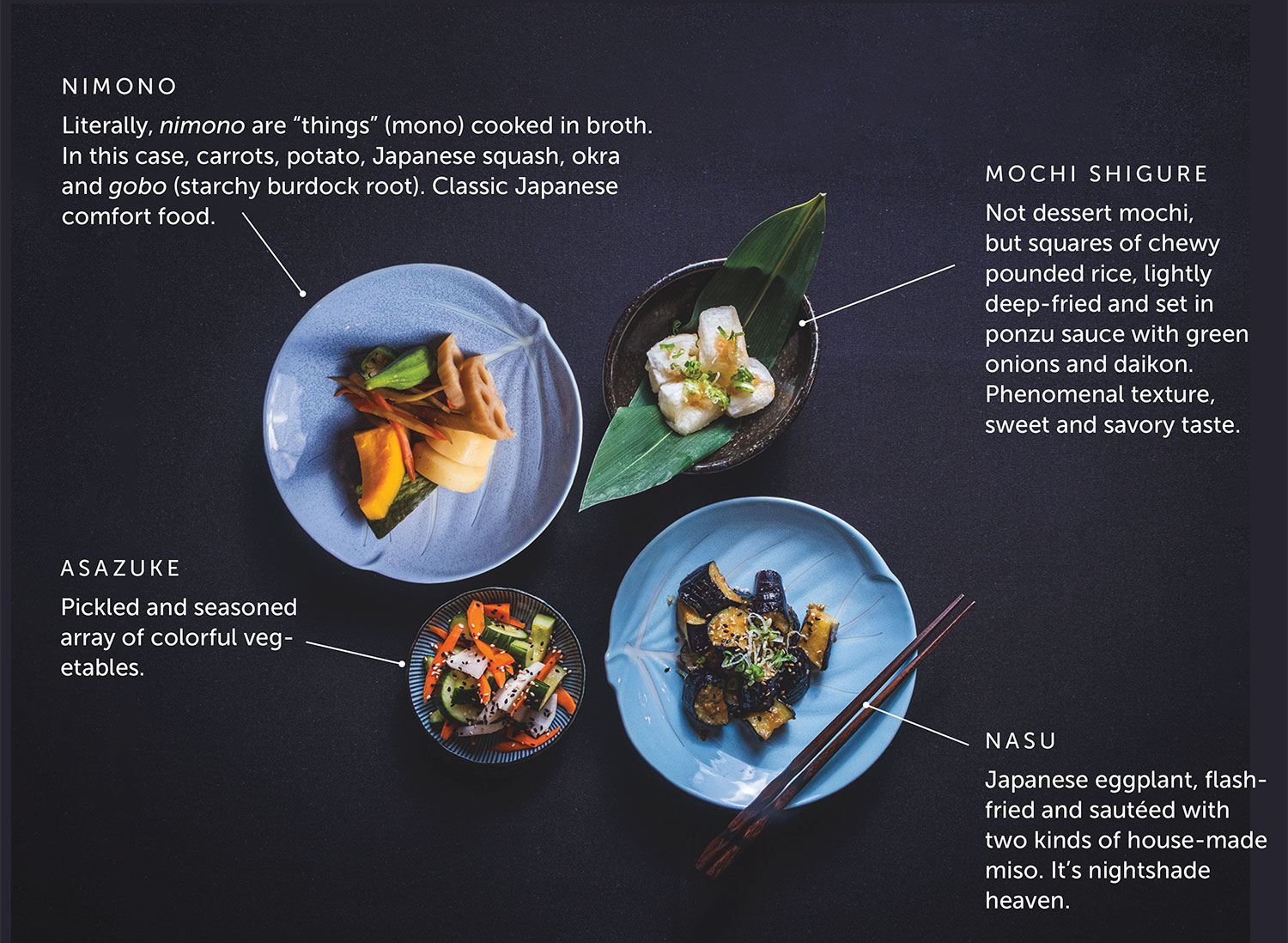
The greatness of a Japanese restaurant is not measured by its fish alone. Truly special sushi joints also tend to have thoughtful and unusual selections of vegetables and vegetarian dishes. Such is one of the many layers of appeal at Hana Japanese Eatery (hanajapaneseeatery.com) in North-Central Phoenix, where James Beard Award-nominated chef Lori Hashimoto conjures plant-based plates (below) you’re unlikely to find anywhere else.
Korea
Although Korean cuisine shares many ingredients and preparations with China and Japan (noodles, dumplings, stir-fry, rice), it has its own bold, distinctive style, frequently leaning into hot and sour flavors. Phoenix has had its fair share of Korean restaurants serving classic dishes since the late-’80s, but in the past five years, specialty restaurants dishing out Korean barbecue, Korean fried chicken and other street foods have blown up – right along with K-pop.
3 Types of Korean Eateries in the Valley
Korean Barbecue
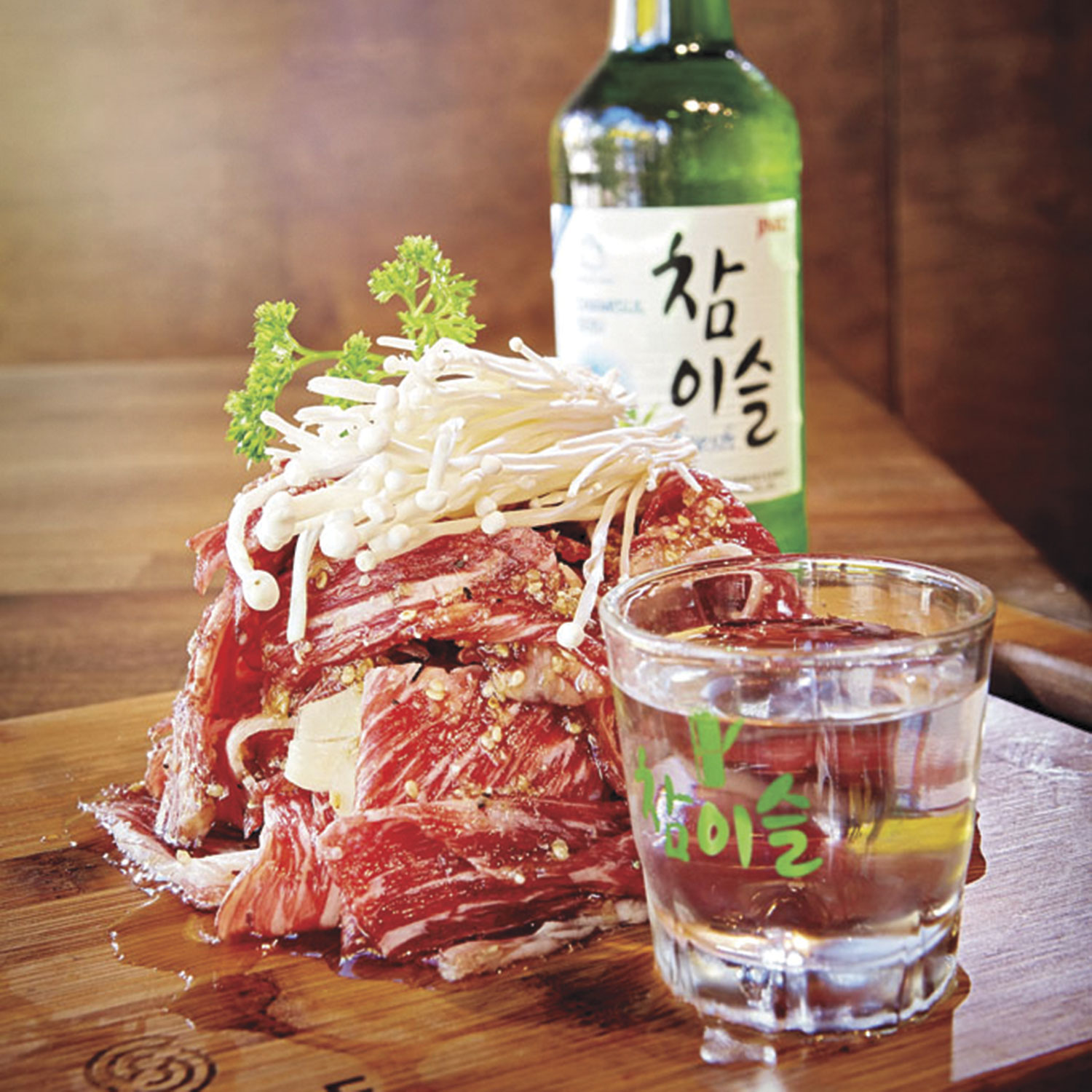
Carnivorous DIYers have a field day at these (generally high-end) places, cooking various beef and pork cuts on gas grills built into the dining tables. Accompaniments include rice and banchan (dainty sides of chilled pickled vegetables), kimchi (salted, fermented vegetables, commonly cabbage) and the occasional starch. Best deal? The combo packages at Jin BBQ (jinbbq.com), Sizzle Korean BBQ (sizzlekoreanbbq.com) and Smoking Tiger Korean BBQ (smokingtigerbbq.com).
Pochas and Korean Street Food
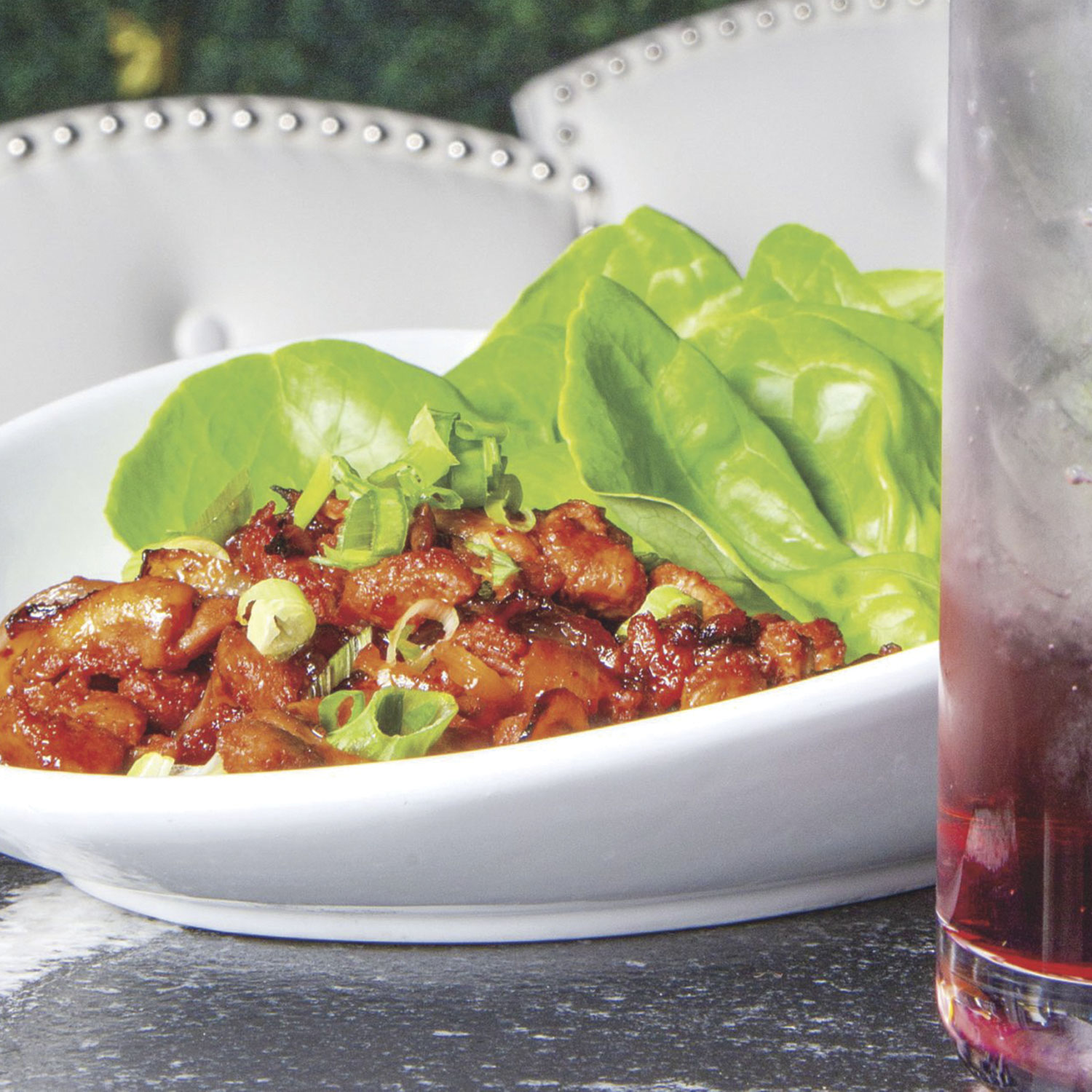
Korea’s first pojang-macha (conjoined to “pocha”) were tented street carts selling drinks and snacks. Eventually upgrading to brick and mortar, pocha are now comparable to Japanese izakaya – casual watering holes serving snacky dishes (called anju) that go well with adult bevs. Tipsy Chicken (tipsychickenaz.com) and Pocha 54 (pocha54.com) effectively emulate the genre, dispensing Korean Cass beer, soju (a neutral, vodka-like spirit), cocktails and dishes like dakgangjeong (ultra-crunchy fried chicken glazed with a variety of spicy-sweet or savory sauces) and tteokbokki (chewy, cylindrical rice cakes stir-fried with fish cake, cabbage, onions, garlic and gochujang).
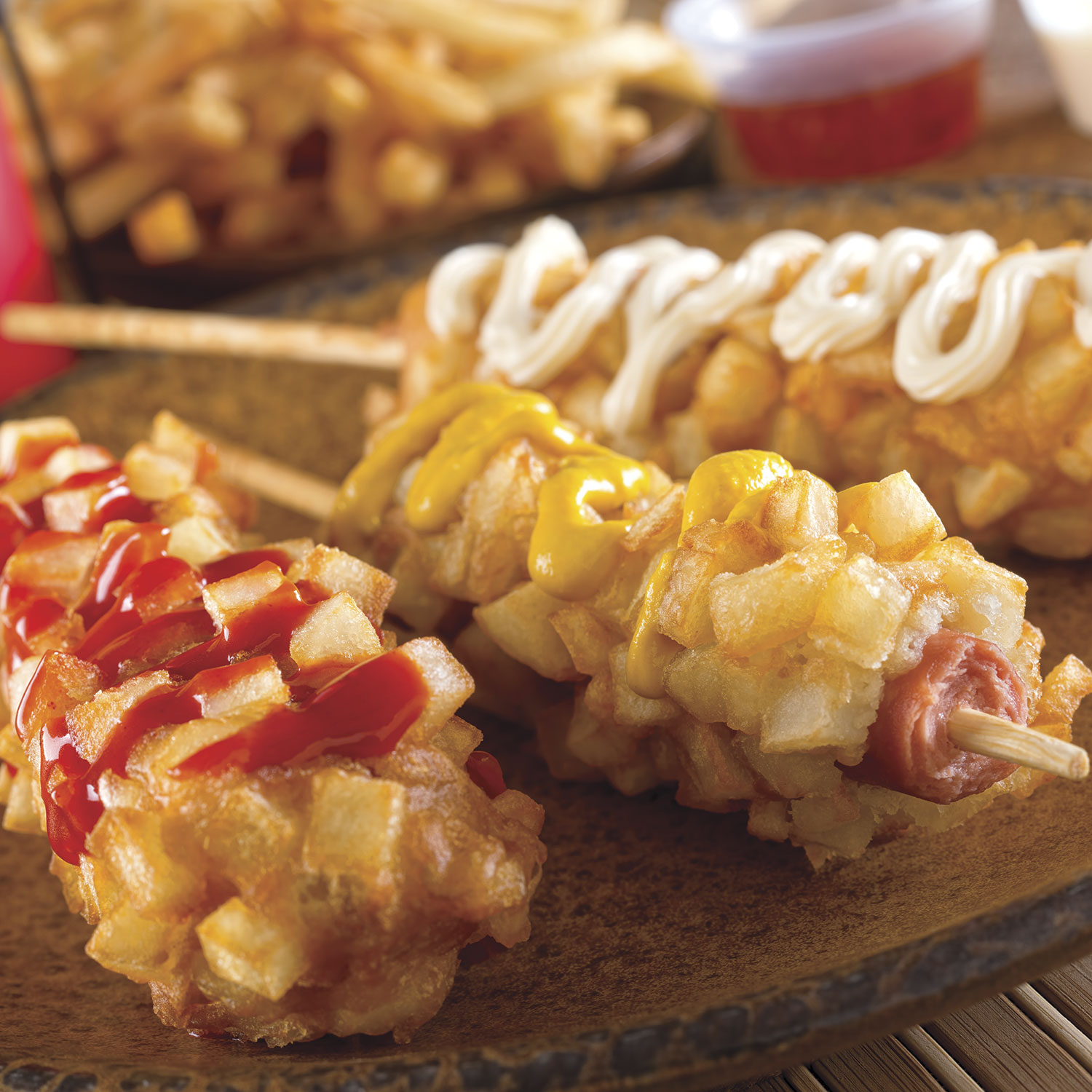
Korean Corn Dogs
Korea’s psychedelic corn dogs bear the merest resemblance to their staid American counterparts. The core of the dog might be a frank, a fish cake, a rice cake, cheese or a combo of these options, coated in crisp, sugary batter, then rolled in toppings such as french fries, crumbled dry ramen or Cheetos dust. To really gild the lily, sweet, apple-y sauces will be offered, including sweet chile and wasabi mayo. Get the real deal from Two Hands Fresh Corn Dogs (twohandsus.com) or the Korea-based chain that started the craze, Myungrang Hotdog (myungrangamerica.com).

Laos
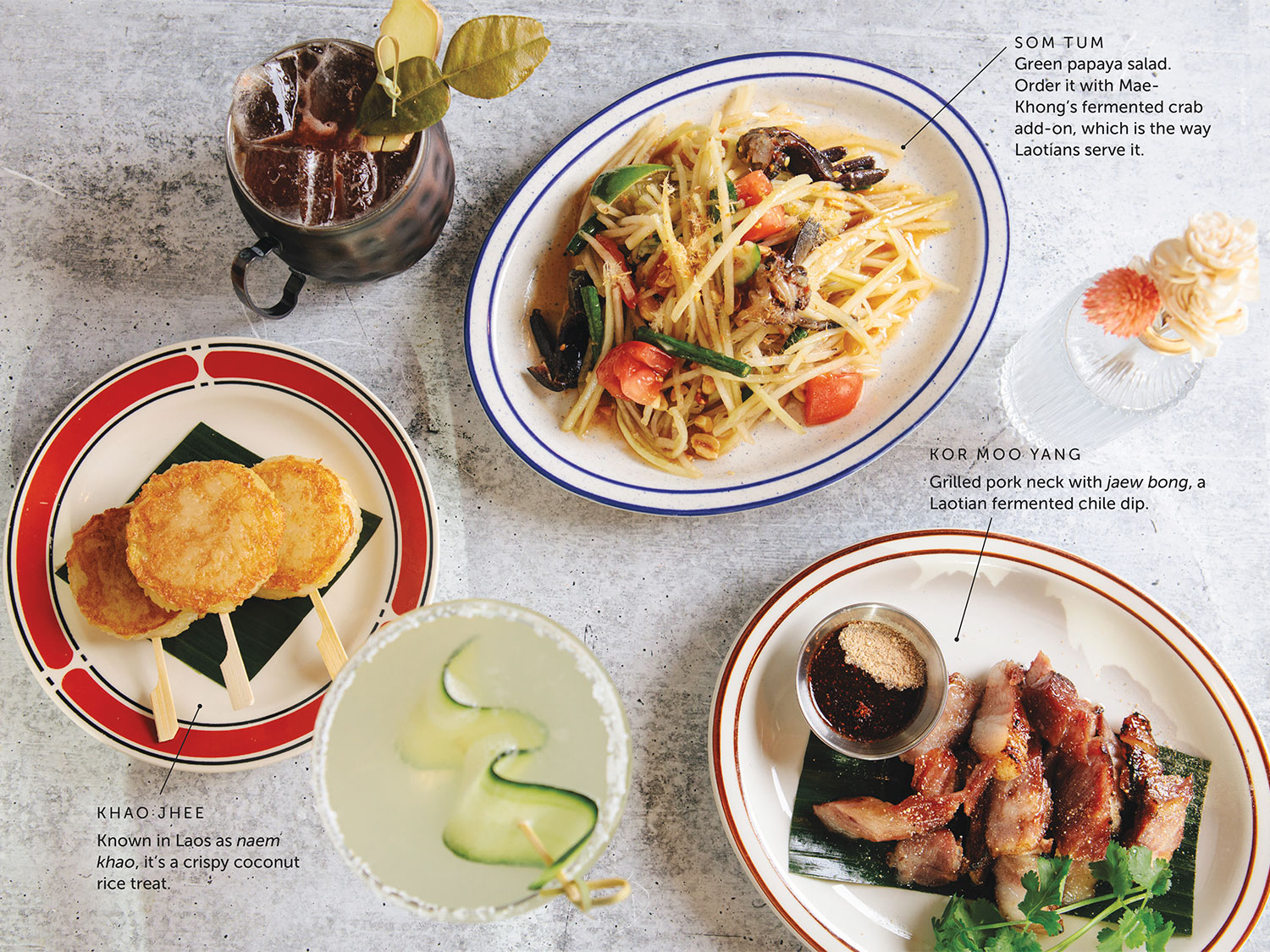
Hugging east Thailand like a BabyBjörn, Laos is not represented directly in the Greater Phoenix dining scene, but here’s a useful work-around: Find a Thai restaurant specializing in the food of that country’s Isan region, which borders Laos and shares many of the same herbaceous, vegetable-driven dishes, with only subtle differences. Mae-Khong Thai Tapas & Bar in Mesa (1649 S. Stapley Dr., 602-759-7556) is one such restaurant (see below).
glossary
jaew bong /djow-BONG]
A fermented hot-pepper dip native to Laos and the eastern Isan region of Thailand. It’s like a weaponized version of Vietnam’s nuoc cham fish sauce condiment.

Myanmar
Bordering Northern Thailand, Myanmar – still better known by its former name, Burma – shares DNA with both Thai and Indian culinary traditions, but has a bracing, freewheeling character all its own. Unfortunately, Phoenix does not have a Burmese restaurant. The best we could do: khao soi, a bodacious coconut curry chicken soup served bubbling hot at Midtown’s Thai Recipe Bistro (thairecipebistro.com), topped with a playful tangle of crunchy egg noodles. They love it in Northern Thailand, but it’s traditionally a Burmese dish, brought to the country by 12th-century Muslims.


Philippines
Perhaps more than any other Asian cuisine, Filipino food carries genetic evidence of its colonial past, from the cozidos (stews) brought to the island nation by the Spanish, to the tins of SPAM introduced by U.S. servicemen before and after World War II, still used in Manila steet cooking. Filipino cooking is rambunctious and rustic in equal measure, and there’s suddenly a lot of it in the Valley, with a wellspring of new restaurants in North-Central Phoenix, including Casa Filipina (casafilipina.com). The restaurant walked us through a few Pinoy (read: Filipino) classics (see below).
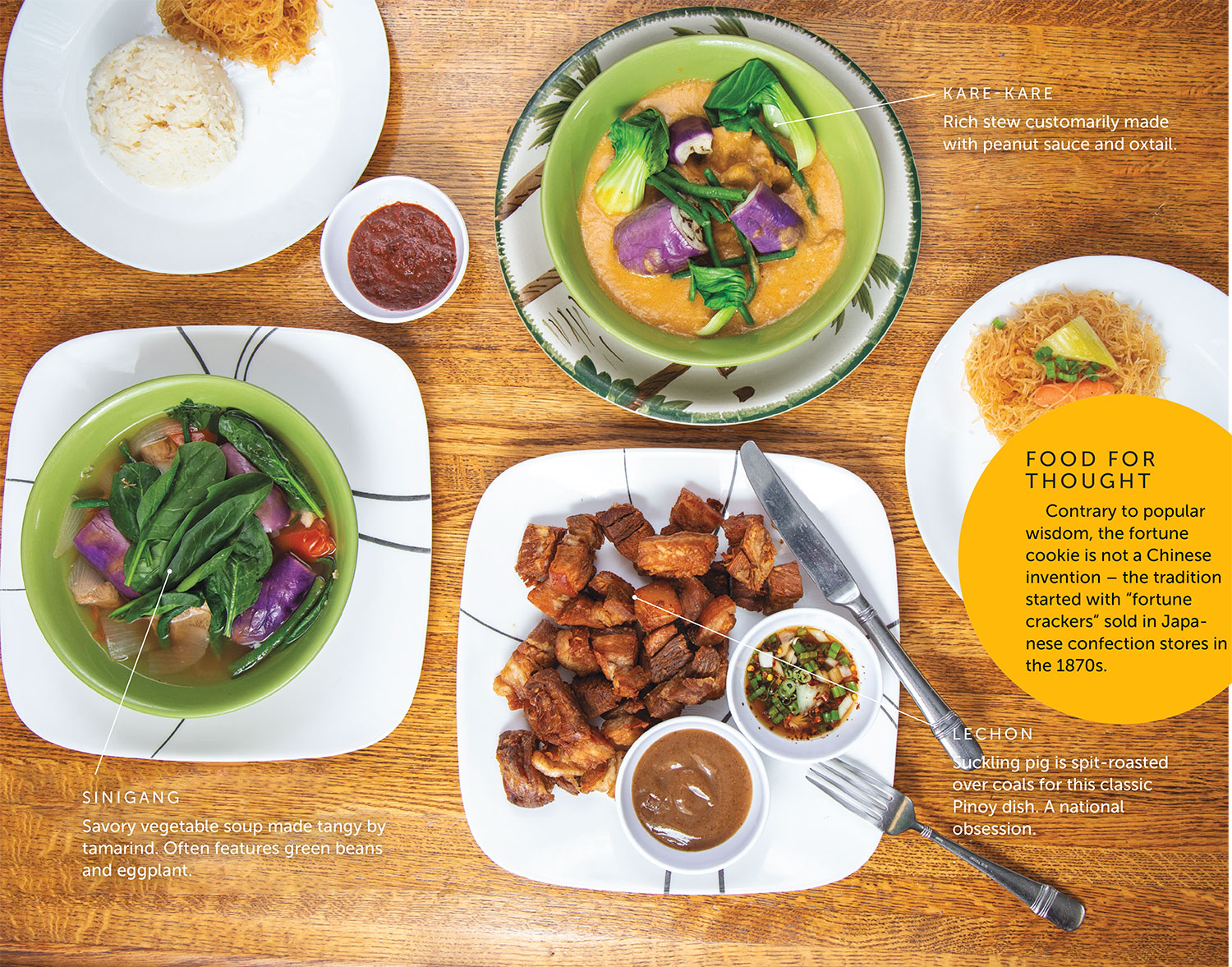
Food for Thought
Contrary to popular wisdom, the fortune cookie is not a Chinese invention – the tradition started with “fortune crackers” sold in Japanese confection stores in the 1870s.

Singapore
An international finance and commerce hub, this city-state occupies the southern tip of the Malaysian peninsula and is heavily influenced culturally by its large ethnic Chinese population. Little wonder, then, that its most distinctive dish was brought over by immigrants from Hainan in Southern China – chicken rice, a popular street staple in Southeast Asia, combining poached poultry and seasoned rice. We only found one restaurant in the Valley that does it: Midtown Thai diner Chick-a-Dee (chickadeeaz.com), where it’s called khaow mun kai and comes out mild, supple and refreshing.

Taiwan
Inhabited by the Hakka of Southern China, the Chinese from Fujian province and the Japanese who colonized the island for 50 years, Taiwan and its distinctive cuisine are a delicious hodgepodge of influences. The Valley’s lone Taiwanese restaurant, Pop Pot & Tea (poppotaz.com) in Chandler, deftly demonstrates the style, offering 20 hot pots – giant, burner-flamed pots of bubbling broth, filled with meat, seafood, noodles and vegetables in endless variation. Meanwhile, crispy nuggets of popcorn chicken, aromatic with five spice, make heavenly little bites; as do fragrant, juicy Taiwanese sausages. Cured, deep-fried century eggs – rich, salty and gelatinous – express centuries-old tradition, while sweet, creamy boba (a tea-based drink filled with tapioca pearls) is Taiwan’s modern contribution to the food scene.


Thailand
These are exciting times for Thai food fans in the Valley. 2017 witnessed the opening of Midtown Thai jewel Glai Baan, where chef-owner Cat Bunnag trained a skilled light on the cuisine of Chiang Mai, Isan and other realms of Thai cooking previously unexplored in Valley restaurants. She was followed by Alex and Yotaka Martin at Lom Wong in Roosevelt Row and Thomas Samuel at Mesa’s Mae-Khong Thai Tapas & Bar, two more regionally focused Thai restaurants that reach well beyond the noodle-and-curry norm. We can’t wait to meet the next trailblazer.
Map It: Thailand
Where to find regional Thai culinary treasures in the Valley.
1. Northeast/Isan
Herbaceous, bold dishes rule the day in Isan and constitute much of the menu at Mae-Khong, from tender kor moo yang (pork skewers) to spicy larb moo (minced pork salad) all served with khao niao, Isan’s famed sticky rice.
2. North/Chiang Mai
Also known as Lanna cuisine, it has several capable Valley practitioners, including Lom Wong, where a densely flavored, jerky-like beef called jin tup is known to grace the menu.
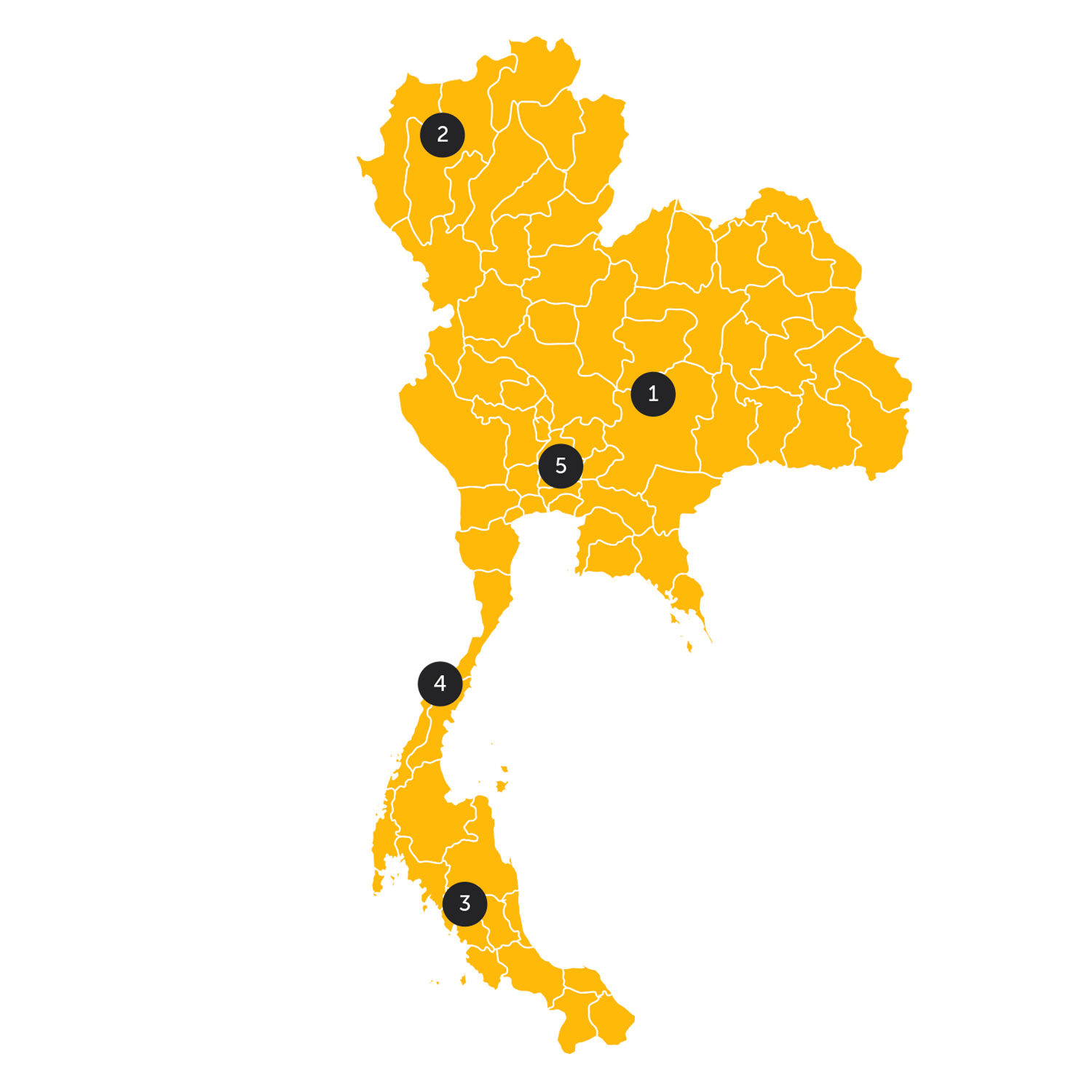
3. Southern
Brought to Thailand by Muslim traders, clove-y. cumin-y massaman curry typifies southern cooking. Mae-Khong faithfully serves its blue-ribbon version on the bone.
4. Coastal/Moklen
Lom Wong runs a virtual monopoly on the esoteric food traditions of the coastal Moklen people, with dishes like chu bai neung boo wak – unnervingly tender squid in a magical, minty chile vinaigrette.
5. Central/Bangkok
All culinary roads in Thailand eventually lead to Bangkok, but the city has its own distinctive cuisine, as well. Glai Baan runs a Bangkok street-food clinic, including tom yum moo soup, a bonanza of tang and lime with minced pork and long, slurpable tangles of vermicelli.
glossary
ab ong or /ahb ONGH oor/
A Northern Thailand dish of roasted pork brains, cooked in banana leaf until it has the texture of pudding. Not on any Valley menu we know of.
Chef Chat
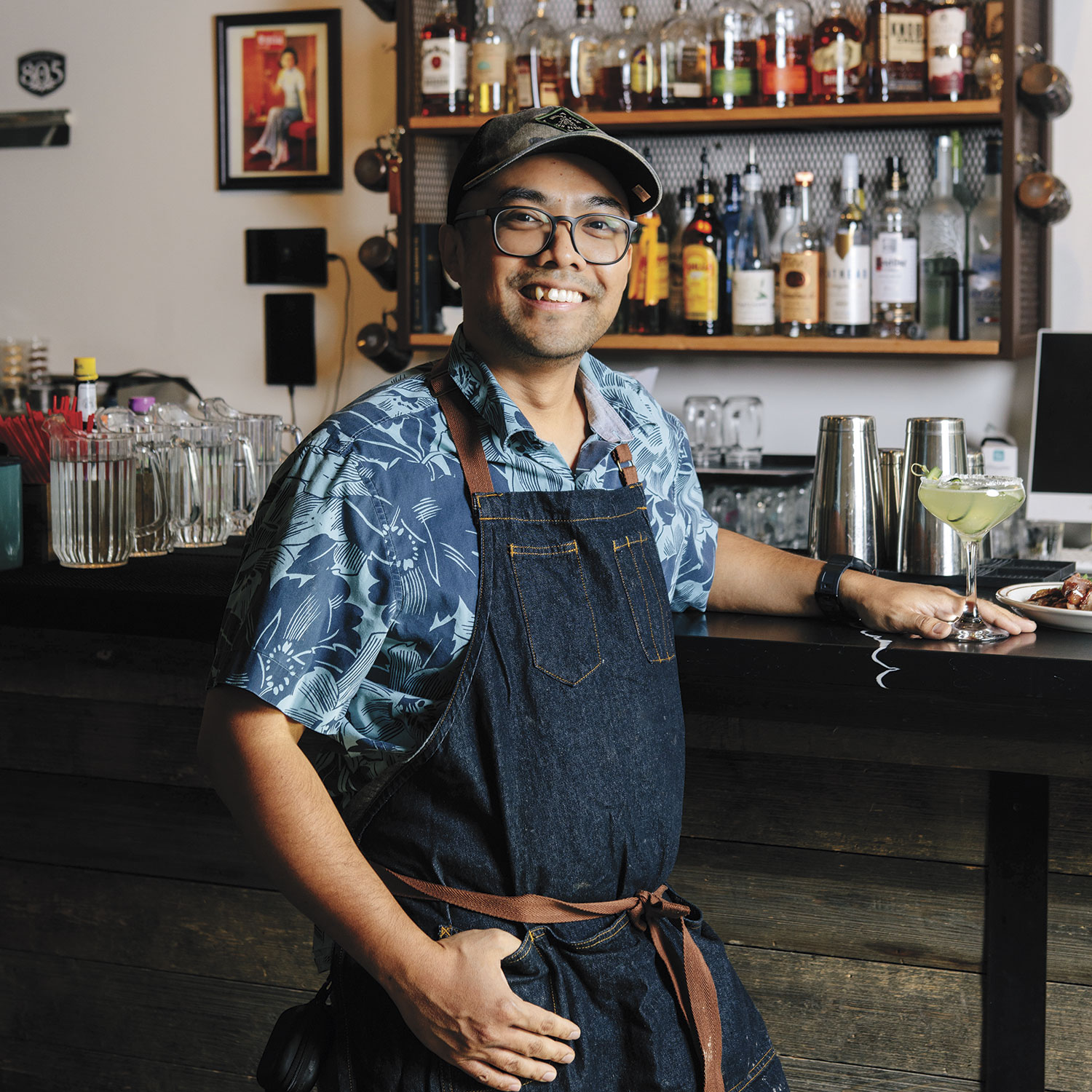
Thomas Samuel of Mae-Khong
After moving to the U.S. with his parents two decades ago, the Thailand native cut his teeth in restaurants in New York City, learning to cook and manage. Two years ago, he moved to the Valley specifically to open Mae-Khong Thai & Tapas in Mesa – sensing that Greater Phoenix was ready for a modern Thai gastropub built on old culinary traditions.
You specialize in food from the isan region. What is the quintessential Isan dish?
Well, papaya salad (som tom) is No. 1, followed by the curry-paste chicken (gai todd)… traditionally, it’s grilled, but [we] do it fried and served with sticky rice. And then tom zap soup… in Thailand, it’s more exotic, made with beef intestine. We use pork rib and a chicken recipe.
Are locals generally receptive to your less familiar dishes? the more exotic ones?
It’s taken a ittle bit of training and explaining. Sometimes they don’t get it, and we did add some things to the mainstream menu [for them]. For instance, yellow curry, just to have an additional item on the menu for people who aren’t used to Thai food, and kids.
Is yellow curry not a big thing in thailand?
To be honest, in Thailand, yellow curry is enjoyed differently… it’s derived from Malaysian food and southern Thailand. [America’s] is sweeter and has potato… but in Arizona, it’s very popular.
Vietnam
A wave of émigrés carried Vietnamese cuisine into the Valley in the 1970s and 1980s – including one restaurant, Da Vàng in Phoenix, that became a favorite of Senator John McCain, who developed a fondness for the restorative broths and bright flavors of the country’s cooking while imprisoned by the Viet Cong. Today, Vietnamese cuisine remains one of the cornerstones of Asian dining in Greater Phoenix, with neighborhood pho and banh mi shops the norm.
Map It: Vietnam
Where to find regional Vietnamese culinary treasures in the Valley.
1. North
Most of the Vietnamese dishes recognizable to workaday Americans – including pho (noodle soup) and bun thit nuong (vermicelli with grilled pork) – hail from the frugal, monastic north. A deeper cut: bun rieu (crab noodle soup), served cue style at Que Hong (quehuong.vietuy.com) in Central Phoenix with fried tofu, tender spare ribs and tomato.
2. Central
Largely anchored to the royal city of Hue, central Vietnamese cuisine is refined and bold. Dishes include bún bò Hue (spicy beef soup), paired with a crispy egg roll at Pho Viet (orderphovietvietnamese.com) in Glendale; and banh xeo (crispy egg pancakes), stuffed with caramelized grilled pork at Song Lynn (songlynn.com) in West Phoenix.
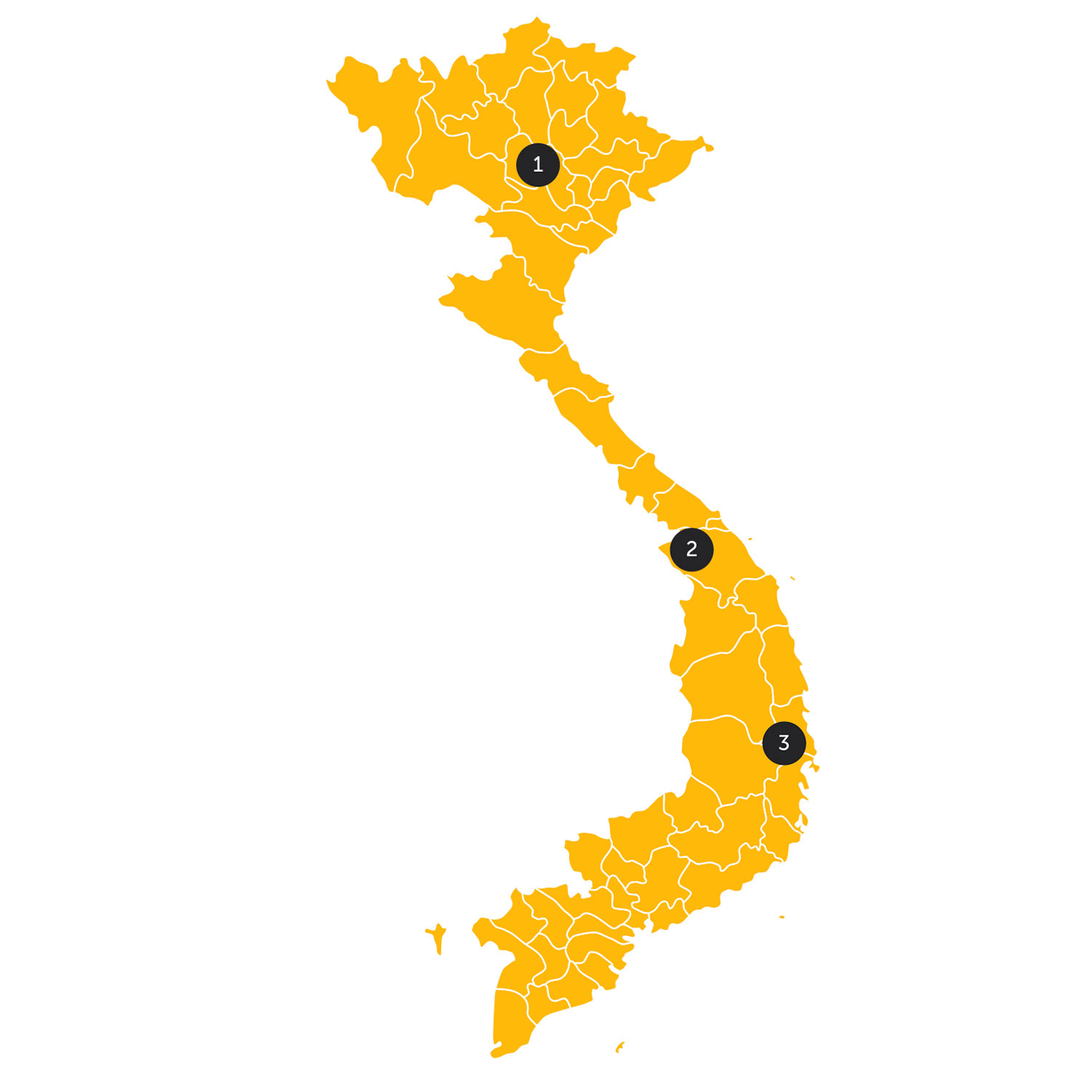
3. South
Though most Vietnamese-Americans trace their lineage to the south, it’s the least-represented style in the U.S. One exception: the banh mi sandwich, a French-Vietnamese hybrid invented on the streets of Saigon. For more esoteric tastes: Go to Pho Gia Dinh (pho-gia-inh.business.site) in Chandler for cá kho tộ (claypot fish).
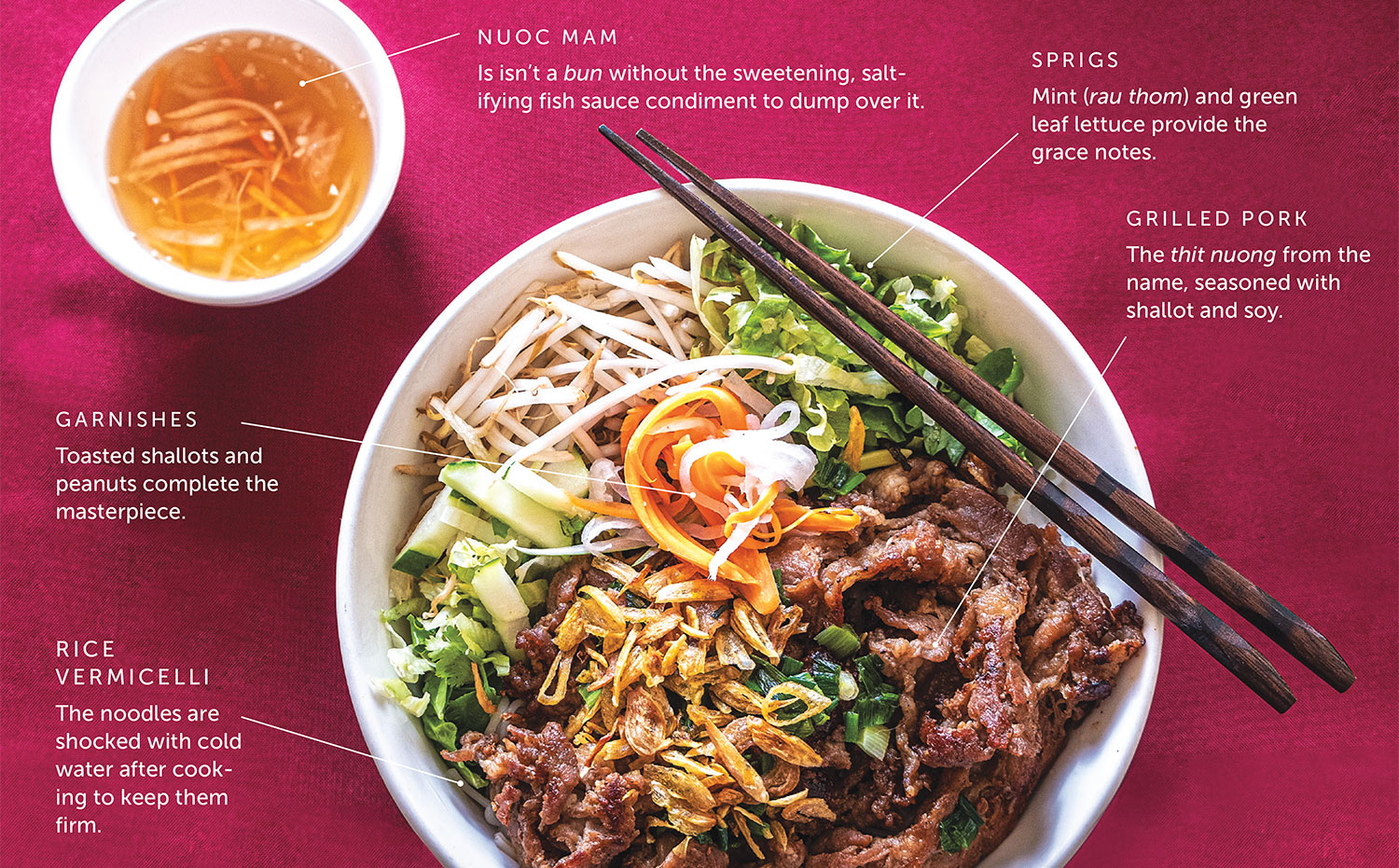
Anatomy of a Bun
Longtime Vietnamese favorite Little Saigon in Glendale has a vast, multi-regional menu you could explore all decade long, but they also excel at the standards, including bun thit nuong, that cooling lunchtime bowl of noodles, grilled meats and other goodies that pairs so well with a hot Valley afternoon. We deconsructed one. facebook.com/littlesaigonaz