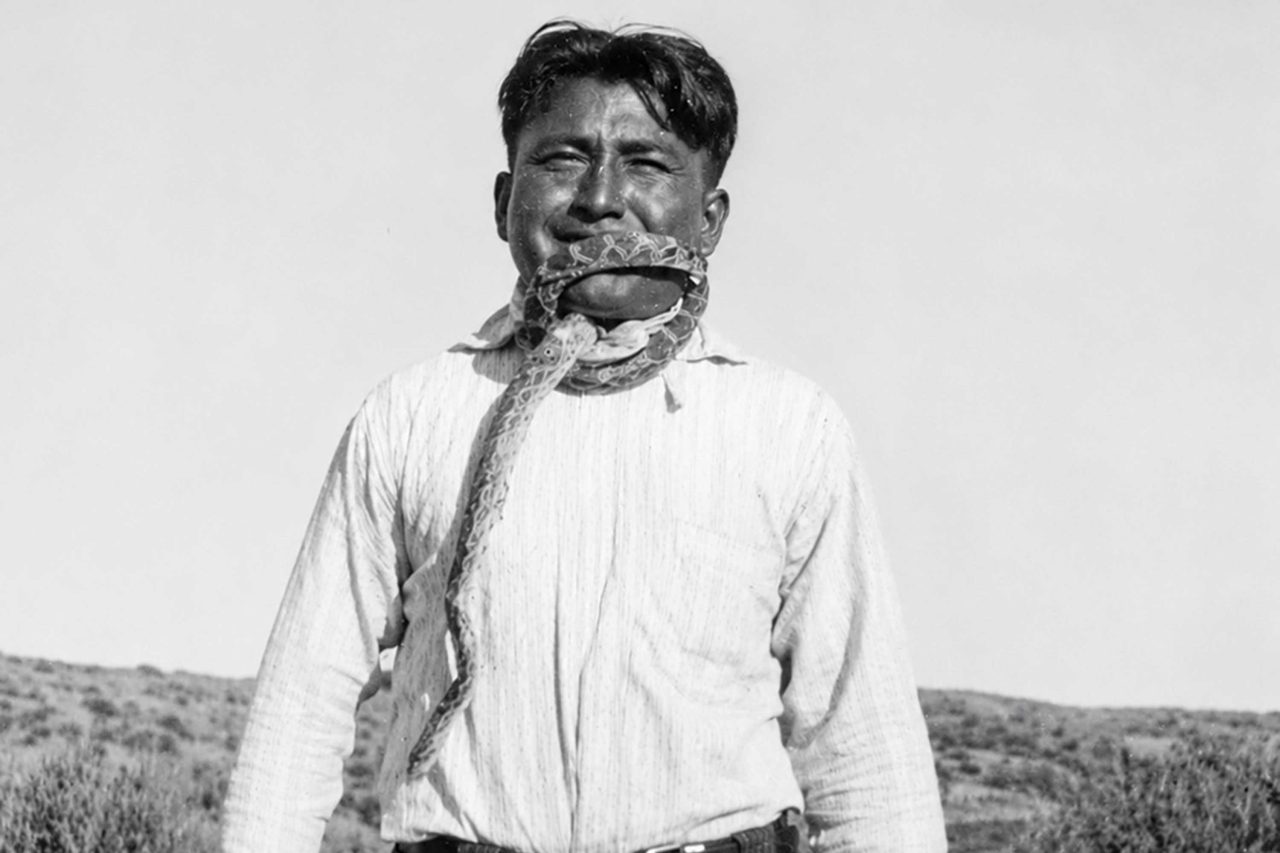
In post-war Arizona, a White Mountain Apache shaman enlisted a famed mystery author to help clear his name of a wrongful conviction.
by Douglas C. Towne
In 20th-century literature, film and television, ordinary Americans wrongly accused of crimes had a steadfast champion in fictional attorney Perry Mason, memorably played by Raymond Burr in the long-running CBS show (1957-66).
But the urge to correct miscarriages of American justice was a real one for Mason’s creator, Erle Stanley Gardner. In 1945, the author founded The Court of Last Resort, a group of talented, real-life sleuths who re-examined questionable verdicts pro bono for incarcerated people who reached out for help.
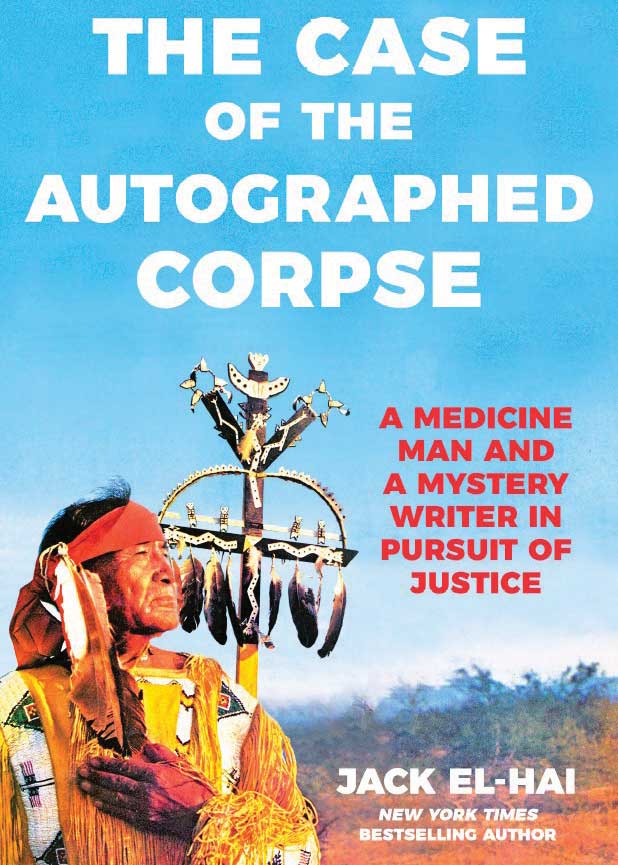
Among the many compelling letters Gardner received at his home in Temecula, California, was one from a 64-year-old incarcerated Native American medicine man named Silas John Edwards. Almost two decades prior, in the 1930s, Edwards was tried and convicted of murdering his wife – largely on the basis of handwriting he allegedly left at the crime scene. Despite the grisliness of the murder, Gardner was intrigued and agreed to examine the case. “If I were writing of this case as a work of fiction, I would call it The Case of the Autographed Corpse,” he later wrote in the magazine Argosy.
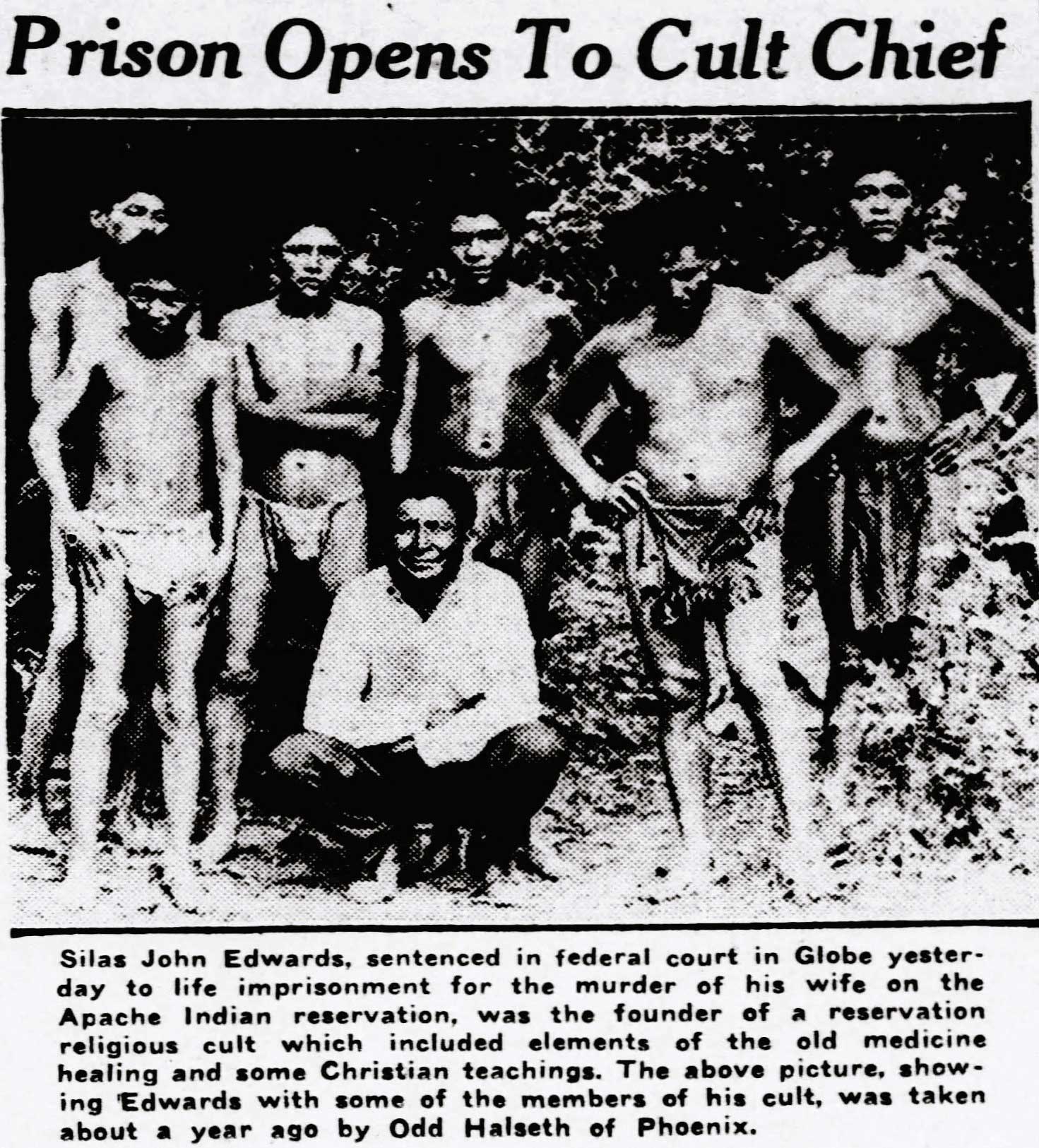
Born in the 1880s, Edwards was known as a charismatic healer on the Fort Apache Reservation. Which isn’t to say he was a spotless citizen. Variously jailed for assault, domestic abuse and selling liquor, Edwards was known to tribal law enforcement as a troublemaker during the Depression years. The authorities were also skeptical of the Holy Ground religious movement Edwards led, which featured days-long healing ceremonies sometimes involving rattlesnakes.
Then came the fateful day in 1933, when his wife was found with her skull bashed in by a rock allegedly bearing Edwards’s initials. He was quickly arrested and, later that year, tried for murder in federal court in Globe.
The prosecuting attorney stated that Edwards committed the crime “so that he might marry a younger and prettier Indian woman,” according to an article in The Arizona Republic. The newspaper labeled Edwards the “Miracle Man of [the] Apache,” who performed amazing cures as the founder of a cult blending Native American and Christian beliefs. “Indians, Mexicans, and even whites went to him seeking relief from their ills.”
Despite only circumstantial evidence, a jury returned a guilty verdict, and Edwards received a life sentence in a State of Washington penitentiary. “In the end, the jury had accepted the prosecution’s contradictory claims: first, that Silas John wanted to rid himself of his wife so he could have uninterrupted time with Belle James [his mistress], and second, that he left his initials at the murder scene, raising the odds that he would spend the rest of his life in prison without James’s company,” wrote Jack El-Hai in The Case of the Autographed Corpse: A Medicine Man and a Mystery Writer in Pursuit of Justice, a definitive account of the case that will be published this fall.
It would be 17 years before Edwards contacted Gardner, a literary giant who had a remarkable backstory. The Massachusetts native was a precocious young man who, at age 22 in 1911, passed the California bar exam without attending law school. “I have built a law practice in which I am dealing with… clients of all classes except the upper and middle class,” Gardner wrote, according to El Hai’s book.
He thrived on unorthodox courtroom strategies to aid defendants, often immigrants who were targets of racism. Still, Gardner felt unfulfilled and turned to writing fiction, a move that proved initially challenging. “It was like trying to sign my name with my left hand,” he said. “I knew what I wanted to do, but for the life of me, I couldn’t do it.”
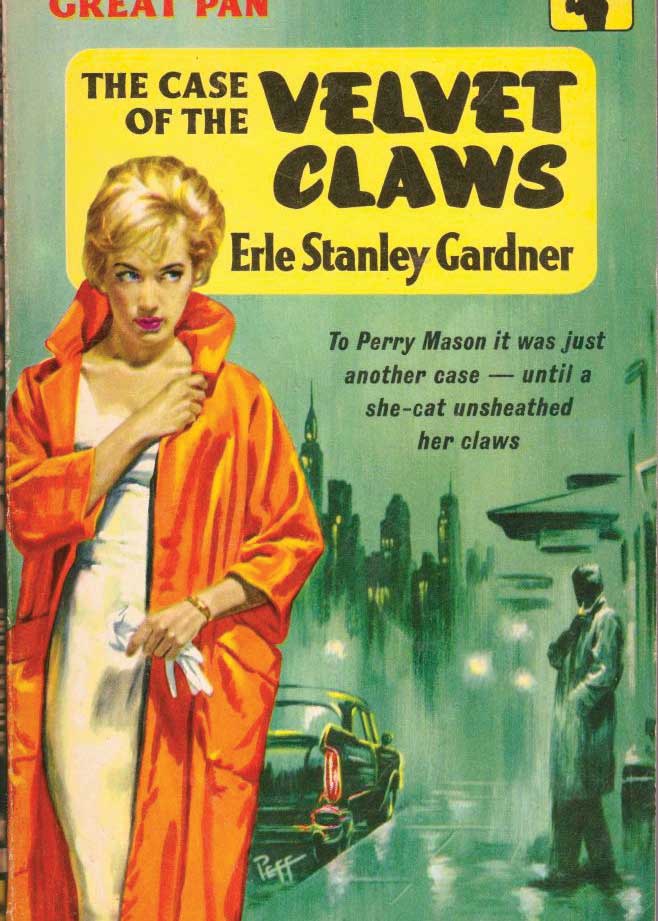
Still practicing law, Gardner initially focused on stories for pulp magazines but soon began churning out books. He recorded the first of his 82 Perry Mason novels, The Case of the Velvet Claws, on his Dictaphone in four days. In that 1933 novel, Mason explained his raison d’être: “I take people who are in trouble, and I try to get them out of trouble.”
Edwards’ case certainly met that standard. The jailed mystic had long campaigned for his innocence and sought parole, most prominently through a 1940 petition signed by more than 700 Native Americans, including the victim’s mother and sister, but without success. So he turned to Gardner, in 1951, writing, “I am at a loss as to where to turn for assistance to rectify the gross injustice that has been practiced upon me.” He noted flaws in the prosecution’s case and that a tribal council recommended his release.
After Edwards was transferred to a prison near Wickenburg, Gardner visited him and asked about his initials inscribed on the murder rock, which the prosecution had alleged were consistent with a tribal tradition meant to prevent a victim’s soul from seeking retribution. “That is no custom to appease the spirit of [the] departed,” Edwards responded. “But it is a very fine custom by which somebody can frame a killing on somebody else.”
“These two men came from different worlds, but there was an instant spark of commonality,” El-Hai tells PHOENIX. “They liked each other, and it meant a great deal to Edwards that Gardner had traveled to meet him and listen to his story after so many years in prison.”
Gardner researched the case in Globe and Whiteriver, interviewing Edwards’s attorney from the 1933 trial and tribal members. “The evidence which convicted him was pathetically inadequate as well as absurd,” Gardner concluded. He also learned that another tribal member, already in prison for murdering his wife, was likely also guilty of killing Edwards’s wife.
Convinced of the shaman’s innocence, Gardner and his literary fans lobbied for his release, which came in 1955. Edwards remarried the same year and resumed his role as a medicine man, but was never the same, El-Hai writes. “Once, he visited a woman who kept a parakeet in a cage. Silas John asked her to set it free because it reminded him of his time in prison.” He died at 95 in 1977.
In 1970, Gardner, the century’s best-selling American author, passed away at 80. His fictional legal character has grown in fame through 271 syndicated episodes of the original Perry Mason, connecting also with a new generation of fans via a four-season HBO origin series (2020-2023) starring Matthew Rhys (The Americans). Alva Johnson, who wrote Gardner’s 1947 biography, The Case of Erle Stanley Gardner, summarized the author’s influence. “The Perry Mason books have taught law to lawyers.”
Momentous Tribal Cases
These legal decisions were life-changing for Native Americans in Arizona.
- 1908: Water Rights
In Winters v. United States, the U.S. Supreme Court held that when the federal government created an Indian reservation, it implicitly reserved enough water to supply all potentially irrigable acreage. These water rights are non-forfeitable, cover future needs and, once quantified, can be converted from farming to other uses. In Arizona, this decision often gave tribes the most senior water rights.
- 1948: Voting Rights
In Harrison v. Laveen, the Maricopa County recorder prevented two members of the Fort McDowell Yavapai Nation from registering to vote, citing Arizona’s Constitution, which labeled Indians as “persons under guardianship.” The Arizona Supreme Court unanimously reversed the lower court’s dismissal of the case, thereby granting Native Americans voting rights, though many remained disenfranchised by other barriers.
- 1987: Gaming Rights
In California v. Cabazon Band of Mission Indians, the U.S. Supreme Court struck down laws that restricted gaming on Indian reservations. California officials sought to shut down Native American bingo and poker games, arguing that the games violated state regulations. The decision prompted Congress to pass the Indian Gaming Regulatory Act in 1988 to regulate gaming on tribal lands, spurring the proliferation of casinos in Arizona.