Hidden on the Baja peninsula, this gem of a golfing, diving and whale-peeping spot beckons your presence this fall.
Lovely aquamarine water to your left notwithstanding, you might feel a tug of recognition driving south from the airport to your hotel room at Villa del Palmar at the Islands of Loreto (villadelpalmar.com).
You’re Valley folk, after all, and Loreto is not un-Valley-like. Nestled up against the Sea of Cortez on the lower half of the Baja California peninsula about 250 miles north of Los Cabos, this Mexican mission-era fishing town and retiree haven is, like Phoenix, set on a rolling desert basin between two smallish, handsomely jagged mountain ranges. Like our mountains, Loreto’s are geological mutts – granite mixed with quartzite, volcanic basalt and the odd flash of red sandstone. Lots going on, visually.
“They’re called Sierra de la Giganta,” the driver says, motioning to the larger, inland range – so named because they look like sleeping giants buried under the earth, he explains.
The other range? Those are islands, of course – five impressive specimens of varying mass that blast out of the sea so close to shore, you can row to them.
Cruising along Baja’s storied Federal Highway 1 into the shrubby Loreto foothills, you’ll notice other echoes of home, including many of the same desert critters (roving families of javelina are not uncommon) and flora (barrel cactus, prickly pear, ocotillo, et al). Even the dominant cactus around here, the Mexican giant cardón, does a halfway decent saguaro impersonation if you can look past its more-numerous, more-straight-up arms.
Yes, it all looks a lot like Phoenix – if someone unleashed an ocean into it.
And that’s key, because the tranquil Cortez offers Arizona travelers a year-round menu of diversions and delights you can’t find back home, including whale watching, deep-sea fishing and shockingly good diving and snorkeling – the best diving and snorkeling you can find within a two-hour flight from the Valley of the Sun, in fact.
“Your resort has a very nice golf course, too,” the driver, who says he also enjoys an occasional scuba, tells his passengers as he rounds a curve and descends into a gated cove called Danzante Bay. “Very nice views.”
We have nice golf in the Valley, too – but once the water comes into view, you suspect this round might be a bit different.
Playing the Palmar
“Hey, don’t sweat it,” TPC Danzante Bay golf pro Danny Garcia tells his instructee after the latter’s third or fourth drive on the fabled 17th hole disappears into the sea. “It happens all the time. Sometimes I take a kayak out there and scoop up all the balls.”
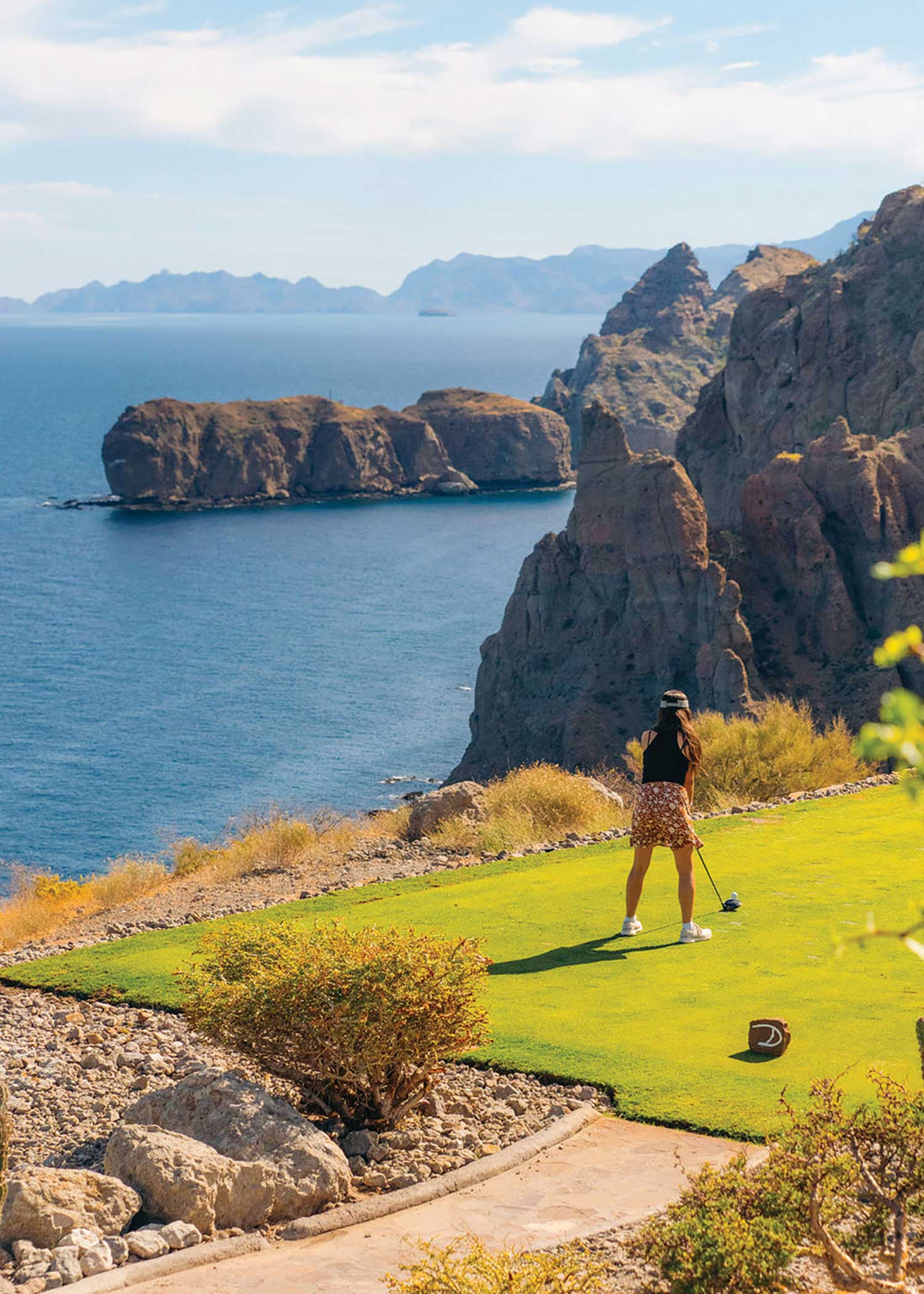
The culprit: iffy club angle, probably. But also the fact that the “fairway” is a scant, grassy flattop on a horseshoe cliff overlooking the water, ending in a slim oblong green. You face this spectacular tableau from a tee-box higher up on the cliff.
The par-3 is spectacular to look at but a nightmare for mediocre golfers. Plop, plop, plop. One Titleist sacrificed to the sea gods after another.
Scaped into the rocky foothills around the Villa del Palmar, the TPC is exhilarating to play, even for a bad golfer. It’s as if someone carved a golf course into Piestewa Peak, with a new, surreal scene of grass, rock and panoramic perspective around every curve of the cart path. If you want to work on your game, Garcia is a joy to learn form – a fit, genial 60-something Californian who moved to Loreto 10 years ago to tutor at the TPC, with a swing as smooth as butter. Just try not to hate him when he reveals that he didn’t pick up golf until age 28.
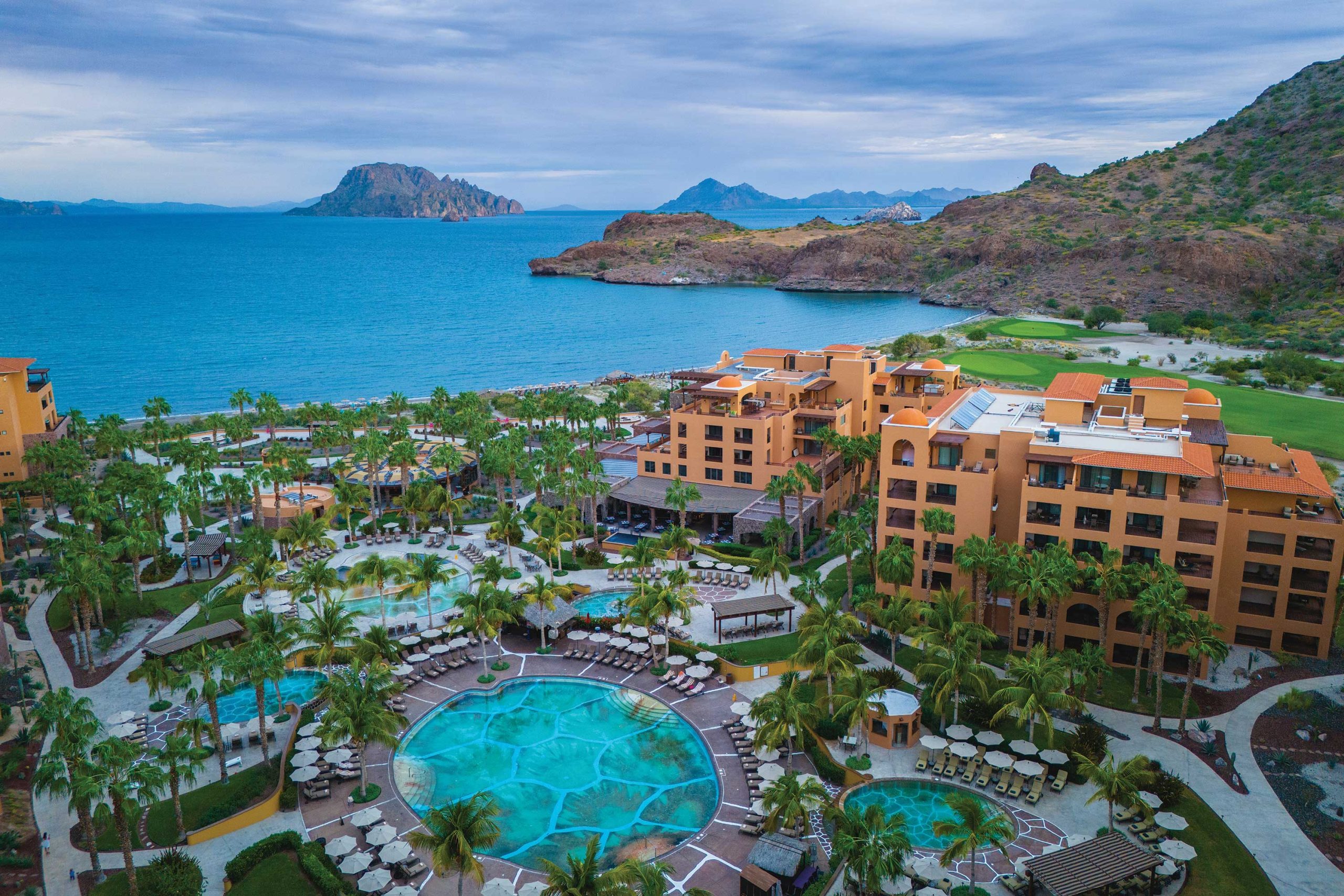
How else does one enjoy this coastal slice of Baja while staying at the Villa del Palmar, non-golfers might ask? Well, where to start? Built and opened in 2011, with a $42 million expansion in 2021, the 181-room, all-suite hacienda-style resort sits on one of Baja’s loveliest azure coves, framed by a wide, sandy, crescent-shaped beach. Located within a few steps from the resort’s massive pool plaza, the cove has a terrific, thatch-roofed beach bar along with a nearby activity shack for kayak loaners – which you’ll need, obviously, to retrieve your golf balls.
Part of a family of comfort-class Mexican resorts with properties in Puerto Vallarta, Cancun, Cabo San Lucas and Riviera Nayarit, the Villa del Palmar is also equipped with four sit-down restaurants, including Danzante (a fine-dining restaurant with a flash menu of Kobe steak cuts and daily-catch tiradito) and Casa Mia, a pool-side, open-air spot for pizza, tacos and sandwiches.
For clarity: The resort is secluded. No neighbors next door, no Cabo-style toot-toot body-shot bars across the street. So even if you don’t select the all-inclusive option – which appears a rather good deal, adding roughly 30 percent to your nightly room bill, starting at $358 in the fall – you’ll probably make ample use of the restaurants.
For confirmed DIYers, here’s some good news – since all of Villa del Palmar’s rooms are suites, they all at minimum have kitchenettes for simple cooking and reheating. (“Premium” suites have full kitchens.)
If you’re inclined to fill the fridge with your own provisions, a trip to the market is warranted. And that means a trip into town.
Loreto Proper
Not to moralize, but you should visit town whether you need groceries or not. No amount of resort pampering can fill the void for cultural engagement harbored by mindful international travelers, right? So plop down your $12 and take the half-hour resort shuttle to Plaza Pública de Loreto, the town’s historic main plaza and a still-bustling marketplace for its 16,000 residents.
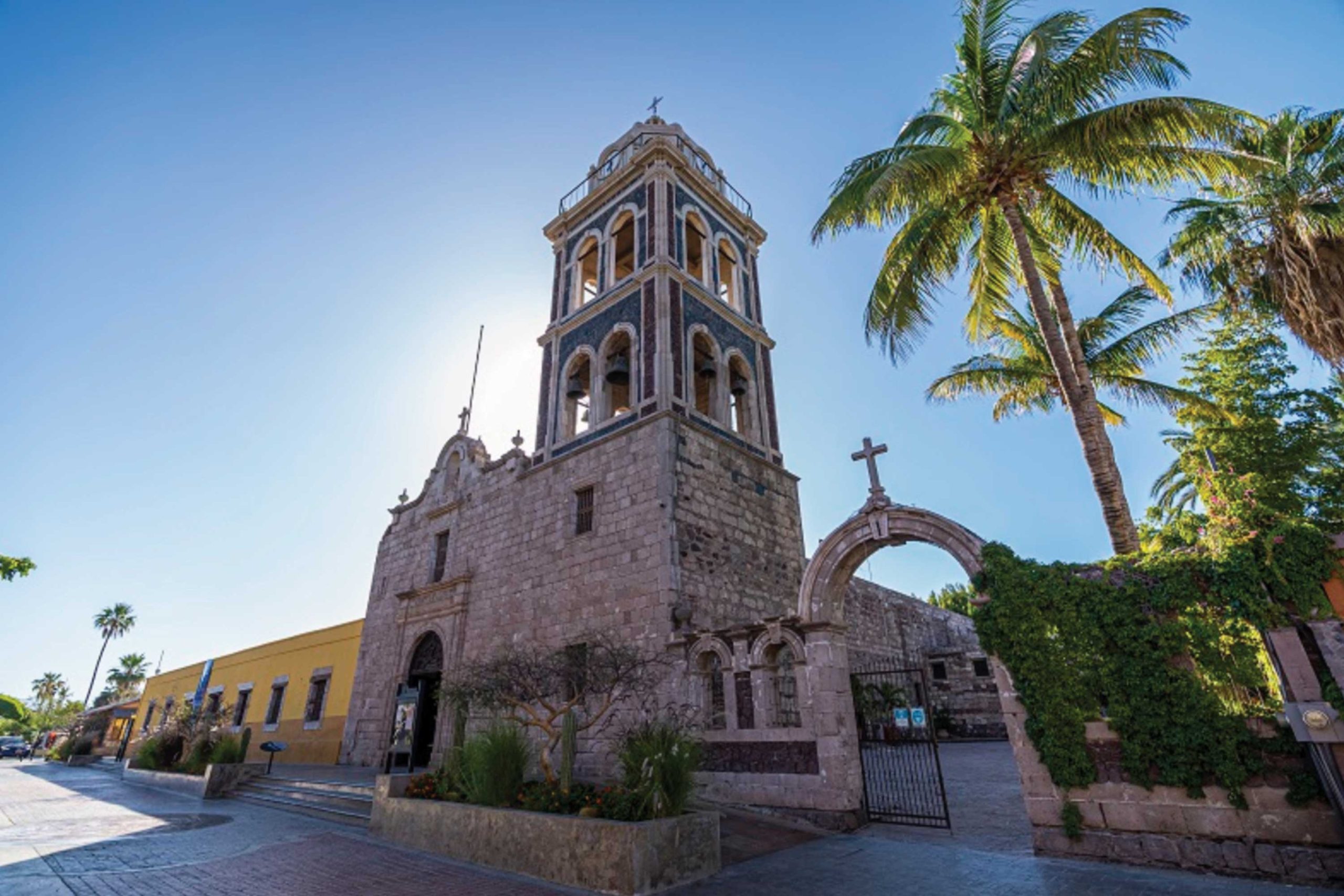
Loreto has quite the rich history. Founded in 1697, it was the first piece of Baja settled by Spanish missionaries, who quickly went to work laying down flagstone pavers and building Misión de Nuestra Señora de Loreto Conchó, the still-standing stone church where they converted the town’s 100 native Monqui Indian families to Catholicism.
With its distinctive bell tower and adjacent museum, the mission is a must-visit site in Loreto, and key to its status as a Pueblo Mágico, or Magic Town – one of 177 historical treasures thus designated by Mexico’s tourism authority. One of the provisos: No building in Loreto can be taller than the church’s bell tower.
Lined with butterfly-shaped stone pavings, Avenida Juan Maria de Salvatierra is the colonial Mexican market street of your dreams, crammed with craftspeople, art shops and jewelers. And cantinas. Take a breather from your browsing at Zapata Cantina (instagram.com/zapata.cantina), which has the best patio seating on the avenue and a pretty righteous selection of craft margaritas to enjoy while people-watching.
If you’re serious about getting something to grill back at the suite, continue down Avenida Juan Maria de Salvatierra to the beach frontage road and turn left for a short stroll to Loreto Harbor, the main marina area, where fishermen peddle just-caught snapper and sea bass out of ice coolers. If you so desire, you can line up your own fishing excursion, with one of no fewer than a dozen operators at the harbor.
If actually getting into the water is your jam, you might instead take the opportunity to hook up with Loreto Sea & Land Tours (toursloreto.com), a do-everything adventure company run by Loreto native Juve Orozco and his American expat wife, Julie. Though their dive shop is located at the marina, their main office is located near the plaza, where they stage hiking trips (including the boulder-and-rope, via ferrata-like setup at Tabor Canyon in the Gigantes), whale-watching excursions (mostly in the winter, which is peak season for whales in Loreto) and other hearty outings that typically require a learned chaperone.
Outings like exploring “the world’s aquarium,” which is what Loreto tourism officials have cleverly dubbed their piece of the sea.
The Islands
“They call it the Monkey Face,” the Sea & Land dive master says, pointing to the distinctive rock formation on Isla Coronado as the 12-man skiff splashes through a light swell, under a sunny fall sky. Others apparently liken the outcrop to Batman. You might see a French bulldog.
In any case, the calm waters under the monkey/Batman/Frenchie rock make for glorious diving and pelagic fish-peeping: leopard grouper, rainbow-hued parrotfish and amorous, shimmering schools of jacks and sardines among the sights.
As a shallow, turbid body of water that can get quite cold in the dead of winter, the Sea of Cortez is not ideal for reef formation. Cabo Pulmo near the tip of Baja is gang-busters for diving and snorkeling, but the possibilities thin out considerably as you move north.
Loreto is the last hurrah for good diving on the Baja peninsula and it’s because of Isla Coronado and her sisters. Collectively forming Parque Nacional Bahia de Loreto, aka Loreto Bay National Marine Park, the five protected islands not only give Loreto is stunning, Valley-like profile, but provide the habitat for its abundant sea life. They’re the reason blue whales, humpbacks and orcas transit close to shore in the winter, often lingering to feed and mate.
Besides tidy, squat Isla Coronado, the formation includes Isla Carmen, the behemoth of the bunch at 37,000 acres (about the size of two South Mountains back home) where local operators stage multi-day wellness retreats; more-remote Isla Santa Catalina, which functions as the Galapagos of the bunch, with singular animal and plant life you can’t find anywhere else on the planet; Isla Monserrate, admired for its white sand beaches and schools of mobula rays; and Isla Danzante, the smallest but most accessible island, set about mile from shore.
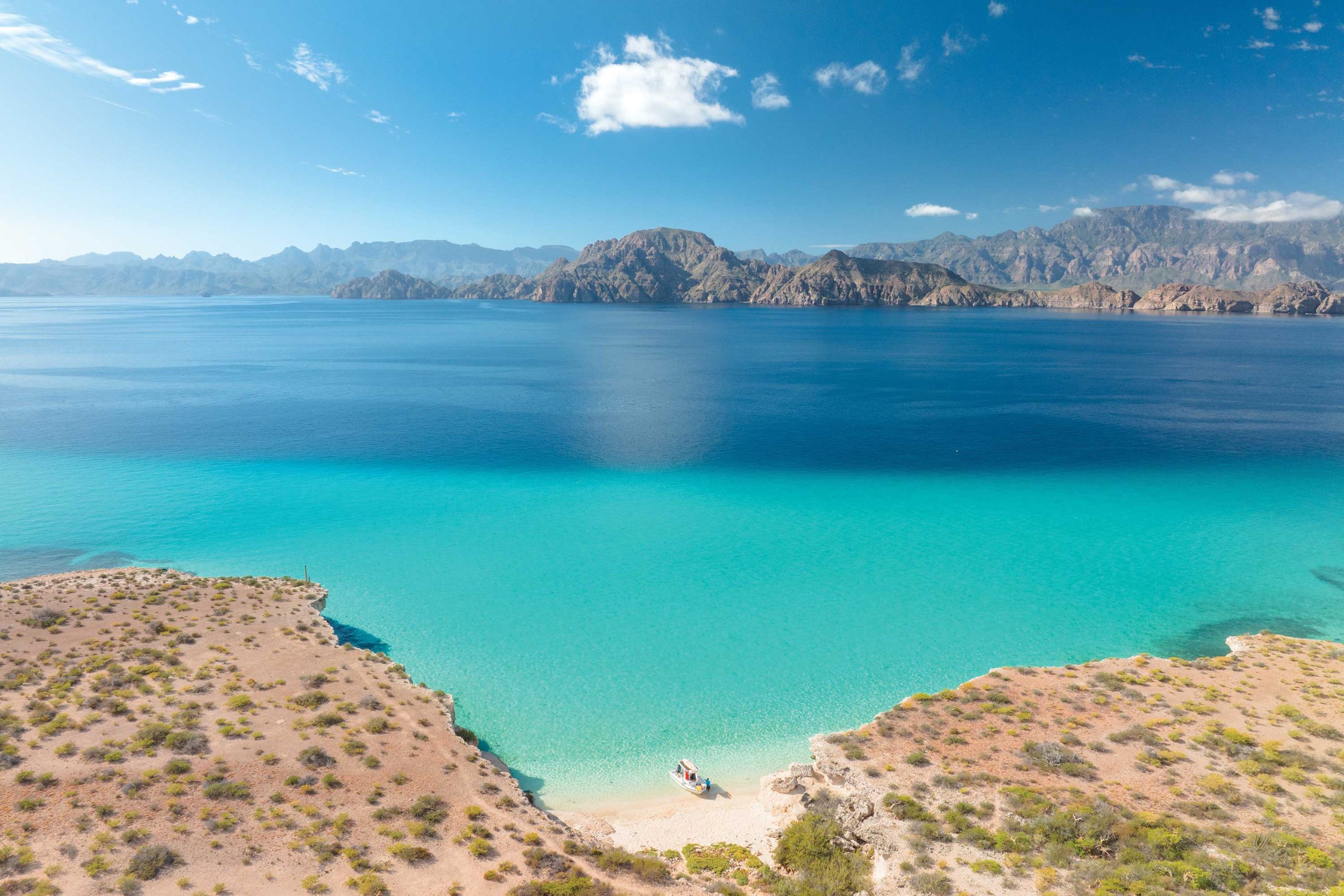
As the name might suggest, Isla Danzante looms just outside Danzante Bay and your room at the Villa del Palmar – and the activities desk at the resort will gladly book you a snorkeling excursion to the claw-shaped island, which is deliciously crannied with shallow inlets and lagoons, perfect for swimming.
And that’s how you find yourself at Honeymoon Cove, a placid turret of rock and turquoise water that resolves into an idyllic, white-sand beach. You snorkel the length of it at a leisurely pace while the boat pilot putt-putts nearby, drinking in the miraculous sealife below before climbing back on board to pop a lager and admire the waning Baja sun. After a minute or two, you dive back into the cove to snorkel the other side.
That tug of recognition is not so strong now.
When/How to Visit
Loreto climate is not dissimilar from that of Phoenix, so the answer is: Soon.
Peak season is October-November, when the monsoon stops on a dime and average high temps sit between 85-90 degrees F.
Direct daily service from Sky Harbor International Airport to Loreto International Airport provided by American Airlines (aa.com).