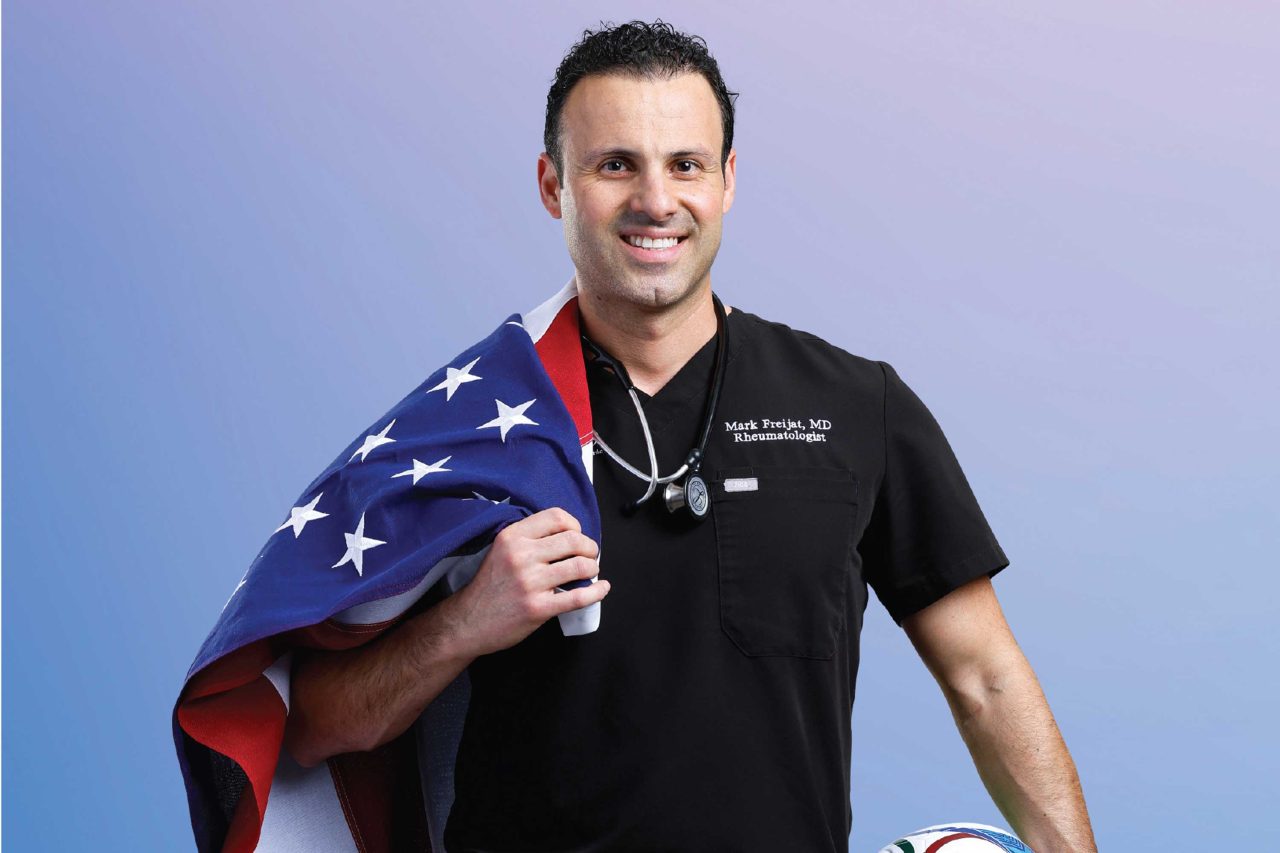
Med School/Year Graduated: University of Damascus, 2007
Years in Practice: 15
Which rheumatic conditions do you treat most often? Are any on the rise – or the decline?
We mostly see rheumatoid arthritis, psoriatic arthritis and lupus. Autoimmune conditions in general appear more prevalent due to the increased chemicals in the environment and the processed foods. Severe complications from these conditions, though, are declining with improved treatments.
In your experience, how often can rheumatism and joint inflammation be alleviated by diet and other lifestyle changes? Are medication and medical treatment always needed?
Lifestyle changes such as a healthy diet, exercise, stress management and weight control often reduce inflammation and joint pain, especially in mild conditions. However, severe autoimmune inflammatory diseases usually require medical treatment to prevent joint damage and other serious complications.
Besides arthritis and joint pain, how does rheumatism commonly manifest in the body?
Rheumatoid arthritis commonly causes morning stiffness that will last more than one hour but will improve with movement. [Sufferers will also experience] fatigue, joints swelling, soft-tissue inflammation, nerve symptoms like numbness and tingling, low-grade fever, skin changes and sometimes eye, heart and lung inflammation.
You named your Scottsdale clinic Flow Rheumatology. Tell us the story behind the name. Is there a medical underpinning?
The word “rheumatism” is originally Greek, meaning “flow.” It was used to describe various diseases causing pain in the joints. The rheumatism was thought to be caused by an excessive flow of inflamed fluids into a joint or muscle.
We understand you’re an avid soccer player and fan. Who will you be pulling for at the World Cup this summer?
I’m rooting for Team USA – no question. With the World Cup coming back home for the first time since 1994, it feels like a full-circle moment, and I’m excited to see the U.S. shine on the biggest stage.
“If I wasn’t a doctor, I’d be…”
If I weren’t a doctor, I’d probably be a diplomat – still listening closely, navigating complex situations and trying to bring people to common ground. Different setting, same goal: understanding, balance and better outcomes.