Med School/Year Graduated: University of Arizona, 2018
Years in Practice: 5
How did growing up with a brother with autism shape your philosophy as a child psychiatrist?
My brother taught me mental health care works best by honoring differences and prioritizing acceptance. I developed a strengths-based model centered on achieving authenticity over “normalcy.” Treatment helps patients become their fullest selves while supporting families navigating stigma and celebrating progress.
Are there any promising pharmacological advancements on the horizon for autism?
We’re moving toward precision medicine respecting how autistic brains work. Medications acting on novel brain circuit pathways, such as serotonin–dopamine–norepinephrine–glutamate tracks, can support autism-associated stress-response pathways and emotion regulation, often with improved tolerability compared to older drugs. Also, novel chemistry delivery innovations, like drug patches, dissolvable tablets and extended-release liquids [can] honor sensory preferences and improve patient experiences with pharmacological treatment.
You call your practice a “community.” How and why is this approach different from the norm? Please talk about your resources for parents and siblings.
Mental health improves when people feel safe, connected and truly seen. We create a nonjudgmental clinical space where families belong. Beyond standard psychiatric care, we offer parent coaching, group classes, advocacy support and care coordination – comprehensive resources uncommon in private practice, essential for healing.
What other disorders and conditions do you commonly treat at your clinic? Are many of your patients dealing with psychological trauma?
I treat anxiety, depression, ADHD, behavioral dysfunction, PTSD, OCD and early psychosis. Many of my patients carry significant trauma, [so] treatment focuses on nervous system regulation, helping them feel safe, stable and ready to engage.
What do you enjoy doing in your spare time?
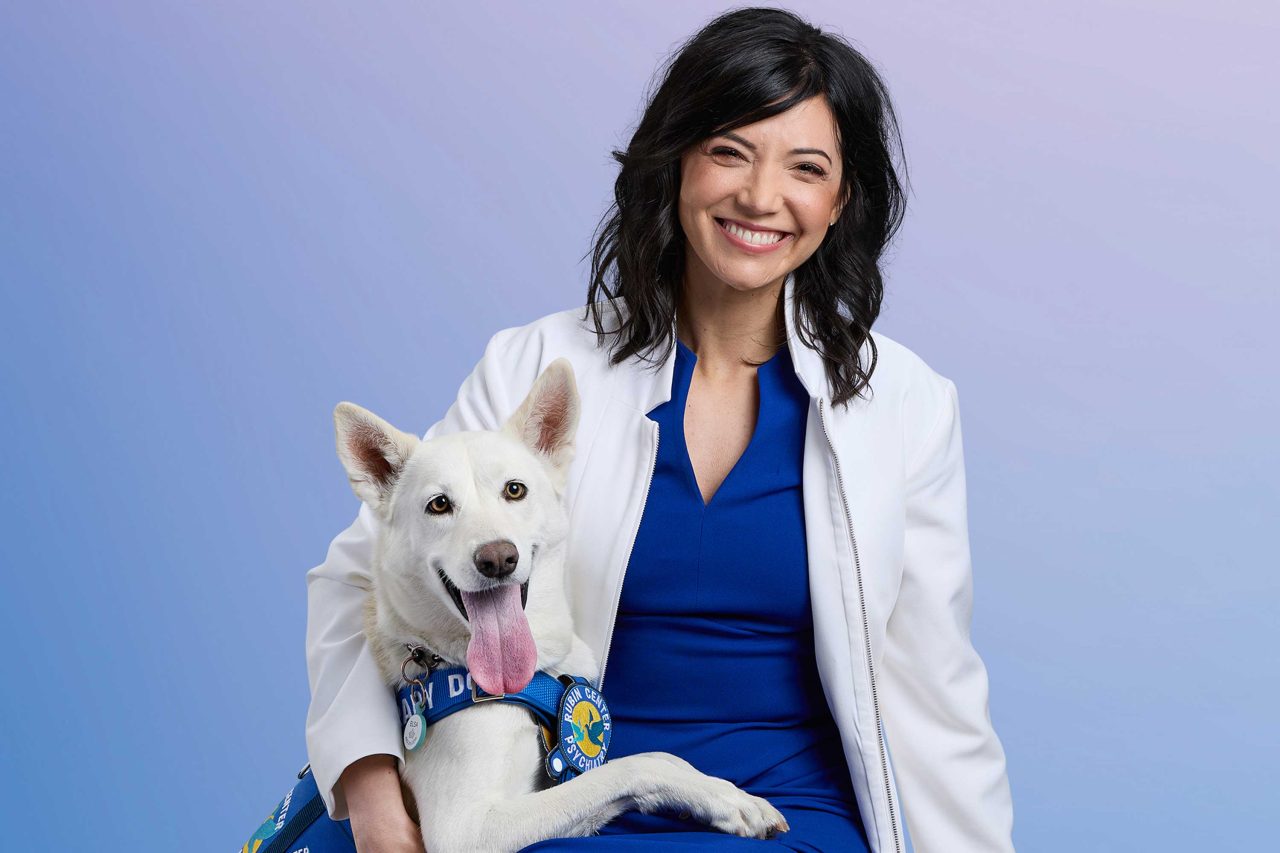
I enjoy exploring the Valley with my therapy dog, Elsa. We enjoy South Mountain trails, dog-friendly cafés and bookstores. I practice Pilates and weight training several times weekly. Learning new skills and meeting people through fitness keeps me grounded!
What shows are you streaming these days?
Law & Order: SVU, Gilmore Girls and The Big Bang Theory. Crime dramas paired with witty comedies – my oddly perfect mix for decompressing after intense clinical work.
If I wasn’t a doctor, I’d be…
A history professor. Alongside premed studies, I majored in U.S. and Latin American history. In a dream sabbatical, I’d research the disability rights movement, connecting history, advocacy and storytelling – work aligned with how I practice psychiatry.