Why Ron May loves a Steve Yockey play and misses competing for scripts.
I notice that Stray Cat Theatre is doing another Steve Yockey play, so I call the company’s founder and artistic director, Ron May.
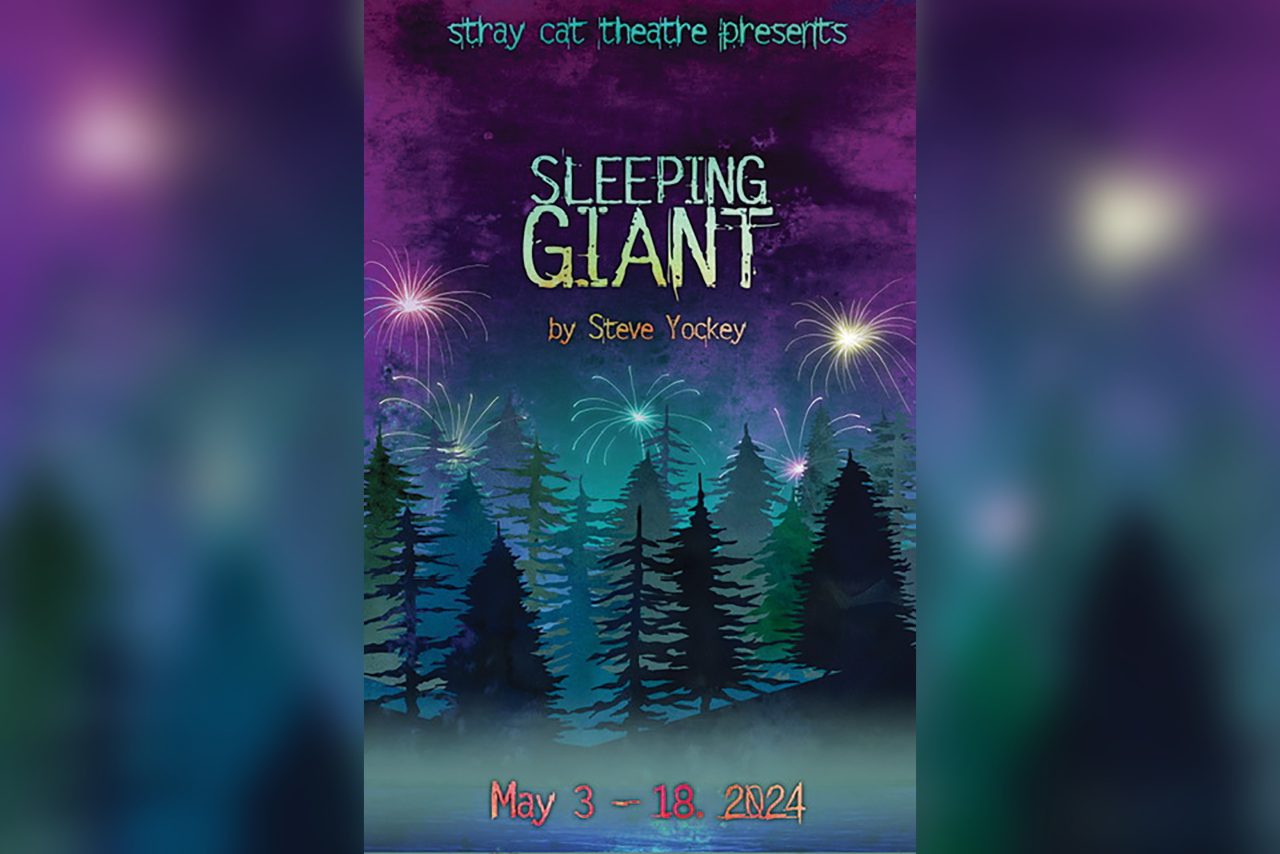
I tell May I know that Yockey – who’s made a name for himself in recent years as showrunner of Max’s The Flight Attendant, based on Chris Bohjalian’s 2018 novel of the same name – is a favorite of his. But I wonder if his choice of Yockey’s doomsday-themed Sleeping Giant is a commentary on the times we’re living in.
“I go with my gut,” May says about how he chooses Stray Cat material. “But even if you don’t go deeper into what Steve is thinking, he’s always great at writing good horror and putting it on stage.”
The new play, which premieres in May, is about a dormant monster who’s awakened by a fireworks display.
“It’s this terrible thing, but it starts to develop a cult following,” May says of the play’s metaphorical monster. “And, yeah. It’s sort of easy to say it’s an allegory for Trumpism. But it could also be about religion or any number of other things that people follow even when it’s not the best thing to be following.”
Stray Cat has settled into new digs at Tempe Center for the Arts. For a long time, May says, some of the Stray Cat audience felt unsafe coming to the company’s former Downtown Phoenix playhouse. Because Downtown still, for many suburbanites, seemed “dangerous.”
“That was part of our appeal,” May tells me. “Some people were like, ‘Ooh, I’m going to this edgy, scary part of town.’ Now, we’re in a place that’s well-lit and safe. The seats are more comfortable, and parking is more available. And Arizona Theatre Company is right next door, which gives us even more pedigree.”
I point out that Stray Cat tends to do a lot of out-there material that more traditional companies might not produce, and May agrees. But, he tells me, he misses competing with other troupes for the same play or musical. He’s referring to companies like Nearly Naked Theatre and Actors Theatre, playhouses that also offered nontraditional plays and musicals. Both have folded in recent years, leaving Stray Cat as the lone “alternative” theater here.
“The ecology of theater was better when those other theaters were around,” May says. “It was a more robust time with three companies presenting this kind of [play], because it kept that kind of play out there. Plus fighting over the same titles forced us to work harder.”
It’s nice to be first in line for a great play like Sleeping Giant, May admits. “But it’s also not good,” he says, “because it’s a reminder of the bigger picture: There are fewer theater companies than there used to be.”