For brain injury victims, waking from a coma is not a happy ending but the beginning of a long tale of recovery. Thankfully, a unique local program is helping patients get their lives back – one Wii game and bell pepper at a time.


Austin Alcorn was born on April Fools’ Day; he always thought it was his job to make people laugh. Even after his car flipped seven times, metal and pavement banging together like the cymbals of a wind-up
What happens to your body after death? Probably what you expect – but then again, this is Arizona, so maybe not.

The pathologists wheel you out of the elevator and place you on the examination table. Respectfully, but not gently. One of them makes a steady, confident incision across the back of your skull. Another cuts a large Y-pattern over your torso, revealing subcutaneous fat of a creamy yellow tint you’ve never seen before. Soon, your body is a painter’s easel of vivid and alien colors and exposed organ structures. You begin emitting smells that offer no polite comparison. Your brain is removed, weighed, photographed and sliced into pathological cutlets that will be shipped to labs all across the world. Your other major organs are similarly broadcast. Going out into the world. To advance knowledge. To do good.  You died all of 67 minutes ago.

One of history’s most feared and stigmatized drugs reemerges as a potential cure for Alzheimer’s.


“Stark weather homicide/children of Thalidomide,” is how Billy Joel year-checked 1958 in his history-cataloguing hit “We Didn’t Start the Fire.” More than four decades after the banned morning-sickness

Valley Metro enlists local bands to educate riders on mass-transit protocol through the power of song.


Riding the bus or Light Rail is easy. Riding the bus or Light Rail while observing the many rules and protocols that attend public transit is a bit trickier.

The Great Arizona Picnic is a grade-A party. Just don’t look for Kai or Binkley’s.


Weather permitting, more than 40,000 hungry and thirsty souls will visit the Scottsdale Culinary Festival’s Great Arizona Picnic in late April. It’s easily the biggest and most famous event of its kind in Arizona. The biggest party. The coolest roster of celebrities.

But is it the premier culinary event for people who, you know, actually want to sample cuisine?

Tempe officials say the forthcoming modern streetcar is just the vehicle to revive the Mill Ave. neighborhood.


“The city’s new $130 million streetcar line begins operations today, closing the final chapter on a five-year mission to provide convenient mass transit to residents and habitués of Tempe’s busy Mill Avenue corridor. Servicing 13 stops on a 2.6-mile route that runs along Mill Avenue from Southern Avenue to Rio Salado Parkway, with a northern loop from Rio Salado to Ash Avenue that reconnects with Mill at University Drive, the service runs every 12-20 minutes. The five 65-foot, 100-seat streetcars draw power from overhead lines and run on battery for stretches.

https://www.phoenixmag.com/wp-content/uploads/2012/04/phm0412_pfphxnews7_md.jpg

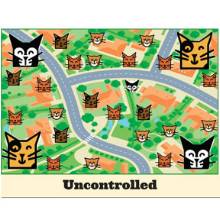
Thanks to some industrious residents, a grassroots trap-and-release program is controlling the chaotic Coronado cat population.

Five cats at one house, perhaps a dozen at another. Their car-hit carcasses were common sights in the neighborhood, and those that survived were painfully emaciated – the area simply didn’t have enough birds, rodents and wild food sources to sustain its growing feral cat population. The residents who tried feeding them were overwhelmed.

Valley visionaries are spearheading computer technologies that enhance your grip on the here-and-now – and take us one step closer to inventing the holodeck.


I put on the glasses and I’m gliding over Mars. The cartographically-accurate surface of the Red Planet rolls below me in 3D. A tiny sun shines dimly. Rusty landscape and twilight skies surround me, even when I look over my shoulder.

Undeterred by the infamous Sedona sweat lodge tragedy, Valley groups use the sacred tradition to battle addiction and strengthen community.


The lodge is pitch black as the meditation, prayer and songs begin. Steam leaps off a pile of red-hot river stones as the ceremony leader fans them with water from a wet sage switch. Cedar chips are thrown on the sizzling rocks – to “facilitate healing,” someone tells me later.

Soon, steam and heat fill the lodge. The smell of cedar fills my nostrils. And once again I feel a wave of uncertainty. I remember some friends’ joking warnings: “What are you thinking? Don’t you remember Sedona?”

When brain cancer attacked his craft-brew-loving wife, Louis Dolgoff devised a charity just for her.

On August 29, 2009, Laurie Dolgoff was near the end of a long, agonizing journey. The cancer in her brain – a glioblastoma multiforme, the most common and malignant of brain tumors – would not be stopped, and the 55-year-old Peoria fashion associate had only meager possession of her faculties. She couldn’t speak and could barely move.

Even after high-profile tragedies, a silent epidemic of prescription drug overprescription, abuse and overdose continues to plague Arizona. 

It was a syringe full of medicine that plunged her down the rabbit hole, and medicine that kept her there, dragging her deeper into a hinterland of darkness, till she could barely remember the woman she once was – or, really, anything at all. 

Four decades after the art-pop legend came to Arizona to shoot his cult Western, the Lonesome Cowboys tale remains as strange as ever.


Paul Morrissey is pouring hot sarcasm into my ear. But I’m glad he called.

“I understand you want to talk about the Andy Warhol movie,” Morrissey rasps in greeting, smearing the name of his one-time friend and collaborator with dark emphasis. It’s easy to imagine the 74-year-old filmmaker affecting a theatrical grimace when he speaks, like Dirty Harry mad-dogging a street punk.

A rash of discrimination cases raises the question: How well does Arizona protect its pregnant workers?


Stacey Smith was mystified when her work hours were abruptly docked at Tutor Time in Queen Creek. The Mesa resident says she received glowing reports from both customers and colleagues at the daycare

A new wave of Beethoven-blasting devotees labors to resurrect classical music’s cool factor.

Mention “classical music concert” to someone and you’ll likely conjure images of a grand symphony hall packed with discerning men in monocles and women wrapped in mink shawls. 

Steve May made waves as a brash Arizona lawmaker. Now the pseudo-homeless pol’s a vagabond advocate for minority groups.

When former Arizona congressman Steve May announced on Facebook last September that he was shuffling off his possessions and calling his Cadillac Escalade home, many of his 4,700-plus friends freaked out, offering their couches, carports and condolences.
But May says the plan – dubbed “DWNSIZE,” after the vanity plate on his Escalade – was entirely by design. “I did DWNSIZE for many reasons, none of them out of necessity,” May says. “It has been a learning experience for me.”