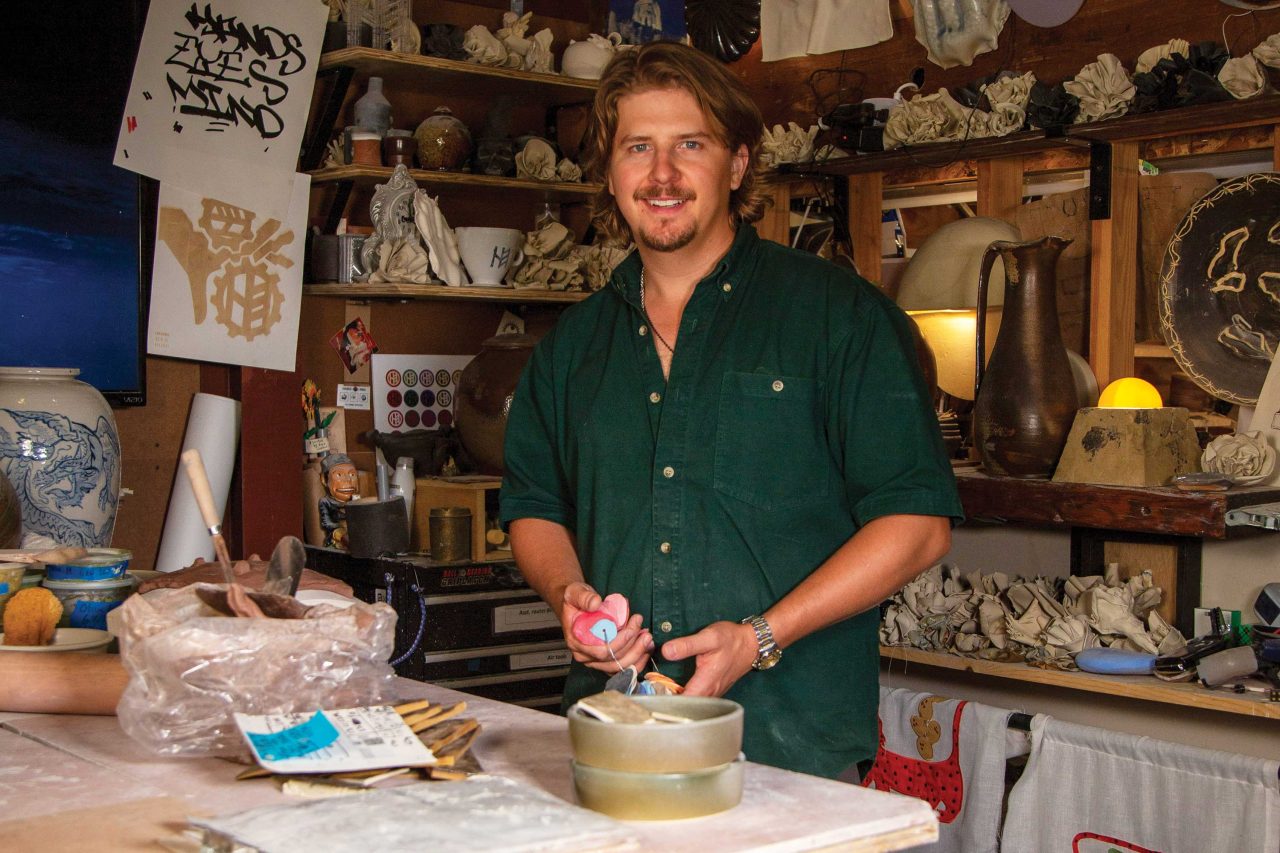
After college, ceramic artist Andrew Smith was surrounded by naysayers.
“Everyone was like, ‘Go get a real job and do pottery as a hobby,’” Smith says. “But I couldn’t see a life without making art.”
Smith’s love of ceramics came early. Born and raised in Augusta, Georgia – what he calls “the epicenter of pre- and post-Civil War ceramic production” – Smith began throwing pots as a kid. His work caught on with local collectors, and he started selling his pieces at local art markets.
After completing a dual major in biomedical engineering and ceramic arts at Arizona State University, Smith planned to return to the Southeast where he had an engineering job lined up in Charleston, South Carolina. But art came calling: Smith was offered a space at the now-shuttered Reitz Ranch Center for Ceramic Education in Clarkdale, Arizona, which led to a Windgate grant and a spot as a maker at the American Museum of Ceramic Art in Pomona, California.
In 2021, Smith came back to Phoenix, where he and a friend launched a creative concern called Hands Eyes Mind. “It started out as a magazine,” Smith says, “and developed into a project specializing in artist collaborations.”
Hands Eyes Mind is home to Smith’s studio and his ceramics business, Augusta Pots. There, alongside the trio of pottery wheels you’d expect to see, he has 3-D printers and scanners, a prototyping lab, a laser engraver he uses to create stamps for his ceramic works and a throwing room where the dishware he creates for more than a dozen Arizona restaurants – including Bacanora and Cocina Chiwas – is made.
“All of my retail work is done to pay for my wood-firing habit,” he says of the high-art vessels he creates. “I travel around to fire in different kilns in places like Cottonwood, Missoula… and Flagstaff. I fired in a kiln in Cornville where all the wood we used came from the property. I love that.”
His artform, Smith says, is a combination of science and aesthetics.
“Also physics and thermodynamics. I took everything I learned in college about biochemical engineering and applied it to the practice of making pots.”
Take that, naysayers.
– Robrt L. Pela
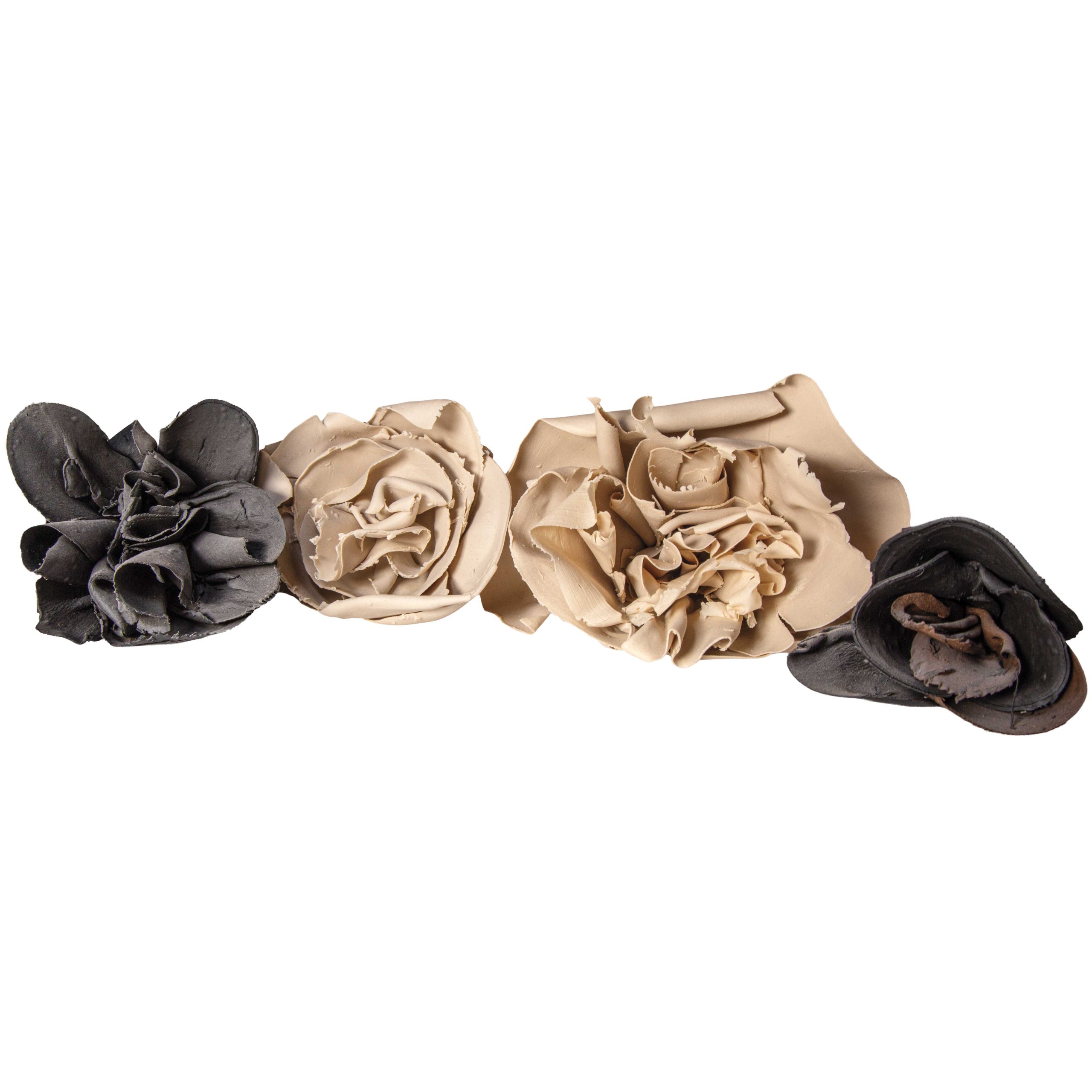
FLOWERS
“The porcelain flowers are made from clay left on my shaping tool. Each one represents a lot of different pieces I’ve thrown.”
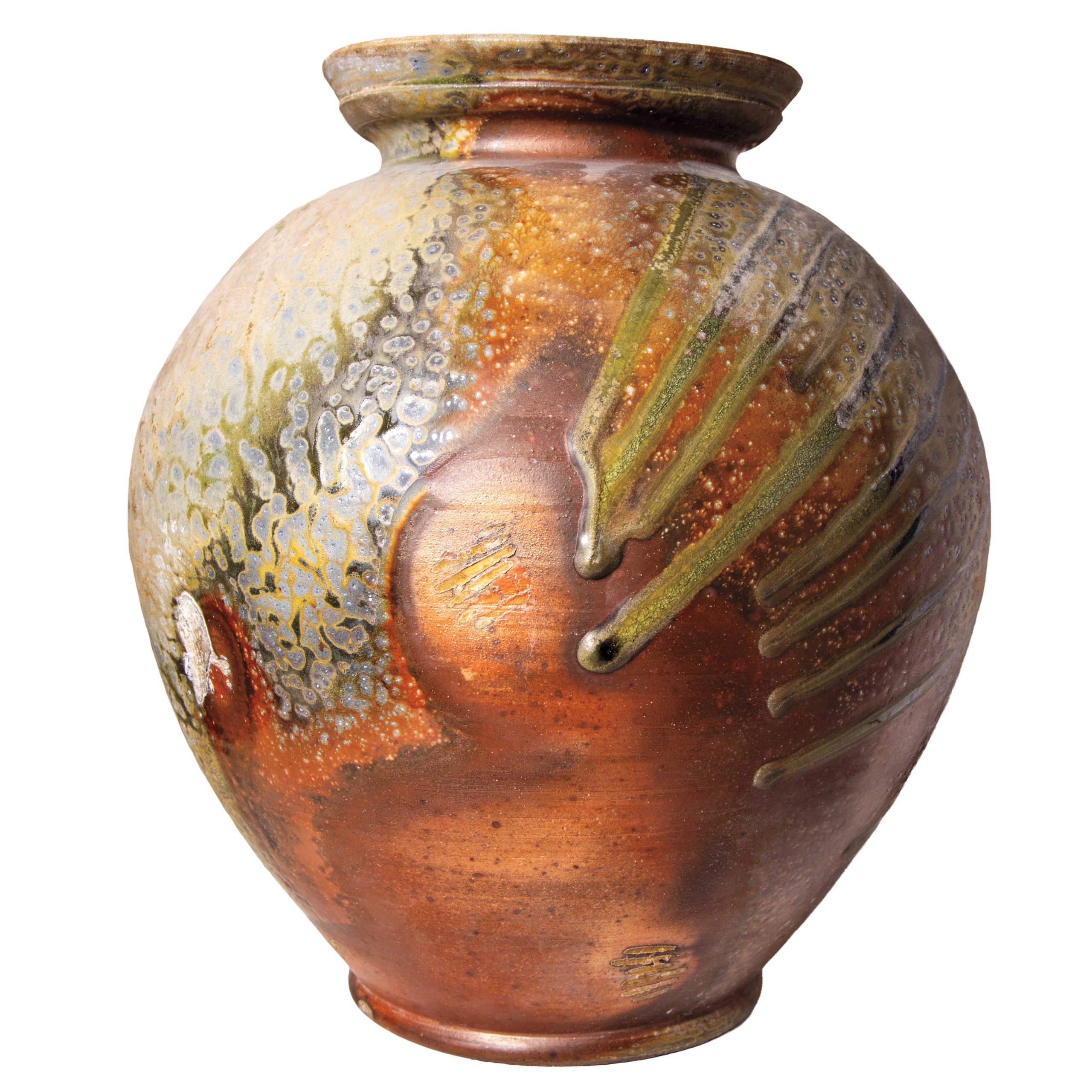
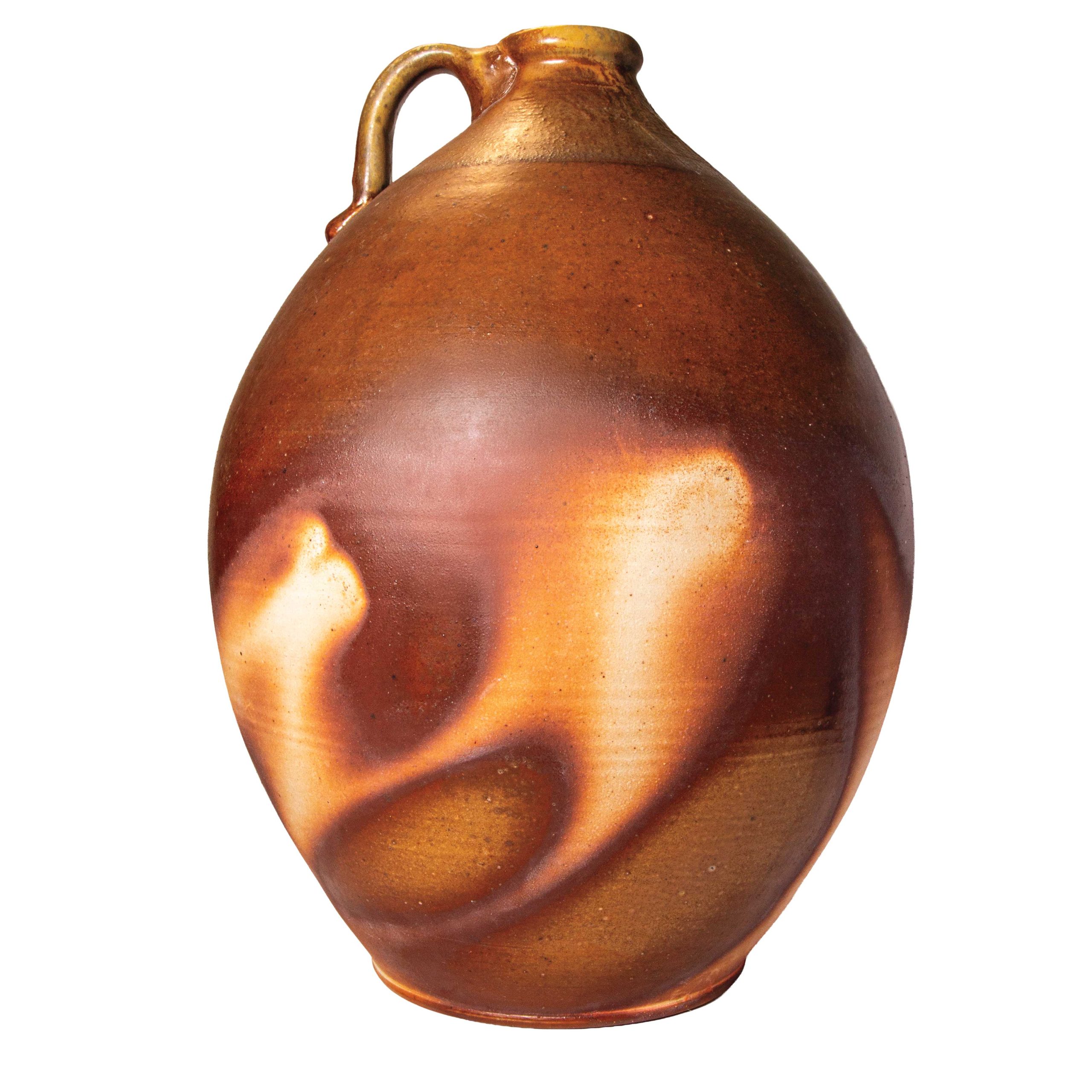
POTS
“The patterns on my work are made by the wood ash in the kiln. The flame travels across it to create eddies and flows.”
GLAZE
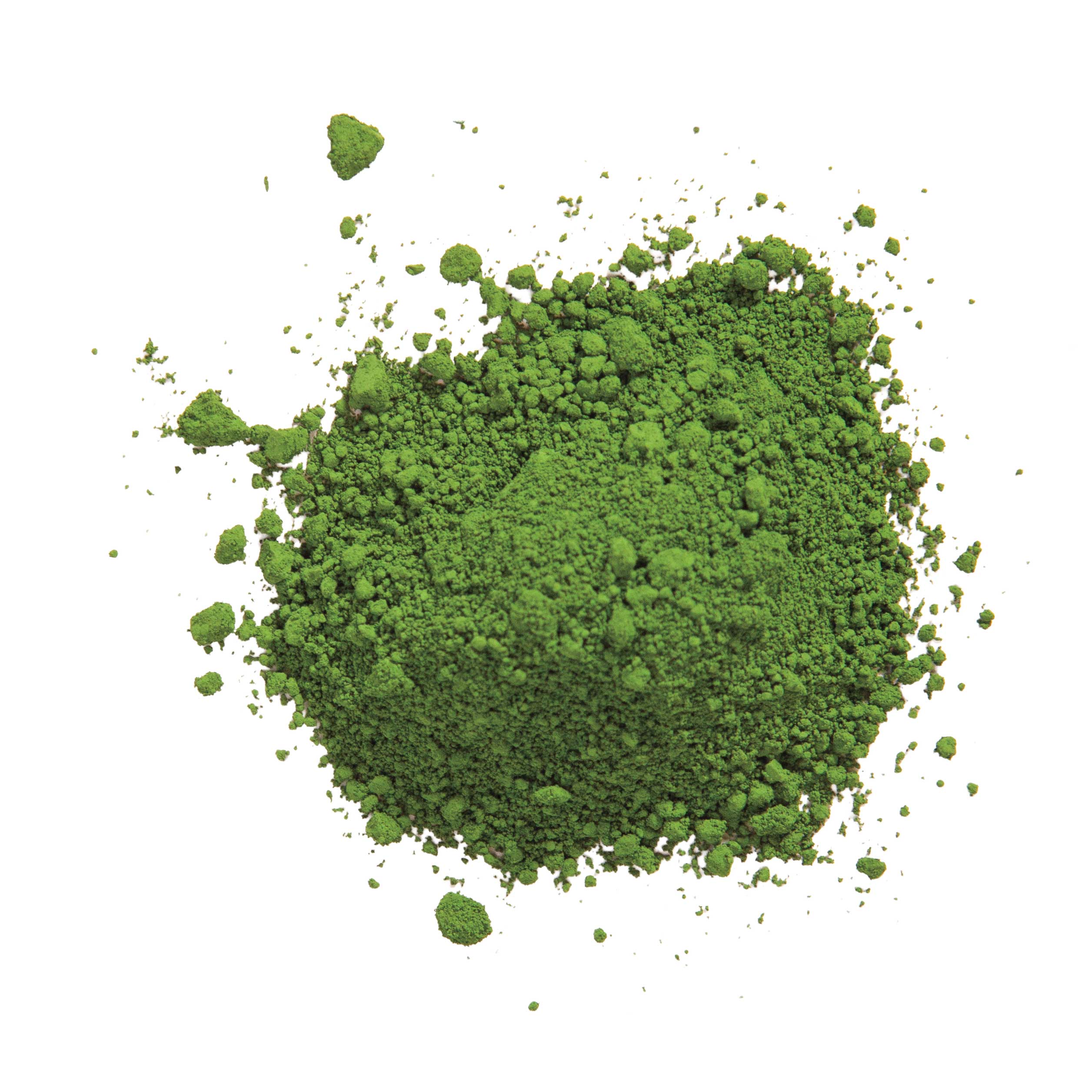
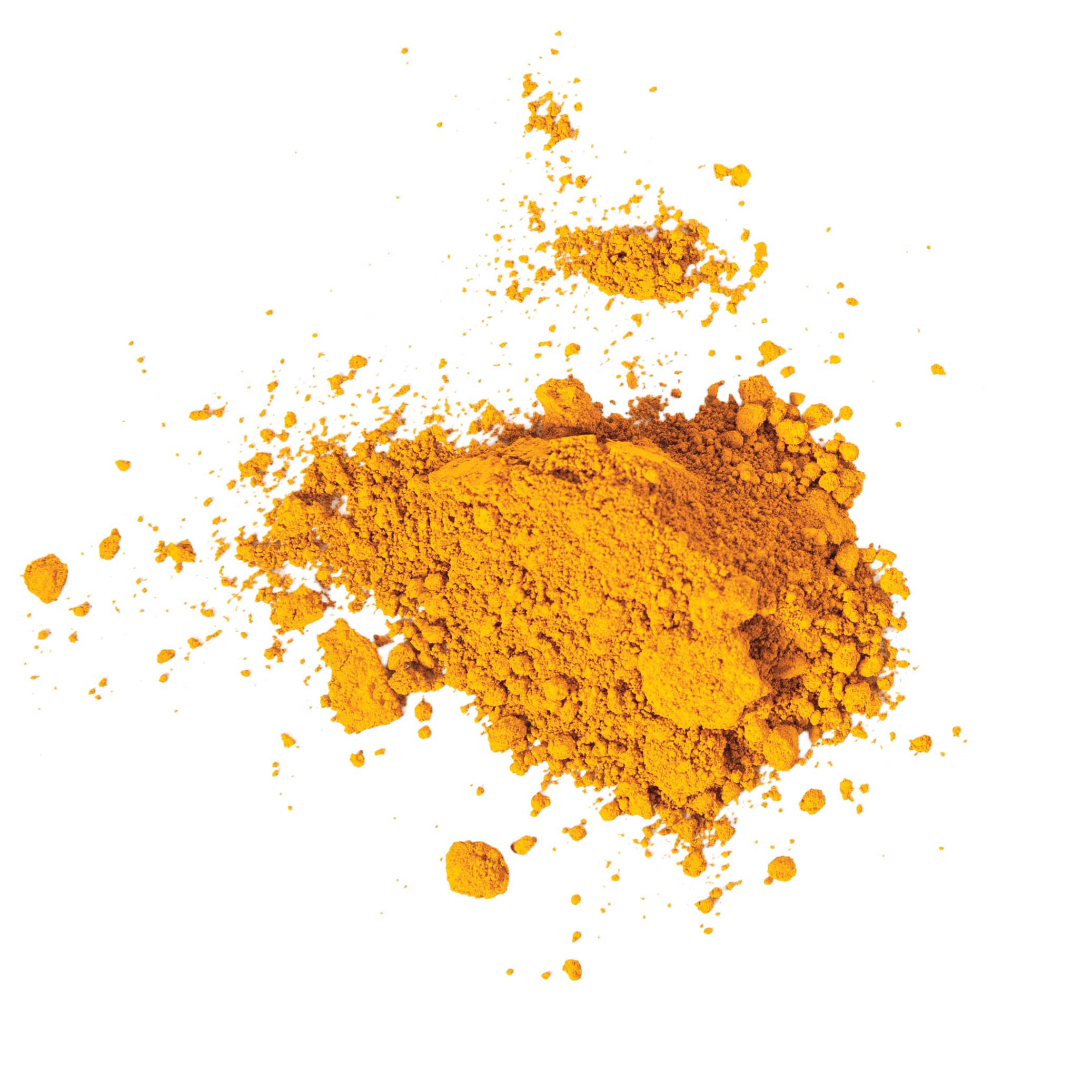
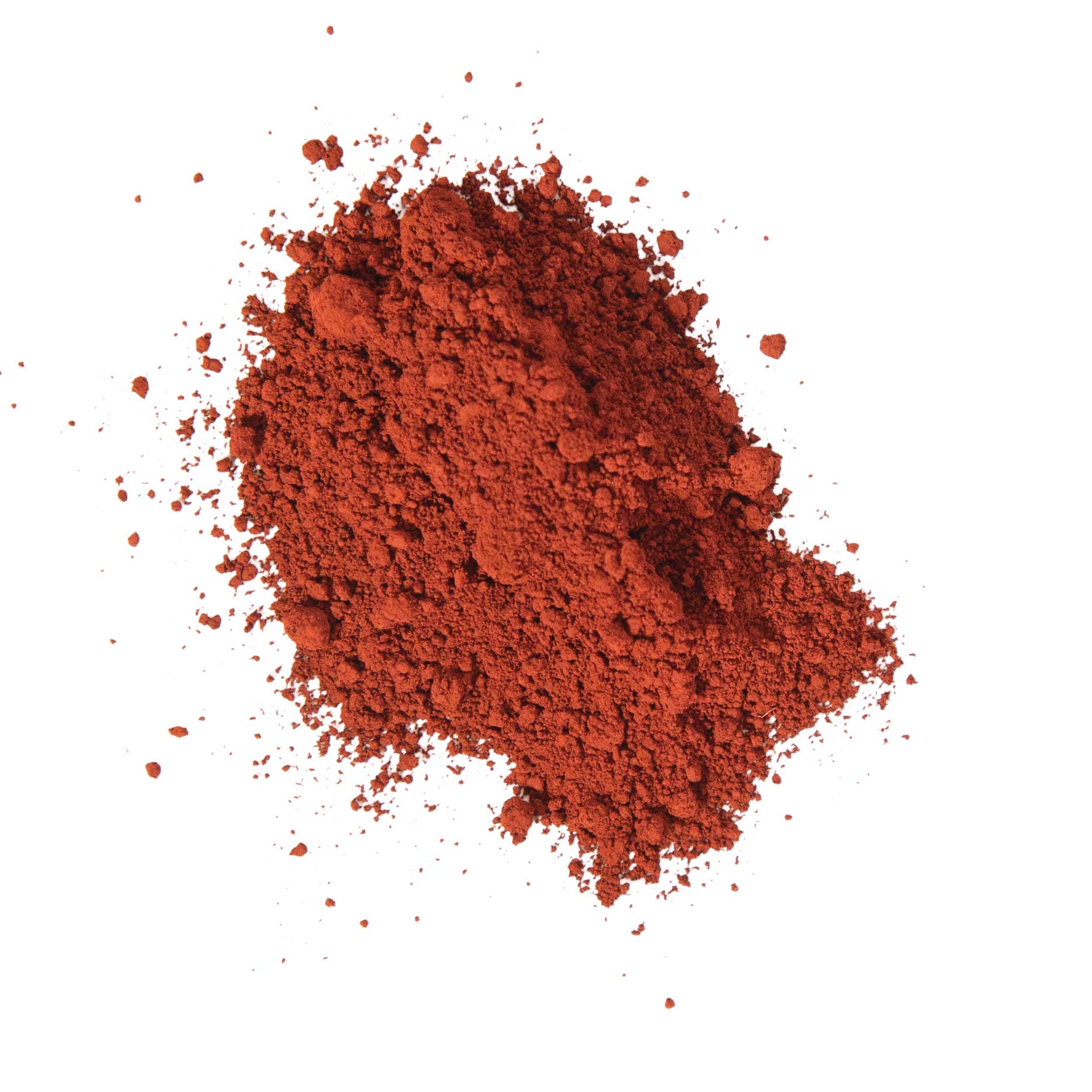
“I make all my glazes so I can control the sheen and color. I add the colorants to a liquid porcelain that I make.”
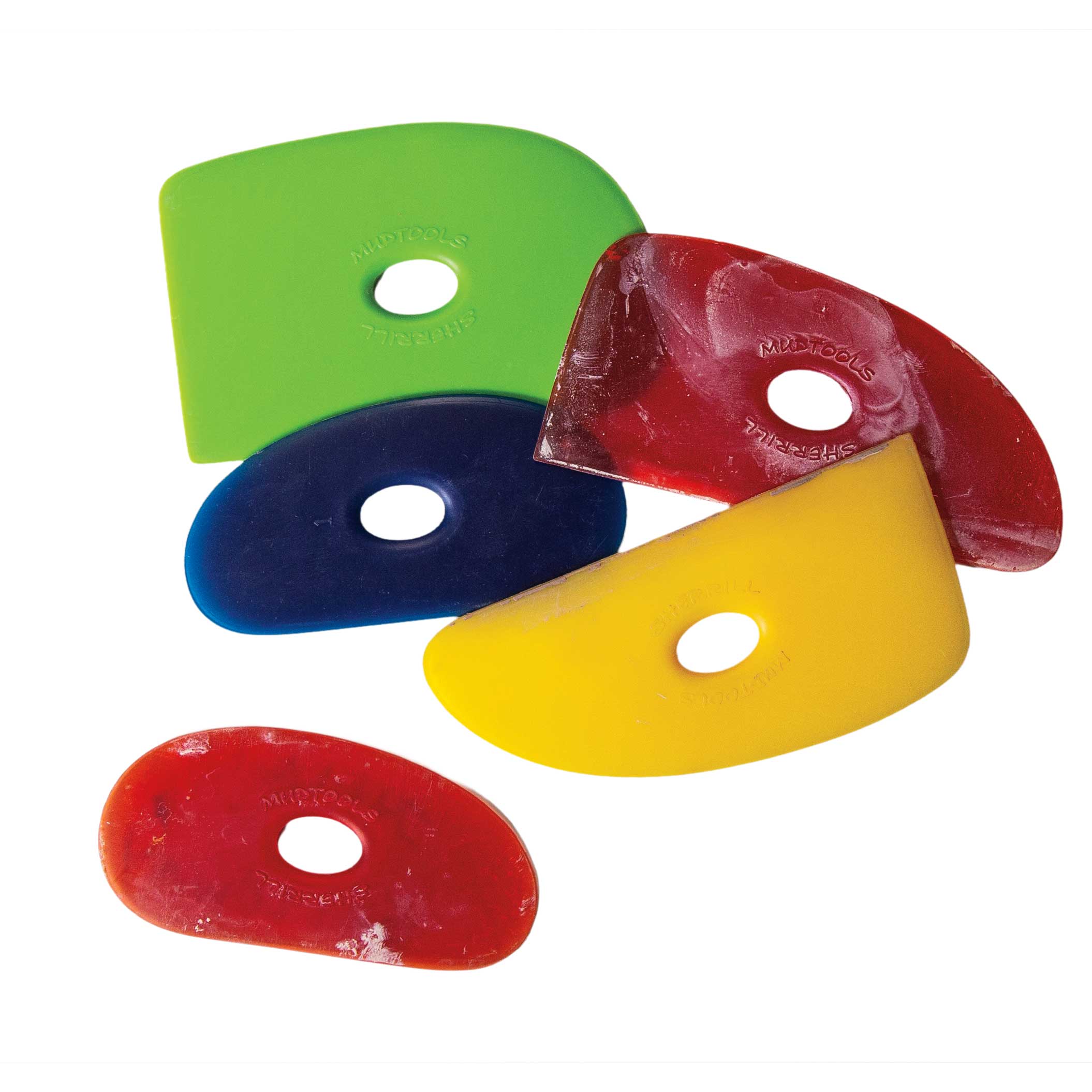
RIBS
“After I use the sponge, I use these ribs to shape the clay, to pull it up and out.”
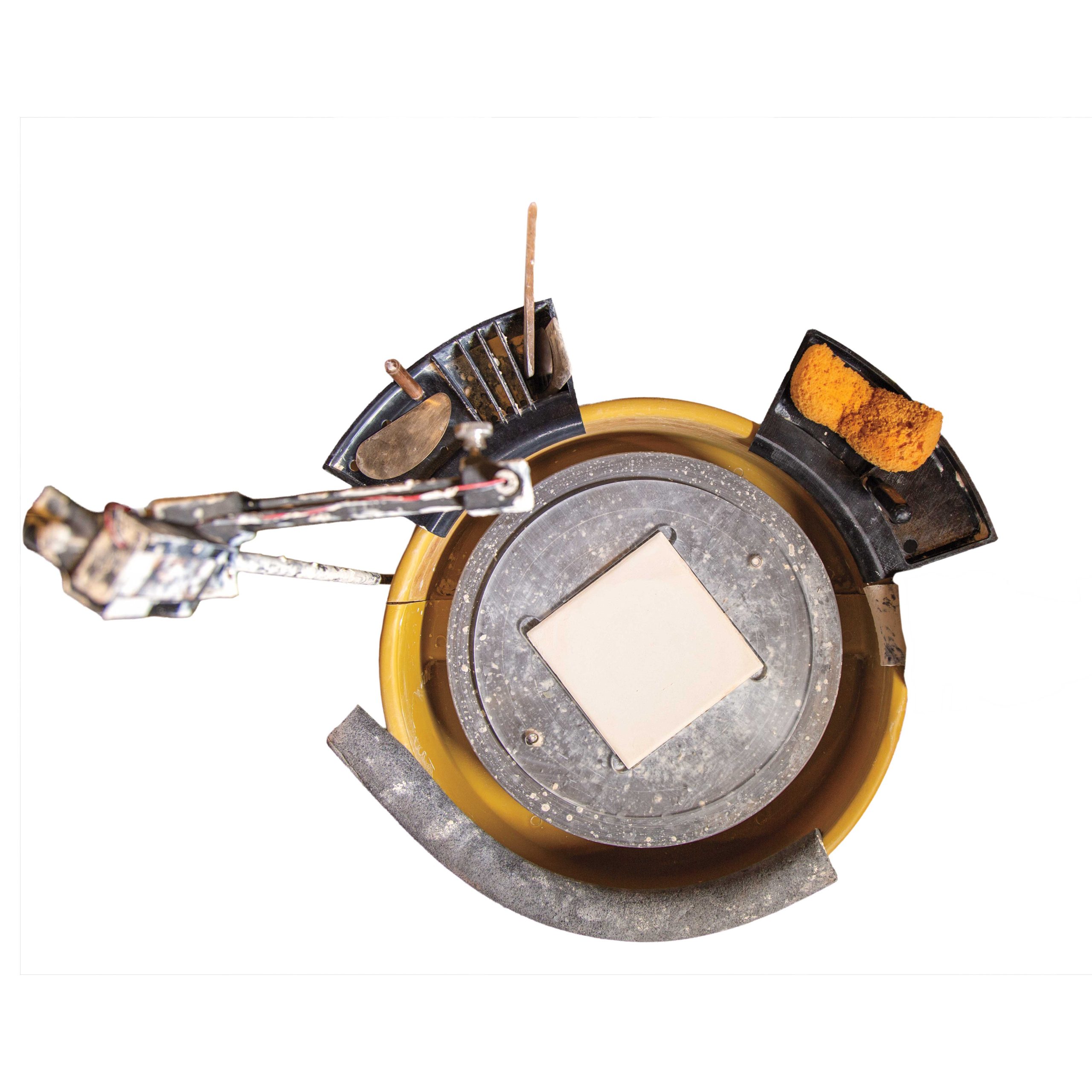
WHEEL
“I use this wheel more than anything in the studio. You can’t really buy tool trays anywhere, so I made my own with a 3-D printer.”