by Jason Keil | Photography by Ethan Beazley
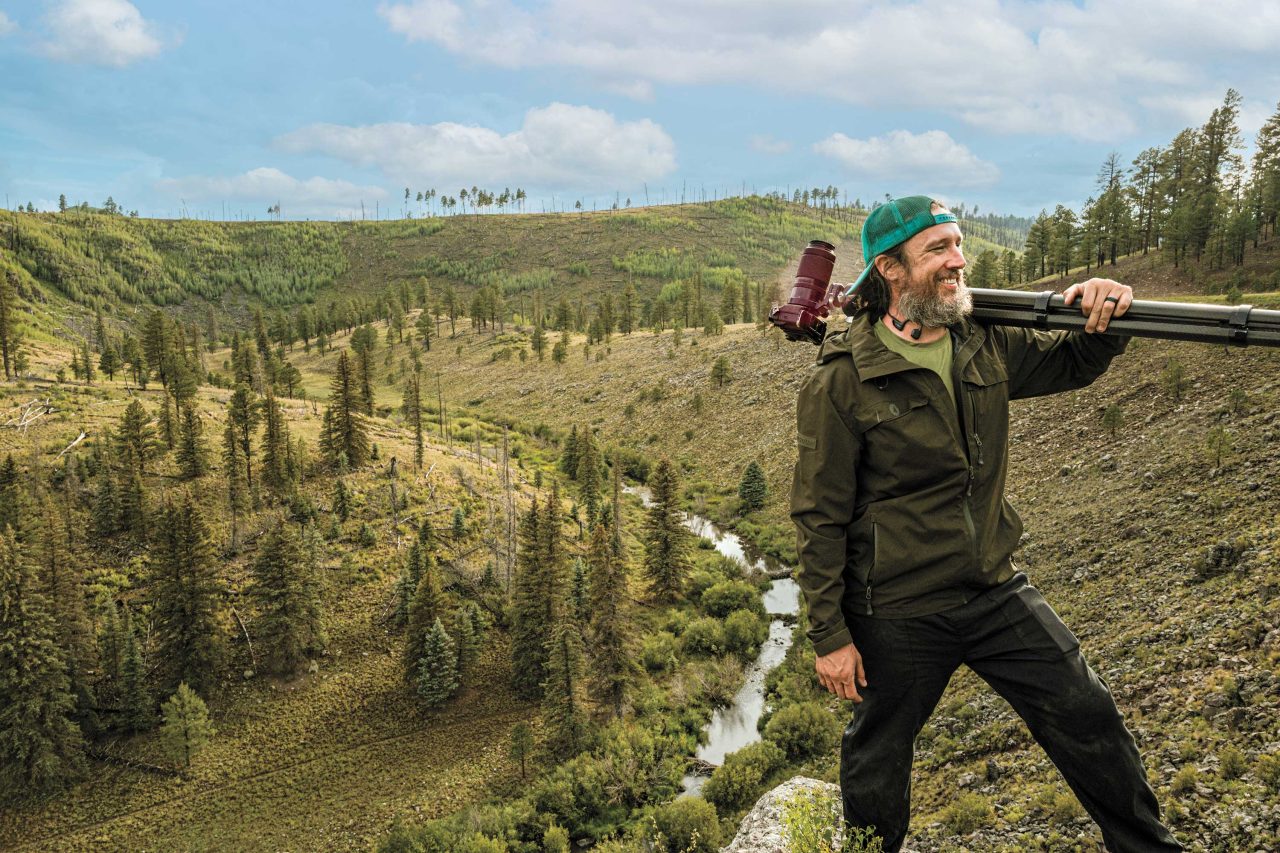
Jonathan Buford was not an expert in the wilderness when he co-founded Arizona Wilderness Brewing Co. in 2013. But that changed during the pandemic when he became reacquainted with his first love: photography, specifically, landscape photography. Arizona Highways editors were so impressed with his work that they commissioned him to photograph areas in the state protected under the Wilderness Act of 1964 for a new book, Arizona Wilderness: A Celebration of the 90 Most Pristine Places in the State. Braving monsoons and lightning storms to immortalize Arizona’s public lands, the project transformed how he saw nature. “It really became me becoming the wilderness guy,” Buford says. “It wasn’t just nomenclature anymore. [The book became] something I could pass down to future generations.” At 368 pages, Buford’s book, published this year, is one of the largest ever produced by Arizona Highways, filled with eye-popping visuals that remind us that our state is more than just a desert. The author took a few moments to talk about the dangers he encountered to get the perfect shot, and to share his tips for what makes a good nature photo.
You grew up in Ohio. What drew you to Arizona?
I moved here in August of 2002 with a friend. He had a wedding that was called off. From that point forward, I became an Arizonan. But I just remember the Forest Service roads catching my attention. You can camp along them. There is nothing like them in Ohio. So, I bought a book on how to take better photographs. That was all around 25 years ago.
What makes a good nature photo to you?
I really like the mood and feeling. If that mood translates to somebody… we’ve gotten somewhere. If it’s just a pretty picture with the rule of thirds and a nice sunset, it’ll probably sell well to some people, but it won’t have much impact. I like when people go, “I’m feeling something when I look at your photo.” But what the book is really intended to do is show what the wilderness [looks like today]. If it doesn’t look that way in the future, I would hope that Generation Alpha and Beta say, “What the hell is going on here?”
How did you prepare for this undertaking?
I planned shots based on the weather, the season, the need for the shot, the best mood of the moment. I didn’t want six monsoon shots for one location, but I also can’t go to Beaver Dam Wilderness during all four seasons. I also got in shape. I was on the side of a mountain after a four-inch rainstorm. Mudslides were coming down, and it was the only chance I got for this one shot. There was a lot to it, and you had to mentally understand what you’re doing and stay the course like a marathoner.
Were there times when you thought you were in danger?
There were monsoons and lightning, but going into canyons and keeper holes, which are water-filled depressions you can’t get out of, is inherently risky. In a canyon, I was essentially flirting with danger.Then there’s just being in the middle of nowhere with a car breakdown. I had to learn how to patch holes in tires. There were sidewall issues and stuff. I winched myself out many times. I gained a lot of skills, and I felt as if a holy wilderness god were watching over me.
Did working on this book lead you to step up Arizona Wilderness Brewing’s conservation efforts?
I think it’s inspired our staff to understand that we stand for something greater. The fact is that running a restaurant and brewery depends on how our federal and state governments create pathways for small businesses. I believe [the book] certainly inspired our staff to buy in more, though. It makes it easier to make decisions. That’s a big win.