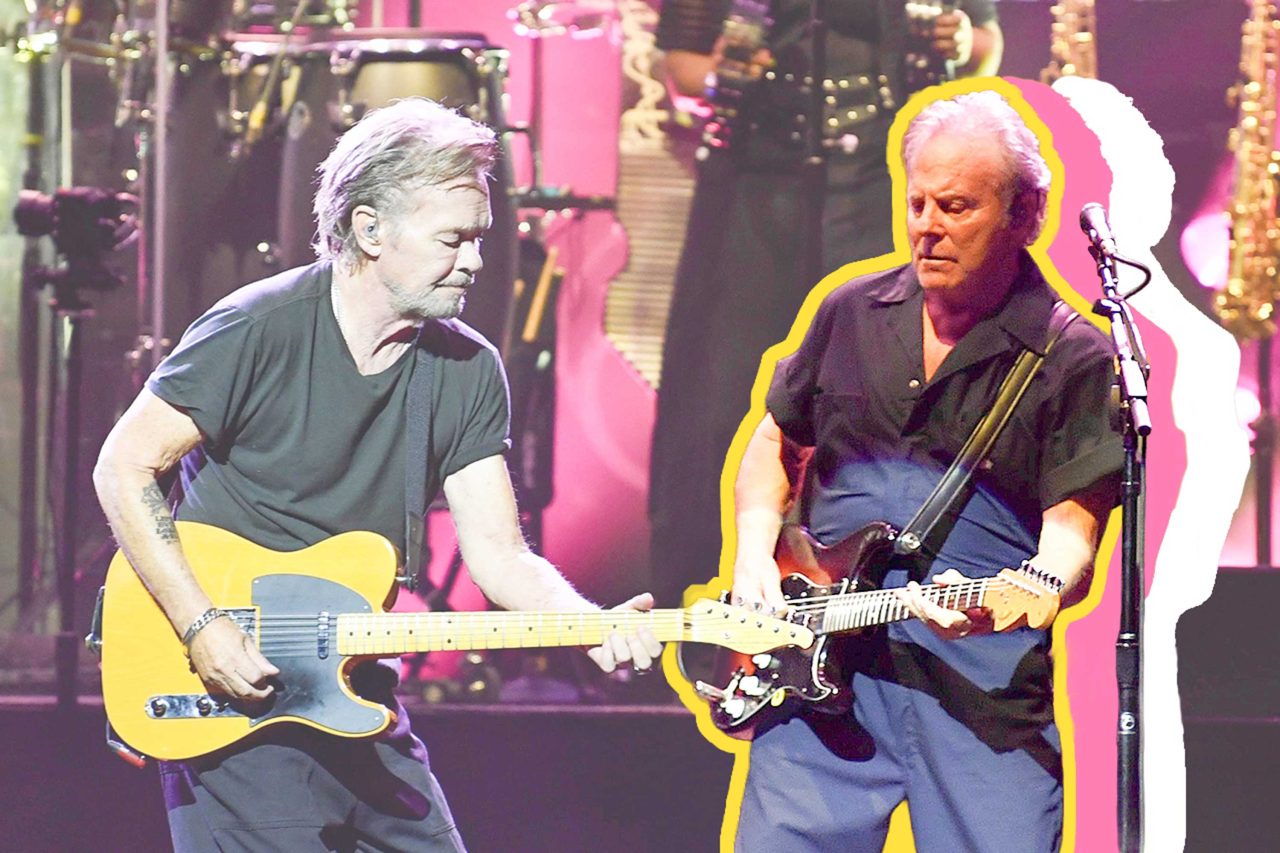
For nearly five decades, guitarist Mike Wanchic has helped shape John Mellencamp’s signature sound on timeless hits such as “Jack and Diane,” “Pink Houses” and “Hurts So Good.” Ahead of the band’s Valley show on its Dancing Words tour, Wanchic spoke with PHOENIX about making music from the heart, the mentors who shaped him and why great songs never go out of style.
You’ve spent nearly five decades making music with John Mellencamp, and you’ve played Phoenix countless times. What about Arizona keeps bringing you back?
Well, the air is terribly dry – it’s hard on my voice. [Laughs.] No, it’s always fun to come back.
One memory that stands out is opening for The Who at Sun Devil Stadium on Halloween. The Who’s fans were like [Rolling] Stones’ fans – they weren’t there to see anybody but the headliner. We were playing a sold-out Sun Devil Stadium, and John jumped onto a sidefill[speaker]. I was looking up at him when I saw a shadow go by me. Somebody had thrown an empty Jack Daniel’s bottle. It hit John square in the head and knocked him out.
We stopped the show while the Rock Doc – those guys were usually former MASH doctors from Vietnam – put a few stitches in his head. John grabbed a yellow hard hat from the stage crew, walked back to the microphone and said, “Where’s the chicken-shit motherfucker who threw that bottle?” Of course, about six people pointed and yelled, “Here he is!”
Security threw the guy out, and we finished the set with “Hurts So Good.”
You’ve worked alongside John for nearly 50 years. What’s the secret to keeping a creative relationship alive and meaningful for so long?
In the beginning, we were both in our early 20s, just out of college… I grew up in Lexington, Kentucky, and John grew up in Seymour, Indiana. We both listened to WAKY in Louisville, so we had a mutual soundtrack growing up, from Motown to psychedelia. Our musical language was easy to put together because we already knew the same songs. When we started talking music, it was an easy transfer of ideas. I think that’s where we gained a fraternal trust. We built on that over the years.
We don’t exactly hang out together after 50 years. [Laughs.] I’ve spent more time with him than I have my wife. It’s one of those things where you don’t spend your leisure time together, but you spend your work life together – which has been the bulk of my life, actually.
You’ve both stayed rooted in the Midwest. How has that influenced your music and the people you’ve become?
It’s the entirety of it, honestly. When we started having our first Top 40 records, our English management kept saying, “You’ve got to move to Los Angeles. That’s where it’s happening.” And we were like, “Why? We don’t want to move to Los Angeles.” We stayed in Bloomington, Indiana. We didn’t have any money. We were driving around in an RV with our equipment stuffed in the bathroom. Moving to L.A. wasn’t practical.
When we started working on American Fool, we rehearsed every day at John’s house in a place we called ‘the bunker.’ We came up with what we thought was a simple rock sound and decided that’s what the record would be. The record company had very different ideas. They wanted us to lean into the blue-eyed soul sound of “Ain’t Even Done With the Night.” Maybe become a baby Hall & Oates. That wasn’t the plan. We were a primitive, two-guitar rock band playing at our skill level. That’s all we knew.
We eventually went into the studio and came away with only three or four songs. One was “Jack and Diane.” We had no idea it would become a hit because it seemed like such a weird song.
The record company got nervous… the bills were piling up. The president came to hear what we were doing, listened for a minute and said, “We’ve got to get some horns on this.”
John grabbed him by the collar, shoved him out the door and basically said, “If you don’t like it, give it back to me. You don’t have to release it.”
They reluctantly put out the record, and suddenly we went from totally uncool to totally cool.
Looking back, if you’re trying to guess what’s going to be cool – or follow a trend – you’re already two years behind. We were simply playing at the peak of our abilities, primitive as they were. American culture happened to intersect with what we were doing. People wanted a simple, dirt-rock band they could call their own. The two lines crossed, and bam – we were cool.
Can you share a moment in the studio when a small creative decision unexpectedly became the defining part of a song?
We were recording [“Jack and Diane”] at Criteria in Miami, probably the country’s most famous studio at the time. Everybody wanted to record there.
We wanted an acoustic guitar and some kind of click track without a drummer. The Bee Gees were next door, so we asked to borrow a metronome. Maurice Gibb came over with the prototype of the first LinnDrum machine and said, “Why don’t you try this?”
We found a floor tom sound and cut the track to it. We thought, “That’s kind of cool… Why don’t we keep it instead of putting Kenny [Aronoff] on drums?”
We built the track from there. Mick Ronson, who played with David Bowie and was working with us at the time, suggested adding baby rattles and other percussion to the breakdown. Kenny came up with that big drum break in the middle. We started goofin’ around, then sang that big chorus, with Mick joining us. That ended up being the song.
We never intended to release it as a single because it felt so weird. For 1982, it was a weird-ass song. But somehow, it resonated.
Looking back on your career and all the changes in the industry, what do you hope today’s young musicians never lose sight of?
I hope they never lose sight of becoming actual musicians and learning their instruments. Love the art of making music with your hands and your voice – not just with a keyboard. To me, that’s part of the demise of music in a lot of ways.
Now you have AI capable of creating songs that can become bigger hits than a lot of people can write because it analyzes the tempos, chord progressions and formulas that already exist. And you have writing rooms where five or six people build songs from a hook line. To me, that’s not how you become a real musician. You connect your instrument with your heart and come up with something real.
If that analog way of making music is gone, then I’m out. [Laughs.] In my generation, you had to learn your instrument. You had to be a good player. You had to know your shit. You had to.
Has your definition of success changed since those early days in the ’70s?
Yeah! We’re no longer concerned with being cool. [Laughs.] Back then, your image – your swagger – meant a whole lot in rock ’n’ roll. We were just hillbillies from Indiana anyway, so our image was pretty rough.
Now there’s a certain freedom in being ourselves and continuing to make the music we want, regardless of who’s listening or buying it. At this point, it’s more about art and legacy, which I think is the natural progression of a long career. We still have our self-respect, the respect ofthe public and the respect of the critics. That’s important.
One of the great joys of my career was working with Bob Dylan. God … you have no idea what that meant to me. When I was 13, I was putting another Bob Dylan record on the turntable, and suddenly I’m in the studio with him. Good Lord … those are dreams come true.
When you hear songs like “Jack and Diane” or “Pink Houses” today, can you listen as a fan, or do you immediately return to memories of creating them?
I go straight to the flashbacks. Musicians are kind of cursed in a way fans aren’t. My wife loves music twice as much as I do. She’s a real listener and knows far more music than I ever will because she’s spent years simply enjoying it.
When you become a serious musician, especially in a band like this, your world narrows. Music and work become the same thing. My wife introduced me to bands like Depeche Mode, The Cure and Radiohead, [bands] I probably never would have explored on my own.
The Dancing Words tour comes to Phoenix on Aug. 9. Is there something about this tour that’s especially meaningful?
Absolutely. This is the first time in our history that people can come to one of our shows and probably hear every song they want to hear. Music is tied to memory. You hear “Jack and Diane,” and you’re right back in high school. I have songs that do the same thing for me. I can see it happen in the audience. As soon as we hit those first few chords, I watch couples look at each other like, “Here we go.” They’re instantly transported down memory lane.
For 50 years, we’ve never gone out and said, “We’re going to play 25 hit records.” We were still making new music, and we never wanted to become an oldies band. This is the first time we’ve embraced a show like that.
Is that freeing or limiting?
I fucking love it. [Laughs.] These songs weren’t hit records because they were little pop sensations. They were hits because they were good songs. A good song is a good song. It’ll last forever.
Is there anything you’d like your Phoenix fans to know about this tour?
If you want to hear the hit records, this is your one chance.
John Mellencamp’s Dancing Words tour comes to Talking Stick Resort Amphitheatre on Aug. 9. For tickets and information, visit livenation.com.