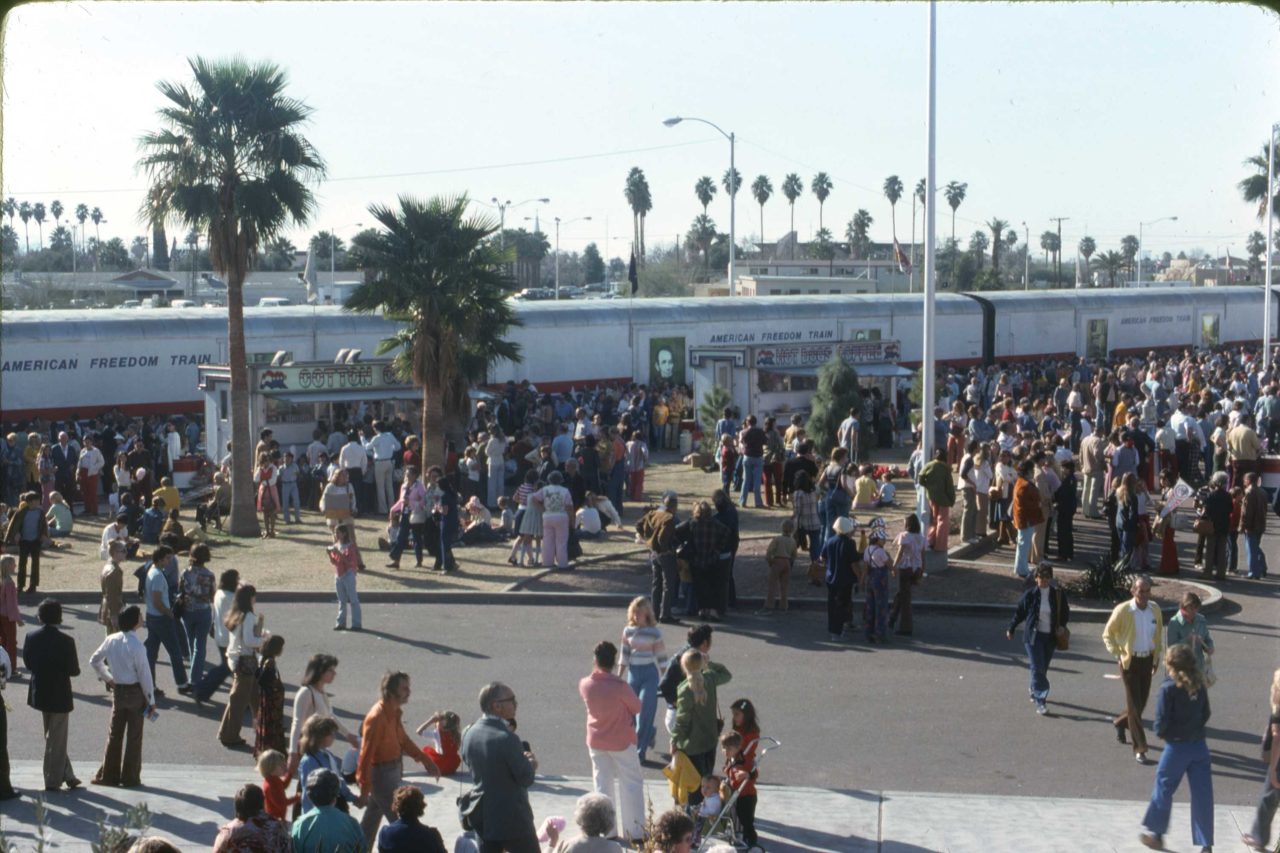
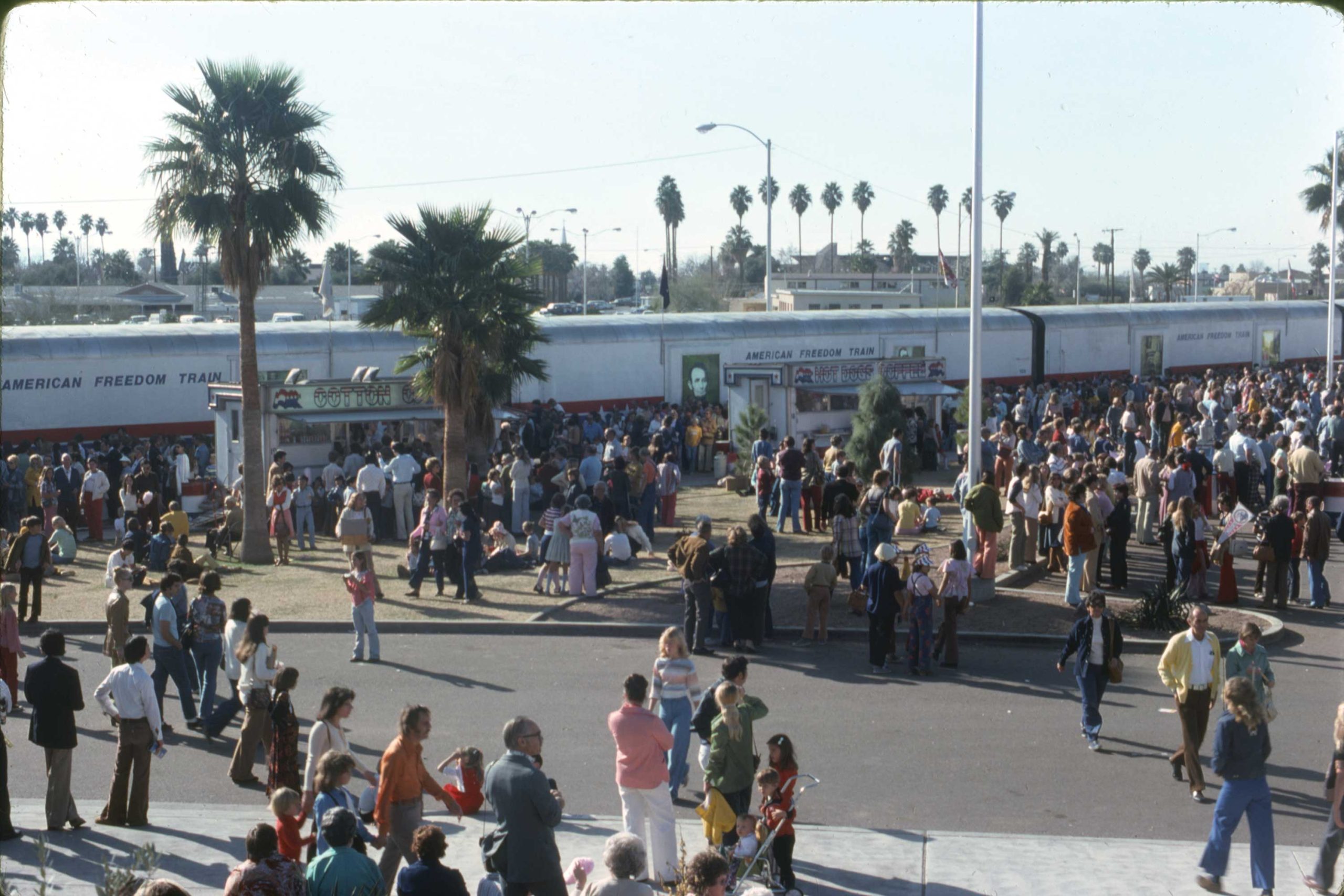
Honoring America’s 200th birthday in 1976, the American Freedom Train
steamed into Tempe as part of a patriotic tour of the lower 48.
Although it was only January, patriotic revelers were in full July Fourth form, devouring hot dogs and cotton candy and laying Lincoln pennies on the tracks to be squashed into souvenirs. Then came the whistle of the approaching steam locomotive, hauling red, white and blue railcars filled with 200 years of priceless Americana.
“When I hear ‘Peace Train’ by Cat Stevens, it takes me back to the American Freedom Train stopping on a rail spur below Tempe Butte during its 1976 national tour,” says Frank Corkhill, then an Arizona State University student. “There were good crowds, and the train cars were filled with amazing artifacts.”
Tempe was the 59th whistle-stop for the train – essentially a steam-powered Bicentennial museum that delighted crowds from April 1, 1975, to December 31, 1976, highlighted by a celebration in Harrisburg, Pennsylvania, on July 4, 1976. Surprisingly, the patriotic locomotive was not conducted by the Ford administration or other government entity, but by a nonprofit group whose roots went back to a chance meeting between actor John Wayne and a runaway teen two decades earlier.
Ross Rowland, a wealthy Wall Street commodities broker with a passion for steam locomotives, was the catalyst behind the American Freedom Train. “Rowland left his New Jersey family in the mid-1950s as a young man, [and] hitchhiked to California, where he met Wayne while working as a landscaper at a Beverly Hills hotel,” says Todd Schannuth, a historian at freedomtrain.org. “Wayne hired Rowland as his assistant for a few months until he reconciled with his dad and returned home.”
Rowland subsequently launched his brokerage career, remaining friends with the Hollywood legend as he navigated the moneyed fjords of Wall Street.
In 1969, Rowland’s financial success allowed him to run a special steam-powered excursion, the Golden Spike Centennial Limited, from New York to Promontory, Utah, to commemorate the transcontinental railroad’s 100th anniversary. “On that journey, Ross bet Wayne he’d win an Oscar for the movie True Grit. They both won, but the bet cost Wayne the cowboy hat he wore in the film,” Schannuth says. “They also discussed how neat it would be to have a similar train for the Bicentennial just a few years later.”
Inspired by that conversation, Rowland assembled a nonpolitical organization to stage an event modeled after an earlier Freedom Train, which, from 1947 to 1949, pulled three cars of early American memorabilia across the country. The Bicentennial train departed from Wilmington, Delaware, on April 1, 1975, for a 21-month, 25,833-mile journey. The 25-car train included 10 converted baggage cars holding 512 artifacts, including George Washington’s copy of the U.S. Constitution and a recording of Wayne reciting the “Pledge of Allegiance.” The train’s $18 million budget included $5.5 million from corporate sponsors, but it needed to earn $24,000 per day to break even, with adult tickets priced at $2 and children’s tickets at $1.
The American Freedom Train, however, soon faced challenges. “The country to date has been rather apathetic about the Bicentennial, and that’s hurt us,” Rowland told The Arizona Republic in May 1975, long before the train’s Arizona visit, lamenting the low turnouts in the early phase of its tour.
Critics were not particularly kind, either, citing the Freedom Train’s commercialism, historical replicas and mechanical walkway, which whisked visitors through the train in 23 minutes. And when large crowds eventually did materialize after the New Year, inflamed by Spirit of ’76 fever, the logistics often failed to meet demand. Frustration peaked in Anaheim with a crowd of 26,500, leading to fistfights as wait times exceeded six hours.
“I think that, being the only national Bicentennial event, we are a national target,” said Janis Burenga, the train’s marketing director, in a January 1976 Republic article.
As for criticism of its souvenir sales, today a foregone fact of any big-ticket event, she said, “No one is forcing people to buy anything.” Merchandise included the usual swag along with a 7-inch single featuring Porter Wagoner and Dolly Parton performing “Here Comes the Freedom Train.”
When the train roared into Arizona for a stop in Yuma in January 1976, wedding bells rang aboard for a serviceman stationed at the U.S. Army’s Yuma Proving Ground. “It’s the United States’ 200th birthday, and this is our way of showing our love for each other and our love of our country,” the groom, Steven Davis, told the Arizona Daily Star. His bride, Cheryl Boaz, said the idea was her husband’s. “I just kind of went along with it.”
The train made a mere five-minute stop in Phoenix because the city declined to cover its sponsorship, which included accommodations for the 135 people aboard. Instead, Governor Raúl Castro and Olympic icon Jesse Owens welcomed the locomotive to Tempe, where it remained for a five-day residency.
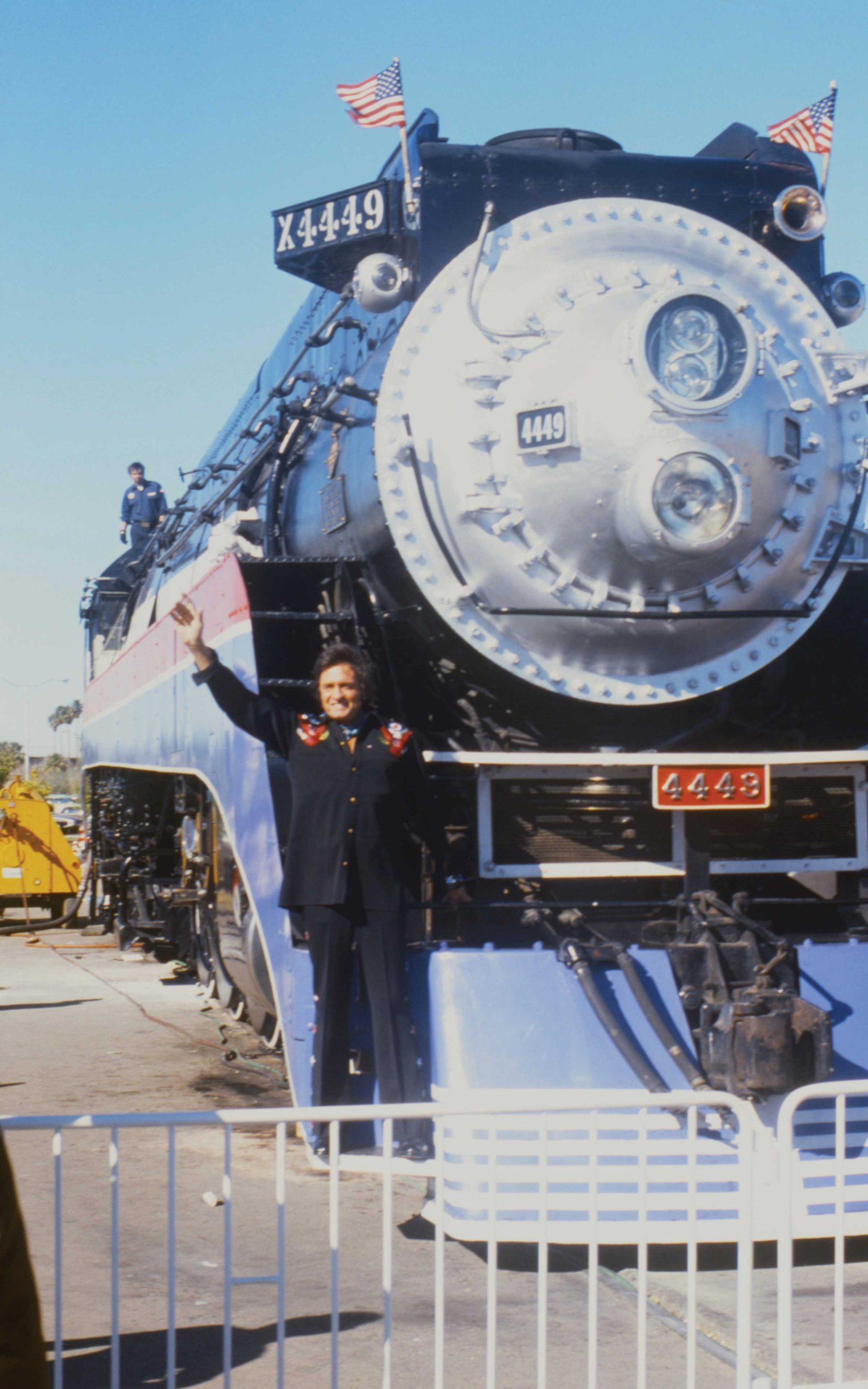
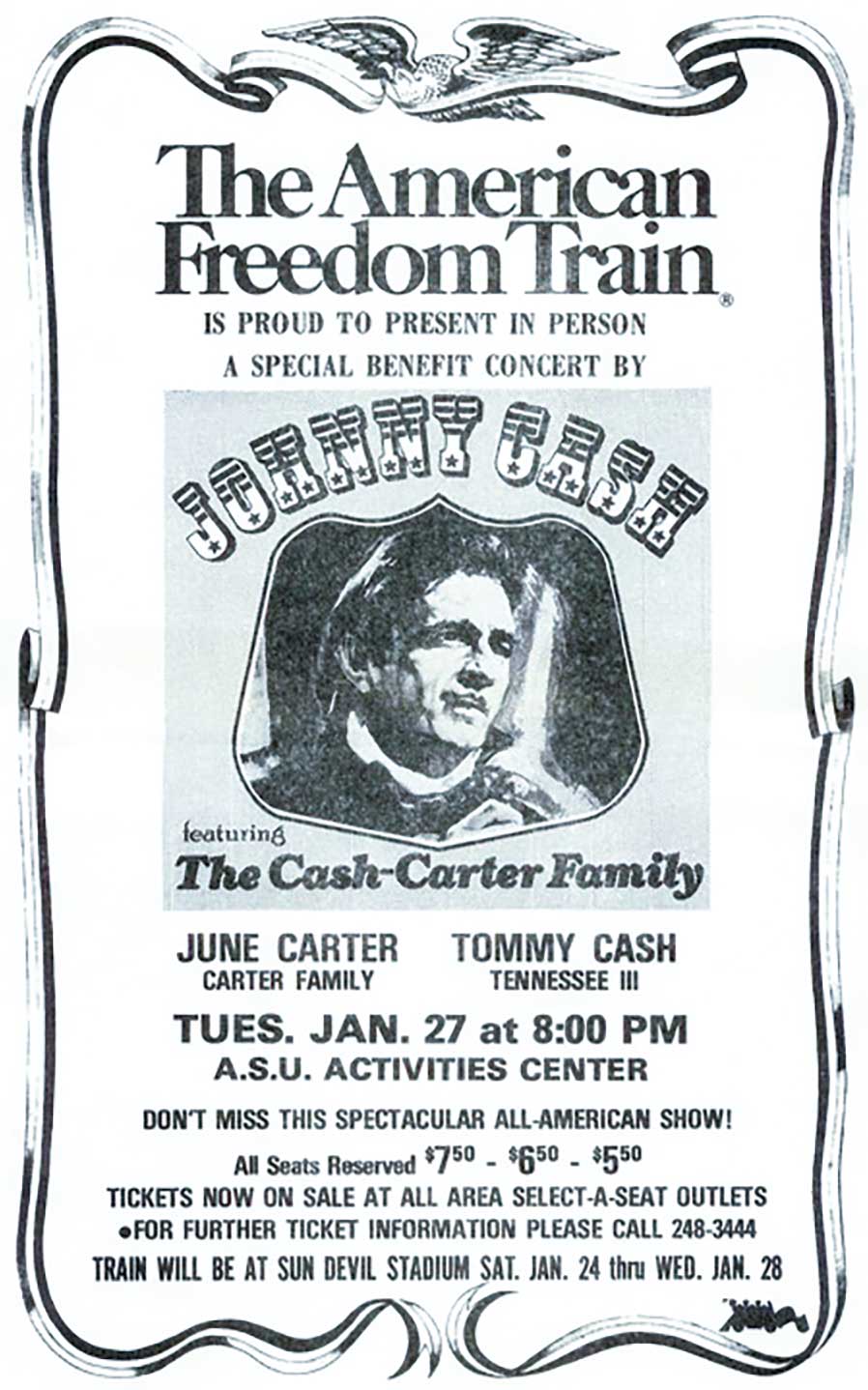
“Johnny Cash recorded a television public service announcement to promote the train early on and, with June Carter Cash, gave a benefit concert in Tempe on January 27, 1976,” Schannuth says. During a preconcert tour, the man in black skipped the artifacts and spent the entire visit enthralled by the steam engine.
“The line was very long, so my mom, sister and I just looked at the train,” says Jim DelRae, a retired delivery driver. “It was the first time I had ever seen a steam engine, which was super cool.”
Afterward, the train made its last Arizona stop in Tucson and continued chugging east until it arrived in Miami on December 26, 1976, for its final destination. An effort to recreate the train for America’s 250th anniversary was canceled, in part because of Rowland’s death in 2025.
Asked what the American Freedom Train accomplished during its 21-month odyssey, Schannuth says, “Coming out of an era seemingly defined by political assassinations, civil rights strife, Vietnam and Watergate, the nation was plenty divided as its Bicentennial approached. The train gave Americans everywhere a way to come together and celebrate 200 years of achievements, accomplishments, conflicts and resolutions.”
Bicentennial Tributes
Arizona celebrated the country’s 200th birthday in grand style.
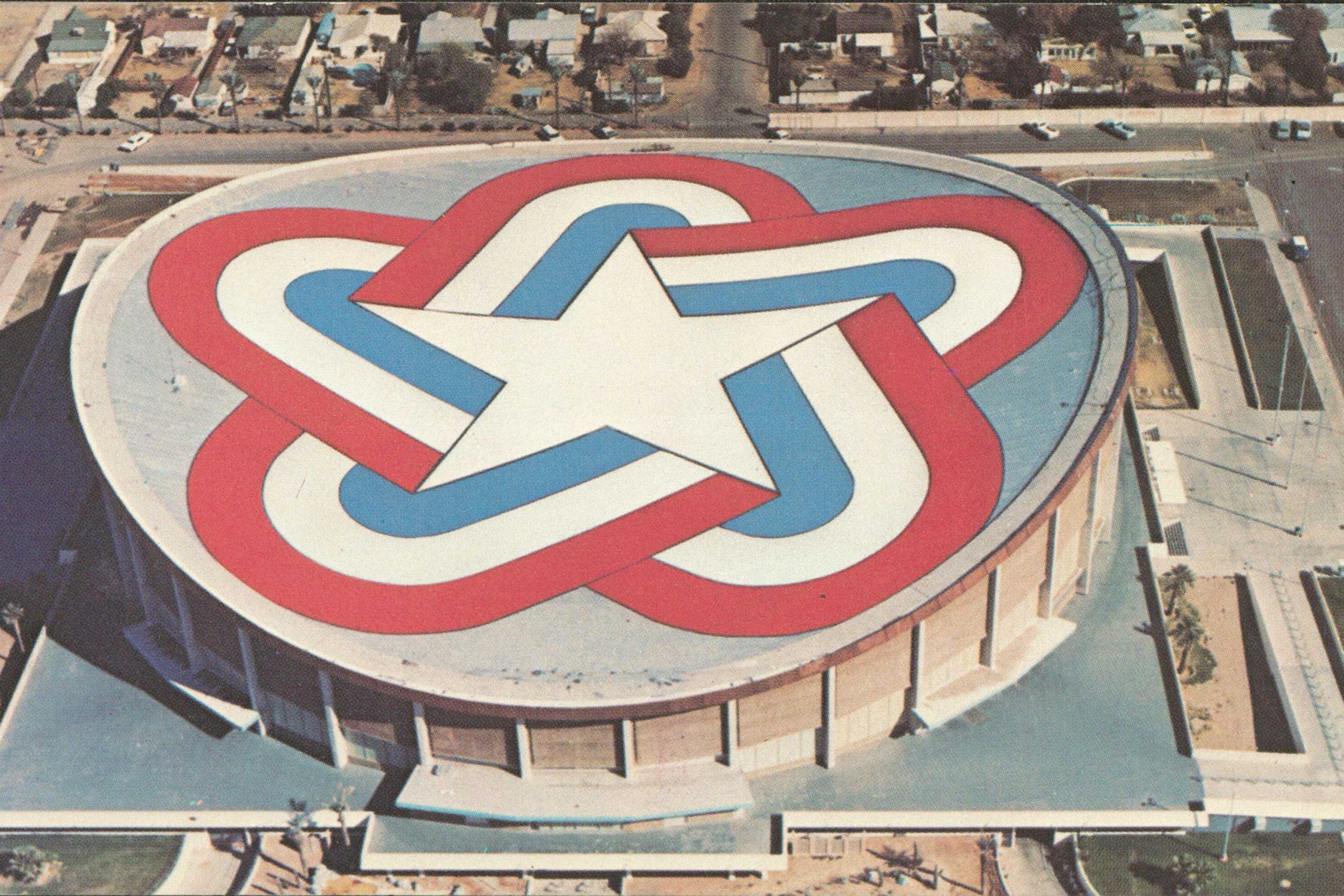
Arizona Veterans Memorial Coliseum
The smiley face painted on the roof of the Coliseum at the Arizona State Fairgrounds was replaced in 1976 with the American Revolution Bicentennial symbol, a double star representing the two centuries since the nation’s founding. This artwork, dubbed the world’s largest painting, contributed to roof leaks that led to the cancellation of a Phoenix Suns preseason game in 1974 due to rain.
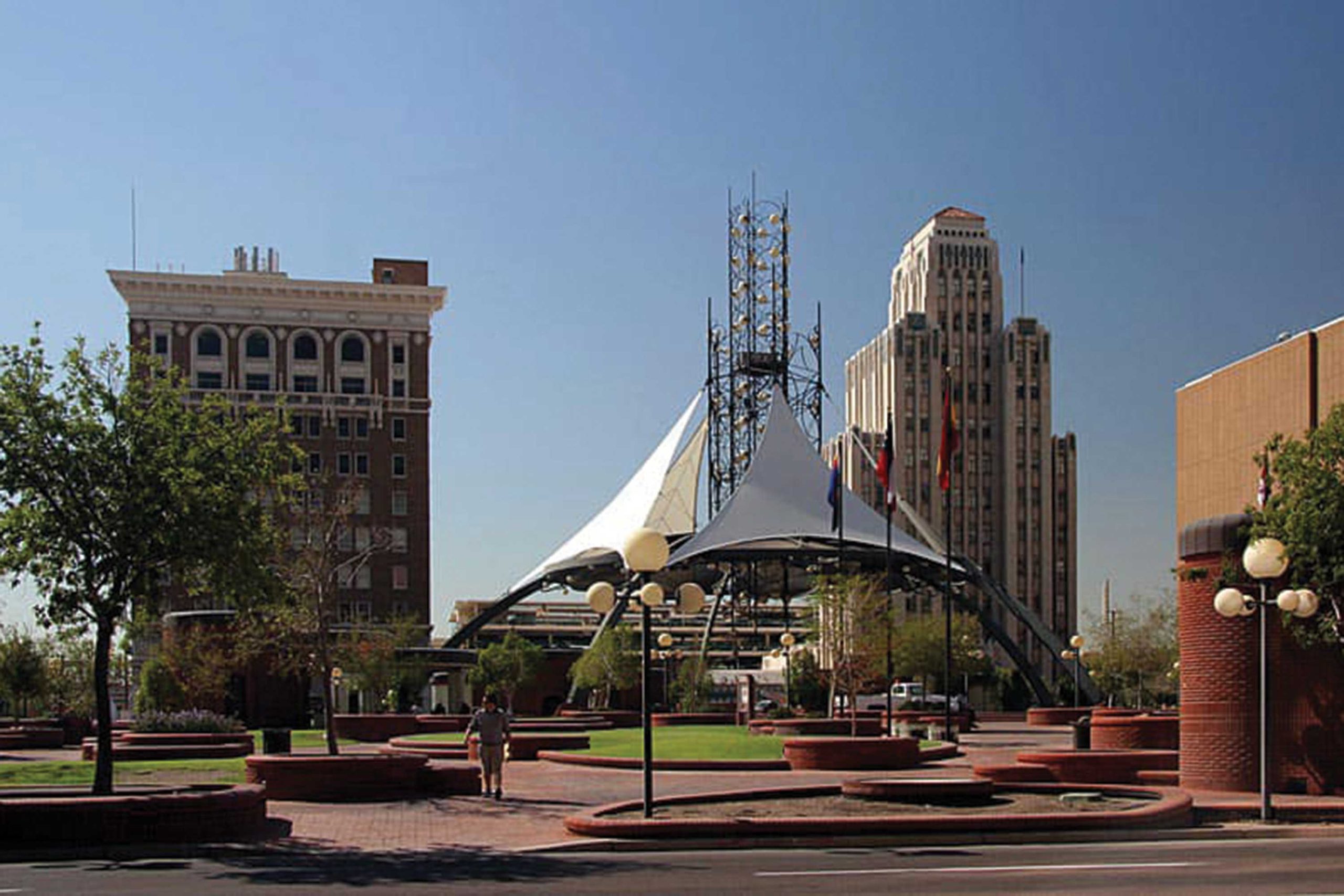
Patriots Square Park
This urban park, created in Downtown Phoenix along Central Avenue between streets named for America’s most famous patriots, Washington and Jefferson, opened in 1976. In the Bicentennial spirit, the Revolutionary War-inspired name beat out runners-up Phoenix Commons and Plaza del Sol. The park hosted festivals until it was redeveloped as Patriots Square at CityScape in 2010.
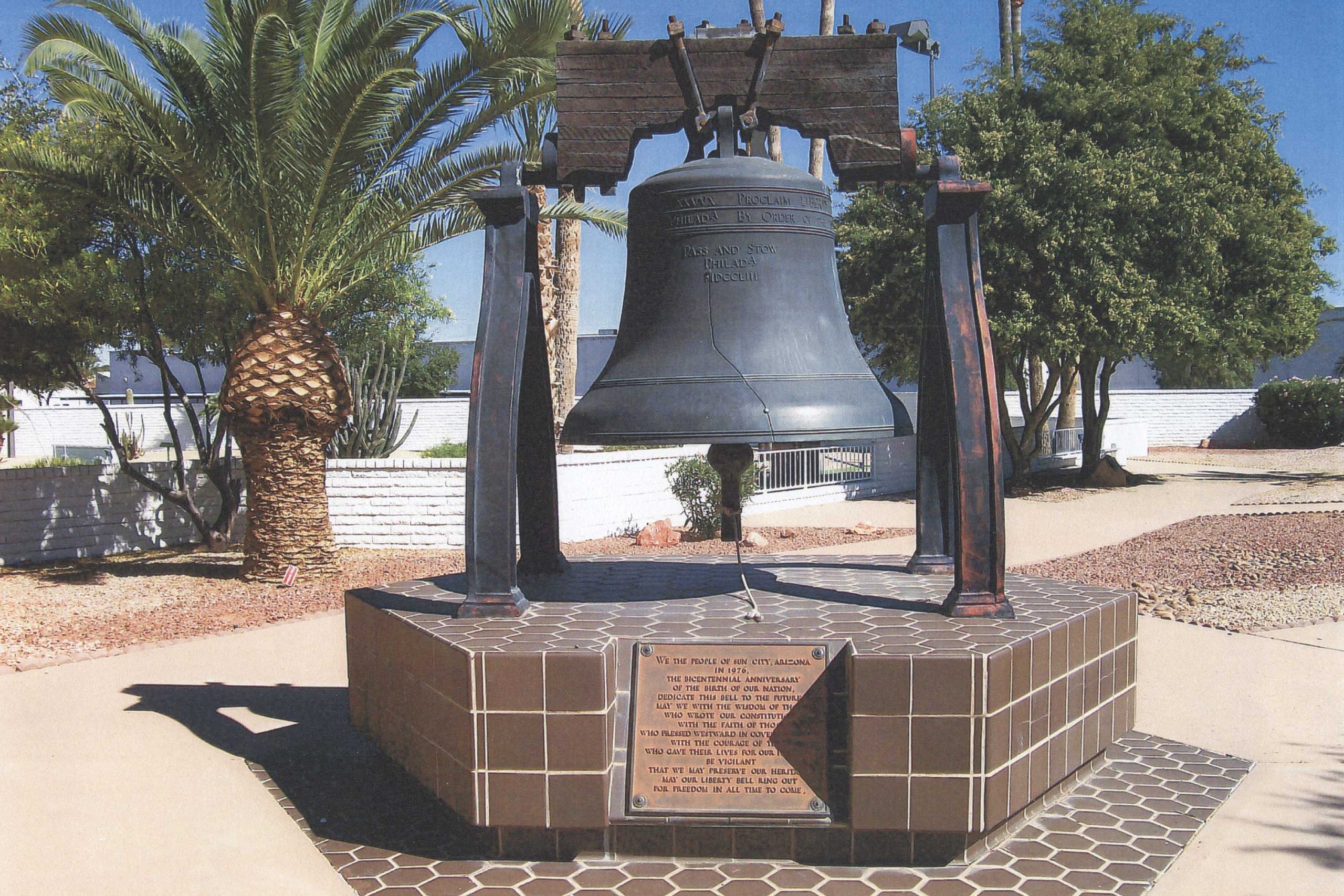
Sun City’s Liberty Bell
In 1976, Sun City residents donated 7,000 pounds of metal to create a replica of the Liberty Bell. The Del E. Webb Development Corp. funded a Pennsylvania foundry to process the metal into ingots, and the replica was cast from the original bell’s mold in the Netherlands. Visitors to the city’s Memorial Garden have rung the 2,080-pound bell ever since to celebrate the nation’s independence.