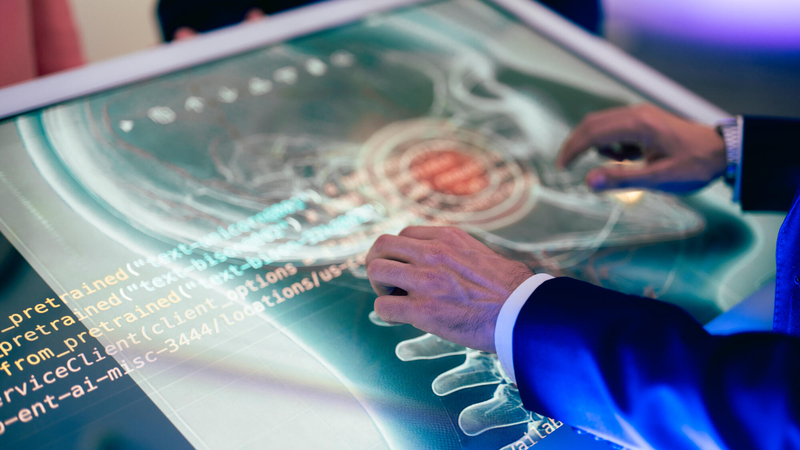
How Mayo Clinic experts are using innovative AI tools to improve cancer care.
Radiation therapy is a common and effective cancer treatment that uses high energy beams to kill cancer cells. In fact, about half of all people with cancer receive radiation therapy as part of their cancer-directed treatment. The goal of radiation therapy is always to target cancer in the most precise way, while sparing surrounding healthy tissues from the consequences of radiation and minimizing side effects.
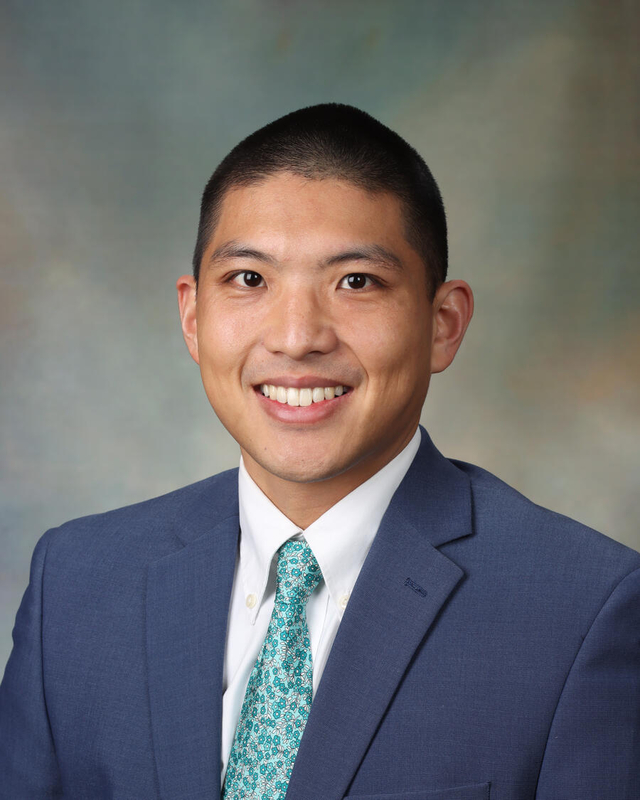
As the director of AI and data science in the Department of Radiation Oncology at Mayo Clinic in Arizona, Dr. Nathan Yu is excited about a host of innovations that are making radiation therapy safer and more personalized.
AI-assisted segmentation
At Mayo Clinic, AI is already being utilized throughout the patient journey — from summarizing prior health records for the care team before your initial visit, to documenting appointments seamlessly, to aiding in treatment planning.
One essential part of radiation therapy planning involves segmenting, or contouring, which is the process of outlining tumors and surrounding healthy organs on medical images to define the treatment area. Mayo Clinic created custom AI tools capable of auto-segmenting both tumor targets and normal tissues in the body — tools now widely used in standard radiation therapy.
“We’ve developed models that can segment tumors based on MRI and CT images,” says Dr. Yu. “Although these contours are generated and presented to each physician as a potential starting point, the physicians always review the treatment plan for finalization or modification.”
Requiring final approval by human experts is an important point, notes Dr. Yu, because at Mayo Clinic, AI doesn’t replace doctors’ judgment — it enhances it. “AI models help us find and deliver the best treatment plan faster,” he says.
Matching patients to clinical trials
Another exciting way Mayo’s radiation oncologists have incorporated AI is through an automated system for clinical trial matching. An AI-driven process notifies radiation oncologists across Mayo Clinic sites of their patients scheduled for the day with clinical summaries and suggestions for relevant clinical trials — helping physicians match patients to the right trials in real time.
The system is powered by RadOnc-GPT, a custom large language model trained on high-quality data from Mayo’s own radiation oncology patient records, providing an added level of accuracy and trust.
Adaptive radiation therapy
Most radiation courses require multiple daily treatments, and traditionally, the same dose plan is delivered each time. Adaptive radiation therapy (ART) is an innovative new approach that allows Dr. Yu and his team to adjust the radiation plan to accommodate changes in a patient’s anatomy or cancer during radiation, making targeting more precise. For example, as a patient’s tumor begins to shrink over the course of therapy, the care team can modify the dose of radiation and the size and shape of the treatment area each day to reflect the decreasing size of the tumor.
“The goal of ART is to improve cancer control and reduce side-effect risk as much as possible,” says Dr. Yu.
But adaptive radiation therapy involves a highly complex daily process that’s currently very time- and resource-intensive. For ART to become the new standard of care, radiation oncologists need to be able to accelerate each step. So Mayo Clinic’s radiation oncology team is actively testing new ways to use AI to evaluate the patient’s evolving anatomical structures in real time and fine-tune the radiotherapy dose plan accordingly.
Keeping patients comfortable and connected
Mayo’s radiation oncologists are also delivering innovative tools that go beyond artificial intelligence. HopeSphere is a virtual reality (VR) tool that allows patients, particularly family members of children, to maintain a real time, interactive connection during radiation treatment. Developed at Mayo Clinic, HopeSphere helps alleviate the separation anxiety people feel when their loved ones can’t be present in the treatment room.
The VR system can also transport patients to calming virtual environments — a beach, for instance — reducing anxiety during treatment.
“While no one wants to come to the radiation oncology department, we do our best to make it as pleasant as possible when a patient is here,” says Dr. Yu.
Cutting-edge care, delivered with compassion
Even with all these advanced tools improving care, Mayo Clinic understands that compassion is the key. It all goes back to Mayo Clinic’s core value: the needs of the patient come first.
“Receiving a cancer diagnosis is difficult. Patients are faced with an avalanche of emotions and a web of possible treatment decisions,” says Dr. Yu. “Our mission is to allow people to continue doing the things they love without worrying about the complexities of cancer care.”
Visit Mayo Clinic’s website to request an appointment or to learn more.