
Press Coffee’s new farm in Panama yields its first Reserve blend.
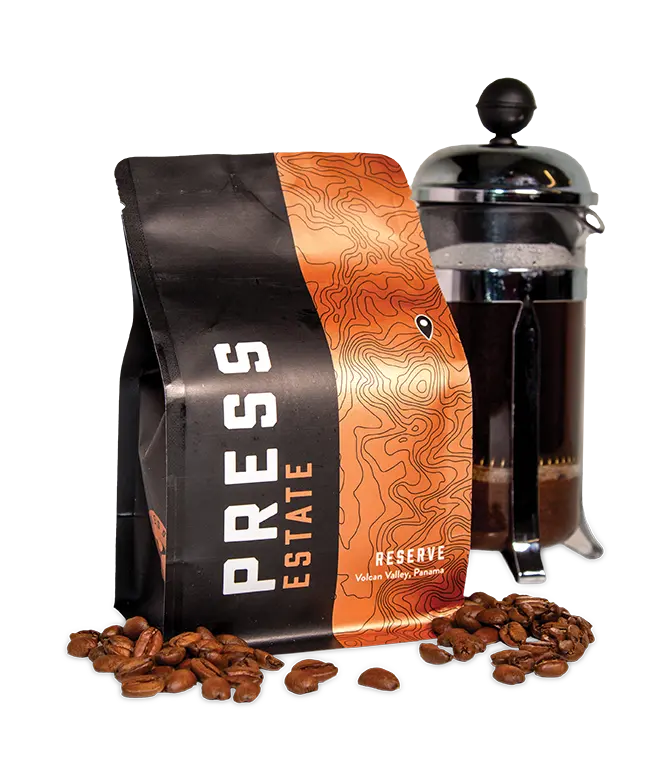
Even as he was getting the Valley hooked on his delicious, generously caffeinated Americanos and lattes, Press Coffee founder Steve Krauss was suffering from a wee touch of impostor syndrome. The problem: Though his suppliers and processing methods were dialed-in, Press was outsourcing all the actual farming. That changed last year with the company’s acquisition of a 170-acre coffee farm in Panama’s Volcán Valley, where the 6,000-foot elevation and proximity to an active stratovolcano generate the “superior soils” and “ideal microclimate” for coffee cultivation, he says. This spring, the first Press estate beans became available to his customers, including the ultra-premium Reserve blend – a seasonal grand cru designed for true coffee nerds. Krauss led a cupping.
Press grows two coffee styles on the estate: Gesha (an Ethiopian varietal known for its floral notes) and heirloom varietals. These provide the basis for both its estate blend (available as a drip coffee at all Press cafes) and the Reserve (limited availability).
Not unlike a winemaker, Krauss cherry-picks his Reserve coffee from trees in some of the most unique locations on the farm – often shaded areas with longer ripening arcs. “These areas are difficult to farm but create coffees like none other,” he says.
After harvesting, the coffee berries are submitted to one of several “processing” methods – essentially, separating the pulp and skin from the seed, or bean. This is where Krauss and co. get artful. The current Reserve blend uses honey processing, in which a thin layer of honey-like mucilage remains in the bean.
The processed beans are shipped to Arizona for roasting, where they acquire, for instance, the honeysuckle florals and bright notes of lemon zest delivered by the current Reserve blend, available through the summer while supplies last. “The mouthfeel is silky and precise, finishing soft and clean,” Krauss says.