In a new memoir, Bill Sassenberger considers punk music and lost love.
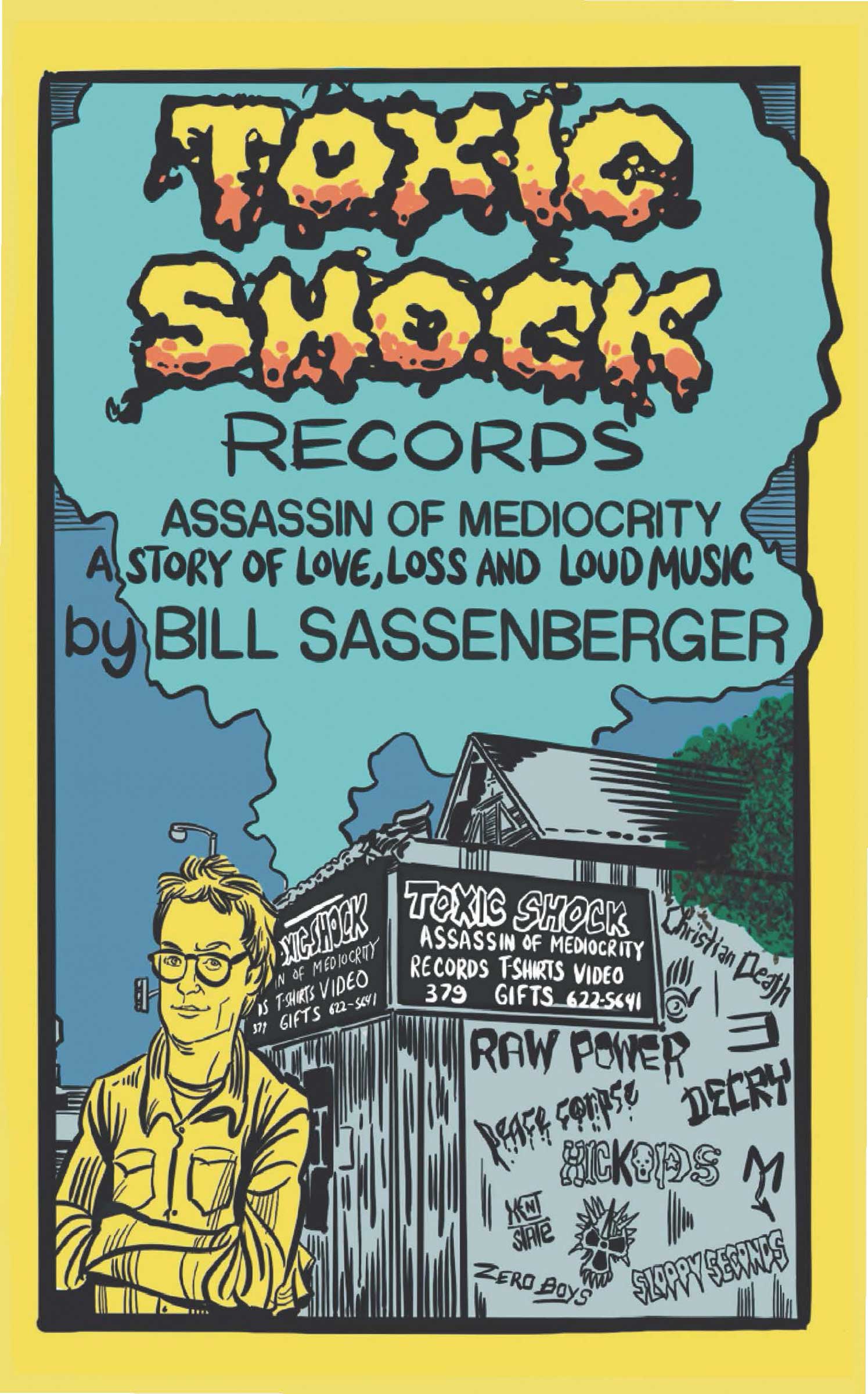
It was about getting his life onto the page, Bill Sassenberger tells me when I ask about his new memoir, Toxic Shock Records: Assassin of Mediocrity – A Story of Love, Loss and Loud Music (Fluke Publishing). The book chronicles Toxic Shock, the record store and punk rock label that Sassenberger and his wife, Julianna Towns, founded in 1980 and ran for nearly 35 years – first in Pomona, California, and later in Tucson. Fans of punk history and those who hang onto concert ticket stubs and collect old Hüsker Dü records will enjoy Sassenberger’s sharp memory.
“I needed to get all my stories together,” he says of his memoir. “To expand on things I’d written about in the Toxic Shock newsletter, but get it all in some kind of order.”
One of those stories – perhaps the most profound story of his life – was about Towns’s death from complications of a stroke she’d suffered in 2011. Sassenberger begins each chapter with journal entries about her recovery and rehabilitation; she died in 2019.
“It was quite an experience,” he says of Towns’s last years. “She was a huge part of everything I’ve done, and [losing her] was horrible. It wasn’t something I wanted to gloss over. I wanted to tell the whole thing.”
I apologize to Bill for having to ask, and then I ask: Why punk?
“It had a certain rebellious quality that was lacking in a lot of ’70s rock music,” he says. “I was already in the counterculture movement. When hippies got lame and neutered, punk made rock ’n’ roll exciting again. More dangerous and less respectful. It was anti-authoritarian, like rock used to be.”
Arizona helped shape the sound of early punk, Sassenberger believes.
“Everyone thinks that punk came out of Los Angeles,” he says. “But the desert had a huge impact on how that music was created. Phoenix had Jodie Foster’s Army and the Mighty Sphincter and Meat Puppets and The Feederz. Tucson had the Giant Sandworms. These were all very different from what was coming out of L.A.”
I tell Bill I worry about becoming an old fogey who thought music “from the old days” was somehow better. He says he understands.
“Maybe I’m becoming that guy, too,” he admits. “I don’t know. Whatever you grew up with, that’s the stuff that sticks with you. It’s nostalgia. But I do try to explore new bands and music. It’s hard to get motivated to check out new stuff when there’s so much great old stuff to listen to again.”
Robrt L. Pela is a Pulliam Prize-winning journalist
and a longtime cultural critic whose essays appear
regularly on National Public Radio affiliate KJZZ.