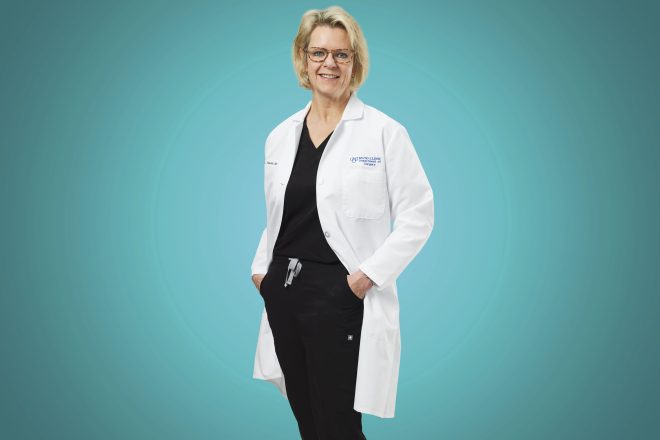
Breast Cancer Surgery
Med School/Year Graduated: St. George’s University, 2014
Years in Practice: 5
What kind of special training is required for breast cancer surgery?
Breast surgeons typically undergo five years of training in general surgery and then go on to complete a fellowship specializing in breast surgical oncology, which is an additional year. During this time, we’re immersed in the multidisciplinary approach needed to treat breast cancer [and] spend time perfecting different surgical techniques, including skin- and nipple-sparing mastectomies and the oncoplastic arrangement of tissue for optimal cosmetic results.
Oncoplastic arrangement? What’s that?
[It includes] optimal scar placement and rearrangement of breast tissues to fill the defect that may occur after a partial mastectomy or lumpectomy. We might also perform something called “symmetrization” of the patient’s contralateral breast – essentially, making the other, healthy breast look the same. And other techniques, as well.
How frequently do you see breast cancer affect men? Do the symptoms and treatment differ?
Breast cancer in men is very rare, but I do see several cases every year. Less than 1 percent of all breast cancers occur in men. Treatment options are typically similar to those in women.
What are indicators that a person is at a higher risk for breast cancer?
Most breast cancers occur sporadically, but indicators can include environmental exposure, family history of disease… plus hormone replacement therapy, diet and other health-associated factors like obesity, smoking and alcohol use.
What are your hobbies and interests outside medicine?
I’m an avid hiker and outdoorsman. I enjoy cooking, traveling and spending time with my family.
“If I wasn’t a doctor, I’d be…”
Most likely a zoologist or archaeologist. I’ve always been passionate about nature, wildlife conservation and history. As an undergraduate, I studied primates in Peru and assisted in an archaeological excavation of an ancient Roman settlement in Italy.