In a form of traditional Mexican healing called curanderismo, medicine and memory intermingle in practices that are centuries old. Modern curanderas are preserving this everyday magic for future generations.
By Leah LeMoine | Photography by Mirelle Inglefield

Memory always resurfaces. It might be unearthed by taste – a sip of chamomile tea, a bite of raw garlic. Sometimes touch triggers it – socks to keep feet warm, ears tucked under scarves to protect against wind. Aroma is the most powerful stimulus – burning cedar, damp earth, Vicks VapoRub.
For many Chicanos, these specific sensations shake loose childhood memories of nurturing and healing. Sometimes, the memories go even further back.
“When I started working on people through massage therapy, I began to have ancient memories of healing ways,” Patricia Federico says. “It was my way into the healing work… I know our ancestors were doing this kind of work way before us.”
Federico is a curandera, a practitioner of curanderismo, a healing tradition born of the interaction between Indigenous, Spanish, West African, Arab and Asian medicine ways in Mexico more than 500 years ago. As with many traditional systems, it’s passed down orally – no guiding text, no dogma, no board exam to pass. And, like many traditions practiced by people of color, it has been suppressed by the dominant culture – so much so that generations of curanderas (and their male counterparts, curanderos, and nonbinary curanderes and curanderx) practiced in secret, especially in Arizona.
Shifting cultural views have made it safer for these healers to come “out of the curandera closet,” Federico says, and for those sifting through memories of family remedios (remedies) and curas (cures) to reconnect with their roots.
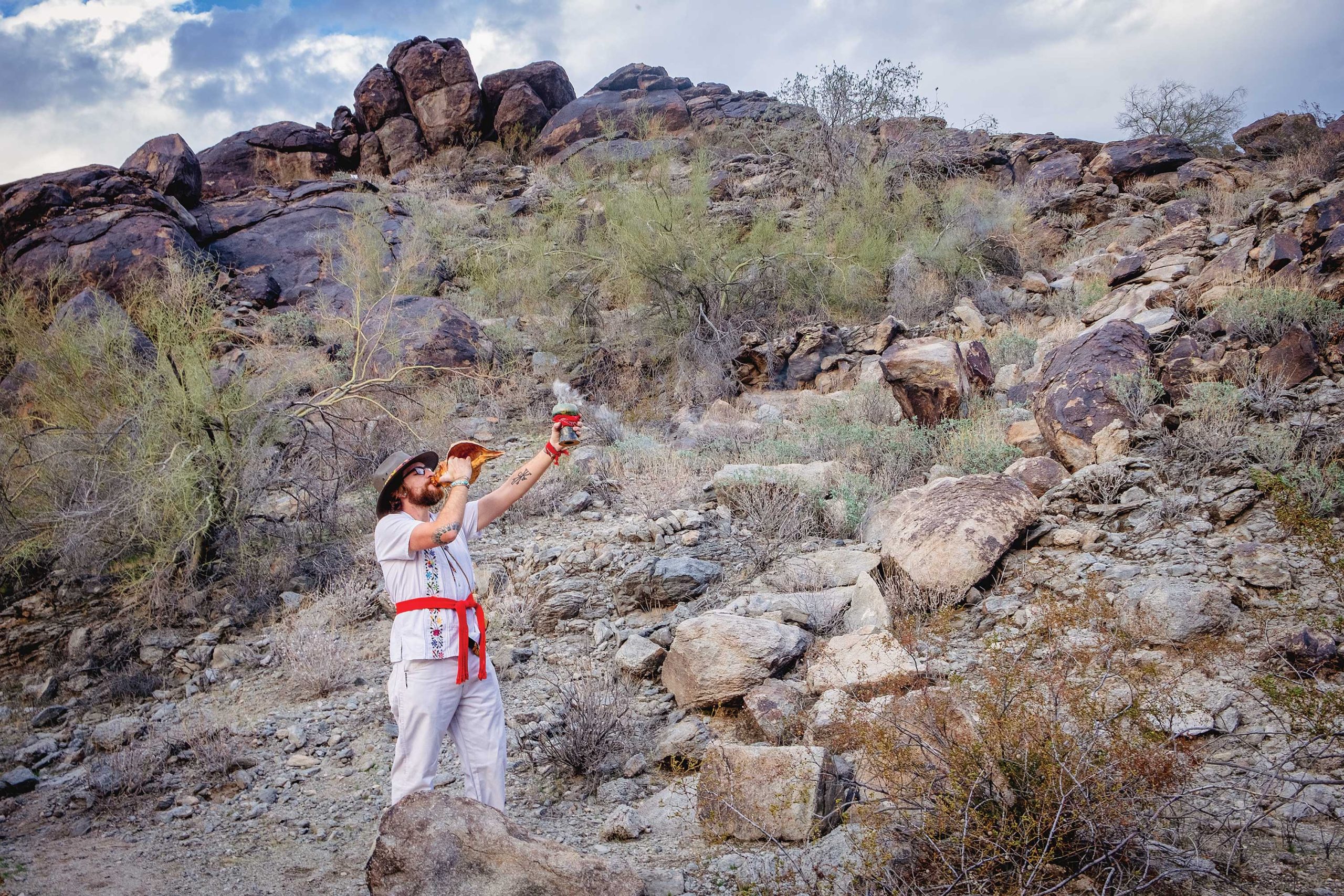
“The term curanderismo is fairly recent,” says Jesús Cuauhtémoc Villa, a curandero, anthropologist and professor at Maricopa Community Colleges and Arizona State University. “That term didn’t come into prominence until the ’60s or really the ’70s at the earliest, as a way for mainly academics and people outside of the tradition to describe it a little more cohesively.” He credits the Chicano Movement – the civil rights movement of the 1940-1970s led by César Chávez, Reies Tijerina and others – for “a lot of the kind of cultural reformation of Indigeneity, of Indigenous ways of traditional medicine.”
Before then, it was known simply as nuestra medicina, or “our medicine.” Sometimes just medicina, medicina tradicional, remedios or curas. Its matter-of-fact existence in people’s lives and lack of formal codification means it defies easy definition. “There’s no one curanderismo. There are as many curanderismos as there are practitioners,” Villa says. “Every family, region, city, state and individual has their own unique version.”
Federico didn’t encounter the term until she was well into adulthood and her own journey as a healer. “My aunt was a sobadora, which is a hands-on healer… I had not heard the word curandera. I only knew the word sobadora,” she says. “As a little girl, I observed my aunt doing rituals and healing modalities on infants… I learned a lot by example from watching my aunt.”
There are many types of curanderos (used interchangeably here with curanderas; we also use the gendered endings of Spanish words interchangeably here). Consejeros are spiritual consultants, hierberos work with plants, sobadores do traditional massage and energy work, hueseros set bones and do chiropractic care, and limpiadores conduct ritual cleansings. Some might choose a single specialty, while others practice multiple. Their shared goal is “maintaining a harmonious balance of health, of social relationships, of environmental relationships,” Villa says, and to empower people to find healing energy within themselves.
“Eres tu propia medicina, you are your own medicine,” he says. “We are here to help you when you need a specialist, or when you need that advanced knowledge, but ultimately the idea is you should be able to learn how to make a tea when you’re sick, or how to do a cleansing when you want to let go of something… You deserve to have all the tools and knowledge necessary to keep you and your loved ones well without relying on the medical system, traditional or not.”
Having said that, he’s quick to assert that curanderismo shouldn’t be viewed as a one-for-one replacement for modern medical care. Curanderos can and do treat minor maladies like colds, fevers, cuts, burns and bruises with plant/nature medicine – teas, poultices, exposure to water of varying temperatures, etc. “But for major stuff like a compound fracture,” Villa says they would encourage patients to see a medical doctor. “My great-grandfather, as a huesero, would do his best to set that… But the reason that there’s a lot fewer hueseros these days is because it is better to go to the hospital and get all of the hardware put in there to make sure that it heals really functionally.”
Where curanderismo sings is the interplay of body and soul, the energy that we speak of in traditions like reiki, reflexology and chakra alignment. “We do curative work, but we mainly focus on the healing side of things,” he says. “How can we, at a broader holistic level, not just on the physical one, restore your sense of being your best self, about feeling truly well?” Restoring the flow of energy in the body through healing touch (massage), breathwork (meditation) and rituals (cleansing a body or space of harmful energy) are ways curanderos do this.
“It’s a mistake, I think, to characterize curanderismo as alternative. It is complementary,” Villa says. “The vast majority of healers who work in and around curanderismo take the position that we respect our fellow healers, and you choose the right medicine for the right thing.”
For something serious like cancer, Villa recommends consulting a medical doctor. “It would be very inappropriate for anyone – curandero or curandera or curandere – to say, ‘No, you don’t need chemo. You don’t need X, Y and Z. What you need is hierba de San Juan,’ or whatever,” he says. “There are plenty of plants with strong anticarcinogenic properties, but those are to be used in conjunction with your physician’s recommendations – biomedicine, what might also be called modern or Western medicine, [though] I’m not a fan of those terms…
“So, it’s not either/or. It’s both/and.”
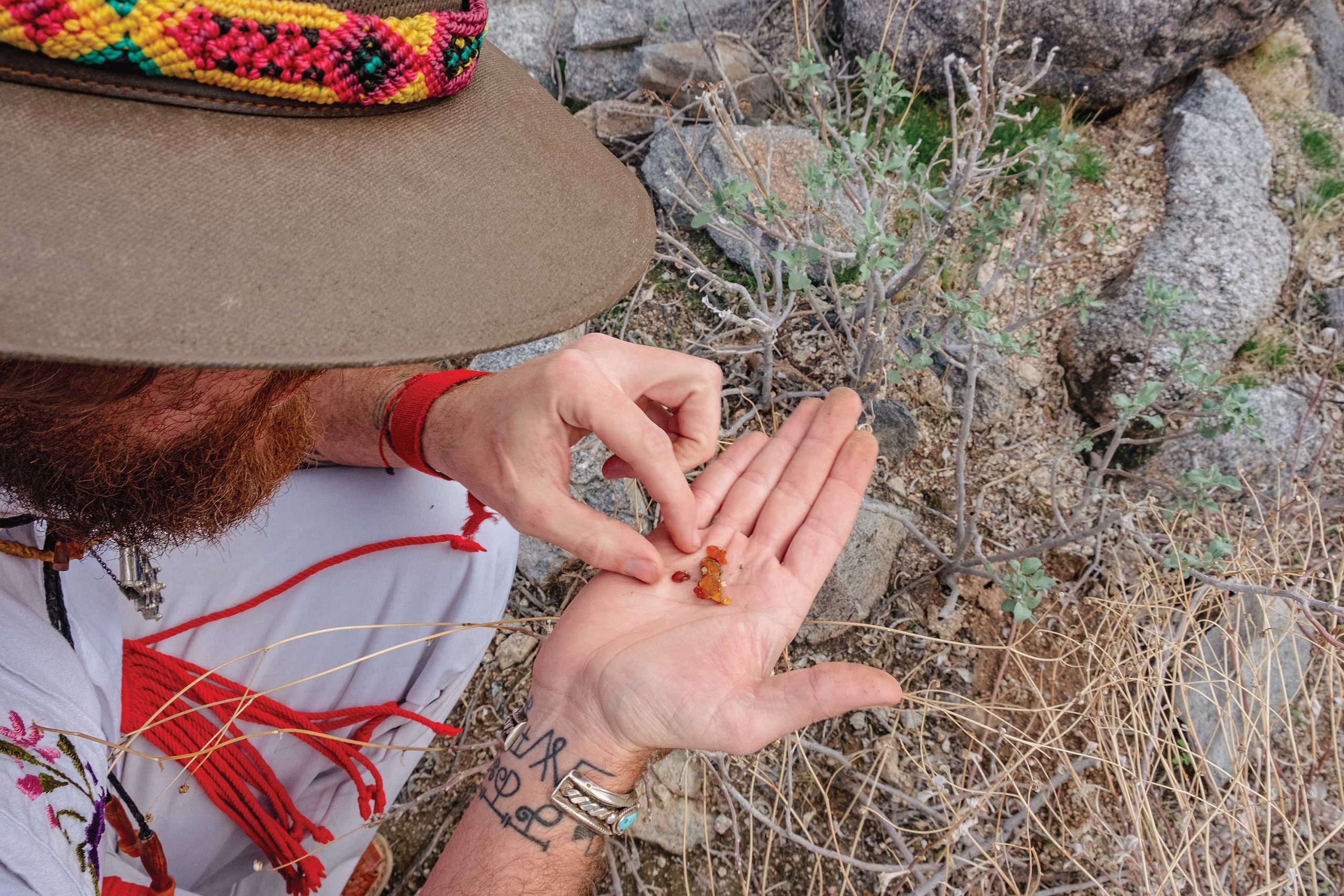
When Felicia Cocotzin Ruiz was growing up in Phoenix, it did feel like an either/or proposition – and curanderismo wasn’t it.
“I don’t want to make this all about colonization… Maybe the word assimilation is better. I think so many of us growing up, especially in the bigger cities like me, we had to assimilate, and often not by choice,” says the healer, who is known as the Kitchen Curandera for her specialization in culinary medicine. “A lot of those traditional healing modalities were kind of on the back burner. So, maybe we knew a great-aunt, a great-grandmother, someone just a generation ago that was still putting these in practice. But a lot of our parents… they weren’t trying to cause harm, they were just trying to help us fit in.”
The pressure to conceal their family’s traditions and adapt to mainstream American culture left many Chicanos feeling rudderless, with a fractured sense of identity. Tucson curanderismo student and Yolia Botánica owner Guadalupe Tineo says her “identity issues” were exacerbated by growing up undocumented after moving to the U.S. when she was 10. She was bullied for her accent, her name and her “weird” ways.
“The healing really came from battling a lot of who I was… [and] trying to give voice to something that is happening to so many people, not just me, not just my family,” she says of her journey to become a healer and help others in similar situations. “They have no clue of what their culture means to them because their culture has been portrayed as something they should be escaping from and walking away from, not something that they should be embracing.”
Despite its large Latino population, Arizona historically has not had a hospitable climate for traditional Mexican healing, Villa says. “There was a lot of work done to actively suppress that kind of stuff – curanderismo and Mexican culture in general – and to assimilate in Texas [and] here in Arizona,” he says. His home state of New Mexico has been friendlier.
“There is a really strong sense in New Mexico that this is nuestra medicina. It’s just like, ‘Oh yeah, that’s just what the grandmas did.’ And there’s not nearly the negative stigma that you find basically anywhere else,” he says. The stigma: being labeled a bruja, a witch, someone doing dark magic.
The comparative lack of development was a factor as well, since rural communities were under less scrutiny. “It also helped that Albuquerque, in particular, became one of the big hot spots of Chicano activism and of Chicano identity, a lot of Indigenous revitalization,” he says. “I think it’s no coincidence that curanderismo is so strong and prevalent and accepted in New Mexico.” These assertions are difficult to quantify, since nothing about curanderismo is “official.”
The University of New Mexico even has a curanderismo course, conceived by Dr. Eliseo “Cheo” Torres. More than 2,000 students had taken his class before he retired in 2021, and the summer program he started draws healers from around the world for community and dialogue. It’s where Federico had a breakthrough, more than a decade into her work as a healer.
“My eyes and my heart were opened up to my own truth,” she says. “I went to the university going, ‘I’m a sobadora.’ … And [my teacher] said to me, ‘You’ve been a curandera, and you don’t even know it.’” Federico started working with Kalpulli Teocalli Ollin – “a kalpulli is a group of people that study curanderismo and serve community” – there and felt connected to her fellow healers in a way she never had back home in Arizona.
After a few years, Federico’s teacher said she was ready for her sahumerio, or sacred cup for rituals, and she was initiated as a curandera. Not all practitioners have initiation ceremonies, but all must study and/or apprentice until they are deemed “ready” to take on that title by their elders. Just like her delayed identification as a curandera, Federico didn’t realize she was an elder – a revered member of the community who mentors others on their curanderismo paths – until she had been serving as one for a while.
“When I was asked to be a teacher in Arizona from the group in New Mexico, my reply was that I wasn’t ready,” she says. “But what I discovered is that I’m like my tía. My tía taught me by example, and I realized that I was sharing and teaching other people by my example. I thought, ‘Wait a minute. I guess I am teaching people.’… And that’s how they started calling me maestra.”
Federico had long ago assembled her own “council of elders,” a multicultural and multifaith group that includes local artists Zarco and Carmen Guerrero. And she’d started hosting “healing circles,” which drew aspiring curanderos including Cocotzin Ruiz and Villa, who apprenticed under Federico before being initiated in 2018 and 2021, respectively. She has served as a maestra (teacher) to about 25 curanderos and worked with more than 50,000 people in her Mi Tierra Healing Arts practice – including a politician in the Biden administration she won’t name. She’s the grande dame of curanderismo in Phoenix, if not in all of Arizona.
“Patricia is absolutely a pioneer,” Villa says. “Not just in practicing the medicine, but bringing it to more open acceptance.”
Tineo speaks of Federico and her Phoenix community with longing. “There isn’t something like that here in Tucson,” she says. “If there is, they’re hiding, because they’re not easy to find.”
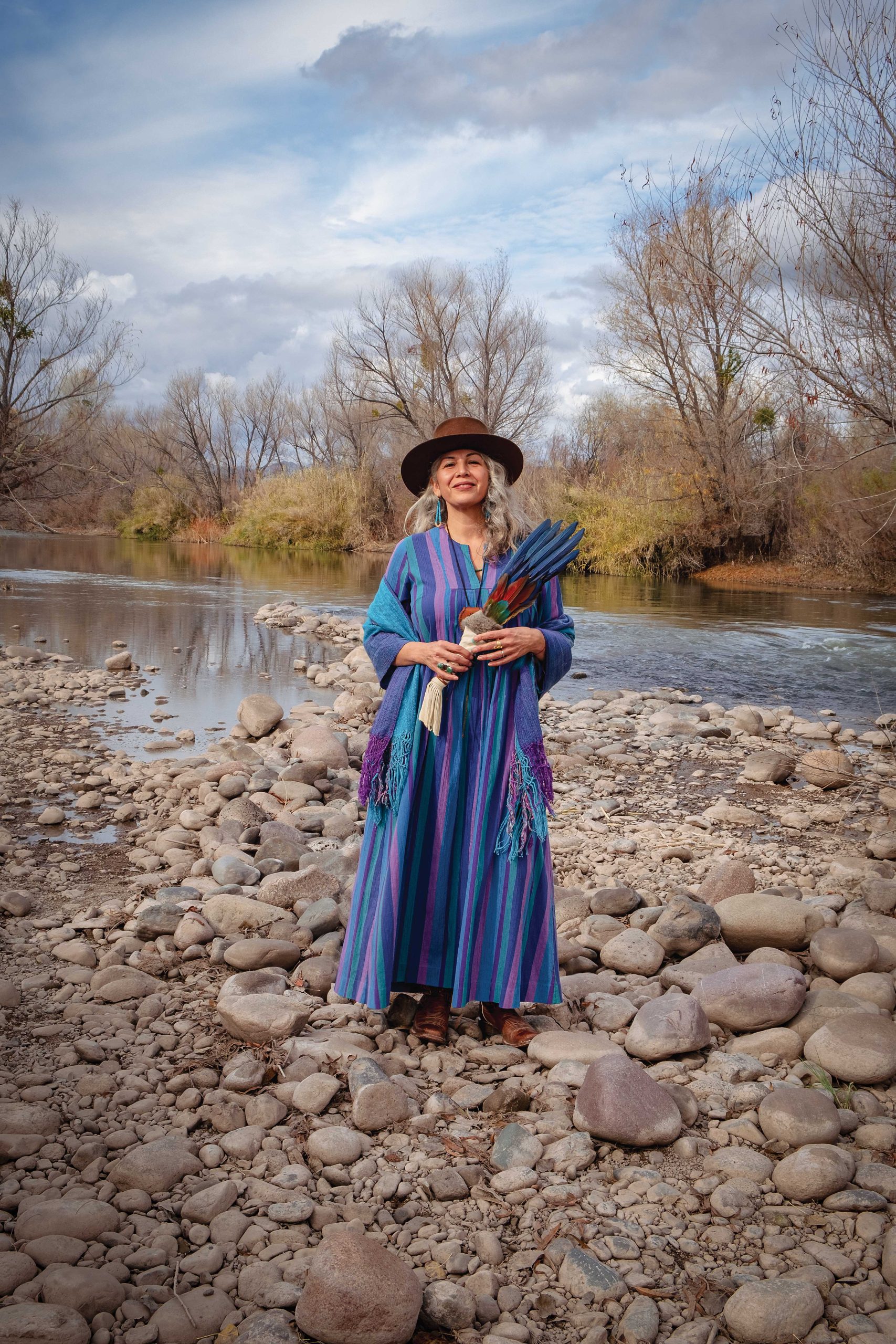
The cloistered nature of curanderismo has occasionally mystified physicians. When Dr. Kelly Winnett was doing a clinical rotation at a free clinic at an underserved elementary school in the Roosevelt District, she would often sense her patients hiding something.
“I would start asking about medications and [doing] my proper intake: ‘What have you tried? What works?’” she says. “They would hesitate. And I’d be like, Something’s there. They’re just not telling me.”
Eventually, she’d get them to open up about the herbal medicine they’d been taking. They’d bring in bottles with Spanish on the labels. “I’m sitting there on Google Translate typing, trying to figure out what these herbs are, what was the direction, what was going on. And there were times when I could say, ‘These are actually really good herbs, but you’re not dosing it strong enough. You need more.’”
As a naturopath specializing in hormone therapy, Winnett draws from medicine traditions from around the globe, both in her practice at Silver Tree Wellness Center in Phoenix and her own personal health journey. “I’ve done a lot of experimenting in the Chinese medicine world and the Ayurvedic medicine world,” she says. “But that’s just because in school we have the most history about those cultures… That’s not to say that medicine coming from Latin America is inferior.” If anything, she says it highlights the need for more scientific study of curanderismo and its sister traditions, like Santería and Vodou.
“We went from midwives and word of mouth and your local healer and apothecary to Rockefeller medicine, science [and] double-blind placebo control. Can you prove it with a study, and can it be replicated?” she says. “We lost so much of that tradition… I think we’re finding that, as medicine continues to evolve, you’re going to [still] have your emergency care. But where we’re really going to start seeing these leaps and bounds is in these well-known uses of plants that just were forgotten.”
While she prescribes pharmaceuticals, Winnett also employs plant medicine in her practice, typically administered through tinctures because they’re more concentrated than teas. There is a lot of other overlap with some of the healing curanderos do – breathwork, energy work, hydrotherapy. “Water is so healing for human beings, and those traditions were just taken out of mainstream medicine,” she says.
When contextualizing curanderismo in the broader world of medicine, Villa – ever the academic – likes to make a semantic distinction between it and allopathic medicine, the kind that employs pharmaceuticals and surgery. “Biomedicine excels at curative work and curing, which is the elimination of physical pathologies, pathological disease processes,” he says. “So, if you have colitis, it excels at removing all signs of colitis – the actual, physical malady – from your body… Traditional medicine excels at healing, which is the restoration of a holistic sense of well-being – emotional, physical, spiritual, mental, social, environmental.”
Curanderas say they frequently collaborate with N.M.D.s, D.O.s and even M.D.s. – and the referrals go both ways. “In my career, I have had more than one physician recommend their patients [see me],” Federico says. “I had this one doctor, and he would give the people pain pills… they’d come to see me, and I would work on them spiritually and physiologically – the mind and body connection.”
Since curanderismo isn’t a religion or a faith tradition “with strict dogma about who can or can’t heal someone” like Christian Science, the Church of Scientology or Jehovah’s Witnesses, Villa says it is not an obstacle to mainstream medical care.
“In the 19 years that I’ve been practicing curanderismo, I have never once heard of or encountered parents refusing medical care in favor of curanderismo,” Villa says. “By the same token, I’ve never encountered or heard a fellow curandera/e/o/x tell a client they should avoid medical treatment in favor of curanderismo. Every time that I’ve seen parents hesitant to seek medical care, it’s been for much more immediate – and very reasonable – systemic reasons: lack of insurance; fear of medical debt, even with insurance; fear of deportation; fear of a racist and sexist medical system, etc.”
So much has changed since Federico was a little girl experiencing visions and shadowing her sobadora aunt in El Barrio Las Cuatro Milpas in Phoenix.
Scroll through TikTok and Instagram, and you’ll find dozens of content creators proudly identifying as brujas, demonstrating egg limpias (cleanses), deconstructing gender in curanderismo (gender-neutral curandere or curanderx are rising in use) and calling out cultural appropriation when sage bundles are sold at big-box retailers. It’s cool to be witchy, to be different, to put it all out there.
“Bruja is definitely a reclamation,” Tineo says of the Spanish word for “witch,” which has historically had a pejorative connotation that curanderas were fearful of attracting. “It is saying, ‘You used to stone us to death once, and you used to burn us to death once, and no longer.’ … I am so privileged to be able to have this store and openly tell people I am a bruja.”
Cocotzin Ruiz is even coming around to the word, after recoiling from it for most of her life. “I sound like I’m 90 years old, but the word bruja was really kind of how I think of people saying, ‘God, what a bitch.’ … But now it’s funny to see all these people embracing it, and I don’t mind it. I actually like that word. It feels better to me than witch. But bruja to me just means we’re working with energy, we’re working with herbs.”
Tineo and Villa both identify as queer, another word that has experienced a reclamation. Still, Tineo hesitated to come out. “I’m married to a man. I’m a wife now. I’m a mother. I felt like I didn’t need to tell anybody,” she says. “But you know who needed it? My inner child needed it. The little girl that had been rejected for so many different things. I finally was old enough and strong enough to use my voice… A lot of us who have these energetic and metaphysical gifts are queer, are different, are weird.”
Villa says that, anecdotally and in his research, the majority of traditional Mexican healers are cisgender women. “Of the men who do practice curanderismo, almost all of us are queer – members of the LGBQIA+ community,” he says. “There are certainly straight, cisgender men who practice curanderismo, but they seem to be vanishingly rare, the ‘unicorns’ of curanderismo.”
“I think this gender imbalance exists because healing has long been considered and coded as ‘feminine,’ especially since it deals with the holistic sense of feeling truly well – and ‘feelings,’ of course, are ‘feminine.’ Whereas curing has long been considered and coded as ‘masculine’ – the conquering and banishing of physical disease processes and pathologies, doctoring being men’s work and nursing being women’s, etc.”
While Villa appreciates that most of his teachers have been women, queer men and nonbinary people, he wishes more cisgender straight men would pursue the path.
“[Traditional] medicine is for everyone, not just women, feminine-identified people and queer men,” he says. “Even those of us who are well-intentioned and dedicated to anti-patriarchy, gender equality and gender equity in curanderismo still fall into the trap of primarily focusing on the Divine Feminine without ever meaningfully talking about or engaging with the Divine Masculine, which only perpetuates the sense that this is a tradition for women, genderqueer people and gay men.”
Exactly who the medicine is for is another hot topic in modern curanderismo. Is the tradition reserved for those within the cultures that created it?
“This might not be what every healer believes,” Cocotzin Ruiz says. “But my auntie told me that the medicine is for everyone. We’re simply carrying the medicine.”
Villa’s take: “The medicine is for everybody. Its practice is not.” While he mentors people from all backgrounds in The Patiloni Collective, a healing group he co-founded, he encourages his students to use curanderismo as a “springboard” into their own medicine lineage if they do not carry Chicano heritage.
“If the goal is ancestor veneration and reclamation of ancestral medicines, it doesn’t make sense to reclaim somebody else’s ancestors’ medicine. It makes more sense to reclaim your own,” he says. “And what medicine are you going to have more connection with than the ones that literally live in your blood and in your bones and in the stories of your ancestors and family – your legacy of resilience and survival and adaptation.”
Now that they’re out of the “curandera closet,” these healers are looking to the future and expanding the reach of their medicine. They’re not all on social media – some prefer “private practice,” if you will, for only their close circles – but many are, making what was once hidden more accessible to all.
“You kind of had to luckily stumble upon a book or upon a maestro or maestra” before, Villa says. “Now, it’s available at your fingertips… People who are yearning for connection to the ancestral medicines that have been severed through these historical processes and cultural processes finally have an opportunity to weave those threads back into the tapestry.”
A Luddite by nature, Federico nevertheless understood that technology could have an incredible impact on sharing la medicina. She saw the spark of expansiveness in Cocotzin Ruiz. “I knew that my intention was to bring curanderismo to the forefront, into Arizona,” she says. “[Felicia] is much more savvy with technology, and she is more savvy with being out in the world. When I initiated her, I was like, ‘This girl is going to be able to spread the medicine.’”
Federico was right. While she may have created the infrastructure of an “out” curanderismo in the Valley, her student has taken her message of “compassion, empowerment and healing community” even further. Cocotzin Ruiz reached the masses through her 2020 appearance on Hulu’s Taste the Nation with Padma Lakshmi and her 2021 book, Earth Medicines: Ancestral Wisdom, Healing Recipes and Wellness Rituals from a Curandera, as well as write-ups in Forbes, Bon Appétit and The Washington Post. She’s currently working on a children’s book series about curanderas, with the first set for release this fall.
“I’m not [aspiring] to fame, but I do not mind being well-known, because I come from really humble beginnings,” she says. “I also feel that my ancestors have a big play in this, because I have had a lot of doors open for me. People have reached out to me on several occasions asking who my PR person was. And I’m like, ‘Well, the grandmothers are my PR.’”
Earth Medicines has helped a new generation of Chicanos reconnect with the healing traditions of their ancestors, she says.
“One of the biggest things that people would e-mail me about was that this helped them remember a part of themselves that they didn’t realize they had forgotten.”