Jaafar Jackson plays the title role in the biopic Michael. The real-life son of Michael Jackson’s older brother, Jermaine, he’s a bit of a ringer for his famous uncle, and he dances with some of the same inexplicable combination of precision and loose-limbed abandon. Assuming that neither his looks nor his moves were computer-enhanced, it’s a remarkable impersonation.
But it’s not the same as the real thing. The oft-repeated point of Michael is that there was never a performer like him and never will be again, and nothing in the movie disproves this. Directed by Antoine Fuqua (“Training Day”) from a script by John Logan (“Gladiator”), it’s a chronicle of the King of Pop’s rise: the tiny front man of Gary, Indiana’s The Jackson Five, under the thumb of tyrannical patriarch Joe Jackson (Colman Domingo), into Berry Gordy’s stable at Motown, eventually to Quincy Jones-produced solo mega-stardom in the late ’70s and the ’80s.
It’s by no means an unpleasant movie to watch. There’s plenty of great music and dancing and period detail. As so often in movies of this sort, the early scenes, even with the shadow of Joe hanging over the family, are the most fun. It feels a little overlong and poky in the homestretch, perhaps, and it’s very incomplete – a sequel is implied at the end.
Juliano Valdi shines as the pre-teen Michael; he has some of that jaw-dropping prodigality of the genuine article at that age. Domingo, Oscar-nominated in 2025 for his work in Sing Sing, is quietly menacing as Joe, with furtive, deceptive smiles flickering over his face, and a voice like distant thunder. And there are some amusing pageant figures in the supporting cast, notably Larenz Tate as Berry Gordy, and Mike Myers, letting it rip in one scene, as CBS Records honcho Walter Yetnikoff.
But something’s missing. The movie has the decorous feel of an official story, almost a press release. As a very casual fan of Michael Jackson, at most, I can’t say there was anything major here that I didn’t already know about his career. And his personal life is treated superficially. He’s just a sweet, bookish kid who loves animals and monster movies and Charlie Chaplin and The Three Stooges, and watching TV with his sainted mother Katherine (Nia Long) and a big bowl of popcorn. All of which may be perfectly true, of course, but that’s not a complete picture of anyone, and it certainly doesn’t make for a satisfying movie.
There’s no exploration of his sexuality – the matter never quite comes up – or his religious and social attitudes. Any racial anxieties are hurried through – we see him insist on plastic surgery for a narrower nose, but his motivations aren’t more than hinted at.
But aside from a fondness for visiting kids in the hospital, about the only psychological trait firmly attributed to him is his extreme aversion to confrontation. He’s constantly tasking other people with telling his father unwelcome news, presumably the result of an understandable lifelong fear of getting beaten.
The source of this evasiveness can probably be traced to the executive producers, among which are many Jackson siblings (Janet is conspicuously absent from the movie as a character). Protectiveness is admirable as a family policy, but it doesn’t make for an exciting movie.
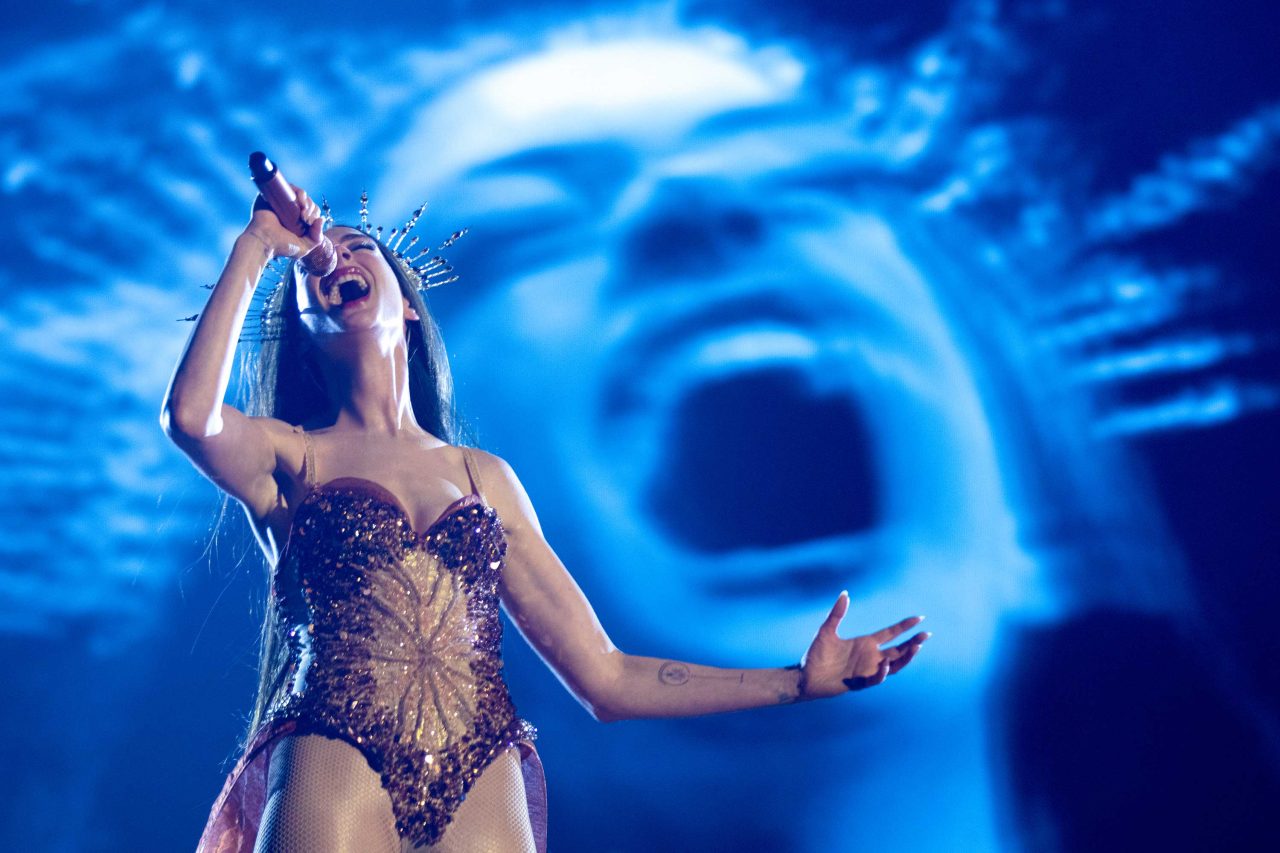
The challenge of being a gargantuan pop star, or of loving one, is also the theme of Mother Mary. The title personage, played by Anne Hathaway, is a goddessy chanteuse of the Taylor Swift/Lady Gaga/Beyonce sort, singing ethereal numbers surrounded by throngs of backup dancers. Her trademark is to wear halo-like headpieces in concert.
Her classical art look is largely the creation of her costume designer and long-estranged BFF Sam (Michaela Coel), now a big-deal fashion designer. As our movie begins, a bedraggled Mother Mary shows up out of nowhere, after many years, at Sam’s headquarters in rural England and asks her to make a dress for a performance just a few days away. Sam is still bitter about the past, but dutifully starts pulling swatches.
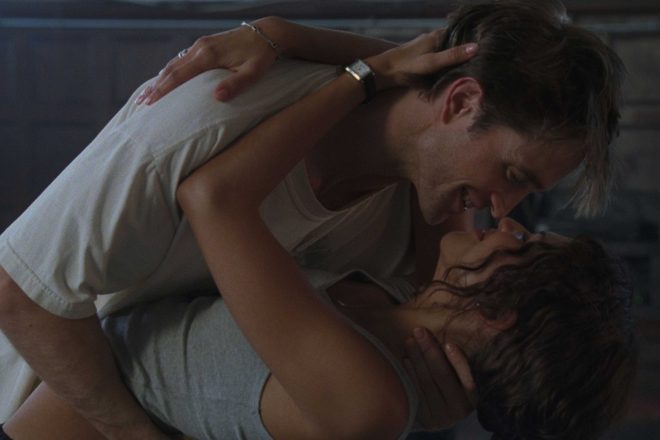
The first third or so of the film is gripping. It has the feel of good two-hander stage play; Hathaway and Coel (the BBC breakout star of I May Destroy You and Black Earth Rising) feint and weave enjoyably, with wit and erotic tension and poignancy. Then somewhere in the middle, the movie shifts to a dreamlike supernatural backstory, in which both women describe their separate experiences with an entity that manifests as a sort of billowing piece of red fabric.
The rest of Mother Mary is visually striking; it’s also numbing and borderline campy. Writer-director David Lowery, of 2021’s The Green Knight, is clearly a talent, with a gift for numinous Old Masters atmosphere, but watching the long possession and exorcism section of Mother Mary felt like being an entourage member held captive by an entitled uber-celebrity’s self-indulgent narrative.
Still, I wouldn’t have wanted to miss these performances. Hathaway is impressively harrowed; her elaborate stage numbers are entertaining and her long dance without music for Sam is a knockout. But it’s Coel, poised and controlled yet fiercely charged, who does much of the movie’s heavy lifting. Hathaway is the superstar here, but Coel is the star.