
Technology is not only revolutionizing how teachers instruct and engage students, but it is also reshaping how we prepare young people for college and the workforce. From bold new curriculum to advancements in the online space, we take a look at how innovation is transforming education in the Valley of the Sun.
Innovations in Computer Science

New threats to our personal data are emerging on the internet daily. As our workplaces increasingly move into the digital realm, protecting ourselves and developing safe online habits has become crucial. To prepare students for these virtual dangers, Xavier College Preparatory was recently selected by the nonprofit organization College Board as a pilot school to introduce two cybersecurity courses in its computer science program.
The new AP cybersecurity networking course is designed to be accessible to all students, no matter their prior knowledge and skill level. Through hands-on activities, students gain practical experience in applying networking concepts, enhancing their understanding of network hardware, configuration, protocols and security practices.
The AP CK cybersecurity class serves as a college-level introductory course to the field of cybersecurity. Students learn about common threats, vulnerabilities and risk management strategies while considering the far-reaching impact of cybersecurity on individuals, organizations, societies and governments.
Students also participate in a comprehensive project where they investigate emerging trends in cybersecurity, such as the increasing role of artificial intelligence, virtualization, hardware and the internet of things (IoT). They also explore how trending concepts like bring your own device (BYOD) and work from home (WFH) are expanding the attack surface.
“As an all-girls institution, we are uniquely positioned to empower young women with the skills and confidence to excel in cybersecurity – an industry where their voices and talents are critically needed,” says Xavier’s computer science chair Leon Tynes Jr. “This opportunity will not only strengthen our students’ technical expertise, but also inspire them to become the next generation of leaders in STEM and digital security.”
To learn more about Xavier College Preparatory, visit xcp.org.

Innovations in High School Education
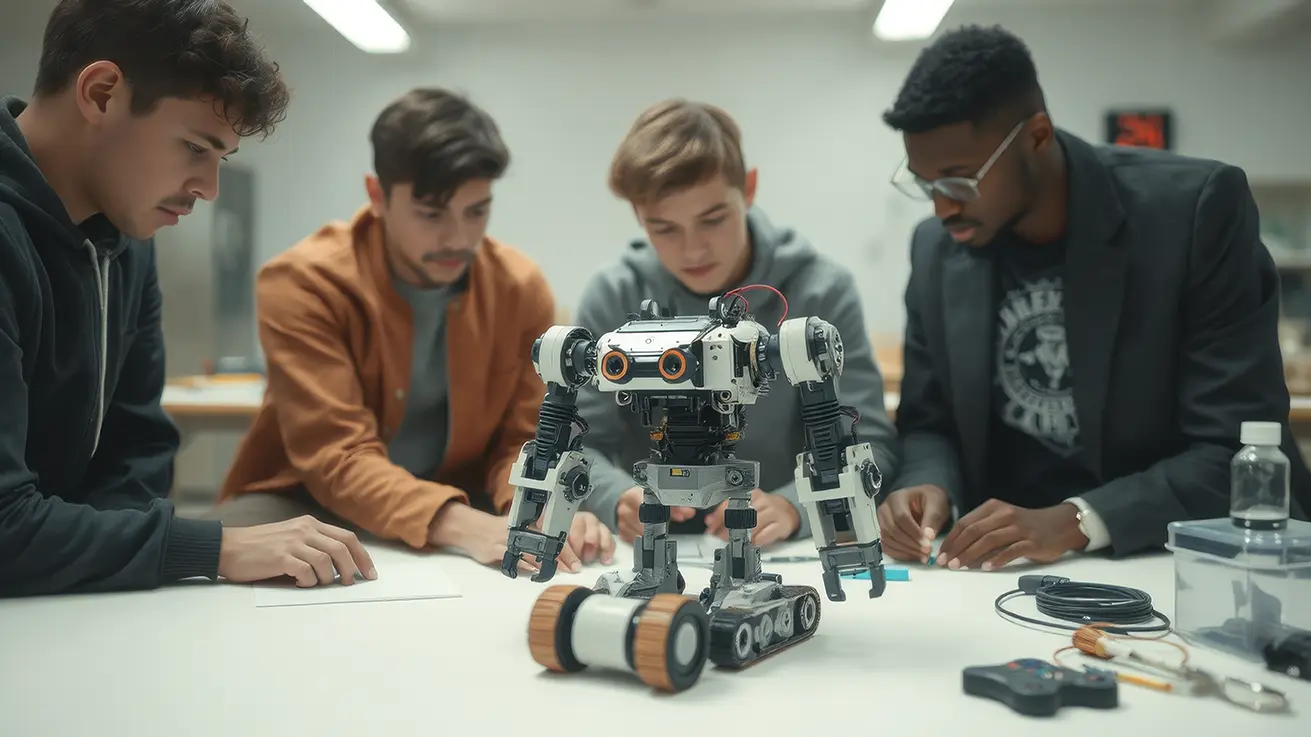
In today’s world, not only do students have to be prepared to learn in the classroom, but they need to be equipped with the skills and knowledge that will allow them to thrive in the global economy.
Paradise Valley Unified School District serves more than 27,000 students in northeast Phoenix and north Scottsdale, from pre-K through 12th grade, ensuring that every learner is empowered for a lifetime of success. Its career and technical education classes, which include arts, science, technology, education, JROTC and business management, open up a gateway to a world of possibilities.
The Center for Research in Engineering, Science and Technology (CREST) at Paradise Valley High School is a testament to the district’s commitment to excellence. Its STEAM program enriches students’ STEM and CTE skills. Students can specialize in bioscience, engineering, or software app and development.
“The real magic that happens with CREST is that it’s a small learning community that celebrates innovation, problem-solving and leadership,” says Pamela Fulk, the CREST and STEM coordinator for the district. To learn more about what Paradise Valley Unified School District can offer your student, visit pvschools.net.
Virtual education is also contributing to innovations at the high school level, including Arizona Virtual Academy. AZVA is an established pillar of online education, providing tuition-free, accredited learning for grades K–12. Recognizing the varied needs of families, AZVA emphasizes transparency, personalized support and educational excellence. Classes are taught by Arizona-certified teachers who promote academic achievement and personal growth.
Students also benefit from AZVA-hosted opportunities to socialize online and in-person. The K12 Zone provides a safe space to connect online, while Strider Squads and Family Fun Days to places like zoos and parks foster in-person connection. To learn more about AZVA, visit azva.k12.com.


Innovations in Kindergarten

Sparking a young person’s curiosity and building a strong foundation for their academic learning is the goal of kindergarten. BASIS Charter Schools, known for setting the bar for academic excellence, offers a dynamic and innovative program for students across its Arizona campuses. Enrollment is tuition-free, regardless of the student’s school district of residence.
Each kindergarten class at BASIS Charter Schools follows a co-teaching model, with two teachers in each room to support learning. Young students will be immersed in subjects that include engineering, Mandarin, visual arts, music and theater to give their education journey a hands-on and well-rounded start. Additionally, families can choose between half-day and full-day programs, with free full-day kindergarten available at BASIS Phoenix Central and BASIS Phoenix South.
BASIS Charter Schools also provide before- and after-school care, clubs, team sports and a STEM- and arts-focused curriculum that accelerates student learning, all in support of its mission to empower students to achieve at globally competitive levels through a transformative K-12 academic program. Basis Charter School students boast a 94.5 percent average pass rate on AP Exams, and 100 percent of its students are accepted to a four-year college or university.
To learn more about BASIS Charter Schools, visit its website at enrollbasis.com.


Innovations in Special Education
Special education teacher shortages are occurring in public school districts across the nation. As the number of teachers entering the field decreases, the number of students identified with disabilities increases. While parents consider the best options for their children, one online education provider may offer a solution to the shortage.
Schools powered by K12, an online learning provider for more than two and a half decades, boast a high retention rate of special education teachers. These educators form strong bonds with students and their families, and they enjoy the flexibility of teaching in an online environment. However, despite these advantages, K12-powered schools have also faced challenges in securing special education teacher positions, primarily due to the increased growth in the student body they serve.
To address this shortage, K12 had to get creative. Since K12 teachers work remotely, and some states permit teachers to hold licenses in multiple states, K12 collaborated with a group of approximately 15 teachers to obtain special education teacher licensure in three to five states. These teachers underwent training to ensure they were prepared to provide quality online special education instruction. Now, they can move between schools throughout the year to provide support, primarily serving as substitutes between when a school posts an open teaching position and when it is filled.
To learn more about online special education options, visit k12.com.
Top 5 High Schools in the Valley
BASIS, locations throughout the Valley
Qualified seniors at its six Valley schools can take courses that are equivalent to 200- or 300-level college classes and create an off-campus research project during their last trimester.
University High School, Tolleson
The number of students enrolled in AP coursework is 100 percent, and the percentage of minorities enrolled is 92 percent.
Arizona College Prep, Chandler
Opening in 2007, this school became the Chandler Unified School District’s first secondary school of choice.
Gilbert Classical Academy High School, Gilbert
Awarded the Best Communities for Music Education in the nation by the NAMM Foundation for six years in a row.
Phoenix Union Bioscience High School
The campus has received awards for its progressive design, including its classrooms and collaborative learning spaces.