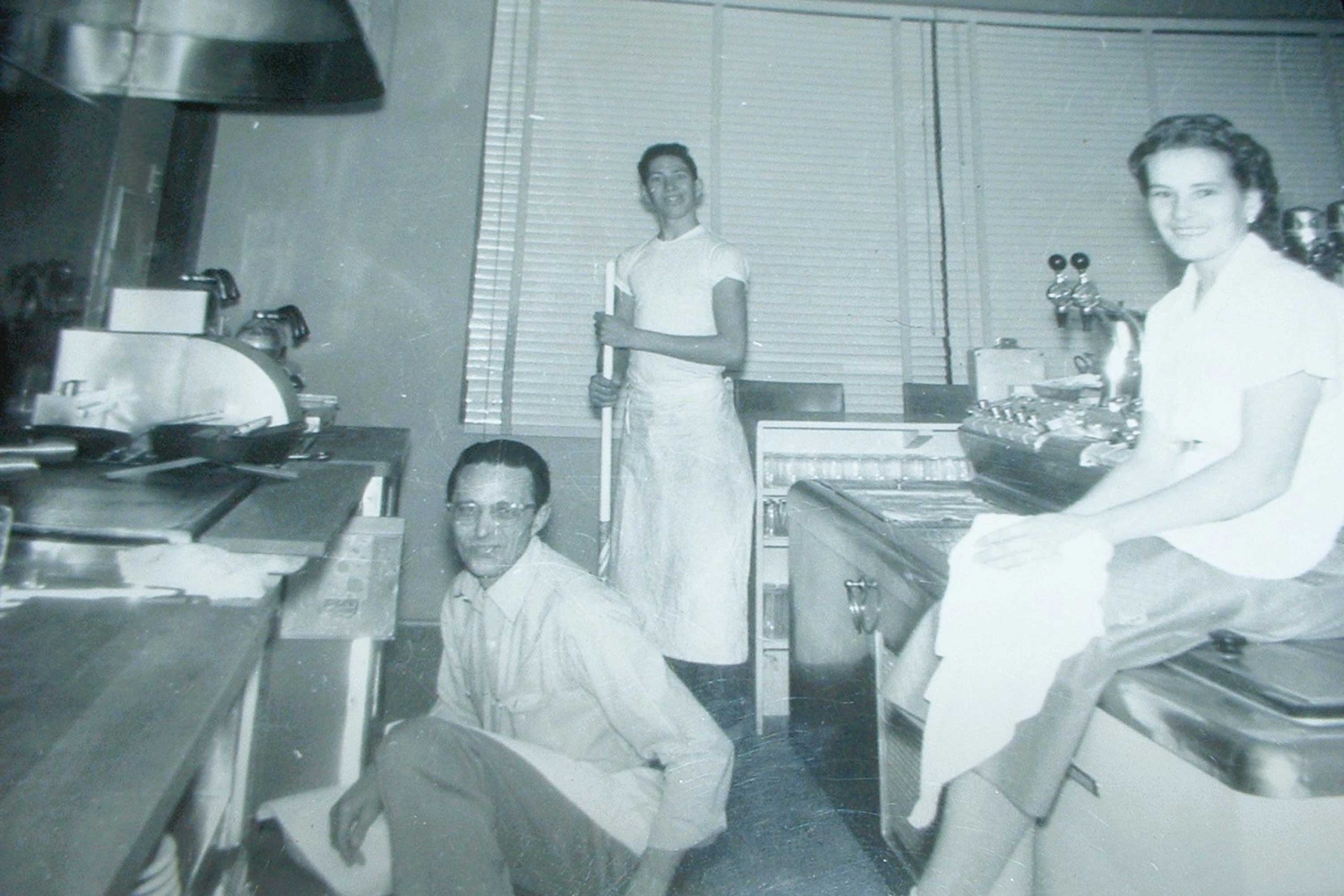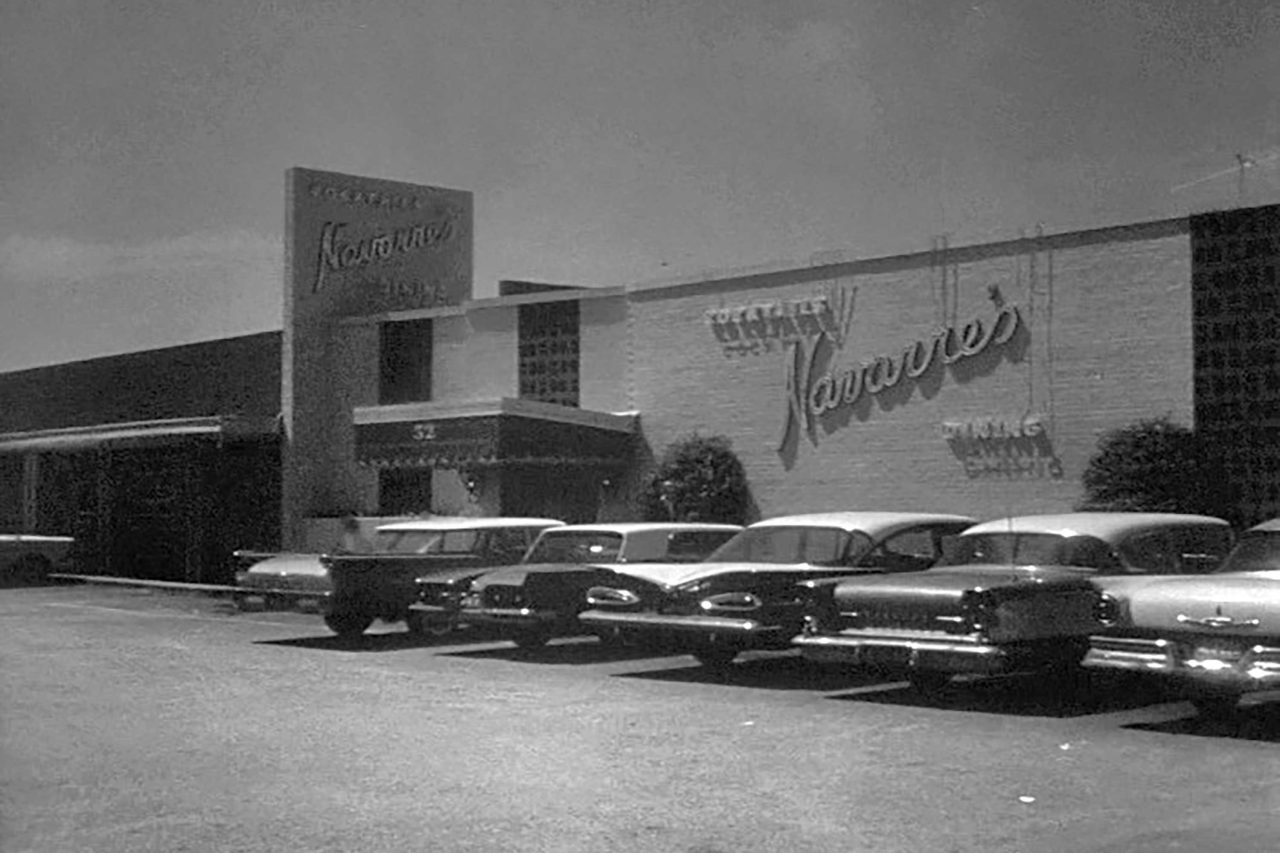
Bygone hot spot Navarre’s offered Phoenicians their first taste of crudités, vichyssoise and flaming cherries jubilee in an elegant Uptown setting for more than three decades.
At mid-century fine-dining trailblazer Navarre’s, the parking lot was as carefully orchestrated as the Continental cuisine created in its kitchen. Like artisan bricklayers, valets would position the Cadillacs and Lincolns of their affluent customers just so, with the grills at a 45-degree angle to Camelback Road, showcasing the exclusivity of the Phoenix restaurant’s clientele. “We would drive by just to view the expensive cars and saw a Rolls-Royce once,” says Peoria retiree James Ott.
For patrons of more modest means, this marketing strategy could be confusing. When Phoenix nurse Mary Ann Gove Cheatham left the restaurant after a business meeting in 1977, she couldn’t spot her yellow ’57 Chevy pickup truck among the sea of luxury cars. The valet retrieved it from an adjacent lot. “It was parked alongside a few other older vehicles that Navarre’s didn’t want displayed in front of the
restaurant,” she says.
Such was the experience of dining at a cultural hub where the “who’s who” of Phoenix converged. With its French-inspired gourmet food and reputation for well-constructed cocktails, Navarre’s was a favored haunt for the well-heeled and a popular choice for others celebrating special occasions or meeting clients.
“Navarre’s was Durant’s for ladies,” Phoenix attorney Marc Cavness says. “Sherry French salad dressing instead of garlic French; tablecloths at lunch as well as dinner; white wrought-iron dividers and softer colors.”
Over its 33-year run, Navarre’s offered gastronomic delights, risqué entertainment and saucy secrets before the chef-driven restaurant model took over in the 1990s.
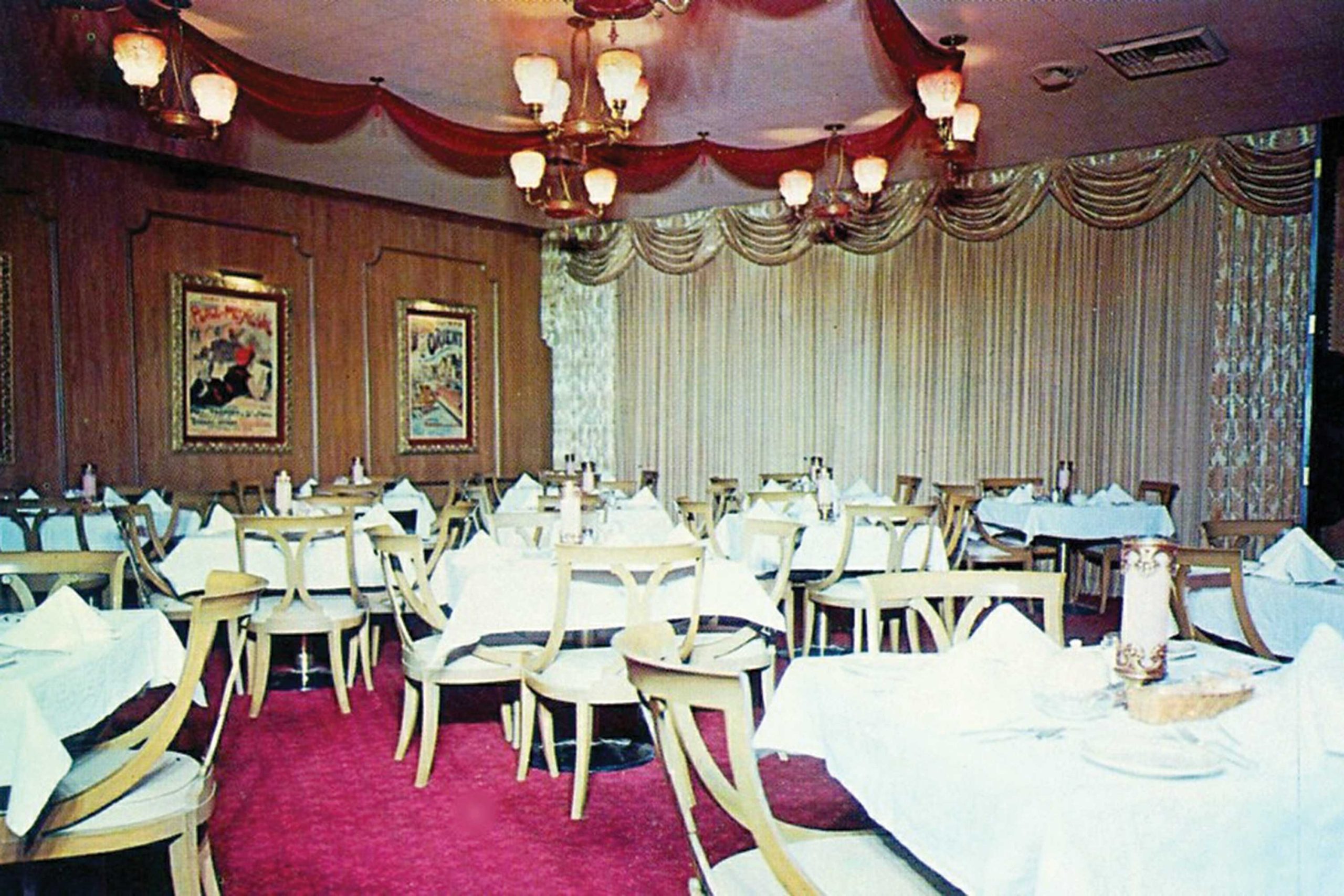
Toledo, Ohio, natives Paul and Bernadine Navarre launched the supper club in the newly constructed Uptown Plaza on January 27, 1955. They boasted “Serving the Finest Cocktails, The Most Satisfying American and French Dishes” and providing entertaniment by “The Keyboards” featuring Bob and Olympia Lloyd, according to an opening night advertisement in The Arizona Republic. The dining room and cocktail lounge accommodated 160 people and featured wrought-iron enclosures, walnut paneling, antique mirrors, a brick fireplace and room in the lounge for a piano. The combination proved successful, with the restaurant winning awards as well as local and national media coverage, but the Navarres sold the restaurant in 1957 to L.C. Jacobson, an executive with the Del E. Webb Construction Co.
Clementine Paddleford, a New York Herald Tribune restaurant columnist, visited in 1959 and wrote that its food “made every taste bud quiver. Navarre’s is typical of high fashion, so very, very French yet very, very American in that roast beef and beef steak are the big deal.”
Similarly awestruck decades later was Athia Hardt, who served as press secretary for Governors Bruce Babbitt and Rose Mofford.
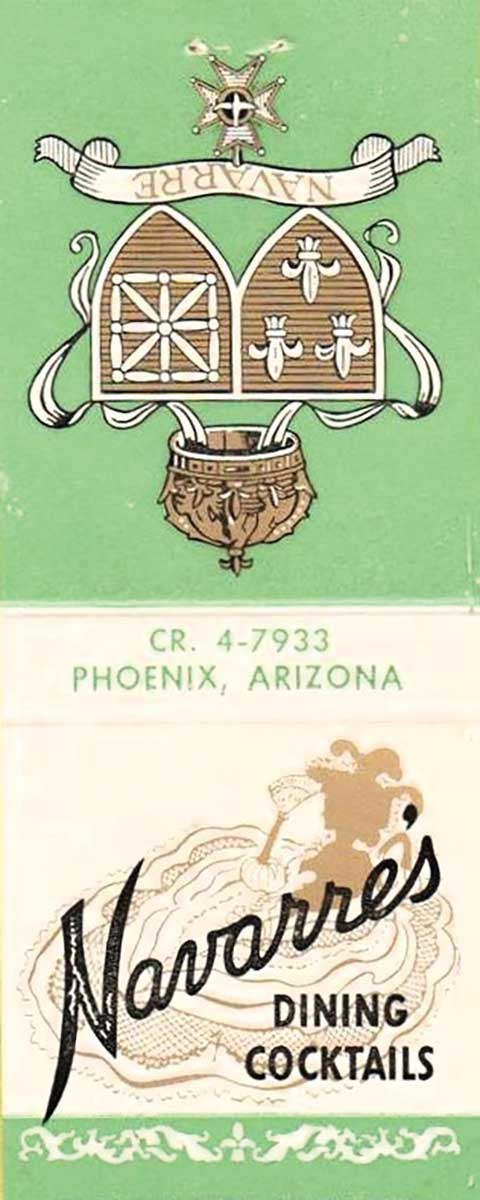
“The restaurant had white tablecloths, candles on the tables, little matchbooks with Navarre’s written across the front in cursive script, and live piano music,” Hardt says. “It was a place not just to eat but to experience; a restaurant where you wanted to relax and enjoy conversation while drinking a cocktail or wine from their impressive menu.”
Hardt learned of one of Navarre’s little-known quirks from her companion that night. “He said if you sat in a certain booth, the acoustics at the place made it possible to hear the conversation in another booth across the restaurant,” she says.
Navarre’s was the place to spend money to make money. “We often took business clients for lunch there,” says Jerry Harris, who owned a nearby insurance agency. “It was very upscale. Everybody loved it, and I’m sure it helped make the sale.”
The upscale dining could be intimidating for budding adults, including Carl Hayden High School student Norman Barnett, who went to Navarre’s for the junior/senior prom in 1974 and couldn’t understand his waiter’s thick European accent. “At one point, he came over with a silver carafe of coffee and asked something,” Barnett, now a training officer with the Arizona Department of Agriculture, recalls. “Not knowing what he said, I replied: ‘Please, pour some more.’ My girlfriend laughed as the waiter rolled his eyes, poured me a cup, and walked away kind of snooty. I asked: ‘What’s so funny?’ She replied, ‘He asked if you were ready for the check.’ The meal cost me a small fortune, but was a good memory.”
Bill Williams was a crowd favorite in the piano lounge, but sometimes the legendary Rusty Warren sang and performed comedy full of sexual innuendo. “Rusty was a character I remember as friendly, loud and bright, as in red hair and vivid clothing,” Xavier College Preparatory and Arizona State University graduate Karen Kamrar says. “She had a record my parents owned that they only played when kids went to bed – with R-rated tunes – called Knockers Up!”
Another attraction was the informal modeling by ladies’ clothing store Beaton’s Towne Fashions in Uptown Plaza, which was offered during weekday lunches for many years. “I loved to go there with my mom for lunch,” says Glenna Teel, president of the Washington Garden Club of Phoenix. “The models would come to the table, tell you about their outfit and leave a card from the store.”
Newcomers could be at a disadvantage when dining with regulars. “My father-in-law often had luncheons there with business acquaintances,” recalls Phoenix resident Nancy Roberts Elzey. “He had the same table, and the waitress trained only to bring him soda water when the others ordered alcoholic drinks.”
Late nights were interesting, too, as Navarre’s was on the circuit taken by local “big shots,” according to Ed Chilleen, the former owner of Crazy Ed’s Satisfied Frog restaurant in Cave Creek, who initially operated its parking concession. “One night, a corporate executive came out so drunk he couldn’t drive. I offered a cab, but he said, ‘No, you take me.’ He lived behind Paradise Valley Country Club but was so inebriated he couldn’t find his house, and there was no GPS in those days. After a half hour driving around, we stumbled on it.”
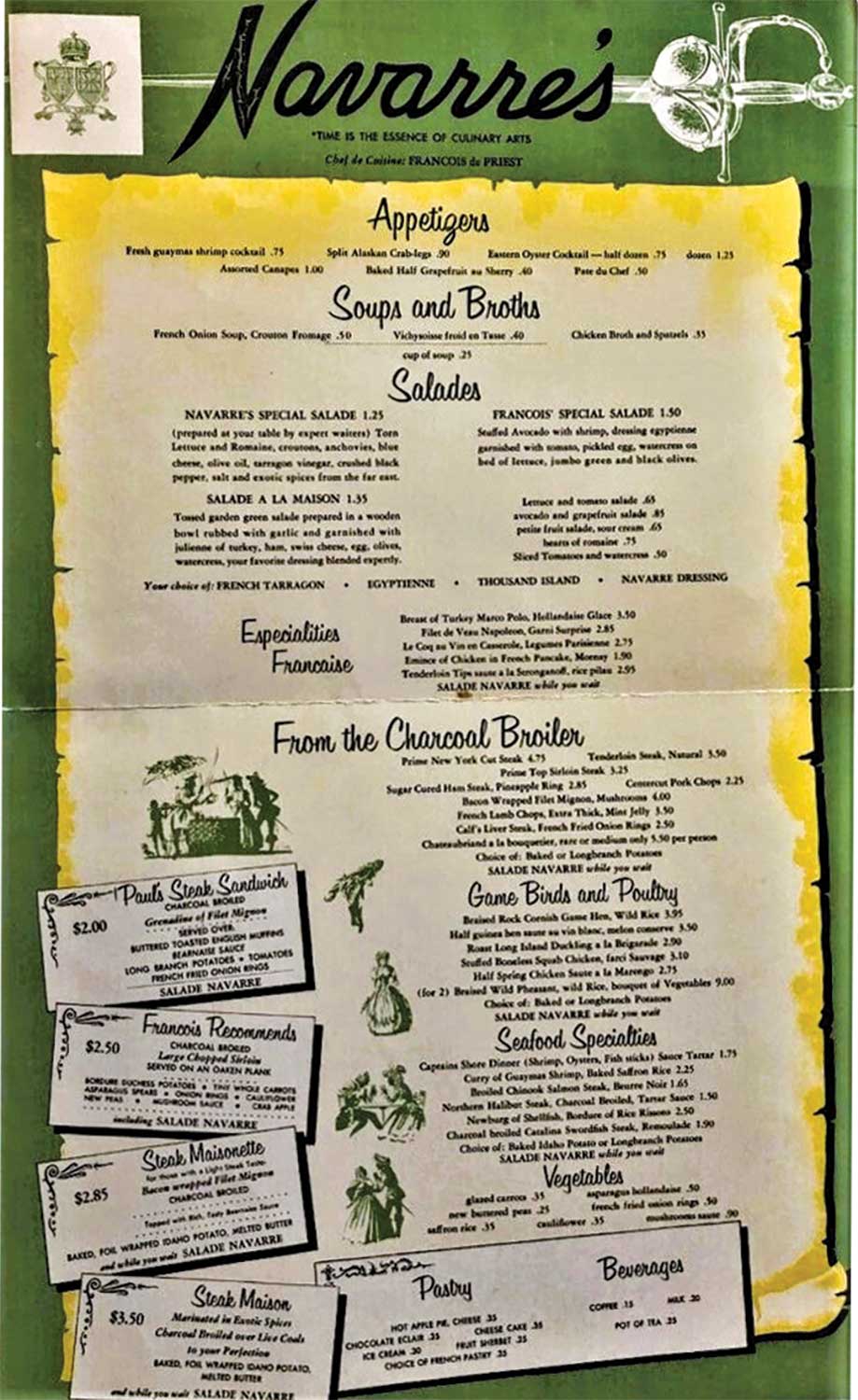
Navarre’s House Dressing
Danilo Gurovich resurrects Navarre’s with its salad dressing. His dad, Danko, got the recipe from the restaurant to serve at his Copper Hills Motel in Miami, Arizona. Get the recipe at danilogurovich.wordpress.com/dankos-dressing
Navarre’s suffered a setback when a fire gutted the kitchen in 1981. The restaurant reopened, but Phoenix’s dining scene had evolved as new cuisines came into vogue, and its clientele attired in suits and mink stoles was aging. The restaurant that had helped lift the city from its “meat and potatoes” fare served its last meal on August 18, 1988.
The closing of Navarre’s left a hole in the Phoenix dining scene, but the space quickly reopened in 1989 as the new location of the Jockey Club, a semiprivate nightclub operated by Bobby Lieb. Many other businesses have used the building since then, but Navarre’s managed to make one last curtain call. In 2016, when Uptown Plaza underwent restoration, its stucco walls were removed to reveal the restaurant’s name painted on the brick.
Final Bites
These departed restaurants nourished many during Phoenix’s post-World War II boom.
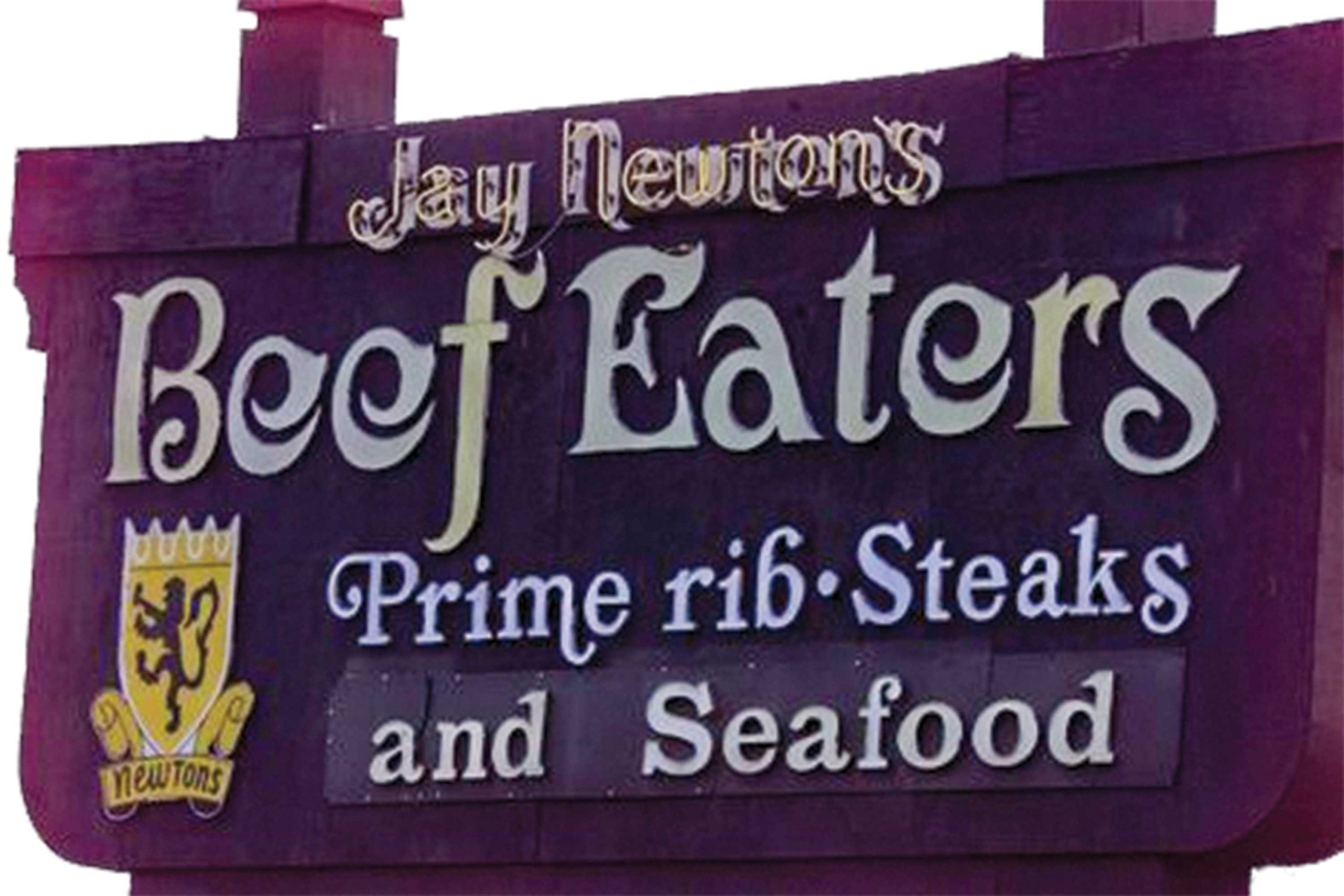
Jay Newton’s Beef Eaters
Jay Newton’s restaurant at 300 W. Camelback Rd. evoked the atmosphere of an old English mansion. Its signature prime rib was served tableside with jus and horseradish from a stainless-steel cart. Cuts ranged from the hearty Henry VIII to the children’s Heir Apparent. It satisfied old-school tastes from 1961 to 2006. In 2013, the building became The Newton, a development that houses Tesota, Changing Hands Bookstore and Toasted Owl Café.
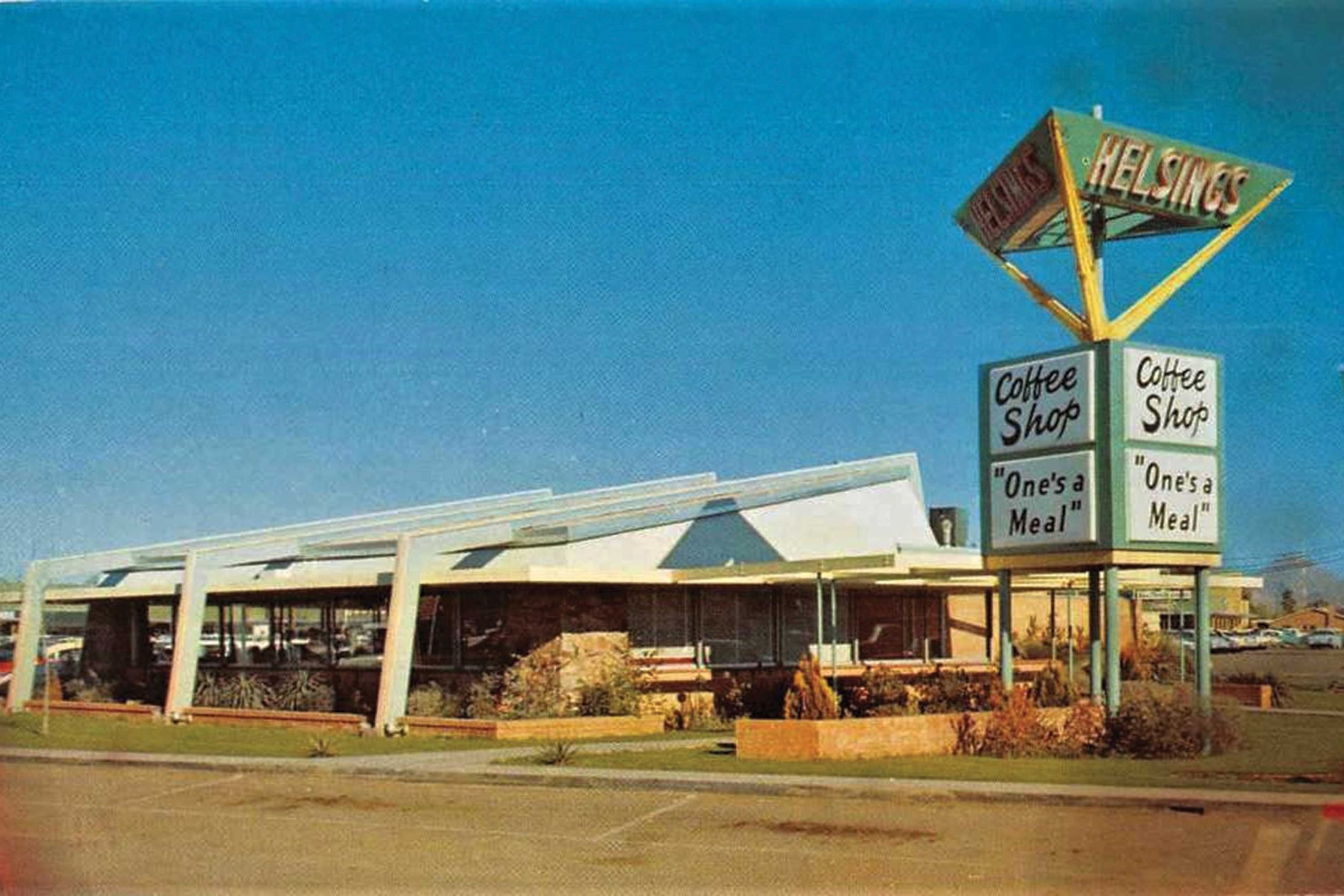
Helsing’s Coffee Shop
Chicago restaurateur Ovide “Bill” Helsing arrived in Phoenix in 1954 and soon after opened a futuristic Googie-style coffee shop at Uptown Plaza. Its geometric design, upswept roof and plate-glass windows were created by local architect Matthew E. Trudelle. Health-conscious patrons ordered One’s A Meal, a “healthful, nutritious and well-balanced lunch,” while night owls enjoyed the quintessential order of a hamburger, fries and a milkshake. It closed in 1975 and was demolished.
Miller’s Eatin’ Place
This cafe (1950-1968) featured The Thing, a shake with malted milk, nuts and fruit. “It was a meal by itself,” says former employee Bill Baker. Miller’s was located at 1120 E. McDowell Rd. and catered to nearby Good Samaritan Hospital staff. Patrons played songs for a nickel in coin-operated boxes in each booth or counter seat. “I had friendly people around me and all the food and drink I wanted,” Baker says. “It was a great experience.”