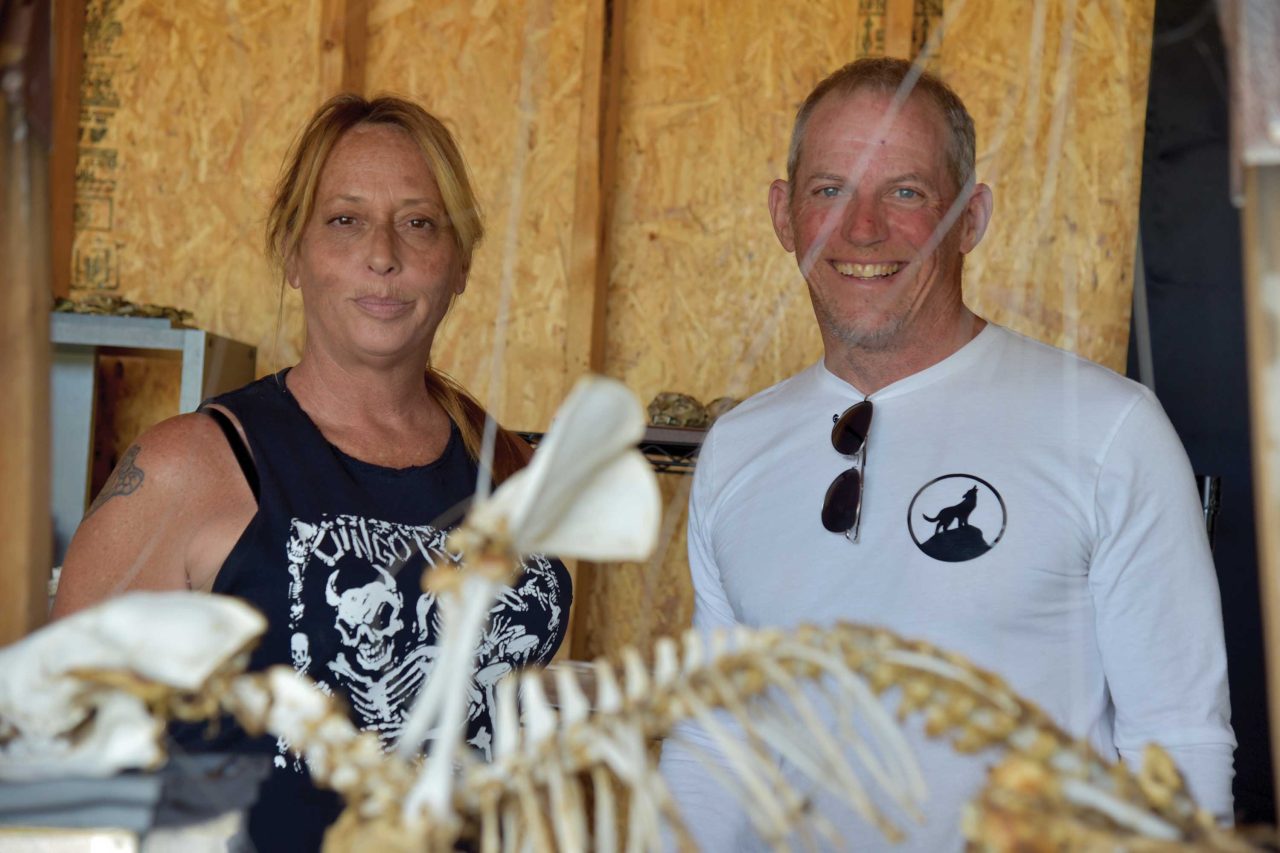
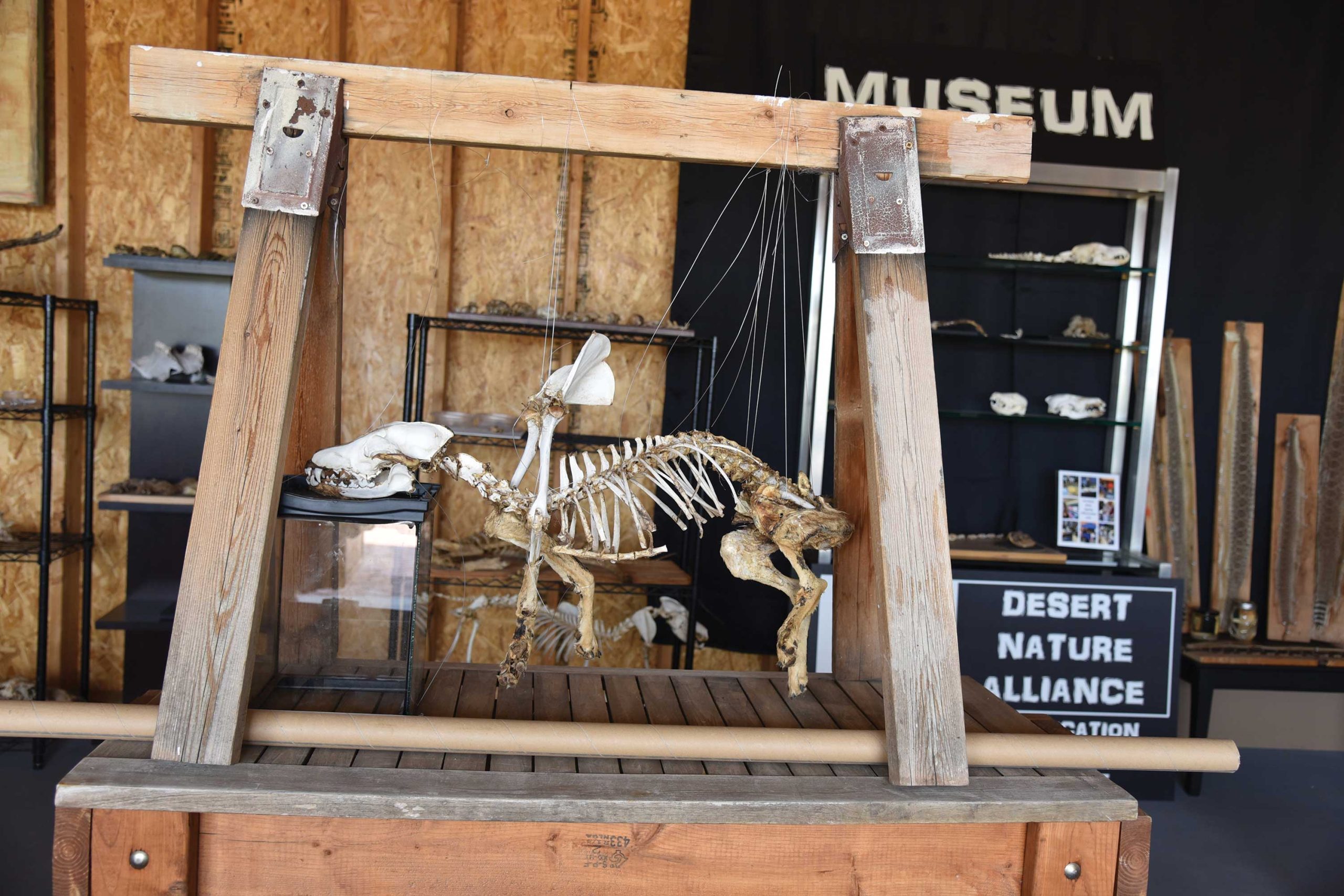
While there’s no magic bullet to get kids off their phones and onto the trails, bat bones can help. “The bones are ambassadors of the native species that live here near the Superstition Mountains,” says Stacy Osegueda, who founded Desert Nature Alliance (DNA) with her husband, Jay, in 2020.
They created the Gold Canyon nonprofit to get kids excited about the outdoors through nature-based education centered on interaction with native wildlife bones. “We use the bones to educate about the value of things like Dark Sky initiatives, habitat protection and why rattlesnakes are an important part of the ecosystem,” Stacy says.
The Oseguedas have taken what they learned in their professional lives as a former hairstylist (her) and teacher (him) and wrangled their skills into an incubating passion that gives renewed life to animal bones they find along Arizona roads and trails. It’s roadkill reimagined as an effective tool for teaching about Sonoran Desert life. “Dead on Road,” they call it.
“If people don’t see nature up close, it’s hard for them to have an appreciation for it,” Jay says. “We don’t go out for show-and-tells, this is science. We compare and contrast [animals]. Take hawks and roadrunners. They’re both birds, but how are their lives different, and what in the bones give clues about how they live? These demos promote larger discussions about nature and how we can better live as part of it.”
Bat bones are the main attraction of DNA, which has all the required state and federal permits to collect animal remains from public lands for educational purposes.
“We have a whole demonstration on bats,” Stacy says. “Why they’re not birds, how helpful they are for pest control. We can show kids how small their mouths are, so they’re not really able to bite and take all your blood… That sparks interest in kids, and when I see that, I’m gonna jump on it and hang out in that headspace.”
Established in 2020, the DNA museum and traveling exhibits are gaining traction in schools and instilling in kids a sense of stewardship of desert trails and open spaces.
“Our organization is a bridge between civilization and the wilds and a voice for the animals,” Stacy says. “Humans are the invasive species here. We teach how to live in the desert without being invasive by killing, poisoning and destroying habitats.”
Desert Nature Alliance
sites.google.com/view/desertnatureallianceaz/home
NEXT MONTH: Veterans find purpose on the Arizona Trail.