Everyone’s least favorite five-letter acronym is still making an impact across Arizona, four years removed from the onset of the COVID-19 pandemic. While cases are down dramatically from the beginning of the outbreak in 2020, Arizonans are still dealing with new – and repeated – infections. Many are experiencing lingering symptoms that last more than four weeks after contracting the illness – a condition known as “long COVID.”
As part of a national collaborative, the University of Arizona has been studying long COVID with hopes of better understanding its most common symptoms, since no single test exists for a diagnosis. It’s proved challenging. One researcher has even labeled long COVID a “syndrome of syndromes” due to its 200-strong list of potential symptoms, including dizziness, post-exertional malaise, thirst and chest pain, among others.
Researchers are getting somewhere, having narrowed down how long COVID presents to a subgroup of identifiable symptoms and creating a patient scorecard that illustrates what long COVID looks like. And that’s a good thing, because University of Arizona professor of medicine Sairam Parthasarathy says that Arizona residents are living with long COVID at a rate that is 3 percent higher than the national average.
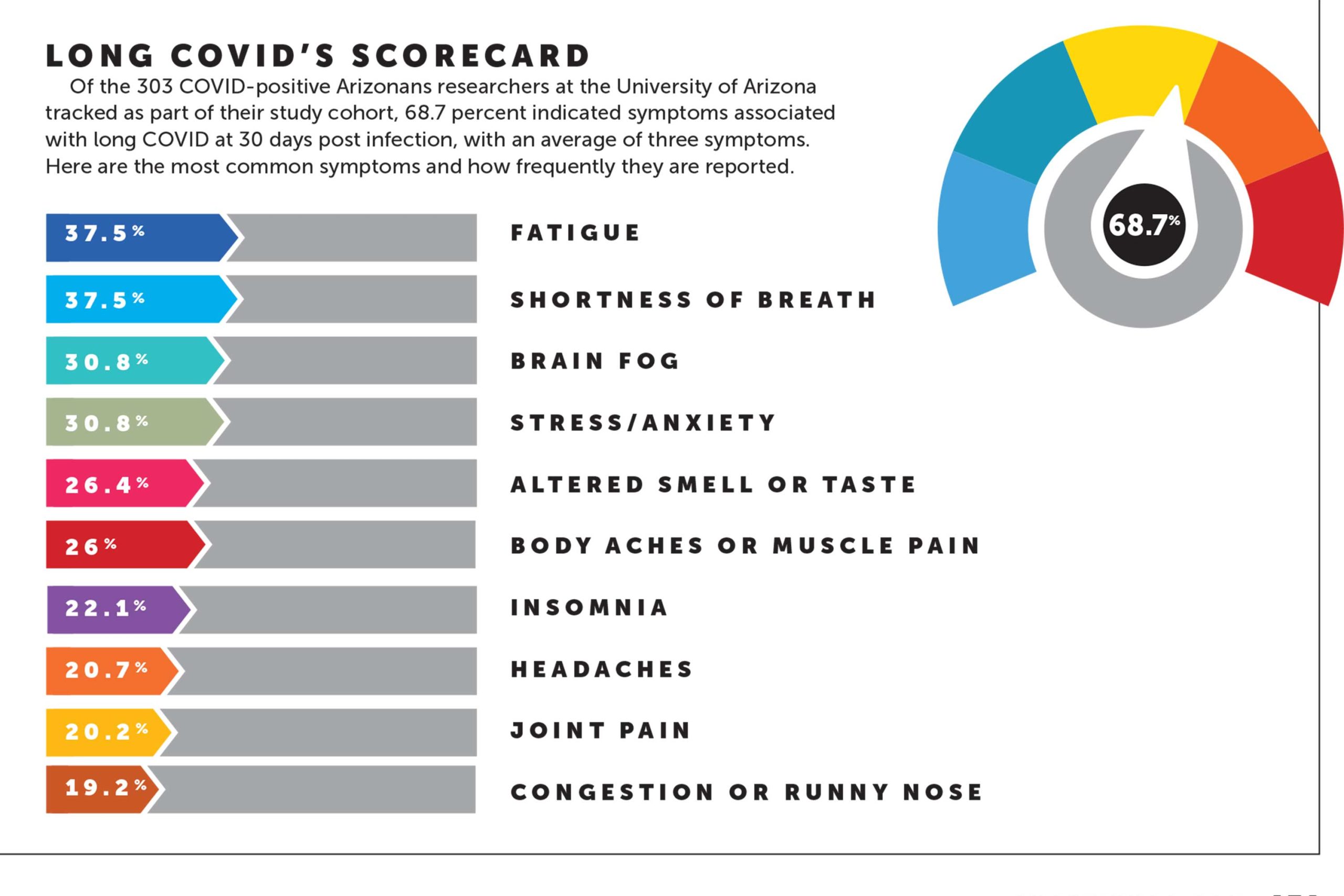
Long COVID’s Scorecard
Of the 303 COVID-positive Arizonans researchers at the University of Arizona tracked as part of their study cohort, 68.7 percent indicated symptoms associated with long COVID at 30 days post infection, with an average of three symptoms. Here are the most common symptoms and how frequently they are reported.