The Sedona Westerners began in 1961 as a hospitality team to promote Sedona’s Western-themed civic events and tourism. But somewhere along the way, its members changed their focus – and the club’s mandate shifted from hayrides and square dances to hiking.
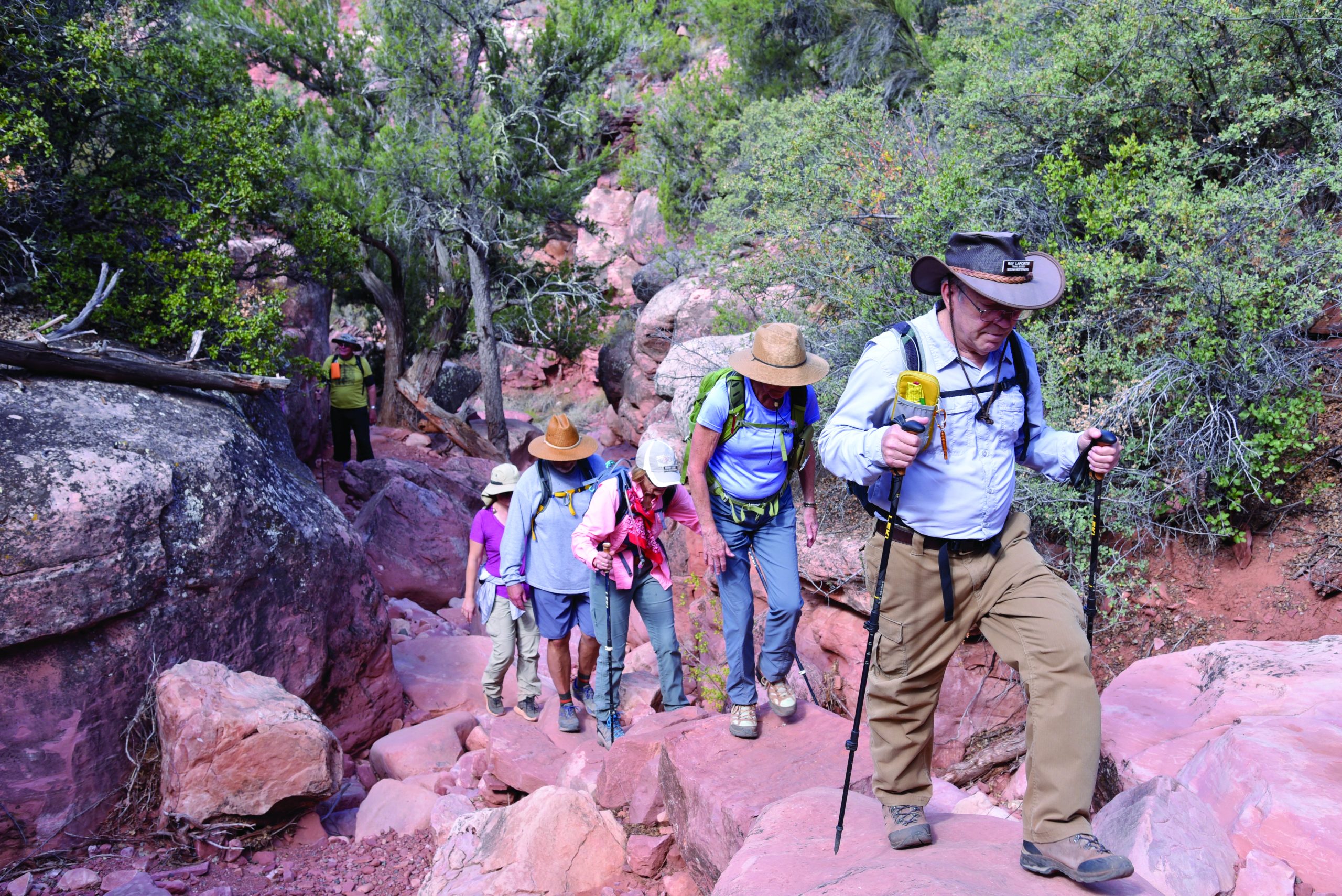
Today, the Sedona Westerners Hiking Club is a nonprofit that’s committed to protecting the city’s natural treasures and heritage through stewardship and fostering a love of the outdoors. It offers immersive and educational hiking events, holiday gatherings and opportunities to support area trails.
“What we are is a group of people who love to get together to hit the trails and see what Sedona has to offer,” says Sara Stiffler, an aspiring screenwriter and volunteer publicist who writes weekly hike articles for the Sedona Red Rock News. “The focus of my articles is to tell about the experience and point out that you don’t have to go to Devil’s Bridge – there are other beautiful places without the crowds.”
The club “season” runs September through May, with up to 200 hikes on the calendar. Hikes are organized into groups that consider a range of interests and physical abilities. For instance, Saturday morning “Rustler” hikes are easy-moderate treks of about 5 miles, while the “Rough Riders” tackle long, challenging trails at a faster pace.
Besides fun and socializing, land stewardship is a core club value, and the 400-member organization works closely with the forest service to raise funds and help with trail work.
“We work with a ranger liaison who coordinates things we can do to support the forest service,” says Ray LaPorte, the club Trail Boss (i.e. president), who directs ongoing support of Sedona trail projects, including intensive clean-ups and assisting in forest closures. “One of the big ones we helped with last year was the Cathedral Rock trailhead maintenance. We not only raised money, we also staffed locations around the worksite with volunteers to keep people from wandering into heavy equipment activity.”
“When my wife and I moved here, we thought if we joined a hike club, we’ll learn the area better,” LaPorte says. “But to our surprise, we learned the people better, and that gave us an instant network of individuals with similar interests.”