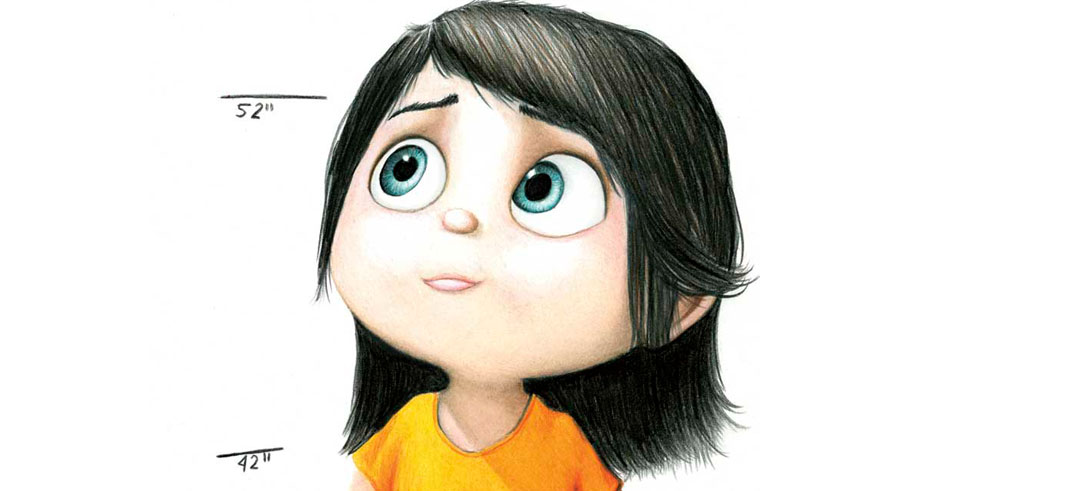
Valley physicians encourage early puberty exams to detect an alarming but easily treatable condition that causes rapid sexual development in children.
Puberty in girls brings with it a host of changes – mood swings, body development, hair in new places and, soon after, a monthly visit from “Aunt Flo.” When Donna Turner started noticing some of these signs in her granddaughter – specifically breast development and tears that started “at the drop of a hat” – the Ahwatukee grandmother was concerned, and not just because puberty is a difficult stage, but because Turner’s granddaughter was only 6 years old.
“I worked in the medical field, so I had some idea about this and knew it wasn’t normal,” says Turner, her granddaughter’s primary caregiver. She took her granddaughter to see Joel Hahnke, a pediatric endocrinologist with Banner Health in Scottsdale. After a bone image test showed the girl’s body was closer to age 10 than age 6, she was diagnosed with Central Precocious Puberty (CPP).
Numerous studies – and countless anecdotal accounts – demonstrate that modern children may be entering puberty earlier than previous generations. (Normal puberty age is broadly defined as 8-13 for girls, and 9-14 for boys.) Garden-variety early puberty can be distinguished from CPP when the changes start earlier: before age 8 in girls and before 9 in boys. Though only 5,000 to 10,000 children per year are diagnosed with CPP in the U.S., the stakes are high – it can cause complications including decreased height in adulthood, and social and emotional problems.
“The problem begins in the brain, as opposed to the reproductive organs,” Hanhke says. Puberty normally starts when the brain’s pituitary gland releases hormones that start the development of estrogen in girls and testosterone in boys, which produce the physical changes of puberty. When the pituitary gland produces hormones early, you often have precocious puberty. Besides the obvious pitfalls of explaining puberty to a kindergartener, Hahnke says CPP is concerning because “we want [children] to have normal development. The two main problems that arise are the child’s emotions are altered and their growth is altered.” Kids experiencing CPP can be extra challenging, moodier than most and display “risk-taking behaviors,” Hahnke says.
They’re also tall for their age, which rarely translates into a basketball or modeling career. “They’ll finish growing earlier and can actually be shorter as adults, so we worry about their adult height,” Hahnke says.
Some research suggests the increasing rate of childhood obesity is to blame for a quicker entry into adulthood. “Obesity is linked, though it’s certainly not the only or even the most common cause,” Hahnke says. “In boys, interestingly, obesity can actually be associated with either early or late puberty, so it’s not as consistent or clear.”
Environmental factors have also been implicated, but research is inconclusive.
“Most people think pesticides or things like bovine somatotropin [rBST, a chemical used to increase bovine milk production]… might be causing early puberty, but we don’t have any clear data linking those things to earlier puberty. I have many children whom I see for a variety of types of precocious puberty who have never been on anything other than organic milk, produce and meat since they were born,” Hahnke says. Less ambiguous culprits for CPP include brain tumors, but Hahnke says no concrete etiology can be found for at least 90 percent of CPP cases.
Treatment for CPP, known as GnRH analog therapy, usually includes a monthly injection of a medication like Lupron Depot, which delays development. Once a child reaches the typical age of puberty, the medication is ceased and puberty resumes. Turner says medication worked for her granddaughter. After a year, “her moods evened out and she wasn’t crying as much. She also found out a couple of girls at school had the same thing, so she didn’t feel like it was just her.”
Hahnke says kids should have an annual physical exam that includes a puberty exam from age 2 on. Symptoms of CPP include body odor, pubic hair, oily skin or hair and acne. In boys, this can include a deepening of the voice and muscular development; in girls, breast development is a sign. One symptom isn’t overly concerning, Hahnke says. “If their growth pattern is normal, watch for four to six months. If there’s more than one symptom, or symptoms are progressing, it may be something to be worried about.”
Risk Factors for CPP
Being female. CPP is four to eight times more common in girls than in boys.
Obesity. Overweight children are at higher risk of developing CPP.
Exposure to sex hormones. Children who come into contact with hormone-containing products are at increased risk.
Other medical conditions. CPP may be a complication of conditions like McCune-Albright syndrome or congenital adrenal hyperplasia.
Radiation therapy. Radiation treatment for pediatric cancers can increase the risk of CPP.
Sources: mayoclinic.org; medical-dictionary.com