A new, professional news lab at ASU offers a human-centered alternative to automated research and shrinking newsrooms.
In newsrooms stretched thin by shrinking staffs and tighter deadlines, there’s an emerging temptation: Let someone – or something – else do the heavy investigative lifting. Increasingly, that “something” is artificial intelligence.
At Arizona State University’s Walter Cronkite School of Journalism, a new initiative is proposing a different solution: Let their staff of experienced investigative journalists and whip-smart students do the work. And offer it to newsrooms for free.
The Beam Investigative News Lab, launching this spring, is housed in the Howard Center for Investigative Journalism and funded by the Scripps Howard Foundation. Its mission: produce deeply reported accountability journalism and distribute it freely to news organizations in Arizona – not as a service bureau, but as a standalone content producer.
“What we’re doing with The Beam is uniting philanthropy, a major public university journalism school and nonprofit partners to do stories that would be impossible if we were operating alone,” says Mark Greenblatt, executive editor of the Howard Center.
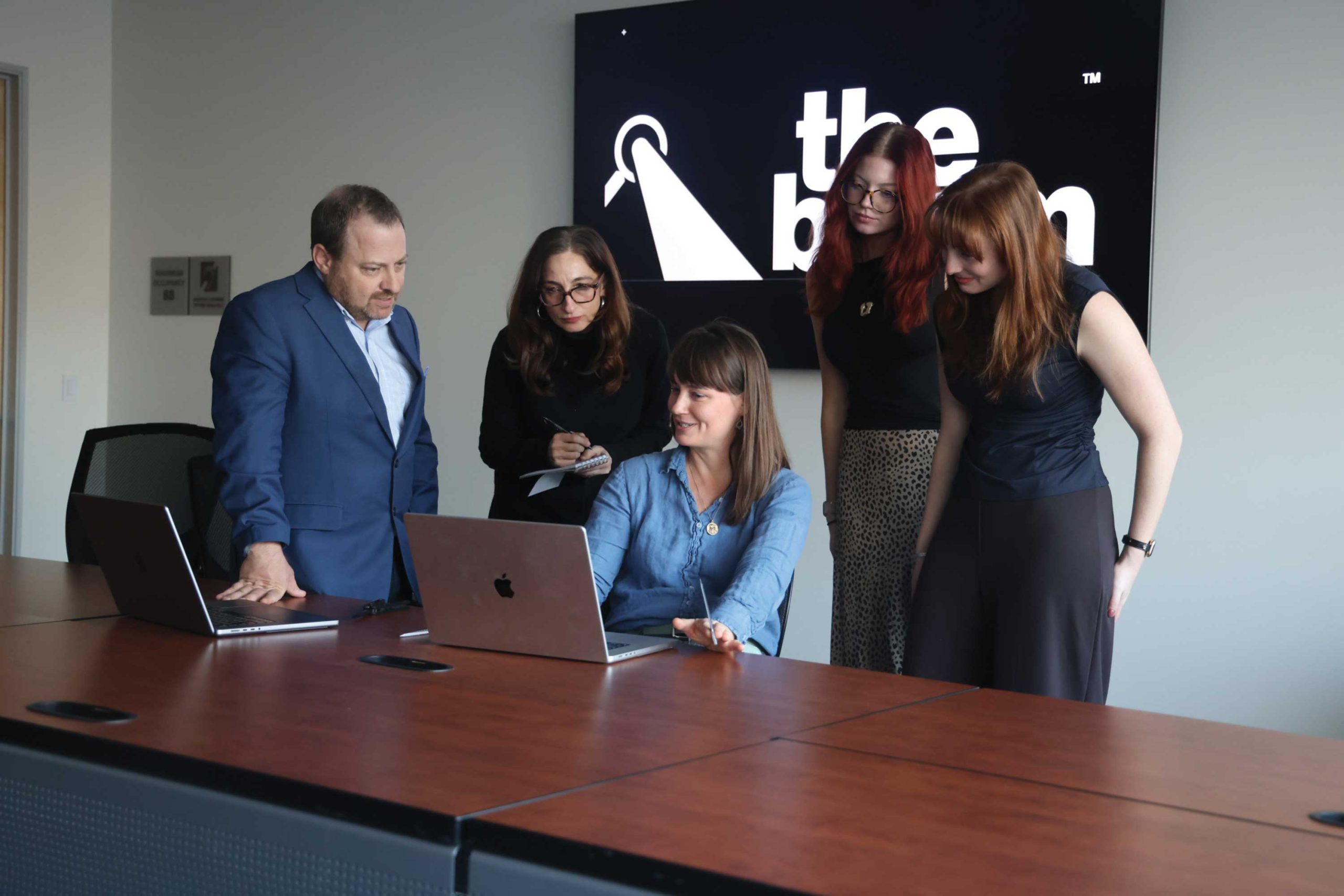
Unlike many university projects, The Beam is not primarily student-driven. It will be staffed by three full-time, professional investigative journalists-in-residence, supported by paid student apprentices who learn by working alongside veterans rather than carrying responsibility for final publication. Students may earn bylines, but only when they contribute meaningfully to the reporting.
The model is designed to strengthen the reporting ecosystem, not dismantle it. Investigations will be shared free with media outlets and nonprofits, but other writers won’t be shut out. “What we’re going to do, by partnering with organizations, is actually pick up some of the heavy lift,” Greenblatt says. “But ultimately, the news organizations across Arizona are going to have to employ freelancers and other reporters of their own in order to partner with us.”
AI still plays a role. A contributing faculty member is a former Stanford professor specializing in artificial intelligence with deep data training, and Greenblatt says they’re already testing AI tools to monitor things like public meetings statewide, flagging issues for reporters to evaluate.
But he stresses that real people remain central. And because the model isn’t tied to commercial pressures or newsroom budgets, Greenblatt believes it offers a template other journalism schools and newsrooms could adapt as legacy models continue to erode.
“We think of AI as augmented intelligence,” he says. “Where AI is at its best is when it’s augmenting the work of humans.”
Rebuilding the Watchdog
The Beam Investigative News Lab is launching with a deliberately narrow reporting agenda, targeting areas where shrinking newsroom capacity has left major accountability gaps across Arizona.
Public Education
Arizona’s K-12 system – “perennially ranked near the bottom,” Greenblatt notes – will be a core focus, with sustained accountability reporting on funding, oversight and policy decisions he calls “fundamental to democracy.”
Semiconductor Manufacturing
As Arizona emerges as a national hub for chip production, The Beam will scrutinize the public investments and policy choices driving the sector. “Semiconductors are going to drive the economy here,” Greenblatt says.
Workforce Development
Closely tied to both education and semiconductors, this beat will examine whether training pipelines are keeping pace with demand. “There’s a growing workforce that needs good people,” Greenblatt says – and systems that prepare them. “Our job is to do the work, and we want it to find audiences. So, we intend to give the work away, for the benefit of the public.”