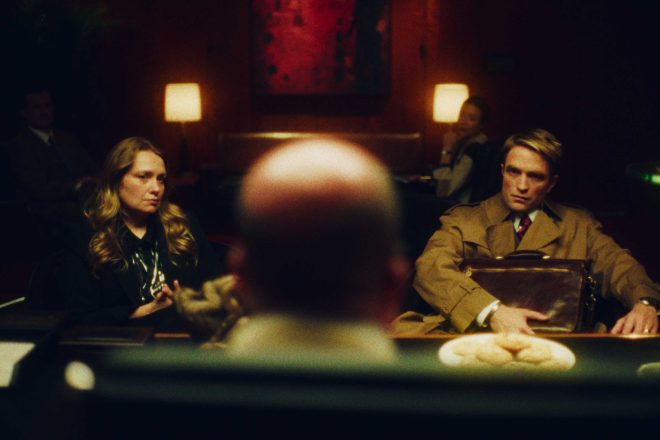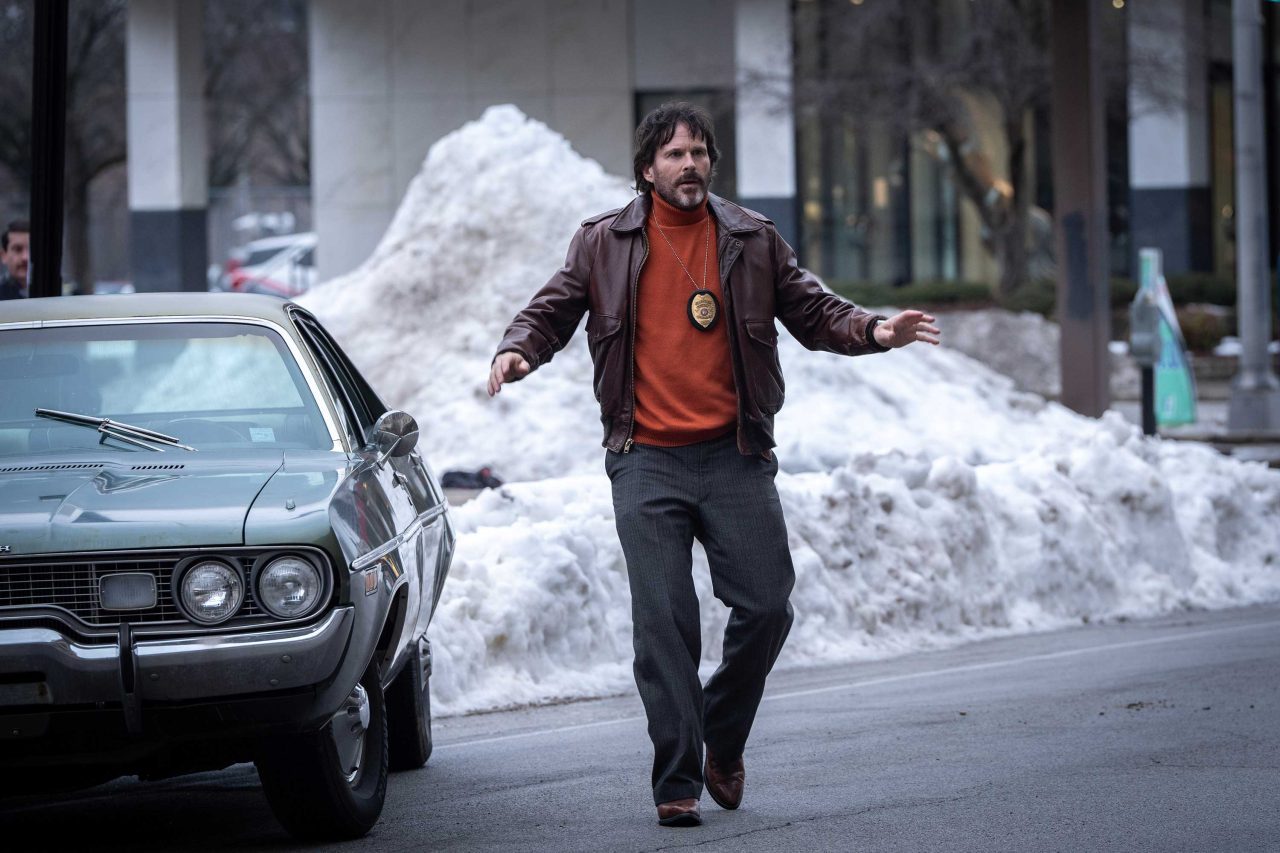
In February of 1977, a man named Tony Kiritsis entered an office building in Indianapolis with a shotgun. He took his mortgage broker, a man named Richard Hall, hostage, rigging the shotgun to the back of his head with a wire called a “dead man’s line” designed to fire the gun if he, Kiritsis, was shot or otherwise knocked down. A nearly three-day hostage crisis ensued, including radio interviews and a grandstanding media conference by the captor.
The motive for the kidnapping was that Hall (Dacre Montgomery) and his father (Al Pacino) had refused to give Tony (Bill Skarsgård) any more time to pay the mortgage on a piece of real estate he owned. The land had increased in value, and Tony, who wanted to build a shopping center on it, was convinced that Halls pere and fils were conspiring unfairly to get it away from him.
The strange, sad episode is dramatized in Dead Man’s Wire by Gus Van Sant, from a script by Austin Kolodney. It’s Van Sant’s first theatrical feature since 2018, and as an evocation of its period, it’s intensely vivid; those of us who remember the mid-’70s in middle America may find it almost hallucinatory. When it’s over, you may feel the urge to watch One Day at a Time or talk on a CB radio.
The movie is also a showcase for some top-notch acting. Skarsgård takes a break from leering as Pennywise and Count Orlok to glowering as Kiritsis. It’s a nuanced portrait of anomie that’s subtly scary without any telegraphing. Colman Domingo is wry and cool as “Fred Temple,” a fictionalized version of legendary Indianapolis radio journalist Fred Heckman, and Cary Elwes has fun playing against type as a gruffly diplomatic police detective.
Montgomery brings a certain sheepish dignity to the role of Hall the Younger. The ripest moment, however, is saved for Pacino as Hall the Elder, who cheerfully and unhesitatingly throws his son under the bus by phone.
It’s easy to sympathize with Skarsgård’s Tony, a small-potatoes guy frustrated in his attempt to rise out of his economic class and bumping into that hard-to-shake sense that the wealthy have pre-rigged the game to make this impossible, and even to take what ordinary people have away from them. Almost everyone below a certain economic level feels this at times, and we can’t always be wrong; it’s why people like Luigi Mangione get fans.
Whether that was what happened in Tony’s case, and whether, at any rate, the actions he took were heroic is quite another matter. Though Dead Man’s Wire is never less than absorbing, this queasiness mutes the dramatic force of this movie’s climactic stretch.
The film is much in the Van Sant tradition of affectionately but not sentimentally depicting the lives of goofball outcasts and fringies, like the itinerant subsistence pharmacy robbers in his 1989 masterpiece Drugstore Cowboy. With Dead Man’s Wire, however, it sometimes feels like Van Sant agrees with Tony when he publicly proclaims himself “a goddam national hero.” Even in these understandably eat-the-rich times, that may be a little much.