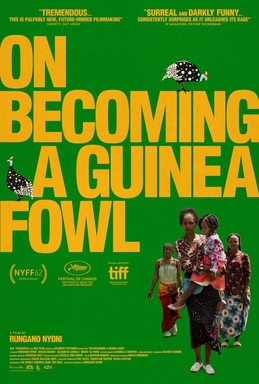
On Becoming a Guinea Fowl
Down a dark road in Zambia one night, a woman driving home from a party spots a dead body in the street. It turns out to be her Uncle Fred. Without much noticeable grief or fear, the woman, Shula (Susan Chardy), calls her father. He promises, after asking her for money, that he will come and take care of the situation. He doesn’t.
So begins On Becoming a Guinea Fowl, Rungano Nyoni’s brilliant, freaky and devastating exploration of relations between, and within, the sexes in Shula’s culture. We meet her giggling, hard-drinking cousin Nsansa (Elizabeth Chisela) and an enforcer squad of her stern, scolding, disapproving “aunties” as they arrange and conduct Uncle Fred’s funeral. We also meet Uncle Fred’s much younger widow, who comes from a poor family, and whom the aunties blame for his death, because she “didn’t cook for him.”
The few men that we meet are secondary figures, entitled and imperious moochers but also largely detached from the family’s day-to-day business. We soon see that Fred was at the center of the extended clan’s painful secrets, but this passionately pro-woman movie is not naïve; Nyoni makes it perfectly clear that it’s the women in the family, with their performative grief and scolding, that perpetuate the awful status quo.
Built around Chardy’s spectacularly un-histrionic performance, On Becoming a Guinea Fowl is shattering as drama, but it’s also an exciting piece of cinema, shot through with Nyoni’s strange, unpredictable wit. It has a lightly surreal feel, though it’s sort of a “found” surrealism; everything seems physically possible, just very weird.
In the opening scene, for instance, Shula is dressed in an absurd, billowy outfit with sci-fi-looking headgear, like a very chic alien. Turns out she’s returning from a “fancy dress party.” Later, when she and Nsansa go to fetch another cousin from a university dorm, the halls are flooded with an inch or so of water, which women are futilely trying to mop up. Is it a plumbing failure, or an externalization of their plight? Or both? In any case, OBAGF is a marvel.
The Alto Knights
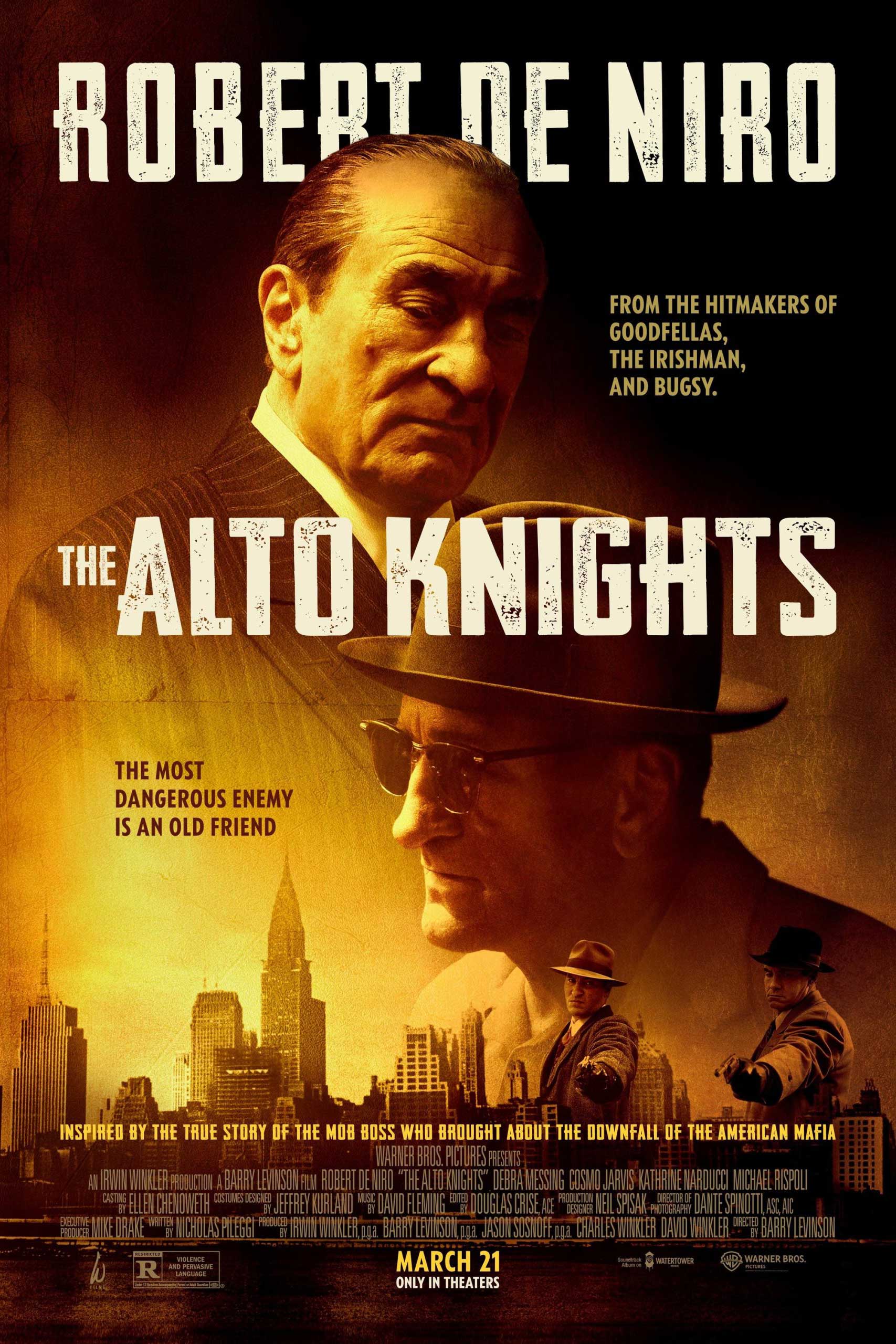
For a gangster picture, The Alto Knights has an unimpeachable pedigree. The director is Barry Levinson of Bugsy, the screenwriter is Nicholas Pileggi of Goodfellas, the producer is Irwin Winkler of Goodfellas and The Irishman. The star: Robert De Niro.
Nobody’s missing, except for the likes of Joe Pesci or Harvey Keitel or Al Pacino to play opposite De Niro. That’s because The Alto Knights is built around a striking stunt: De Niro as his own costar. The actor plays both Frank Costello and Vito Genovese, both veterans of Lucky Luciano’s gang in the ’20s and ’30s.
Most of the film is set in the ’50s, however, when Genovese returns from several years of exile in Italy, during which time Costello has been running his syndicate, and has made himself seem legit – even philanthropic – living luxuriously in the Waldorf-Astoria penthouse and raising flowers.
Genovese wants to move the business into drug dealing; the cautious, diplomatic Costello objects. Tensions escalate across a couple of showcase scenes in which De Niro tries to talk sense to De Niro, while De Niro tells De Niro in no uncertain terms that he, De Niro, is still an old-school gang boss, and that nobody, least of all some De Niro, is going to tell him what to do.
Dual or even multiple roles are a long-standing gimmick in movies. Peter Sellers and Eddie Murphy came to specialize in them, and Jim Carrey just did it in the recent Sonic the Hedgehog sequel. The reason for it in The Alto Knights may be nothing more than that De Niro seemed perfect for both parts. The rest of the movie is built to help emphasize the difference between the two men, with a smart, respectable wife (Debra Messing) for Costello and a volatile wife (Kathrine Narducci) for Genovese.
The supporting cast is convincing, from Michael Rispoli as Albert Anastasia to Louis Mustillo as Joe Bonanno to Wallace Langham as Estes Kefauver to Cosmo Jarvis as a woebegone, befuddled Vincent Gigante. The movie is beautifully shot by Dante Spinotti, and the period detail is seductive.
I thoroughly enjoyed The Alto Knights, but I don’t know how much appeal it will have with general audiences. As with Bugsy, there just isn’t all that much juicy on-screen violence. There are a few gory murders, sure, but mostly Levinson lets the movie glide along sedately, with scenes of old guys talking business. Even the climax doesn’t center on the flurry of killings customary in a Scorsese mob flick, but rather a bit of ingenious, bloodless tactical gamesmanship.
Part of what we want from a gangster movie is a vicarious taste of a world in which our grudges are violently gratified. The Alto Knights is fascinating, but it’s as doggedly stodgy and prudent as Frank. You may find yourself, like Vito, craving a little more mayhem.