Long known to Arizonans as a notorious den of abuse and religious opportunism, Colorado City is leaning into its natural gifts and transforming itself into a tourist hot spot.
By Craig Outhier | Photography by John Burcham
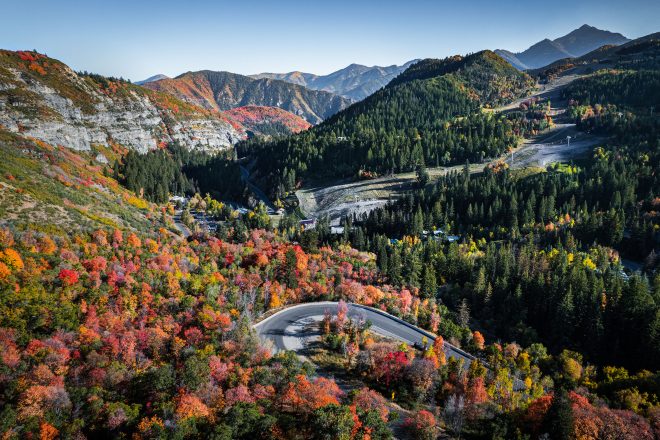
High in the handsomely oxidized foothills near Donia Jessop’s hometown is a public park set on a wide, lush plateau, its neatly clipped grass offering electrifying contrast to the rugged red mountains looming overhead.
A short hike from the park leads to an unusually flat rock just big enough to seat one or two people, with commanding views of the vast high-desert plains below. Jessop has a deep fondness for the spot.
“I call it my Thinking Rock,” she says. “There’s no phone connection, no distractions. When things get crazy, it’s where I like to go.”
It’s where she sometimes went as a young woman to escape the routine stresses of motherhood after marrying her high school sweetheart at age 17. Other stresses were not so routine. Jessop and her husband, Joe, were members of the Fundamentalist Church of Jesus Christ of Latter-Day Saints (FLDS), the polygamist Mormon splinter sect that controlled the twin towns of Colorado City, Arizona, and Hildale, Utah – collectively known as Short Creek – for three generations. But the Jessops’ marriage was never sanctioned by church leaders, as was custom.
Thus, they lived as low-key pariahs, even as they raised 10 children in the community.
Later, when Short Creek fell under the sway of child-abusing cult leader Warren Jeffs, the rock offered Jessop a bit of daylight as an impenetrable fog of recrimination and religious mania engulfed the twin towns. Young men were being banished. Girls were being hoarded as chattel. Jessop feared she might lose her home and family. But her rock was there.
Today, Jessop is the two-term mayor of Hildale. And if you visit, she heartily recommends the rock as a selfie spot.
Like many modern Short Creekers, Jessop prefers not to dwell on the past, or enshrine her pain in reverence. Located just a few miles from the splendors of Zion National Park, the community is in the midst of a remarkable and unlikely transformation. Once known to Arizonans primarily as a TV news bogeyman, a black hole in a remote part of the state that spat out nothing but sad and appalling stories, Short Creek has broken loose of the FLDS and is rehabilitating itself as a progressive, investment-friendly tourist destination. It has terrific hiking and rock climbing. It has B&Bs and guest lodges. It even has a winery and brewery. It’s moving on.
The question is: Are we ready to let it move on?
Arizonans have substantial curiosity about Colorado City and its Utah sibling, but most of their interest is still rooted in the area’s sordid past, not its world-class side-by-side trails. “Especially in the beginning, after the courts took control and the [FLDS] lost its grip, I’d hear that a lot, the fascination with the crimes. ‘Oh, that’s creepy,’” Jessop says. “But we’re telling a different story – one about love and beauty, and I think that’s a better story.”
Still, she can’t quite bring herself to reprove the local businessman who acquired the compound-like residence built as an aspirational post-incarceration love nest for Jeffs and his 80-odd wives, converting it into a hospitality business called Zion’s Most Wanted Hotel – an unashamed attempt to capitalize on the felon’s “Utah’s Most Wanted” nom de guerre. “It’s someone trying to make a little bit of money… and I really can’t find fault in people who are doing that,” she says. “This community was exploited for so long by so many. But personally, I’m like, ‘Can we move on now?’”

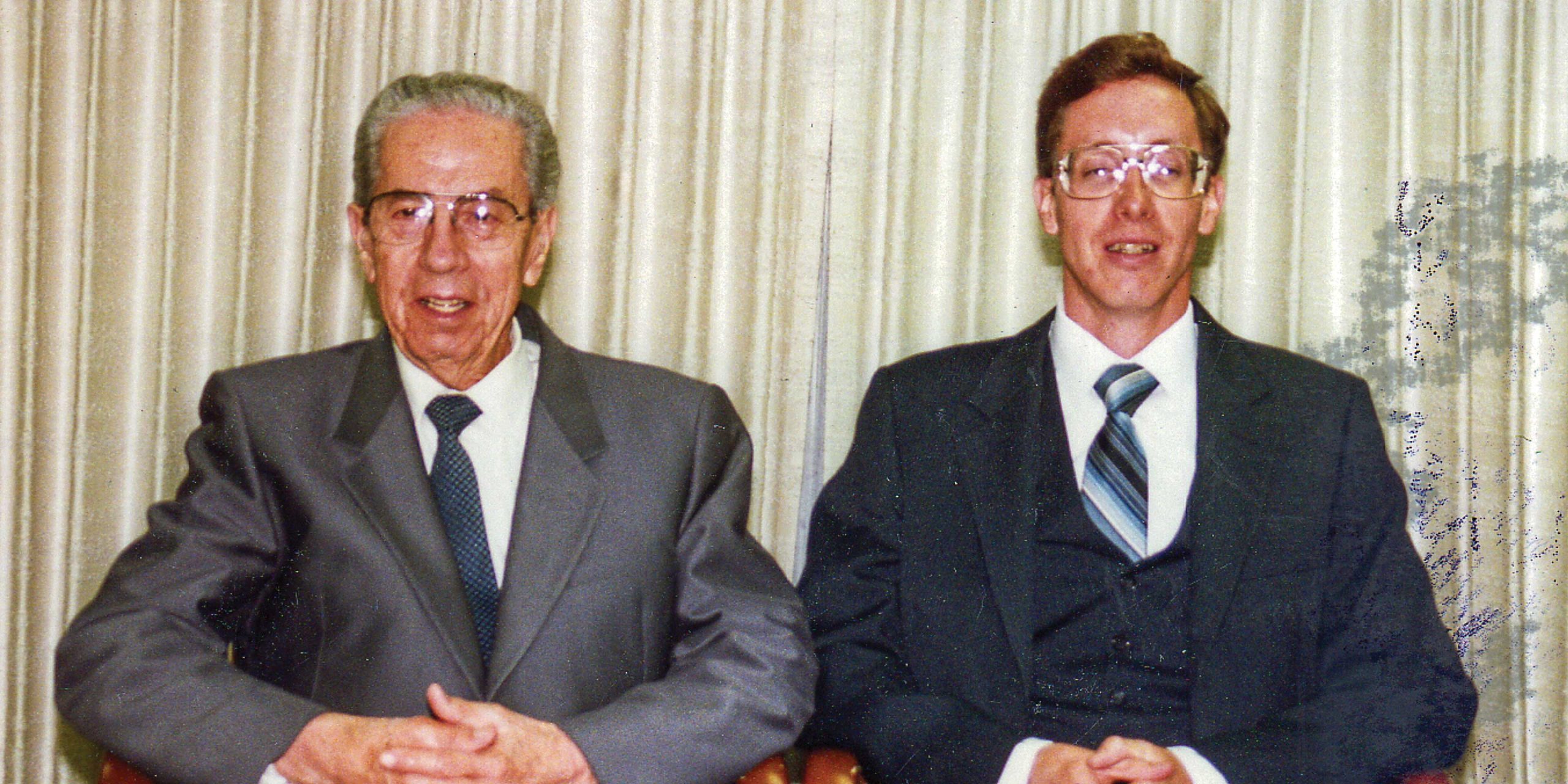

Settled in 1935 by the Council of Friends, a breakaway Mormon group and precursor to the FLDS, Colorado City had a complicated and contentious history long before Jeffs took power in 2002 – including the infamous Short Creek raid of 1953, which was such a public relations disaster for Arizona Governor John Howard Pyle that the state effectively ignored the town for the next half-century.
During that time, Short Creekers freely practiced polygamy and lived in a sort of crypto-socialist utopia – a highly paternalistic, church-dominated community in which the FLDS controlled most aspects of social life and all real property through a trust. Still, it was not a culture that longtime residents – even victimized residents like Jessop, who along with her family was excommunicated from the FLDS and evicted from town in 2012 – typically characterize as abusive. Suffocating and backward, perhaps. But not abusive. That is, until Jeffs took control.
Hildale hotelier Shem Fischer is another longtime resident and former FLDS member who also has fond – or, at least, untraumatized – memories of the pre-Jeffs era.
Blue-eyed and clean-cut, pouring an IPA for a guest in the common room of Zion Cliff Lodge, the 50-something Fischer recalls how his father, a prolific polygamist, moved his family from suburban Salt Lake City to Short Creek when he was a young boy – for the express purpose of practicing polygamy.
“I was one of 36 kids,” Fischer says matter-of-factly. “But I was very outspoken and progressive, a bit of a black sheep, growing up here. I developed a taste for the… finer things.”
Despite bristling at Short Creek’s customs, and having no interest in plural marriage himself, Fischer loved and admired his father and ran a prosperous “cabinet shop” business with him – essentially a rural version of a Home Depot, selling fixtures and goods for high-end custom homes, with multiple locations in Southern Utah.
Like many residents in Short Creek, where zoning was nonexistent and construction loans impossible to acquire, Fischer also built homes himself. The Zion Cliff Lodge, an upscale 11-room boutique hotel with its own four-handle beer bar and bungalow-style front deck, was one such effort. He completed it in 1997.

Fischer says he was content living in Short Creek until the late 1990s, when the FLDS – then led by Rulon Jeffs, the elderly father of Warren – began ruling with a “more rigid, forceful hand.”
“They started telling us how we could eat, dress and drive,” he says. “Meanwhile, the girls they were arranging in marriages were getting younger and younger. It was apparent to me they were grooming kids for wives.”
Short Creek was systematically being bricked off from the world. In July 2000, Rulon Jeffs issued a prophecy that church members could not employ any apostates – i.e. people who severed ties with the FLDS. It was the final straw for Fischer.
“Those were people I needed for my business – friends who depended on me, and me on them,” he says. “But most importantly: It was illegal. It’s illegal to fire someone for religious preference. And just wrong and unfair on every level. So, I refused.”
Shortly thereafter, Fischer himself was branded an apostate and excommunicated. Since his lodge was built on land held by the FLDS trust, he was deemed a “tenant at will,” evicted from his own home and banished from the community entirely. Shown the door by FLDS cops working on orders from FLDS city managers.
“They were the judge, jury and executioner,” he says. “That’s where the movement began.”
Unlike many other FLDS “lost boys,” many younger and with less money, who often ended up homeless in nearby towns, Fischer had the means and will to fight back. He launched a salvo of lawsuits, taking the case to federal court and riding out more than 10 years’ worth of judgements, appeals and stays.
According to Fischer, his case was one of several that compelled the Utah attorney general to step in and seize the FLDS trust (known as the United Effort Plan, or UEP) that allowed it to rule the town. Coupled with Jeffs’s life sentence for child sexual assault in 2011, it put Short Creek on an irreversible path to recovery.
Finally, in November 2017, after more than $1 million in accumulated legal fees, Fischer and his wife, Lisa, took back the keys to their 10-room lodge on the Utah-Arizona state line.
“Jeffs’s brother lived here after I was kicked out,” Fischer says. “It was the nicest place in town. They pretty much trashed it.”
Two years and another small fortune in improvement costs later, the Fischers opened Zion Cliff Lodge to its first guests. The one-time kingdom of Warren Jeffs had its first boutique hotel.
With the State of Utah doling out leases and deeds via the seized trust, other good things were happening in the late 2010s. In Colorado City, industrious amateur brewer Ray Hammon went pro, opening Edge of the World Brewery with business partner Nick Dockstader using a tiny half-barrel brewing system – while the town’s FLDS police chief and mayor could only impotently fume.
Seven years after opening the brewery, Hammon is still going strong, pouring for the community’s growing population (up to about 10,000 between the two cities, Jessop says) in addition to Utahns from surrounding towns hell-bent on skirting the state’s draconian 5 percent ABV limit for tap beer.
Then again, it’s a matter of some debate how dry Hildale and Colorado City ever really were. Shane Tooke has reason to wonder. Growing up in neighboring St. George, Utah, the future winemaker didn’t know much about Short Creek’s inner workings and rarely visited. But when the FLDS racket crumbled and land was put up for sale, he and his wife, Kalie, sold their chain of hair salons and moved to Hildale, looking for business opportunities.
In 2020, he met a sales representative to examine an unusual, 2-acre piece of farmland set behind 6-foot walls in the middle of town. “I took a look at the plants, which were in really rough shape, and said, ‘Oh, my God, those are grapevines. This is a vineyard.”
It turns out the vineyard was formerly owned by Jeffs, who – among his many other vices and hypocrisies – was fond of furtive winemaking and wine-drinking.

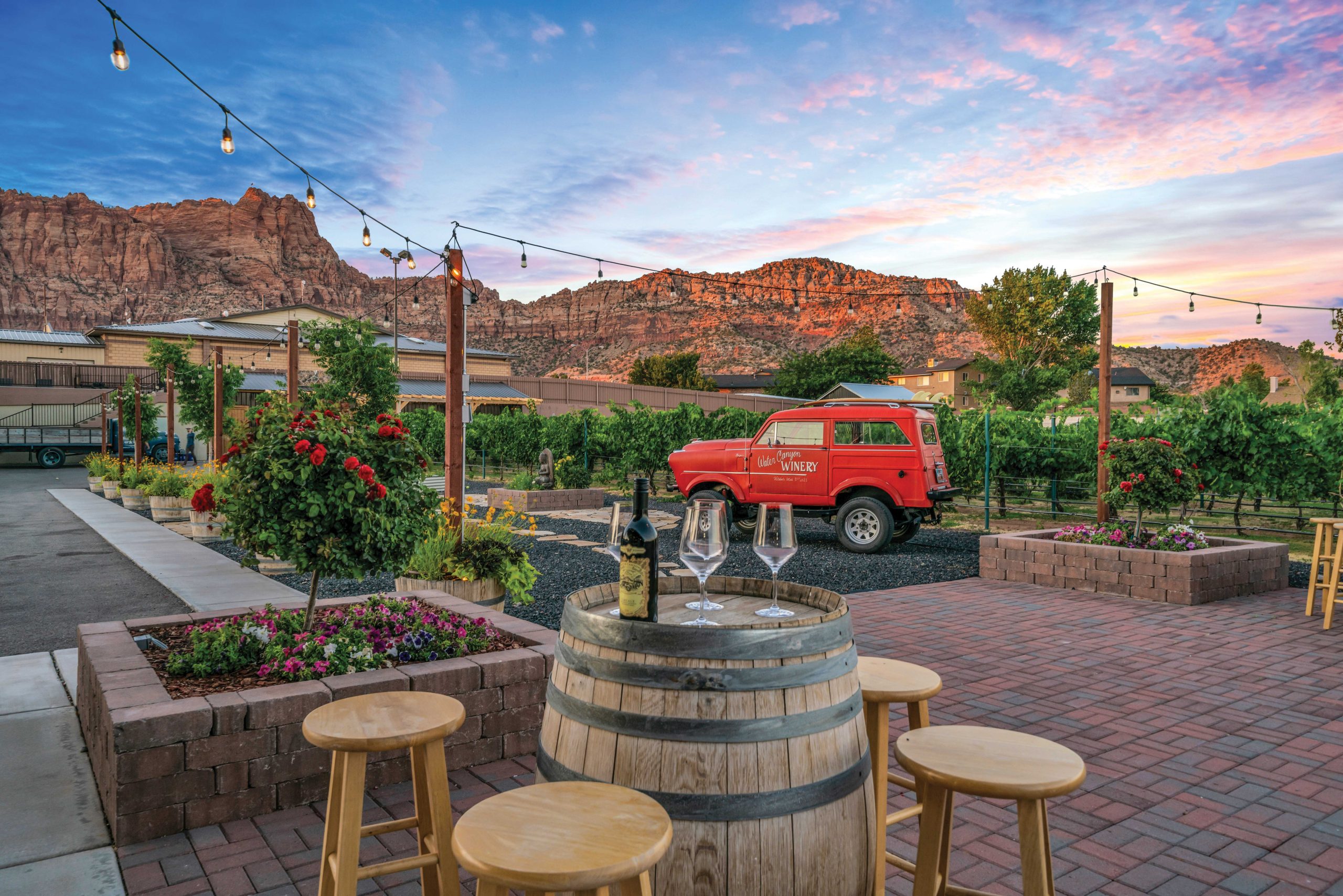
Going with it, Tooke spent the next two years studying winemaking and sorting out his vineyard – the former owner had planted Sangiovese, Barbera and Cabernet Sauvignon, among other varietals – before bottling his first Water Canyon Winery vintage in 2021. Today, he and Kalie make excitingly unpredictable natural wines – sometimes fizzy and a little funky, made without regulating agents like sugar and pesticides – out of their custom-built crush facility and estate tasting room.
“It’s exciting being part of this transformation taking place [in Short Creek],” says the winemaker, who also runs a tasteful wedding and event space at the winery, with an Airstream trailer for overnight guests. “You have to believe in this town. It’s gone through so much. There’s a strength here. It’s what drew our family here in the first place.”
Though all of Short Creek has enjoyed evolution and investment over the last decade, it hasn’t been exactly even and proportional. Hildale is clearly ahead – it’s where all six of the area’s hotels and guest lodges are located and where investor energy more naturally conducts.
Jessop has a simple explanation: “It’s because we – and by we, I mean people who don’t discriminate based on religion – took over [here in Hildale] five years earlier, so we’re ahead of the game a little bit.”
To Jessop’s point: Her counterpart in Colorado City, Mayor Howard Ream, didn’t assume office until 2022, five years after Jessop became the first female mayor in Hildale history. Like Jessop, Ream is an area native who was expelled from the community – and from the FLDS – and returned to help lead its “healing process,” he says.
And he also has a theory about why Colorado City has lagged behind its sibling. “We’re in Arizona, but we’re kind of hidden up here, sequestered up here behind the Grand Canyon,” he says “It’s not easy to get to Colorado City from Phoenix or other Arizona cities. Whereas Hildale is very much a Utah town. It gets more attention.
“I’m working really hard to bring representatives and civic leaders from Arizona to Colorado City to see what we’re doing here, and hopefully interest and investment will come from that.”

Ultimately, Colorado City and Hildale are very similar, and will face similar roadblocks as they strive to modernize and court hospitality dollars. As Jessop notes, neither city had zoning ordinances or growth plans during the FLDS era, and it shows – sidewalks, green streets and medians are practically nonexistent, and lots are widely varied and motley, lending both cities the happenstance look of older tribal neighborhoods or Mexico border towns.
Short Creek also has a wall problem. Which is to say, they’re everywhere, surrounding houses, businesses and who-knows-what, and they tend to be quite tall, including the 10-foot compound wall surrounding the aforementioned Zion’s Most Wanted Hotel. They project a disquieting energy, not exactly hospitality-friendly.
“Compound was a word that was never used here, growing up,” Jessop laughs good-naturedly, noting that several of the more oppressive-looking walls have been removed. “But here’s the interesting thing. For many years, we had so much media here, people started building fences to ward off cameras and get some privacy. It’s frustrating, because the walls weren’t built to keep people in – it was to keep people out.”
Looky-loos and true crime buffs continue to poke their noses into town, but even Jessop concedes that – as a bottom-line tourism trigger – this isn’t an entirely bad thing. The community’s identity as an outdoor adventure hot spot, after all, is still in its infancy. Can a crime podcast fan here or a repeated haunted-hotel-style myth there really hurt?
Jessop warns that true-crime sightseers might be disappointed, however. Women and girls in the classic FLDS neck-to-ankle dress and tied-up hairstyle are extremely rare sightings these days, as more and more Short Creek fundamentalists scatter across North America. “I would say if you’re out on the street, only 1 out of every 200 or 300 women is wearing [the garb],” she says. “We estimate there are about 50 homes we assume are FLDS, based on their attire. But I guess you never want to judge a book by its cover.”
Clearly, Short Creek’s future resides in the greater community of Zion-adjacent tourism towns, like nearby Hurricane and Springdale, sustained by family vacations and outdoor adventuring buffs. Enter industrious newcomers like Gabby Olsen, principal of Rock Odysseys, a canyoneering and rock-climbing guide service. In many ways, Olsen is a model for the kind of interested outsider that Colorado City-Hildale is banking on. A Utah native, Olsen caught the climbing bug at a young age and moved to the St. George area in 2016 to make a career of it.
She frequented Water Canyon (the area’s definitive climbing and hiking feature) but was leery of Short Creek, remembering the community as “very closed off and guarded” during her initial visits.
That changed almost overnight when the first UEP titles were handed out. Suddenly, the town opened up, and Olsen saw herself as part of the community instead of as an interloper. She and her similarly climbing-inclined husband, Dion Obermeyer, even got married at Water Canyon Winery, holding their reception at Zion Cliff Lodge.
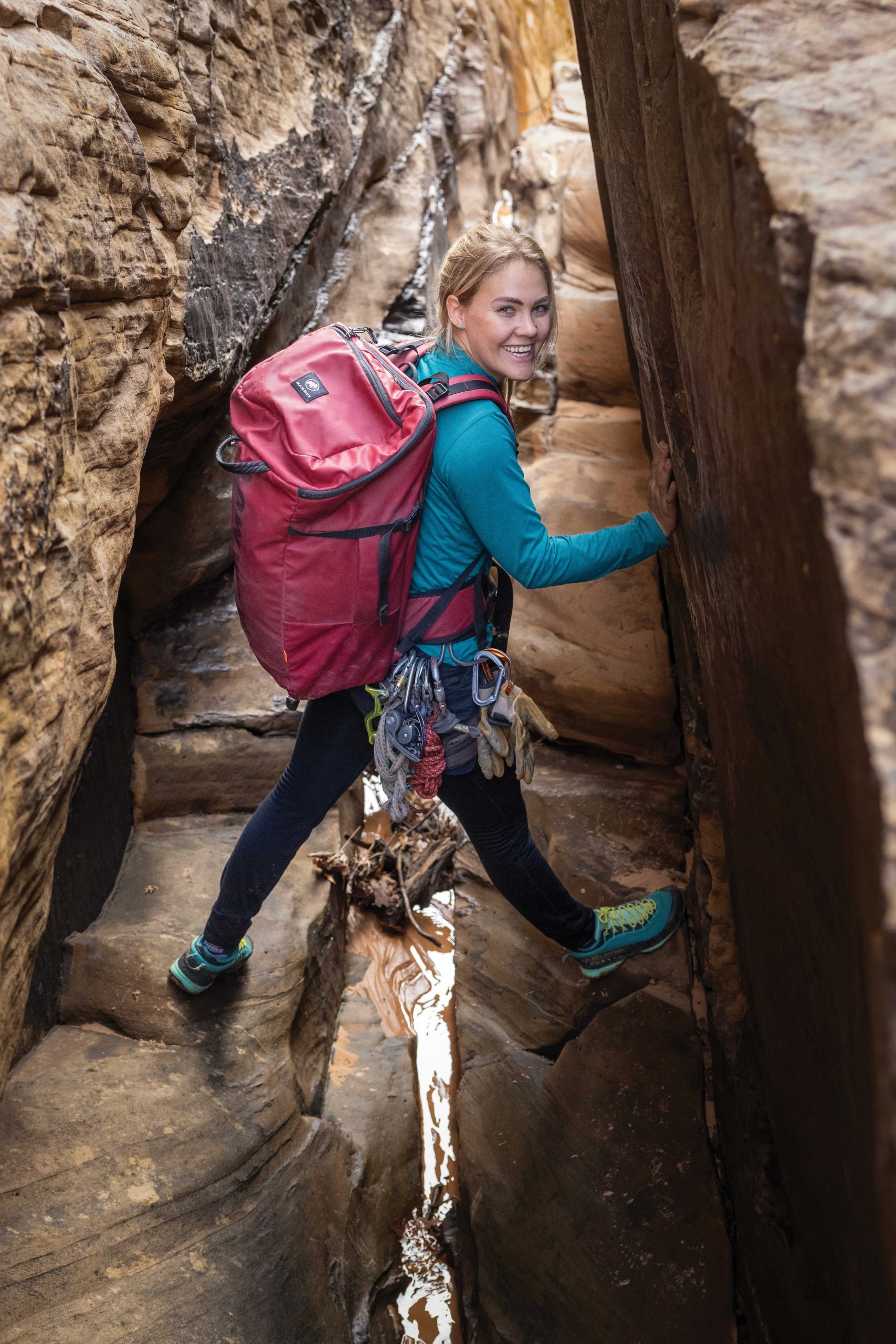
“[Short Creek] is important to us, and we love seeing the transformation there,” says Olsen, who calls Water Canyon the “crown jewel” of the area but also favors Coral Pink Sand Dunes State Park in Kanab, closer to Zion National Park. She believes the town could someday rival larger, more amenity-rich Hurricane as the preferred gateway into the fabled badlands.
Like the biblical Zion, a central part of Colorado City-Hildale’s growth will be the return of its diaspora – the hundreds of former residents and apostates expelled by the FLDS over the years. Jessop says they keep coming in waves, making housing problematic and necessitating emergency measures for growth and development. It’s a problem that also preoccupies her Colorado City counterpart, Ream. He’s hoping a widening project on Arizona State Route 389, which runs through town, stimulates business, and that new traffic restrictions at the Zion-Mt. Carmel Tunnel will bring more Grand Canyon and Bryce Canyon transit through town.
If you come, and hike up to the uncannily flat rock outside Hildale’s Maxwell Park, Jessop will surely scoot aside and make room. Just don’t ask her to turn on her Snapchat locator, as her children often do before she disappears into the wild.
“Sometimes, it’s nice to just turn off the world and be present. You know?”
IF YOU GO
Zion Cliff Lodge
zionclifflodge.com
Water Canyon Winery
watercanyonwinery.com
Edge of the World Brewery
facebook.com/edgeoftheworldbrewery
Rock Odysseys
rockodysseys.rocks