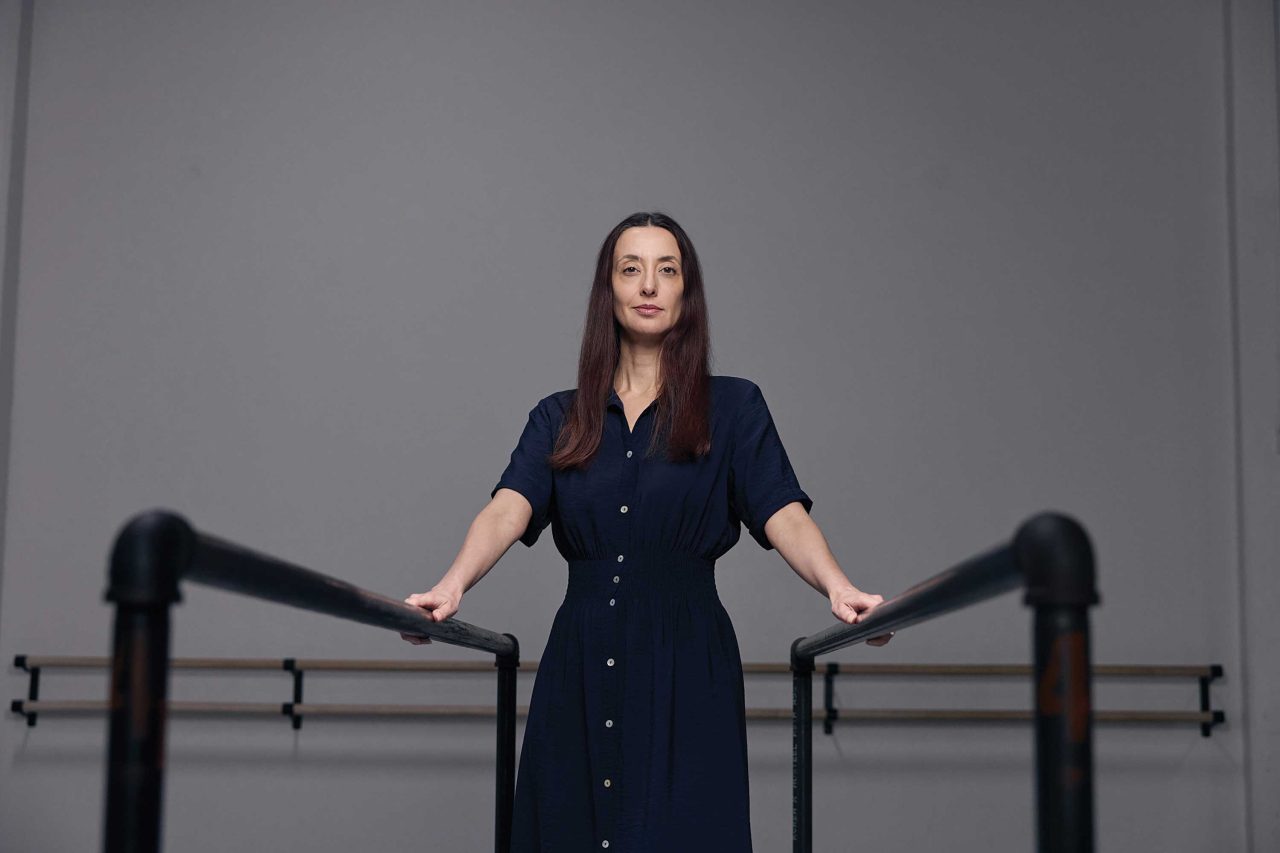
by Robrt L. Pela | Photography by Thomas Ingersoll
Daniela Cardim has big toe shoes to fill. The new artistic director of Ballet Arizona follows in the pointed footsteps of her legendary predecessor, dance virtuoso Ib Andersen. Cardim is herself an internationally acclaimed dancer and choreographer and the first woman to hold the position at the 38-year-old organization. “I feel lucky and honored to be inheriting this talented company,” says Cardim, born in Rio de Janeiro and most recently the assistant director of the New English Ballet Theatre in London. “Ib did such a great job of growing the organization and raising its level of artistry.”
You’re hardly a neophyte in the dance world. But is it intimidating to follow a legend like Ib Andersen?
I wouldn’t say it’s intimidating. But it’s a lot of responsibility. It’s nice to build on something by somebody who has done so much wonderful work. And, you know, this is just how it goes. Every artistic director has their own strengths, and they bring them to the job. And then they leave the job, and this is a new chapter.
What are your plans for the company?
We’re going to honor our past by continuing to do some of the classics – some of Ib’s ballets and some of the classical repertoire that a ballet company should be doing, because those are the works that made ballet famous. Like Swan Lake and The Nutcracker and Sleeping Beauty. But I want to bring some masterpieces that haven’t been seen in Arizona, ballets from America and abroad.
Why has it taken this long for Ballet Arizona to appoint a woman to this position?
I don’t know. Ib was here for a long time, and he was a man. They were not looking for anybody else. So, a man had the job. That’s how it went.
You were one among a handful of choreographers selected to attend the New York Choreographic Institute.
It was an incredible opportunity. They pair you with another artist, and it was the first time I worked with a composer who would create the music I would dance to. Before, I had chosen music myself, and I would always create from the music. I’m very driven by the music. But this took me out of my comfort zone. It was very challenging, and it was a little scary. This kind of project is important, because you end up discovering things about yourself that you didn’t know you could do.
Will you be reprising some of your own recent work, like Reset or Baroque Encounters?
I plan to. Yes. That’s slightly confidential. But if you print it, it won’t be confidential anymore. So, yes. Now everyone knows. Eventually I will bring some of my existing work to Ballet Arizona. But I don’t see myself being the main choreographer, I see myself as being one of many choreographers. It won’t just be me doing my own work.
Phoenix isn’t always the easiest sell when it comes to peddling culture. How do you get around that?
It’s not a challenge that’s unique to Phoenix or to Ballet Arizona. Yes, in London there’s a bigger audience for the arts, but they’re competing with social media and all other entertainments, the same as any other big city. We have to reach further into the community and introduce our art form to them, to engage them. I can’t do that by myself. I choose the programming and we make sure that every year there are family-friendly ballets, to expose younger audiences to ballet. After that, it’s the team – the director of marketing and the director of philanthropy and the executive director. We’re all sending out the message that we are dancing, and we want you to come see this.