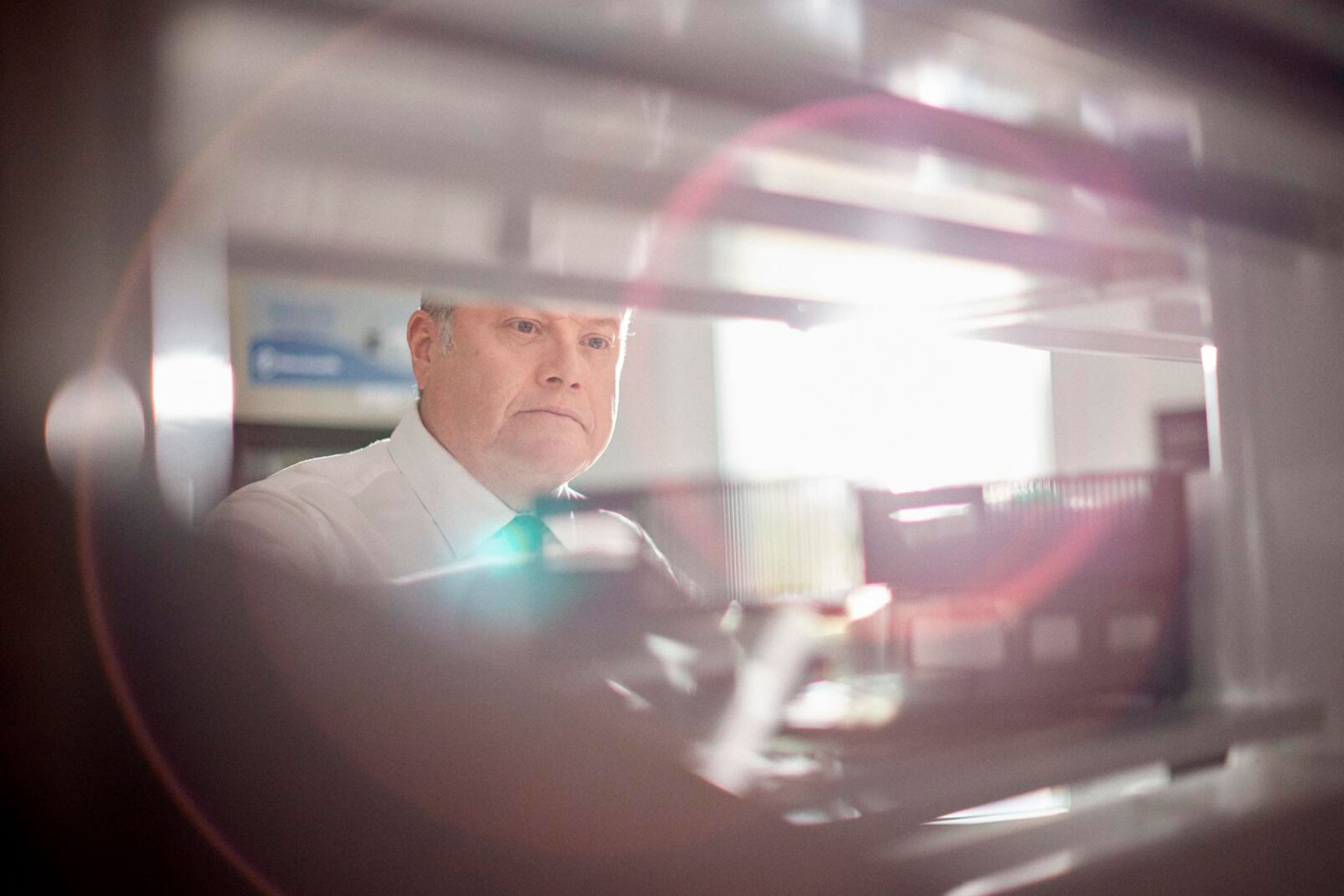
Rafael Fonseca, M.D., hematologist and chief innovation officer at Mayo Clinic in Arizona, is a self-proclaimed pathological optimist. Perhaps that’s why he attributes the trajectory of his career to a debilitating event in his early life: a ski accident that resulted in a 12-hour surgery when he was 17 years old.
He doesn’t remember much about his first few days of recovery, but the care he received from his nurses and physicians left an impression on him. “I was truly grateful,” he says. “I thought maybe someday I could be on the other side of that.”
While Dr. Fonseca says he doesn’t necessarily believe in fate, he says, “I vividly remember right before the accident I told myself, ‘You shouldn’t be here.’ Had I followed that, I’d probably be an actuary somewhere.”
Fate or not, it was this pivotal experience that set his sights on a career in medicine and eventually led him to Mayo Clinic in Arizona.
‘Don’t worry; I’m not a research person.’
Today, Dr. Fonseca leads a team of Mayo Clinic researchers working to create a better future for people with multiple myeloma, a type of blood cancer that develops in plasma cells — a specialized type of white blood cell. He is a Distinguished Mayo Clinic Investigator, the highest academic distinction given to researchers at Mayo Clinic, and was recently named one of 2024’s Giants of Cancer Care for his trailblazing contributions to multiple myeloma research.
Before coming to Mayo Clinic in Arizona, where he helped establish one of the most advanced multiple myeloma programs in the country, Dr. Fonseca envisioned a life close to family in his home of Mexico City.
“I grew up in Mexico City. I had a very nice family and a beautiful environment,” he says. Both his parents — now in their late 80s — and three siblings still live in Mexico City. “My original goal was to be a gastroenterologist and open a private practice in Mexico.”
After earning his medical degree from Universidad Anáhuac, México, Dr. Fonseca first came to the United States to complete his internal medicine residency at the University of Miami in Florida, but his life was still back home in Mexico City.
“I had great admiration for so many of the things we know are wonderful here in the United States, but I thought it was going to be temporary,” he says.
His goal remained to work with patients and pay forward the care he once received, but the fellowship programs he interviewed for weren’t a match. They were too focused on research and not enough on patient care.
He finally found what he was looking for at Mayo Clinic. “I was accepted for my fellowship at Mayo Clinic in Rochester, Minnesota. There was an optional fourth year of clinical research, and I told my wife, ‘Don’t worry; I’m not a research person. I’m never going to do that. Let’s go to Rochester, and then we’ll go back to Mexico.”
The persisting call of research
“I went to Rochester to attain superb clinical training,” says Dr. Fonseca. “As I went through my internal medicine program, I became enamored with hematology and oncology, but still without a focus on research.” That was until he met the late Philip Greipp, M.D., a Mayo Clinic hematologist and multiple myeloma pioneer who played a defining role in creating the International Staging System for Multiple Myeloma.
“Phil was my primary mentor,” says Dr. Fonseca. “Through our interactions, I became more and more interested in the research behind the therapies we offered and what we could offer tomorrow’s patients.”
Dr. Fonseca understood that the most significant impacts to multiple myeloma treatment had yet to be made, and as a physician-scientist at one of the most renowned collaborative institutions in the world, he could champion a future for his patients — and more broadly, patients anywhere. “I thought, ‘Whatever we find here can have an impact beyond Mayo Clinic.’”
By the end of his fellowship training, Dr. Fonseca knew the research he and his colleagues were advancing could improve the lives of people with multiple myeloma. He also knew Mayo Clinic was his new home.
All roads lead to Phoenix
In 1998, 2,000 miles southwest of the Rochester campus of Mayo Clinic, the construction of Mayo Clinic Hospital in Phoenix was nearly complete. Dr. Fonseca felt drawn.

“People will say I was just getting out of the cold. That was just one of the factors,” he jokes. “My wife and I thought it would be wonderful to be closer to family.”
He had also started thinking about building a myeloma program to reach more people. “In Rochester, many people were treating myeloma, and they were doing great work. But to some degree, I thought, ‘Whether I’m here or not, the program will always be strong. But there is no program in Arizona.’”
Dr. Fonseca introduced the idea of a myeloma program in Arizona. “I told our Mayo Clinic leadership, ‘I want to build a myeloma program, and I realize that if there isn’t a need for it, I’ll have to do other things. But I think we can make it happen,’” he says. “They placed their trust in me.”
Challenging the idea of incurability
“If you go to most textbooks or review articles, the first or second sentence will say myeloma is not curable,” says Dr. Fonseca. A brief internet search will confirm this. It also will inevitably produce one of Dr. Fonseca’s more than 370 medical articles and 60,000 citations, including clinical trial findings that led to the approval of drugs now helping people with multiple myeloma live longer than ever before.
“When I started my career at Mayo Clinic in 1998, we had two drugs to treat multiple myeloma and a survival rate of about two years,” he says. Today that is no longer the case, and some people with multiple myeloma are now living as many as 20 years after diagnosis.
“It’s not unusual for me to be in the clinic and see patients 10, 15 or 20 years after they were first diagnosed.”
Almost 21 years later, Mayo Clinic in Arizona sees nearly one-third of multiple myeloma patients who seek treatment in the greater Phoenix area. Dr. Fonseca says he hopes to see this number grow.
As more patients come to Mayo Clinic in Arizona to receive cancer care from renowned experts like Dr. Fonseca, personalized care in all aspects of a patient’s journey becomes increasingly important. Mayo Clinic emphasizes its commitment to closing the cancer care gaps in the diverse populations it serves through the language and cultural diversity of its staff, culture-specific patient navigators and translators.
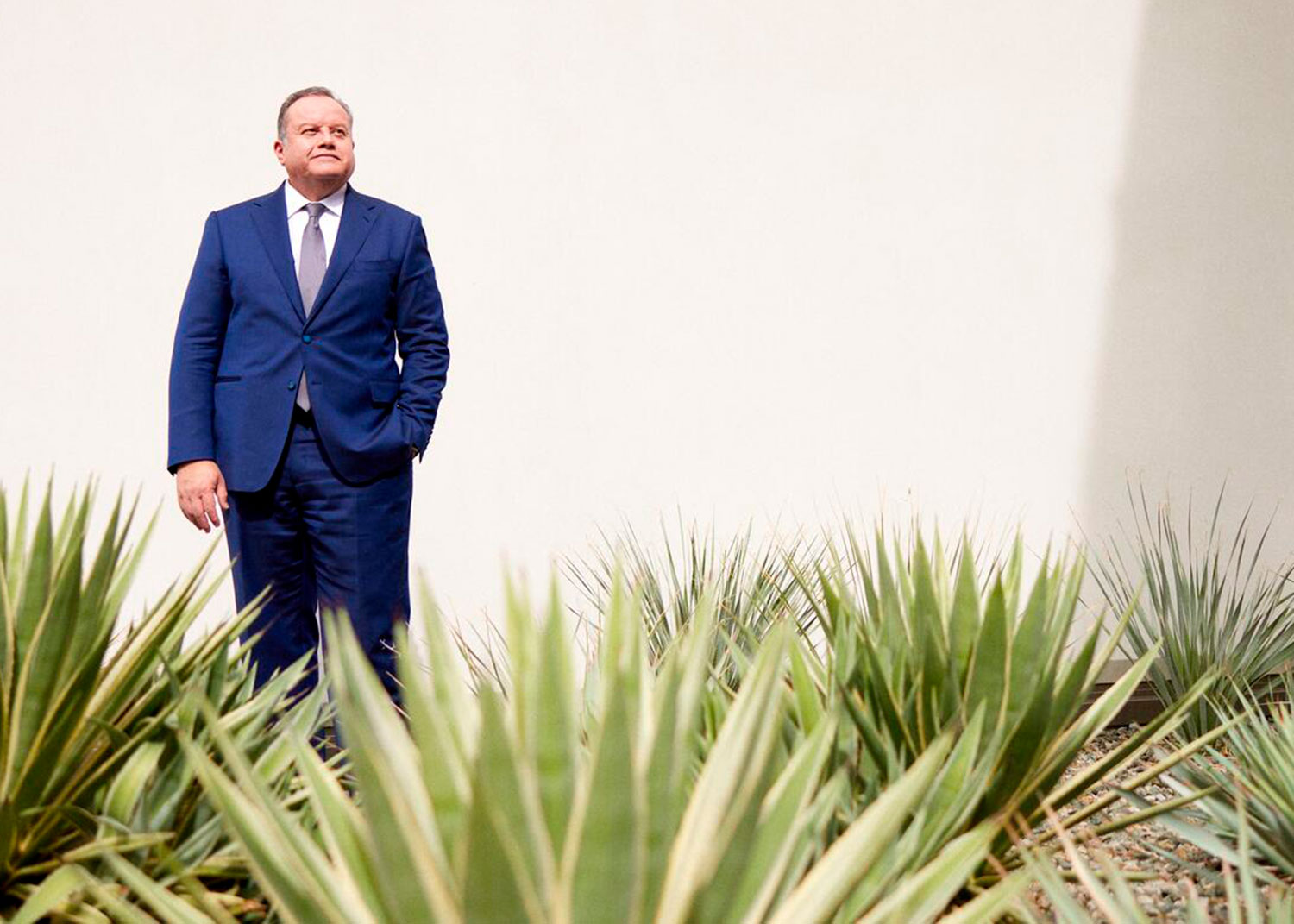
Decades after he decided to pursue medicine and embrace his calling to find cancer cures, Dr. Fonseca still remembers what first drew him. “When I’m with a patient discussing treatment options and how we can individualize therapy to maximize their outcome, that’s when I feel that connection and find the most meaning,” he says.
His connection with patients continues to fuel his research as he and his colleagues investigate more therapies to help people with multiple myeloma live long enough to benefit from tomorrow’s advances.
Optimistic as ever, he extends this hope to patients: “I tell them I will do my best so they can someday say they had a curable version of multiple myeloma.”
For more information or to request an appointment, visit mayoclinic.org.