Does West Valley businessman Kyle Eng finally have a formula for an MLS-worthy soccer franchise in Phoenix?
Phoenix is the largest city in the U.S. – and second largest media market – without a Major League Soccer team. Advertising executive Kyle Eng hopes to change that. His goal is to deliver an MLS franchise to the Valley by 2020.
“I want Phoenix to have all the offerings that any other major sports town has,” says Eng, owner of the freshly minted Arizona United Soccer Club (AUSC). “The only thing missing is Major League Soccer.”
Phoenix has a history of failed soccer franchises, most recently the Phoenix FC Wolves, thanks to little fan support and funding, unstable ownership and triple-digit weather. But when the city was in danger of losing its only professional team last year, Eng didn’t hesitate to buy the local franchise rights. “It was partly a business decision, partly a community decision,” Eng says. “I thought it was important for kids to have soccer heroes as well as football and basketball heroes. I thought it was important to keep soccer in Arizona and I was in a position to do it.”
 Eng, 45, is CEO of Arrowhead Advertising, which counts Nationwide Vision and Hyundai among its clients. Eng bought the soccer franchise rights after the Phoenix FC Wolves’ franchise agreement was retracted by USL PRO in 2013 after one season because the team defaulted on a deposit, didn’t pay players on time and violated various league rules.
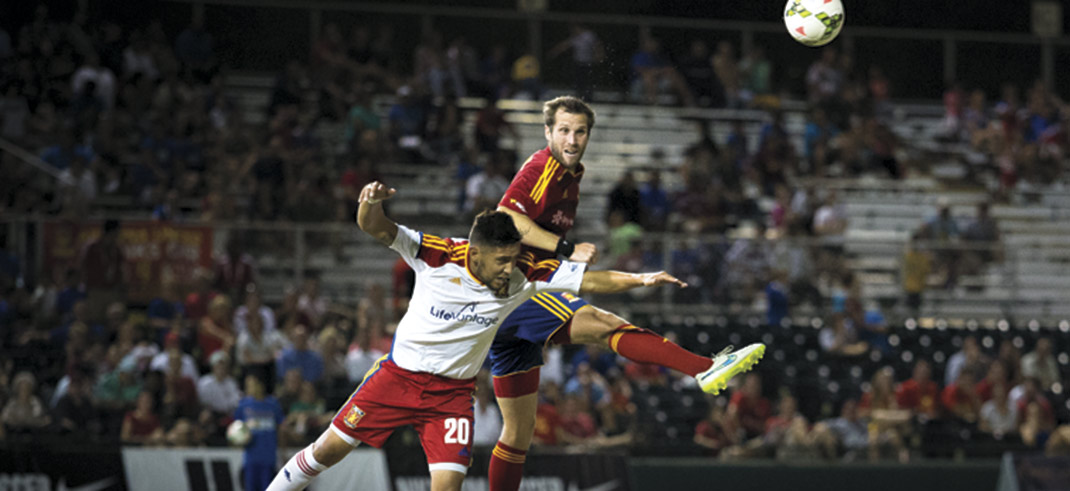
Arizona United is currently playing its second season. It signed a one-year affiliation with MLS team FC Dallas that helps defray costs through loaned players and other benefits; Eng estimates he’s invested “in the low seven figures” in the team, including an estimated $40,000 he paid to Phoenix FC players to cover the salaries they were still owed – a gesture he called “good soccer karma.”
AUSC signed a deal to play its 2015 home games at Scottsdale Stadium, which seats about 8,000. Eng says the club averages about 3,400 fans per game (Phoenix FC drew less than 2,000) at an average ticket price of $15.
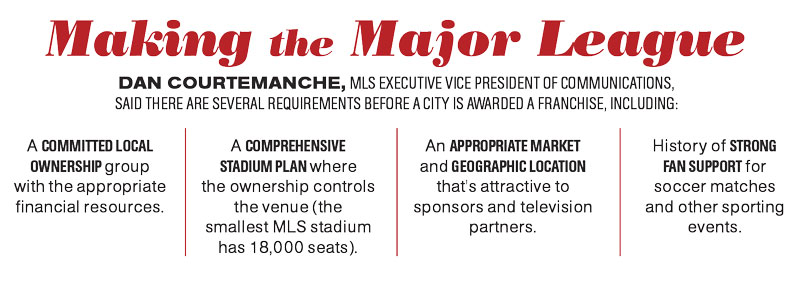
When assessing the viability of a Phoenix franchise, MLS Executive Vice President of Communications Dan Courtemanche touts the Valley’s ability to manage several previous international soccer events, including Mexican national team matches and the CONCACAF Gold Cup doubleheader, which drew 62,910 fans to University of Phoenix Stadium.
 MLS added expansion teams Orlando City SC and New York City FC this year and announced a Minnesota expansion team. Plans for a Miami team are moving forward. Atlanta and Los Angeles will join the league in the next few years, bringing MLS to 24 clubs. “Since our goal was to have 24 teams by the end of the decade, we are now evaluating our future expansion plans and expect to have more details in the coming months,” Courtemanche says.
Eng says it’s too early to estimate an expansion fee for Phoenix, but Minnesota recently paid $100 million to join the league. Those funds are disbursed among team owners.
Eng isn’t aware of any studies measuring the potential economic impact of an MLS franchise in the Valley, but the rewards could be great. MLS attendence averaged around 19,000 fans per game in 2014, and MLS and U.S. Soccer announced an eight-year television and media-rights deal this year with ESPN, Fox Sports and Spanish-language Univision Deportes worth a reported $720 million – an average of $90 million per year.
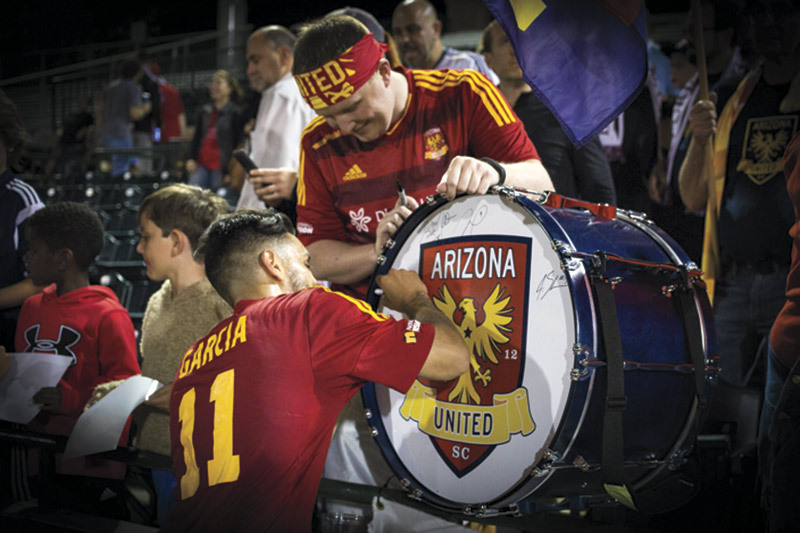
Part of AUSC’s game plan is to engage a Latino community that Eng calls vital to success, given the Valley’s demographics. As an advertising exec who also worked PR stints at FOX Sports and the Golf Channel, Eng says he understands how to reach that community. “Soccer is not a sport for the Latino community; it’s a lifestyle,” he says. “We’ve tried to embrace them with Spanish language partners, Spanish-speaking community reps and we’re looking to do a soccer [exhibition] with a team from Mexico – hopefully this year.”
Perhaps the biggest hurdle for Eng is securing a soccer-only stadium. He’s negotiating with “three or four parties” about building a privately-funded stadium. The design would start in the 8,000-10,000-seat range but remain expandable to anywhere between 22,000 and 25,000 seats. Among the considered locations are Downtown Phoenix, the Loop 202 and 101 freeways junction on the Tempe-Mesa-Scottsdale borders, and the 101 corridor in Scottsdale. Eng declined to be more specific, but denied rumors he’s exploring a partnership with Suns owner Robert Sarver. The stadium would have to be completed by 2020, per MLS’ timeline.
“We believe it is our job as Arizona’s professional soccer team,” Eng says, “to show that Arizona can support soccer at the highest level.”