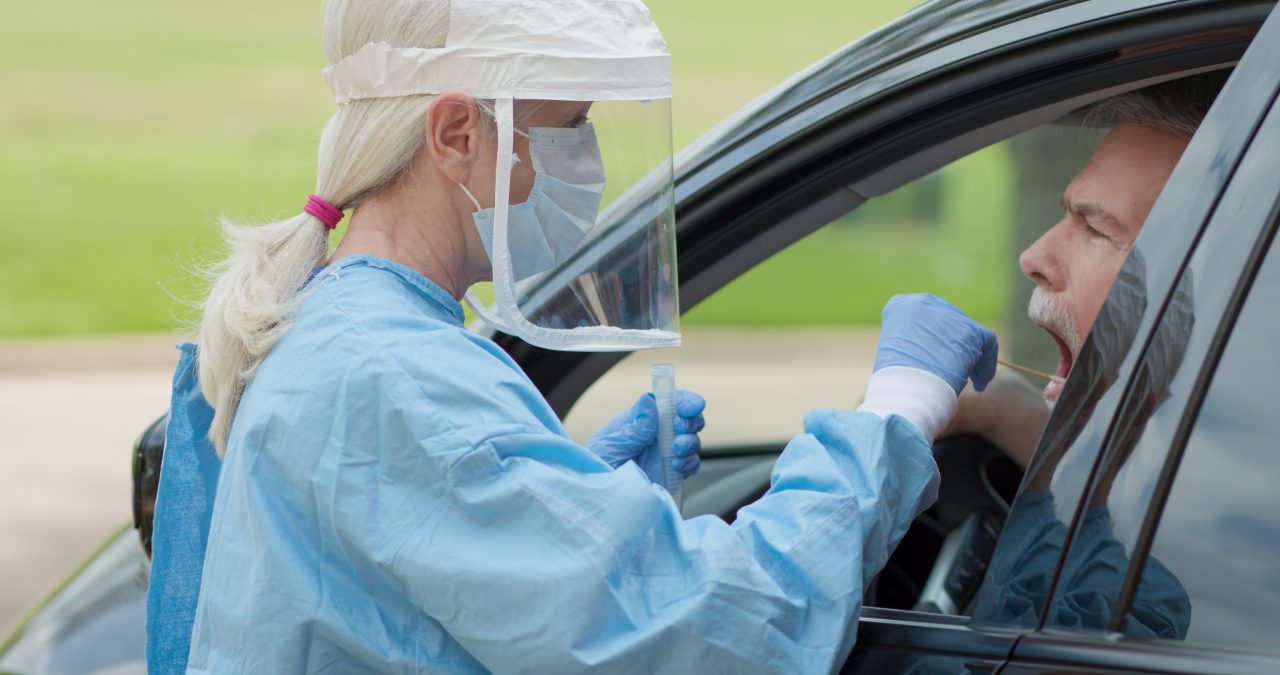
As coronavirus cases in Arizona continue to climb, you might be wondering if you should get tested. While the test – a quick nasal swab – is safe and simple, the state doesn’t currently have the capacity to test everyone. A doctor’s note is required to receive a test and health care professionals are prioritizing patients with severe symptoms. The scarcity of supplies and slow rate of testing, paired with strict protocol on who gets tested, have caused a lot of questions for Arizona residents. We sat down with Valley critical care specialist Jeremy Feldman, M.D. to get a definitive answer to these queries, including what symptoms to look out for and what to do if you’re experiencing them.
According to Feldman, shortness of breath only occurs in the most severe cases of coronavirus. The most common symptoms are fever, cough, nasal congestion and muscle aches. “Basically, you feel as though you have the flu,” he says.
Feldman advises anyone experiencing these symptoms to stay at home and check in with your doctor over the phone or via telemedicine.
“If you have shortness of breath, then you need to go to the emergency department,” he says. “Patients that have low oxygen levels are at higher risk for more severe disease and will need to be admitted.”
If you don’t have a primary care physician, you can use urgent care via telemedicine services or go to the emergency room.
As of today, Arizona has very limited capacity to perform COVID testing, Feldman says. As a result, most tests are reserved for patients that are being admitted to the hospital. This is critically important, he adds, because it helps conserve personal protective equipment, which is currently in short supply.
There are a few outpatient testing sites throughout the state. Mayo Clinic has drive-thru testing, but you must be a Mayo patient and have an order from a Mayo primary care doctor.
FEMA has also set up a drive-thru testing center in collaboration with Banner, but you must call ahead and make an appointment and they won’t test you if you don’t have symptoms.
“Being anxious that you could have COVID is not justification for testing,” Feldman says.
Drive-thru testing sites are safe, Feldman says, but the vector of risk is pointing at the person conducting the test. His advice is simple: “If you don’t have symptoms of COVID, don’t get tested.”
“If you do have symptoms and really want a test, then you are potentially exposing the tester and anyone you come close to with COVID,” he continues. “The tester is wearing full protective gear and taking precautions to not convey COVID from one patient to the next.”
The length of time it takes to get test results back depends on where the test was performed. Most hospital systems are now doing in-house tests for patients admitted to their hospital, which are ready in less than 12 hours. Swabs that are sent to the health department take one to two days and swabs that are sent to private labs such as LabCorp, Sonora Quest and ARUP take four to seven days.
What should you do while you’re awaiting test results? “Hunker down and put yourself in isolation,” Feldman says.
Testing criteria is so stringent due to the profound lack of testing capacity. “Ideally, we would be doing massive testing to better understand the extent of the pandemic,” Feldman says. “However, this is just not possible due to limited testing kits.”
Though tests are currently in short supply, Feldman is optimistic that the situation will improve. A new rapid turnaround point-of-care test, which can provide results in just 45 minutes, was recently approved, though it will take weeks for it to reach the market.
“Additional throughput capacity will eventually lead to shorter wait times,” he says. “Better availability of testing kits will help, as well.”
For more information and advice from Dr. Feldman, visit pulmonaryhypertensionrn.com.