The San Carlos Apache Nation and Sierra Club seek to pull the plug on a high-profile copper mine at Oak Flat.
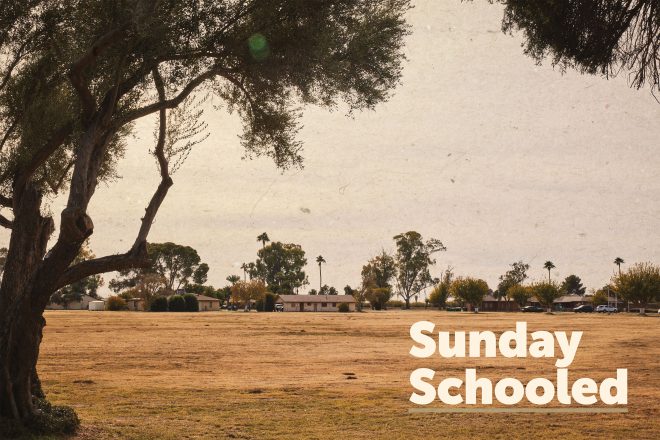
On the road to Globe, just east of Superior, the asphalt of U.S. Route 60 squeezes between rocky hills dotted with shrubby desert foliage. This is the traditional calling card of Oak Flat Campground, a popular retreat known for its shady oak trees and spiring rock formations.
But travelers now find the former Tonto National Forest park cut off by a gatehouse. Oak Flat is now allocated to Resolution Copper Mining, following a land swap between the company and the federal government in December. Oak Flat contains one of the largest copper deposits in the country, an estimated 1.5 billion tons. It also has significant cultural and spiritual meaning to the San Carlos Apache Nation, recreational value to outdoor enthusiasts, and conservational merit to environmental protection groups.
With the controversial Canyon Mine project near the Grand Canyon on hold indefinitely due to litigation and economics, the Oak Flat mine has become perhaps the signature environmental battlefront in Arizona – even if the battle looks already decided.
Pursued by Arizona lawmakers since 2005, the land swap ultimately passed as one of hundreds of amendments to the 2015 National Defense Authorization Act (NDAA), stoking the ire of critics who characterized its inclusion in an unrelated budget bill as sneaky.
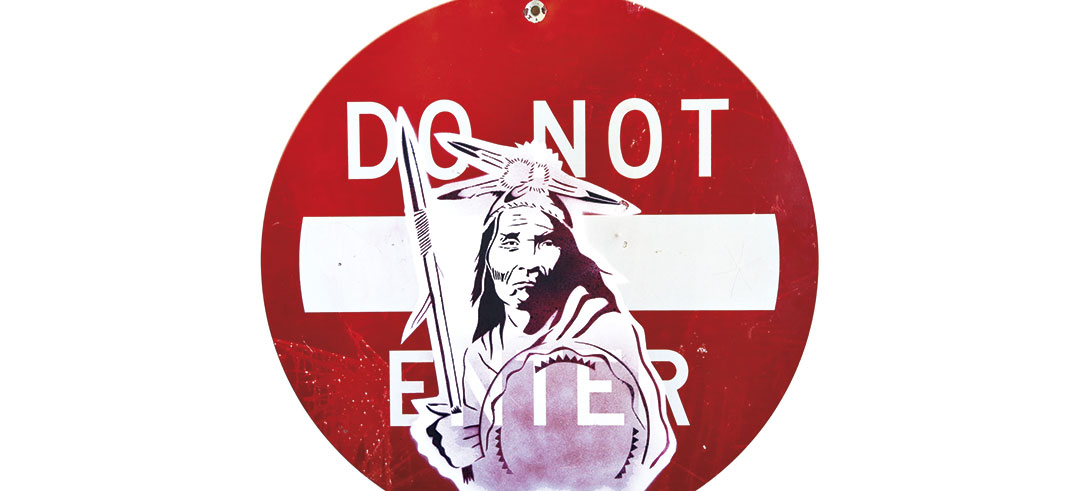
Apache artist Douglas Miles is one of them. Though Miles made his splash designing skateboards, his energies today are almost entirely devoted to protesting the copper mine at Oak Flat, which sits about an hour west of his home on the San Carlos Apache Indian Reservation. His protest art includes salvaged “Do Not Enter” signs stenciled with a Native American warrior, and printed T-shirts showing the same warrior holding a shield inscribed with “Save Oak Flat.” Miles feels it’s important to keep San Carlos Apache Nation members in the conversation. “[Native Americans] are left out of the conversation on what is good and clean industry. We’re left out of the conversation on who gets to choose what’s good for the environment, what’s not good for the environment,” Miles says.
Oak Flat is adjacent to a mountain prominent in the Apache creation story. It’s also home to Apache ruins and petroglyphs. Miles recalls camping at Oak Flat to celebrate Easter and birthdays for years. It’s one of few areas near San Carlos where Apaches can collect acorns, a traditional food item, he says.
Following the land swap – in which Resolution exchanged about 5,300 acres of private land for 2,400 acres managed by the U.S. Forest Service – Apache Nation members and supporters marched 44 miles from San Carlos to Oak Flat. Their arrival kicked off the Occupy Oak Flat movement, a contingent of 100 tribal members led by former chairman Wendsler Nosie that refuses to vacate the land until President Obama, who signed the NDAA into law, grants their request to designate Oak Flat a National Monument (which he could do without Congressional approval) or until the NDAA is reversed. A petition on the White House administration’s We The People website successfully reached 100,000 signatures in one month, triggering a mandatory response from the administration. “We’ll work with tribes to protect sacred land,” wrote Jodi Gillette, special assistant to the president for Native American affairs. “Moving forward, the Administration will work with Rio Tinto (Resolution Copper’s parent company) to determine what can be done to work with the tribes to preserve these sacred areas.”
Resolution doesn’t expect to break ground until mid-2020, after completing an environmental impact statement (EIS). The company estimates the mine will provide about 1,400 jobs and generate about $64 billion in economic value over the mine’s 64-year lifetime – an economic boon to the Superior area, which lost 400 jobs when the Magma Copper mine shut down in 1996. “We want the benefits of the project to be felt locally; that’s really important to us,” communications director David Richins says.
The Sierra Club opposes the land swap because Oak Flat is an important area for recreational activities, says Sandy Bahr, director for the Grand Canyon Chapter of the Sierra Club. The mine could also dewater neighboring Devil’s Canyon and create large amounts of waste rock. Bahr says The Sierra Club is working with the San Carlos Apache Nation and other environmental organizations to find points where the land swap could be challenged in federal court. “It’s definitely not over,” Bahr says.