By M.V. Moorhead
Around midpoint in The Social Reckoning, our whistleblower heroine notices a basketball player on television pumping his fist in the air. She asks why, and it’s explained he just hit a shot that tied the score and sent the game to overtime. She remarks that she can’t remember ever feeling that level of joy about anything.
No one else in the movie seems much more upbeat than she is, really. The basketball player is probably the happiest person we see. And this doesn’t seem unrealistic. With The Social Reckoning, writer-director Aaron Sorkin offers some possible explanations for why our societal mood may be so lousy these days
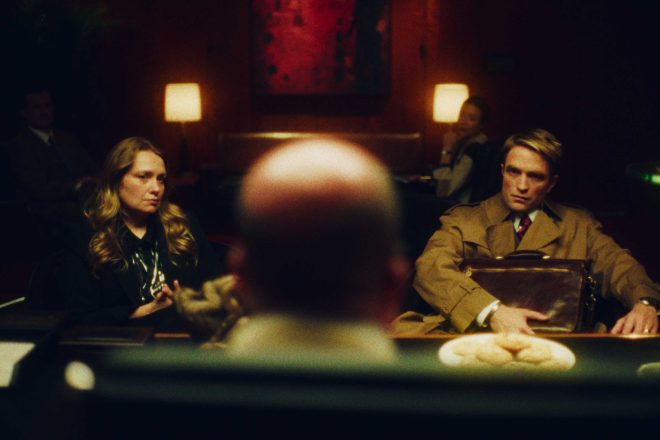
Oscar winner Mikey Madison (Anora) plays said whistleblower, Frances Haugen, who works for Facebook’s Civic Integrity division. Haugen notices, among other troubling patterns, that Facebook is algorithmically encouraging societal outrage, even when based on misinformation, and even though it tends to radicalize users. She also notices that every attempt she makes to raise this concern with her superiors is slapped down with Orwellian abruptness.
Despite clinging to her faith in the beneficence and “democratizing” power of Facebook and other social media, she finally becomes a deep-background snitch to Wall Street Journal investigative reporter Jeff Horwitz (Jeremy Allen White). She finds his technical ignorance exasperating, but gradually she comes to trust him more than she trusts her employer.
The Social Reckoning is a sequel to David Fincher’s 2010 The Social Network, which Sorkin also scripted. They’re very different movies, however. The Social Network was to some degree an underdog story about Facebook’s launching, with Jesse Eisenberg as Mark Zuckerberg; the new film shows the long-term outcome of the dark side of Zuckerberg’s character hinted at the first film. Eisenberg took a pass on reprising the role in Reckoning, so Succession star Jeremy Strong stepped in, brilliantly, as the tight-faced, wounded, petulantly indignant boy-emperor of Facebook.
How many fictional liberties Sorkin took in dramatizing this story I can’t say – plenty, if I had to guess. Is Horwitz really an avid fan of movie musicals, for instance? That seems more like a Sorkin tic. But The Social Reckoning is absorbing and compelling; tense, angry and disconsolate. Sorkin’s people still exchange his trademark fast-patter quips and wisecracks and badinage; they still refer to the uplift of Frank Capra heroes. But the mood is wistful and anxious.
Despite this chilliness, however, The Social Rekoning is one of the few movies this year that I feel the urge to see again. I think this is because the critique of social media, and especially of social media co-opting the role of journalism, is so bracing and apt and overdue. The story felt, to me, Capra-esque.
It’s also because of the acting, not only of the chameleonic Strong but of the leads: Madison and White form a believable bond without making a big deal of it, Bill Burr contributes a fine, restrained turn as a Facebook gadfly and Betty Gilpin offers a few much-needed laughs as Horwitz’s hostile WSJ San Francisco bureau chief.
This cast, abetted by Alexander Desplat’s subtle score and Jeff Cronenweth’s overcast Bay Area cinematography, potently evokes the national mood, and offers a pretty convincing suggestion of where that mood comes from, at least in part. They also give us some idea of the courage it will take to improve that mood.