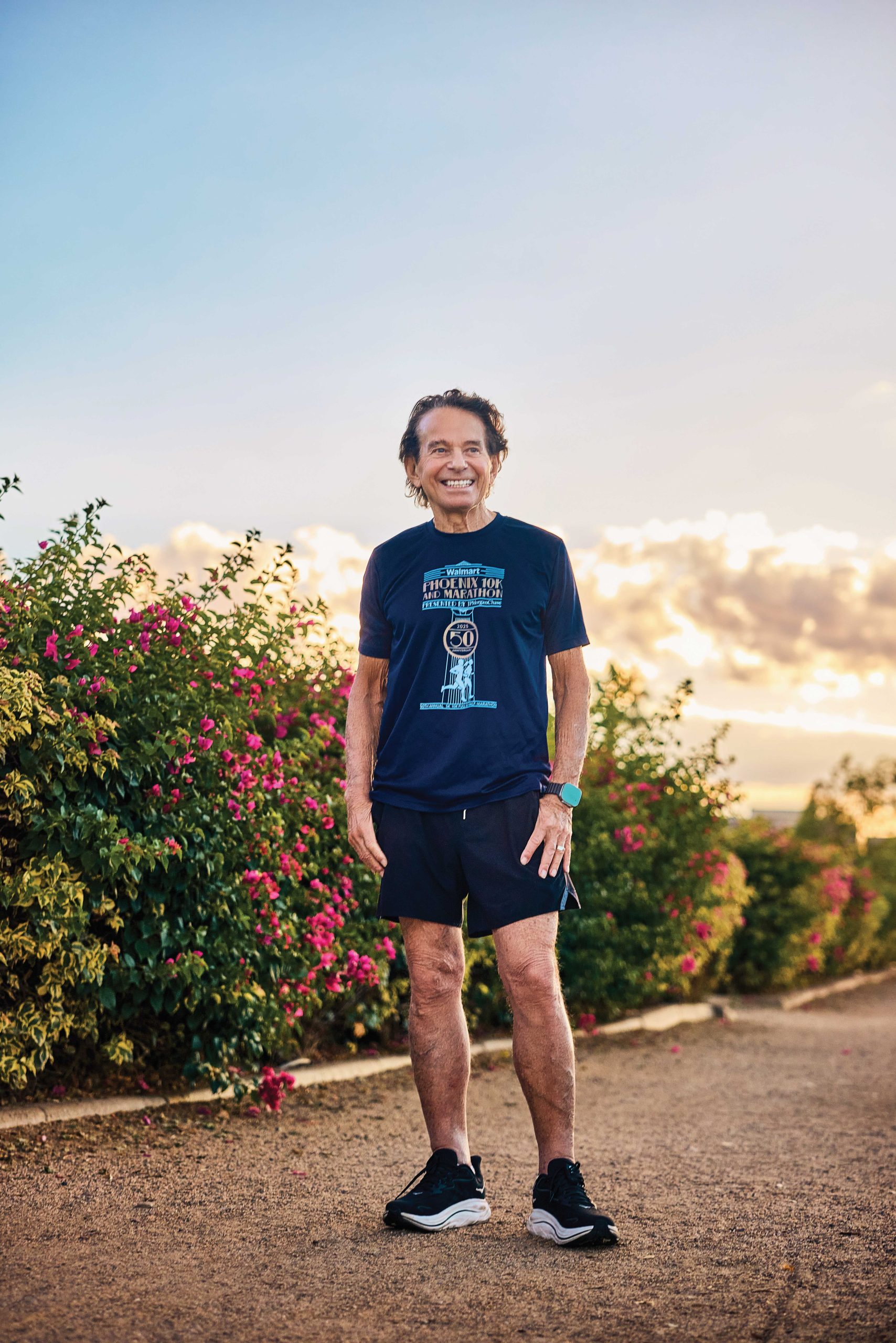
Dr. Art Mollen reflects on 50 years of the Phoenix 10K – and looks to the future as the race expands this year.
If you want to know how to run a marathon, there’s no shortage of apps, books and coaching to get you over the finish line. Perhaps the only thing more difficult than running a race is, well, running it. For that, there’s Dr. Art Mollen.
Known to Valley viewers for his longtime segment on 3TV’s Good Morning Arizona, Mollen is also the CEO of the Phoenix 10K, an event he founded in 1976 and for which he has been serving as the official race organizer ever since. In this role, 80-year-old Mollen has done it all: plotted racecourses, organized aid stations, solicited volunteers. He’s even fired the starting gun.
This year, to honor the event’s golden anniversary, Mollen will add a 26.2-mile race – transforming the Phoenix 10K into the Phoenix 10K & Marathon. It’s not the first marathon in our city’s history, but it is the first locally owned one. And it was a long time coming – for Phoenix and for Mollen.
“I ran the Boston Marathon in 1976 and was like, ‘Phoenix doesn’t have a marathon; it’d be great to put on a race,’” Mollen, a retired family medicine doctor, recalls. “I wasn’t ready to take on a Herculean effort like that at the time, so we did a 10K. But it was always my utopian dream to have a marathon.”
The inaugural Phoenix 10K – a 6.2-mile scramble on the Arizona Canal – rode the swell of America’s jogging craze of the 1970s and ’80s. Mollen estimates 1,500 runners showed up for that first race. He expected only 500.
“Tell you the truth, I probably didn’t know what the heck I was doing, but we pulled it off,” Mollen says. “There was so much camaraderie. Everybody had a good time.”
Mollen has evolved the run into one of the Valley’s most anticipated yearly events. The annual November race (set for November 9 this year) features multiple distances – 5K, 10K, half marathon and a kid-friendly Mollen Mile – and 500,000 people have participated since 1976, including Olympians Jesse Owens and Frank Shorter and record-holders Henry Rono and Steve Scott.
Operating a race is like launching a small business – from scratch, year after year. There’s no guarantee of longevity. For context, Mollen’s event pre-dates the Chicago Marathon by two years, Ironman by two years, and the Rock ’n’ Roll series by 22 years. The New York City Marathon is four years older. The secret to the Phoenix 10K’s staying power? “Good race weather!” Mollen jokes.
After that? Financial support and collaborative logistics. Mollen’s race staff comprises 20 people, including his wife, Paige, who is involved with maintaining nonprofit status for the Mollen Foundation, a 501(c)(3) for which the race raises funds.
Financially, the key is acquiring sponsorships to recoup costs. These include finisher medals and T-shirts, bibs, pace cars, timing technology, a race director, insurance, course certification and barricades. Mollen says the budget can hover in the low six figures.
A marathon is pricier. Mollen ballparks this year’s budget at $250,000, double what it’s cost in the past. Helping to mitigate that are title sponsor Walmart and presenting sponsor J.P. Morgan Chase.
Then there are the logistics, trickier to navigate and reliant on relationships. At 26.2 miles, the longer race needs to thread through multiple cities, requiring cooperation among city governments. Previously, the race stayed within Phoenix, but the new marathon course includes Paradise Valley.
“I went to [Phoenix] Mayor [Kate] Gallego and asked for help,” Mollen says. “She’s been a big supporter of the race; this year, we’re actually presenting a Mayor’s Cup to the top male and female finishers. I told her I want to take the race to the next level, and I can’t do it without her.”
With warm introduction from Gallego, and Mollen’s friendship with Jim Rose, former GM of JW Marriott Camelback Inn, Mollen connected with Paradise Valley mayor Mark Stanton, who expressed enthusiasm and vowed to help. “It’s the first time a race will go through Paradise Valley,” Mollen says. “It’s never been done before.
“Fifty years ago, the idea was just to have a race associated with Phoenix. But my bigger vision is to have one that would be self-perpetuating.”
– Jessica Dunham

New Biz: BeeStop
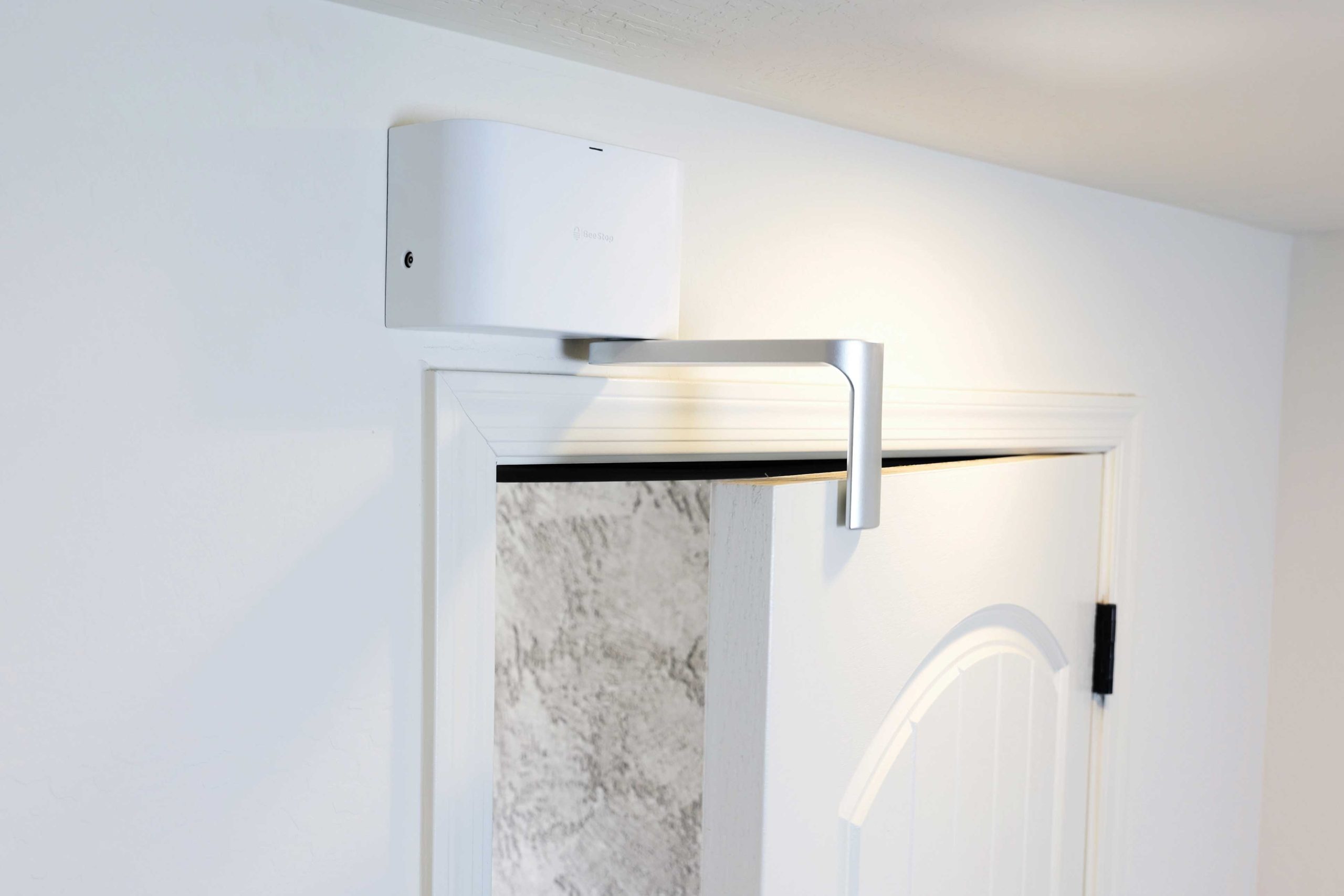
After seeing frightening footage of a “push-in” home invasion, the Cooper family of Scottsdale – dad Mitchell and sons Shane, Harrison and Bailey – dedicated themselves to designing and fabricating a security measure that would be a step above a basic lock but less techie than a complicated security system. Their prototype, the wall-mounted BeeStop unit ($675), has three modes to allow easy passage for family members while keeping intruders out. At press time, the company had an online waitlist for the product’s initial rollout in late 2025/early 2026. beestop.com
– Leah LeMoine
Tech Corner: Earn It
Aspiring entrepreneurs and small business owners will find inspiration and concrete advice in Earn It, the new podcast from Scottsdale’s Adler Public Relations founder and CEO Jennifer Adler McLaughlin. Through candid conversations with fellow business owners, clients and media, McLaughlin demystifies entrepreneurship, from building and refining your brand to understanding and deploying PR and marketing to achieve your goals. Available on Spotify and Apple podcasts.
– Leah LeMoine