
Arizona’s cannabis equity program promised opportunity. Five years later, some winners say they got burned.
When Anavel Vasquez learned that her name was drawn in Arizona’s 2022 cannabis license lottery, she and her husband, Rene Mendoza, believed their lives were about to change.
Mendoza, a former firefighter sidelined by neck and back injuries, and Vasquez, a hospital kitchen worker, had landed one of 26 “social equity” licenses created when Arizona voters legalized recreational cannabis use under Proposition 207 – coveted permits designed to give underrepresented populations, and those adversely affected by outmoded drug laws, a chance to own and operate legal cannabis dispensaries in a tightly capped market.
It was, one might argue, the human-interest rider that helped skeptical voters set aside their misgivings about Prop. 207. Largely funded by the Arizona Dispensaries Association and major medical-marijuana operators, the law would inevitably enrich existing dispensaries – roughly 130 statewide – by dropping the “medical” pretext. Everybody knew that. But through its Social Equity Ownership Program, Prop. 207 would also uplift 26 stricken citizens and their families, so it had a noble side, the thinking might have gone.
Five years later, however, Mendoza and others say the reality has been far from empowering. Instead of opening doors for disadvantaged Arizonans, he says the program was deliberately designed as a loophole for corporate cannabis operators to scoop up new permits in an industry otherwise closed to newcomers.
“The same day we won, [an investor] wanted us to drive to Phoenix urgently to sign contracts,” says Mendoza, who lives in Tucson. “They told us they had everything ready for us – just come up and sign.”
He says they were told to meet in the lobby of a Downtown hotel, where the representatives laid out their pitch. “They tried to coerce us, threaten us – even laid out a duffel bag with $35,000 spilling out like flowers,” Mendoza says. “They thought that we were these poor Hispanics and that we were gonna jump on seeing a chunk of money in a duffel bag.”
Other recipients recall similar casino-style tactics in the immediate aftermath of the lottery – and critics say the dice were weighted in favor of corporate investors from the outset.
For starters, many of the equity applicants needed financial help just to pay the state’s $4,000 nonrefundable application fee. To qualify for a license, applicants were required to demonstrate a household income at or below 400 percent of the federal poverty line in 2022 (roughly $54,000 for individuals) and have either a prior marijuana conviction or an immediate family member with one.
The upshot: Many of them were cash-strapped and had to strike preliminary investment deals just to pay the fee.
Mendoza and Vasquez – who qualified for the program through a relative’s prior cannabis conviction – say they answered a recruitment flier aimed at low-income Arizona residents and accepted assistance from a group led by high-profile dispensary investor Michael Halow. As part of the deal, the group confirmed the couple’s eligibility and submitted multiple applications on their behalf while covering the $4,000 application fees. The respective parties also signed a preliminary term sheet outlining a 51/49 ownership split, with Mendoza and Vasquez retaining a majority share. The final terms would be negotiated if they won a license.
Ultimately, the couple did win one of the coveted permits, leading to the cash-money offer in the Downtown hotel, Mendoza alleges.
It evidently was part of a corporate script. West Valley resident Diane Willsey recalls her son, Jason Briggs, being visited late at night at his home in Ajo by a representative of Halow, who is tied to dozens of dispensaries across several states. “At 10 o’clock, there’s a knock at the door, and here’s this guy who said, ‘I have $10,000 for you in cash. All you have to do is sign this paper and sign all your rights away,’” she says.
Briggs, whose chronic back injury compounded by mental-health issues left him unable to work, was in no position to grasp the 50-page contracts pushed on him and was not provided an advisor by the state. “My son couldn’t really understand those contracts,” Willsey says. “People like him were easy to take advantage of, and they knew that.”
For many lottery winners, the big cash flash was an offer they couldn’t refuse.
Of the 26 social equity licenses awarded, only one – Deeply Rooted in El Mirage, run by cousins Abel Ochoa and Diana Pineda – remains independently owned and operated by its original winners. The rest are now controlled by investor groups or major operators, or diluted by management agreements that stripped owners of day-to-day authority. By law, social-equity recipients were required to retain at least 51 percent ownership of their licenses for the first three years, but that didn’t stop many from signing management or financing deals that effectively transferred ownership to their partners – and sometimes even left them in debt.
Not every license recipient who cut a deal has regrets. Five years exactly after voters passed Prop. 207, the people who directly benefitted from the equity program fall broadly into one of three camps: lottery-winners who struck lucrative, six-or-seven-figure deals to effectively sell their licenses and quietly walked away; those who accepted investment but ultimately felt manipulated or deceived by their partners, and wish to void the agreements; and a few who entered into stable, long-term management contracts and draw an acceptable income from their dispensaries.
Alicia Deals’s story offers a glimpse of the third scenario.
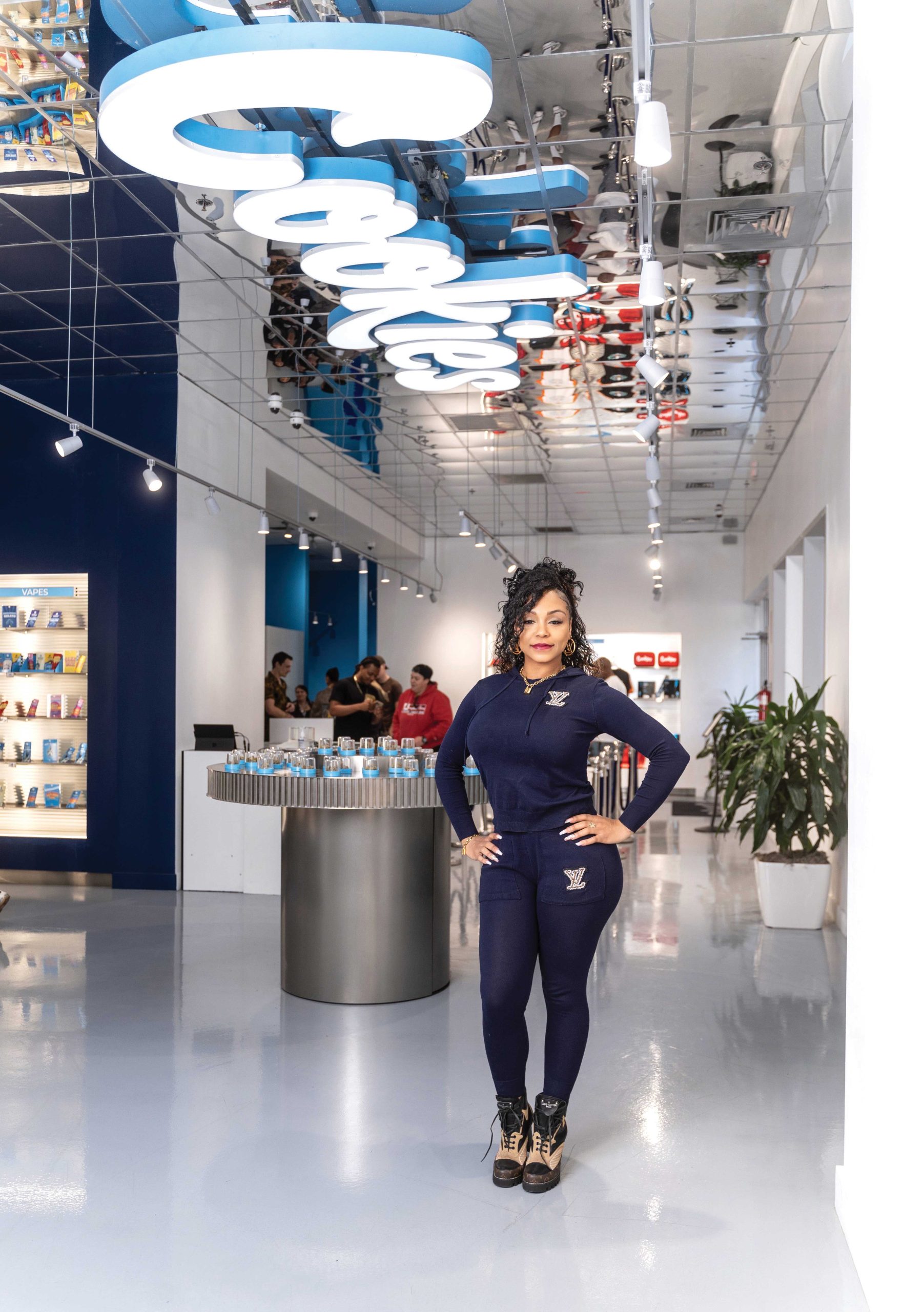
Deals qualified for the lottery because of her father, Robert Deals, a retired United States Air Force veteran now serving an 18-year sentence on a cannabis conviction. When she got the news that she had won one of Arizona’s social equity cannabis licenses, “it was almost as good as hearing the news that he was coming home,” she says.
“Cannabis was a tragedy in our lives before this program,” Deals adds, noting that her dad is still serving the 14th year of his sentence, complicated by an aggravated assault charge that grew out of the same case. “My father’s case highlights the harshness of those laws. For us, winning was vindication.”
Within three hours after the lottery drawing, her phone started ringing.
“My very first offer was $14 million from a private investor,” she says. Turning it down wasn’t easy, but she calculated that running her own dispensary would ultimately be worth more. “I said, ‘If I can get open and operate for a few years, I’ll make way more than you’re offering me.’ This was for generational wealth. It was about turning one of our greatest burdens into one of our greatest blessings.”
That conviction carried her through a grueling process. “We were only given 18 months from the day of allotment to find a facility and funding,” she says. “First of all, we were barred from Phoenix completely and most surrounding areas.”
Because state rules barred new social equity licenses in areas that already met the population-to-dispensary cap – effectively excluding most of metro Phoenix – applicants like Deals faced limited siting options. “So, it was just me sticking to my guns – and the grace factor of falling in with the right people. I did not have to give up equity, and I stood strong on the fact that I never would.”
Ultimately, Deals struck a deal with the California-based Cookies brand, opening Cookies Tempe. Cookies financed the start-up and build-out, with Deals retaining equity control. Her agreement gives Cookies significant influence over day-to-day operations, and she credits the success of her partnership to the company’s sage management. Cookies founder Gilbert Milam, better known as the rapper Berner, became a personal advocate for the family, “a big guy that doesn’t wanna take advantage.” That trust, she says, made all the difference, sparing her the debt burdens and legal disputes that plagued other winners.
“They have the brand, I have the license,” she says. “You have some managerial agreements, but they’re just that – I’m the parent, they work as a nanny. It’s my baby; I can do what I want.”
Other lottery winners happily sold the baby – though few, if any, encountered the $14 million payout offer Deals claims.
Impressively named Valley attorney Jimmy Cool is intimately familiar with the state’s Social Equity Ownership Program. In 2021, he filed a lawsuit with the nonprofit group Acre 41 and the Greater Phoenix Urban League challenging how the Arizona Department of Health Services structured the program.
Having fought to reform it from the outset, Cool maintains the initiative fell short of its original mission – though he does concede that most participants came away with significant payouts, a result he views as a byproduct of poor design rather than true equity.
“If the social justice goal was to remediate the harm that was done as a result of the war on drugs in mostly Black and brown communities, we didn’t do that,” he says. “What we did was we created 26 Black and brown millionaires – or, in the case of many of them, 250-thousandaires.”
Acre 41 co-founder Celeste Rodriguez is even more skeptical of the notion that the program minted millionaires.
“By the time they had to pay the litigation fees that came with it, they were no longer millionaires,” she says, adding that many were also “under-evaluated on what their payouts were. It was mostly the multi-state operators that benefited from it. Lawyers second. And the social equity winners last.”
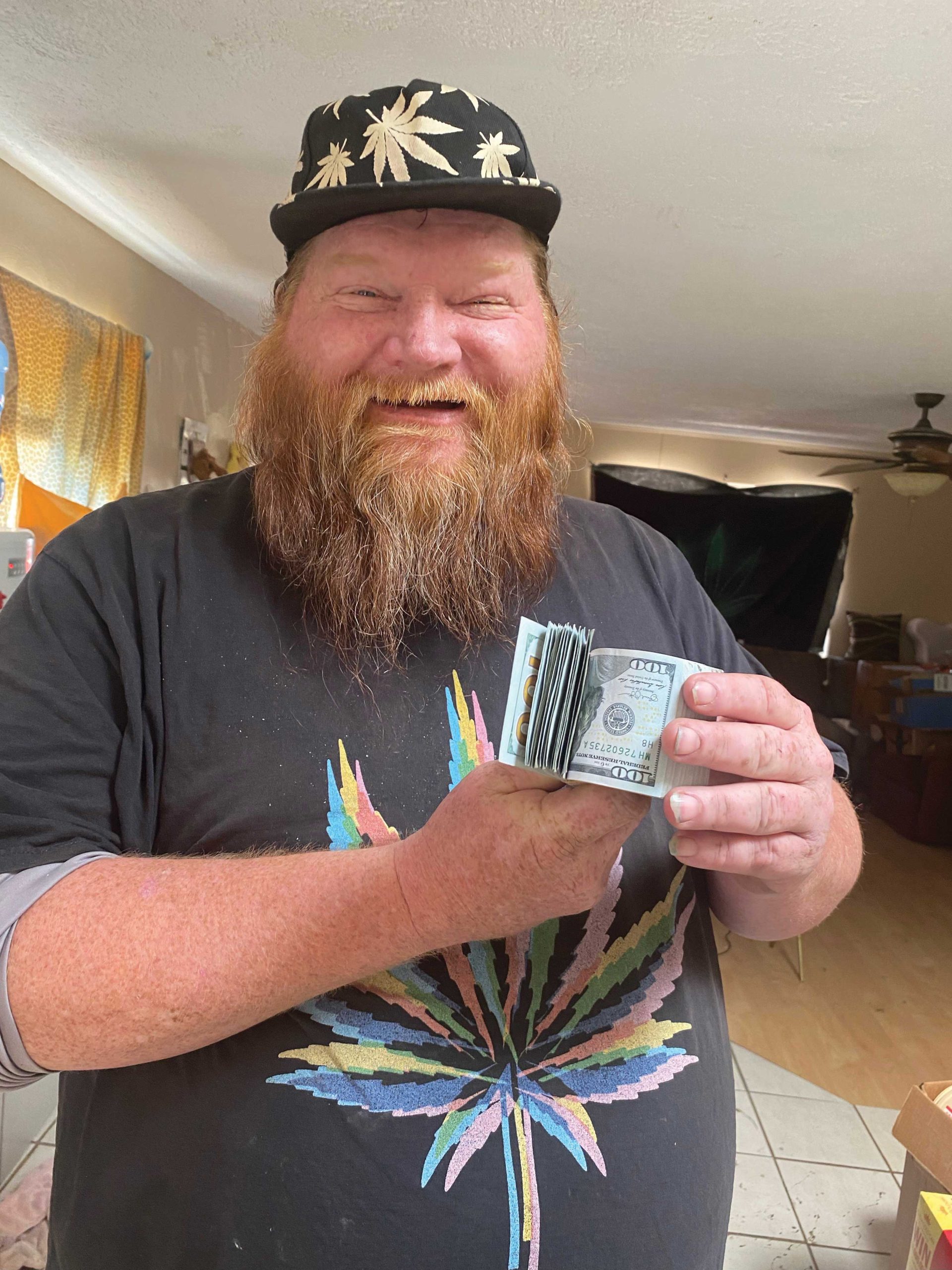
Not all were Black or brown, either. Briggs, a white man who was on Social Security disability, thought his payout would change everything. “He even said, ‘Well, this is gonna set me up for life,’” his mother remembers, sharing a photo he sent her of himself waving a fat roll of hundred-dollar bills. “He was so excited. But it didn’t help him at all.” Briggs caught COVID-19 at 42 and never recovered. “He died before he even saw the last payment.”
The complicated matter of financing a dispensary itself virtually guarantees uneven outcomes. With most applicants unable to fund a dispensary independently (start-up and build-out costs in Arizona run between $1 million to $2.5 million, according to insiders), and with traditional financing severely restricted by federal law, outside investors set the terms of engagement, often through contracts that promise compliance on paper but cede real control in practice. “Predatory investors came in and had them sign contracts that stripped away real control,” Cool says.
One of the clearest examples of how management agreements strip winners of authority is the case of Denzel Mason, who partnered with Snowflake-based Copperstate Farms, the state’s largest cannabis grower and dispensary operator. According to research gathered by the Arizona Center for Investigative Reporting, after he was awarded a license, Mason was pressed to sign an operating agreement and a promissory note that placed his business on the hook for up to $3 million before it opened. The debt covered start-up expenses that Copperstate fronted – costs Mason says were inflated to keep him indebted.
Court documents show more than $800,000 of that debt stemmed from costs Copperstate claimed for outreach, licensing and “success fees” – nearly all before Mason had even set up a dispensary.
When Mason balked, Copperstate sued to remove him as manager, and a court sided with the company, suspending his voting rights and leaving him with no say over how the dispensary was run.
According to court filings in Mason v. Copperstate Farms (Maricopa County Superior Court, 2024), Mason told the judge, “I don’t really understand the point of my involvement if I don’t have a voting right. I have no say in the way the dispensary is operated or how it looks. I just have not really been involved in any of that: budgeting, nothing.” Though Mason remains the nominal majority owner, he told the court he’s never received dividends from the operation.
PHOENIX asked Copperstate Farms to respond to the allegations on repeated occasions, but received no reply.
For Mendoza and Vasquez, they of the overflowing duffel bag, the outcome proved no better. The couple’s attempt to turn their winning ticket into a functioning business quickly collapsed into a legal quagmire.
Unsatisfied with the final terms offered by Halow’s representatives, the couple walked away from the cash, citing the proposed deal’s lack of long-term involvement and ownership.
Not long after, they connected with Tucson-based dispensary owners Mohit Asnani and Charles “Chip” Boyden and set up a limited liability company called MENVAS22 – presumably with the intent of opening a dispensary.
The only problem: Mendoza and Vasquez already had a binding LLC partnership in place with Halow, through a company called Juicy Joint, which won the marijuana establishment license in April 2022 after his group financed the couple’s application.
“We were just kind of scrolling through [the LLC agreement] and initialing things,” Mendoza says, explaining the couple’s lack of leverage during the negotiation phase.
Through his attorney, Halow sketches out his version of the events for PHOENIX. He says Vasquez – in whose sole name the social equity license was issued – “secretly” transferred the license to MENVAS22 in exchange for “millions of dollars,” effectively cutting him out of the picture.
That transfer, Halow argues, violated their existing agreement and triggered an arbitration in which Vasquez was expelled from Juicy Joint for breach of fiduciary and contractual duties. The arbitrator ordered the license restored to Juicy Joint’s control – a decision later upheld in Maricopa County Superior Court, which also found MENVAS22 liable for aiding and abetting breach of fiduciary duty, civil conspiracy and tortious interference with contract.
In a statement provided by AB46 Investments, the company headed by Asnani and Boyden, the group says it’s appealing the court decision and maintains that the contract between Vasquez and Halow’s company “severely limited her ability to control her Social Equity License,” and was, in their view, invalid under Arizona law.
Ultimately, Halow used Vasquez’s license to open a facility in Bullhead City, now managed by a third-party operator – Story Cannabis, an Arizona-based retail chain. It was a necessary step, Halow says, to generate revenue after a costly and protracted legal battle.
Mendoza and Vasquez say they have yet to see a single dollar from the dispensary, despite their substantial ownership stake in Juicy Joint.
That’s because Juicy Joint has itself yet to see a profit, Halow claims. He also says that more than $600,000 in legal fees and costs must be repaid from company revenues before Vasquez would be eligible to receive any distribution.
Mendoza insists that he and Vasquez were misled and exploited from the outset by a crafty multi-state operator, and now find themselves in the middle of a tug-of-war between well-funded, entrenched business groups.
“This wasn’t a partnership,” Mendoza contends. “It was a setup from the beginning.”
For critics of the Social Equity Ownership Program, the Juicy Joint case highlights the broader, systemic flaws of Arizona’s rollout – a system that began with the promise of opportunity and ended in lawsuits and loss.
Some critics perceived problems from the outset.
In November 2021, several months before the lottery took place, the Acre 41/Greater Phoenix Urban League lawsuit Cool brought against DHS argued that the agency had failed to carry out the intent of Proposition 207 by writing rules that left lottery winners vulnerable to predatory management deals. The lawsuit was paired with an emergency request for a temporary restraining order, urging the court to halt the issuance of social equity licenses until stronger protections could be put in place.
“People were being asked to sign agreements they didn’t even understand,” Rodriguez says. “There was no oversight, no protection, nothing to keep them from losing everything they’d just won.”
Even parties who disagree on the fairness of the partnerships agree on one point: The state offered little guidance to help winners navigate complex contracts or vet potential partners. Without oversight or basic financial counseling, many of the new license holders were left to negotiate with far more experienced investors – a structural imbalance that made exploitation almost inevitable.
Kim Prince, CEO of Proven Media, a Carefree-based public relations firm specializing in cannabis clients, argues the flaws went even deeper – that the program’s qualifying conditions (poverty level, arrest record, etc.) actually disqualified many of the very people who might have had the best chance at success.
“Anyone who was already a successful Black business owner couldn’t even apply,” she says, citing two clients who came to her with that complaint. “So, the state set it up so the people who did qualify had no chance to succeed.”
Some state leaders have attempted to walk back the program. One effort came at the Capitol, where Senate Bill 1262, introduced by Arizona Senator Sonny Borrelli (R), sought to restore more power to social equity license holders. Introduced in January 2024, the measure failed to advance out of committee and is now considered dead.
It should be noted that Arizona is not the only state where a social equity dispensary program has gone sideways. Missouri, for instance, struggled with many of the same problems, but regulators have taken a much harder line. Since launching its social equity lottery in 2023, the state has revoked more than a third of the microbusiness cannabis licenses it has issued – 34 of 96 – after finding that winners had ceded control to outside investors or failed to prove majority ownership by qualified applicants. Ohio has taken similar steps, pulling licenses when predatory practices surfaced.
According to reporting by Missouri’s NPR affiliate, 22 of the microbusiness licenses revoked in that state were tied to none other than Halow – the investor behind the ill-fated partnership with Mendoza and Vasquez. Mendoza argues that Arizona should do the same – repossess Halow’s social-equity licenses in the state and restore them to their original owners, including him and Vasquez.
“Every other state that recognized the scam pulled those licenses. Arizona refuses to do that. They ignore it, like they don’t care.
“This wasn’t just a flawed program,” Mendoza says. “This was fraud. And fraud deserves to be investigated.”