Should the non-deaf lead the state’s primary agency for deaf people? The question has our columnist thinking about identity politics and inclusion.
by Amy Silverman
illustration by Michael Hirshon
I probably shouldn’t be writing this column. You’ll know what I mean in a minute.
Last year, Sherri Collins announced her retirement as executive director of the Arizona Commission for the Deaf and Hard of Hearing. I’ve had the opportunity to interview Collins on a couple of occasions over the years, and found her to be smart, well-spoken and lovely. Collins is deaf, though a medical device called a cochlear implant helps her hear some. I figured she was leaving big shoes after 27 years, so I was interested in the search for her replacement.
You might not have heard of the commission. It was created by law in 1977 and today serves the 1.1 million Arizonans who are hard of hearing and more than 20,000 who are deaf or deaf-blind. The small agency – funded in part by proceeds from a tax on land lines – is tasked with education, outreach and connecting Arizonans with service providers like American Sign Language interpreters. The executive director represents the commission before the legislature and other government bodies.
I watched hours of presentations, debate and comments at public meetings posted on the commission’s YouTube channel, all part of the selection process for Collins’s replacement.
By the time I tuned in, two candidates had made it to the final round. I was very impressed by each of them – their résumés reflect decades of experience working with the deaf community as well as related disability organizations. They were both eloquent and obviously committed to their lifelong work.
But here’s the thing. Neither of those finalists is deaf, deaf-blind, or hard of hearing.
This led to great dissension among members of the commission, as well as the deaf community. As I watched the debate unfold, I thought a lot about identity politics.
And about whether, as a hearing person myself, I could write about this at all.
Generally speaking, my feelings about identity politics are mixed. I very much appreciate the “nothing about us without us” sentiment – for too long, too many minority groups have been ignored or misrepresented. But I worry that this has led in some cases to a silo effect, particularly in Phoenix. That’s ironic, since for a long time our metropolis has been considered by market researchers to be the best place to find a cross section of society.
That might be the case – but how often do these groups really mix it up? I can’t help but wonder – watching current events unfold – if by eschewing the melting pot effect, we haven’t siloed ourselves into trouble.
We gather all the old people into retirement communities, we put kids on the spectrum in autism-only schools, there are neighborhoods composed pretty much entirely of members of the LDS Church. We don’t listen to people with differing views, we unfriend them on Facebook.
And many of us go home at the end of the day to gates and tall fences designed to keep others out, no matter who they are. As a journalist, I was trained to cover anybody and anything, to avoid only focusing on people like myself. Today, it’s trickier. I kept watching the commission meetings.
It’s not like I’m a complete neophyte. I’ve written stories that happened to include people who are deaf. When the pandemic hit, I was several months deep in reporting a story about the Arizona State Schools for the Deaf and Blind. I had been getting tips about administrative missteps and low test scores, and began talking to teachers, staff and parents about their experiences.
Current management challenges aside, there are philosophical considerations about the school, which is actually a state agency – created in 1912, the year Arizona became a state. Given that the model in public education has for a long time been all about inclusion and mainstreaming kids with disabilities, I was surprised that something as arcane-sounding as a “school for the deaf and blind” still exists. I also wondered why two such disparate groups would be educated together. (Some other states have separated them.)
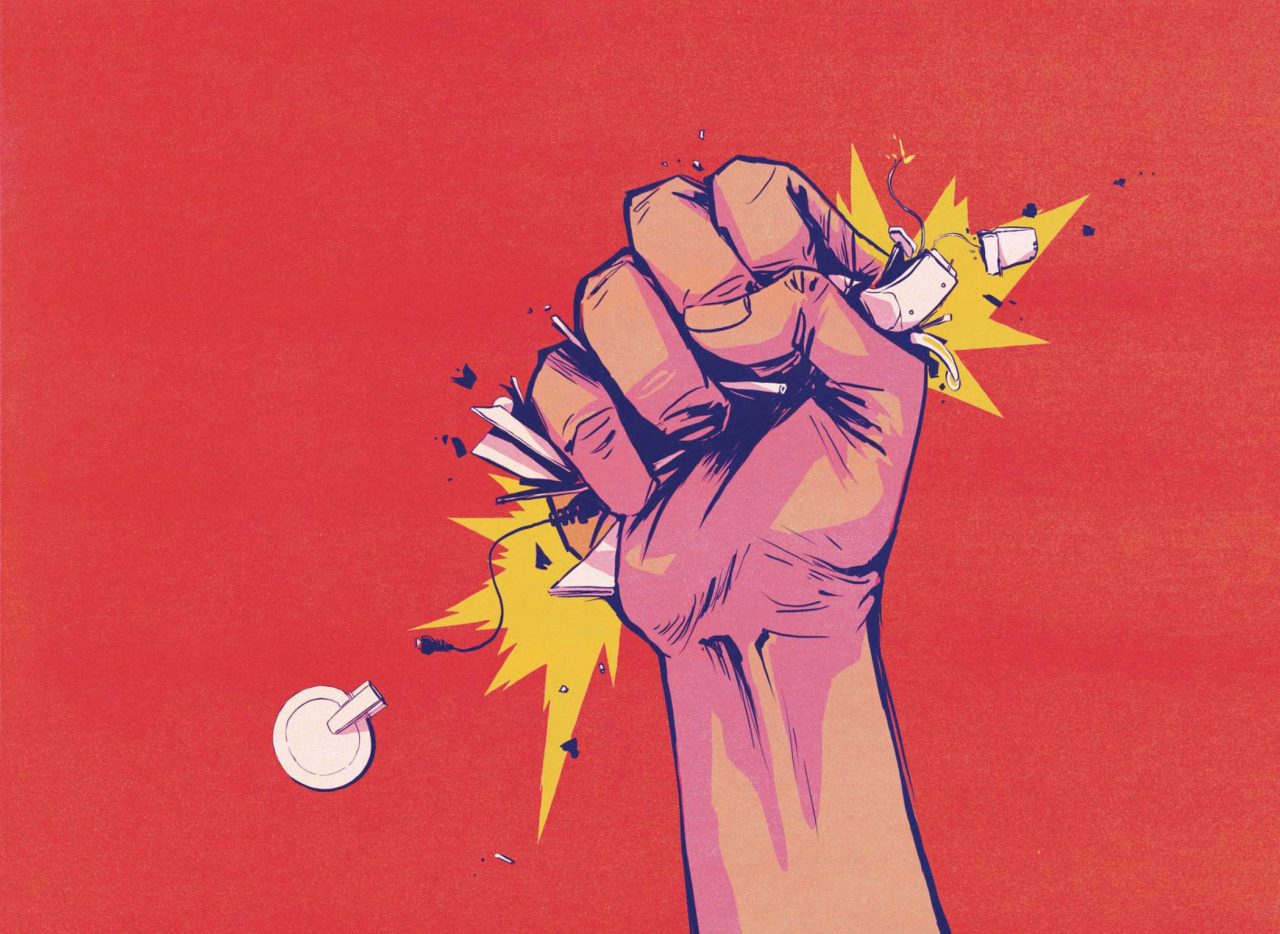
Turns out, it’s even more complicated than that. There’s a big debate in the deaf community over the cochlear implant, a small device surgically placed in and behind the ear of a person with profound hearing loss. It doesn’t work for everyone – much depends on the medical circumstances that led to one’s deafness, and other factors – but for many, it offers at least some ability to hear.
In my reporting, I learned that there was a divide at the Phoenix Day School for the Deaf (a day school that’s part of the agency, the original boarding school is in Tucson) over cochlear implants. Some teachers, I was told, were advising parents against the devices and instead supported teaching kids American Sign Language and immersing them in deaf culture.
It’s why you often see references to the Deaf-with-a-capital-D community – deafness is considered by many to be a positive, not a negative. Something that defines a person, a point of pride. A culture. Something to capitalize, rather than mourn or fix. (Editor’s note: The original version of this column capitalized deaf, hard of hearing and deaf-blind, but that does not align with current Associated Press or PHOENIX editorial style.)
Whether or not to get cochlear implants for their child might be among a parent’s first big decisions. It’s got to be incredibly stressful, particularly if the other members of the family can hear.
I didn’t really feel like I understood cochlear implants until I read a novel last year called Jellyfish Have No Ears, by a French writer named Adèle Rosenfeld. (Full disclosure: I read an English translation.) Rosenfeld has been careful in interviews to clarify that her work is fiction, not memoir, but she does have a cochlear implant.
In the novel, the main character – a woman who has been hard of hearing her whole life – is losing her hearing more rapidly and has to make the decision quickly of whether to get a cochlear implant. I didn’t realize till I read the book that there’s a high probability of losing one’s existing hearing during the procedure. And while a cochlear implant might allow someone to hear, the experience is not the same as natural hearing, and the woman agonizes over whether to sacrifice what she has left.
Reviews from members of the deaf community have been mixed.
I don’t know how much I’ll ever understand deaf culture, but the meetings I watched felt like a crash course in so many issues – and to a person, the members of the commission as well as community participants were educated and thoughtful. Which is not to say that some of them weren’t pissed.
And it went both ways.
“No one deserves to be disrespected the way they have through this process,” one speaker said of the candidates, observing that simply being deaf, hard of hearing or deaf-blind doesn’t qualify one for leadership. “Just because somebody has a lived experience doesn’t mean they can be the voice for us.”
And on the flip side, the speaker asked, referencing a candidate who has been second in command at the commission for more than 20 years, “Is she not qualified to be first in command simply because she can hear?”
In the end, the commission voted to scrap the whole thing and start over, with the help of an employment agency that specializes in finding deaf executive candidates.
I don’t have any answers. I am not going to weigh in on whether the commission should choose a hearing person for its next executive director. I’m not even sure I should have written about this in the first place.
But I do know there’s one comment I’ll be considering for a long time.
“They will go home and move on with their life as usual” after work, the commissioner said. “A deaf or hard of hearing person will continue to face barriers in their life.”