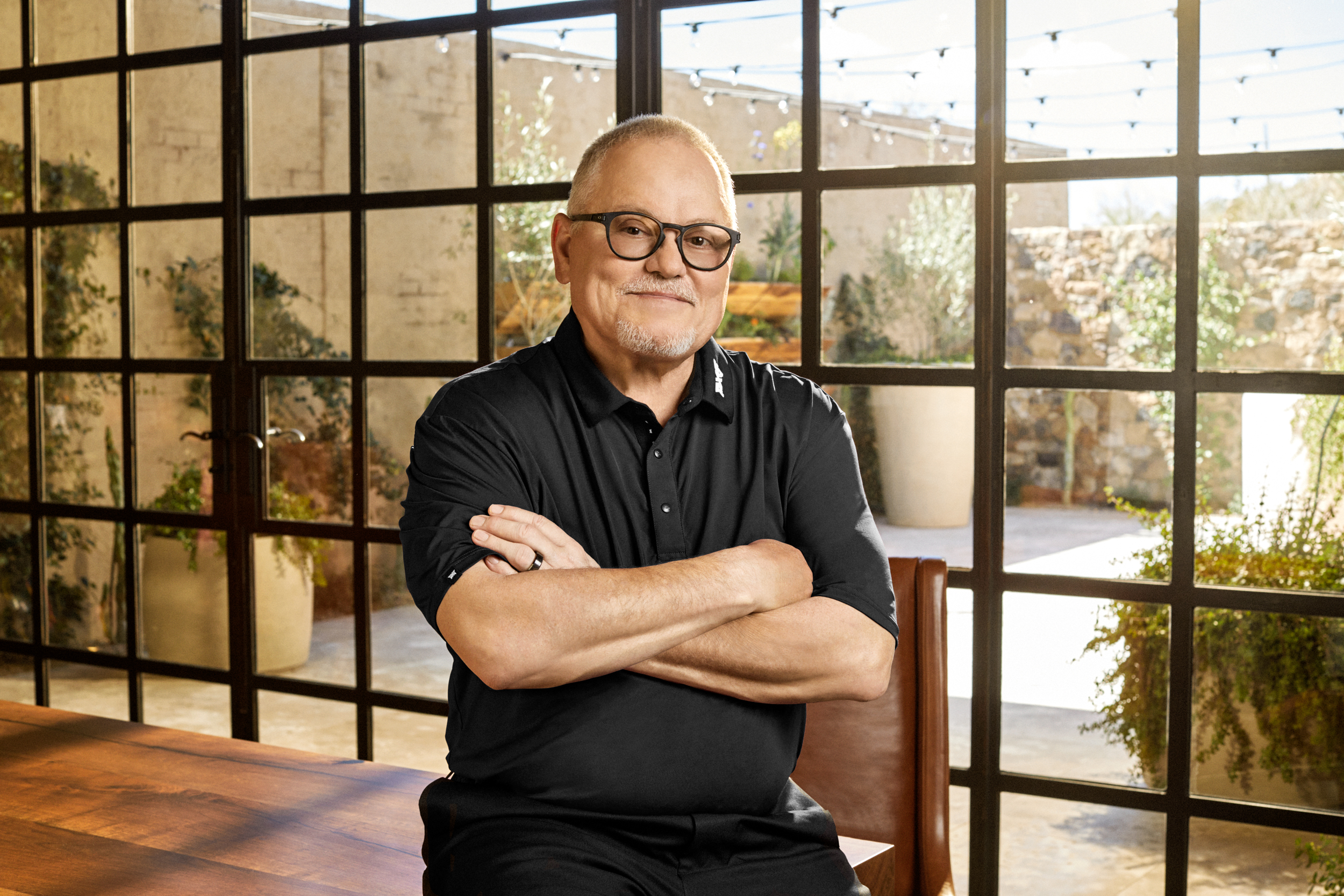
It took Bob Parsons decades to even start writing his memoir, and two years to complete it. Yet, when he was finished, he hesitated.
“I wasn’t going to publish it. I was just going to keep it for my family,” he says. “And then I sent a copy to each of the guys I served with in the war. There’s six of them, and they all urged me to publish it, so I did it.”
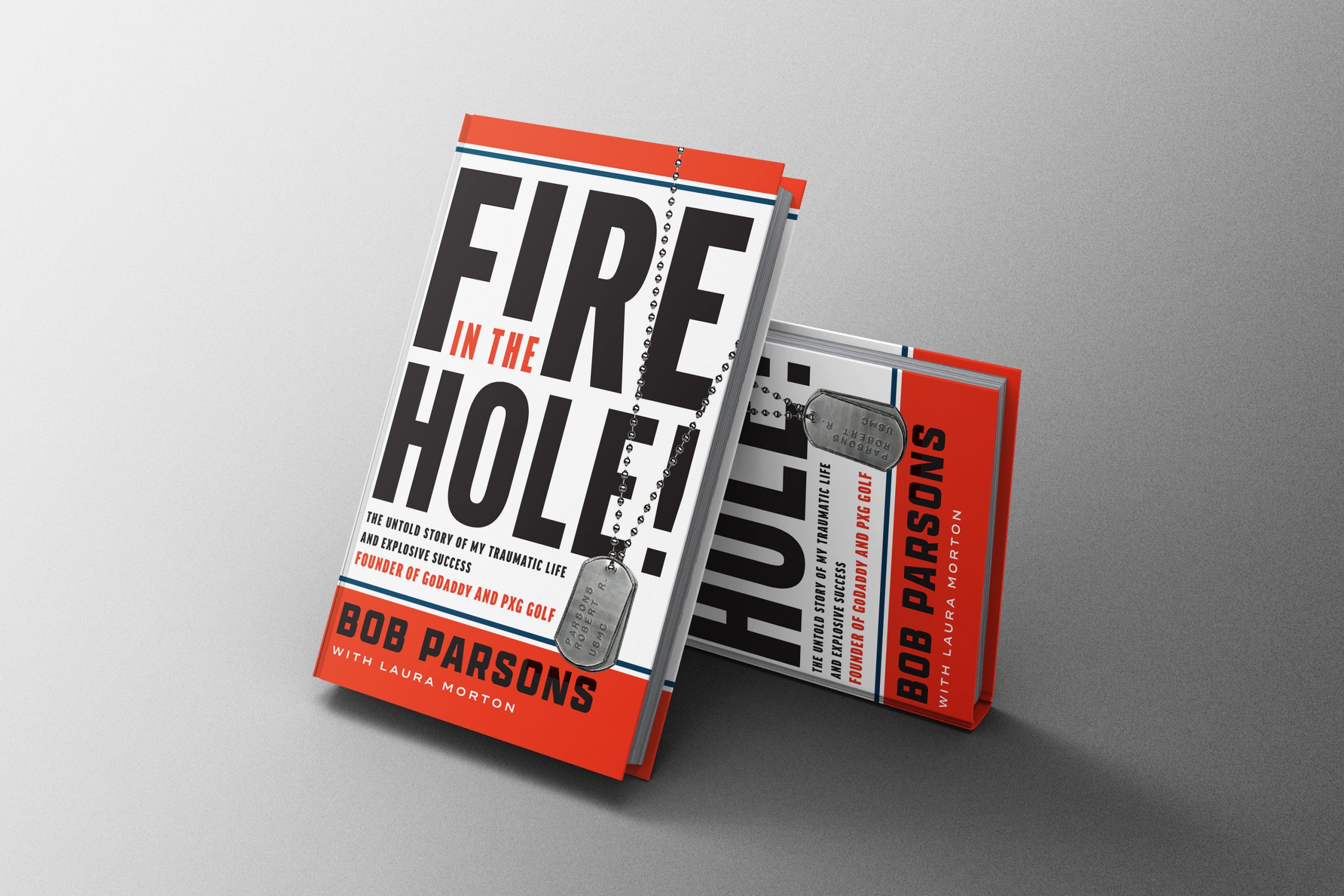
Fire in the Hole! The Untold Story of My Traumatic Life and Explosive Success (Forefront Books, $29) chronicles Parsons’s meteoric rise from his hardscrabble beginnings in East Baltimore to his valorous service in the United States Marine Corps during the Vietnam War to his serial entrepreneurship (GoDaddy, PXG, et al.) that led to a multi-billion-dollar empire and philanthropic powerhouse. And, crucially, his use of psychedelics to heal from PTSD.
But it’s not all heavy – there’s plenty of levity to offset the pathos of his heartbreaking childhood and harrowing war experiences, delivered with his trademark gruff humor. “It was raw… I was pretty loose and critical of myself throughout,” Parsons says. “I didn’t make me look like I’m anybody special, because I’m clearly not… The fact that I achieved what I did, there’s no way in hell I should have, because I come from nothing. In the book, I say I wasn’t born with a silver spoon, I was born with a dirty plastic one right in my mouth.”
We sat down with Parsons at his Scottsdale book launch ahead of its official release date this week.
Why now? You’ve had such a storied career with so many companies. What made you decide to write your memoir now?
I always said I’d do it after my mother passed. As much as I loved her, you know, I had to tell how the cow ate the cabbage in the book. And I had a number of false starts, and then I had my buddies… I’m still tight with the guys that I served in Vietnam with, and so they all told me, “Man, when are you going to get this done?” I told those guys, “I don’t report to you anymore.” I was introduced to [my co-author] Laura Morton. She gets stuff done and she’s a very dominant woman, like this blonde [Renee Parsons] I’m married to, Lord have mercy.
Was it a difficult process – thinking back through your life and having to revisit these things to write about them?
Some things were. You know, I have an ability to dissociate – and it got me through my childhood, got me through the war, and helped me in business immeasurably. So, there were things that I came across that I had not been thinking about in a long time, and some of them were difficult, especially the things dealing with my parents and my family… Coming home from the war was the hardest part… We thought we did something special. And I mean, the shit we went through is just unimaginable… Not only did we not receive a hero’s welcome – or any welcome at all, for that matter – we… It just was brutal. A lot of us were met by protesters, and they were calling us names like murderer, Nazi, drug addict. Of course, gotta throw in baby killer.
As if you’d chosen to go to war on your own. So crazy.
They definitely took it up with the wrong guys. Now, did I have a problem with them being against the war? No. You know, that’s their right as an American. And I fought for that right. And to a man, we all felt that way. But to take out the war on us – I mean, it was so misdirected. And to this day, I don’t understand why that happened.

Has writing the book been healing for you?
You know, the thing that saved me was psychedelics. I read Michael Pollan’s book, How to Change Your Mind. And it was a treatise on psychedelics throughout the ages… I had never done anything like that in my life. And then after reading it, I asked my wife, Renee, I said, “You know, I’d like to do this.” Well, she had me hooked up in two weeks.
She gets it done.
Yeah, she does get it done. God bless her. I mean, I love her to pieces, but my God, you don’t want to be on the railroad tracks when her train is coming… [Anyway,] she got it done, [and] I met those guys [psychedelic facilitators] in Hawaii. This is back in 2017. And after that, I was treated. A lot of tears. I mean, it’s not something you want to go through all the time. At one time, I actually flashed back, and I was there [in Vietnam]. I mean, I was fucking there, and I could see it. I cried. Oh my God, I don’t remember crying that hard in my life. When it was done, I was like I was before the war, only better.
You felt that different.
My wife couldn’t believe the change. People I worked with couldn’t believe the change. They say, “He’s so nice now. He’s so easy to get along with. He says nice things, doesn’t get upset quick,” you know, on and on and on. All those [behaviors are] part and parcel, symptoms of PTSD. My son told his wife, he goes, “You know, I think Dad found out that he’s going to die soon.” And she says, “Why?” and he goes, “He keeps calling me, and he’s so nice to me. He’s never done this before.” Long and short, it had been 49 years since the war, and I finally came home.
Did you read other people’s memoirs in preparation to write this?
No. See, that’s just not what I do. In all my business career, whenever I’m gonna do something, I could give two shits how somebody else does it. I’m gonna do it the way I’m gonna do it.
What do you hope that people take away from the book?
I think depending on who the individual is, there’s gonna be different messages. But one message that everybody should understand is life is very random. Particularly if you’re in business and you’re trying to make it, a lot of times you just need to hang on until your break comes along and you’re able to spot it. Now, does that happen for everybody? No. But I think it’s all about luck and perspective… If you think the right way, you got a really good chance of making it. If you think the wrong way, don’t bother.