A Valley homemaker group finds modern empowerment by embracing old-fashioned roles.
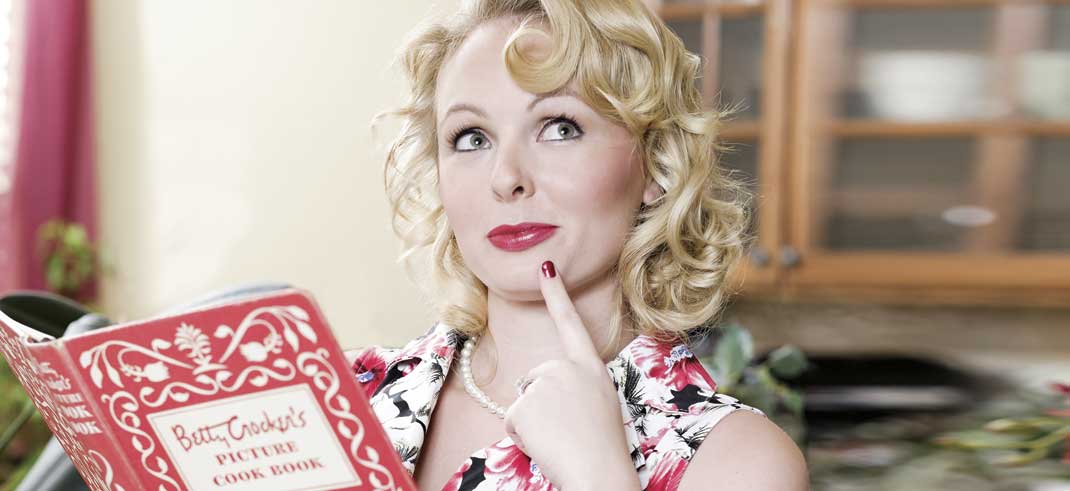
Nicole Williams is reflecting on the 1950s – a time, in her mind, when Leave It to Beaver depicted the perfect family, and dishes were done while wearing pearls and heels. She knows that not everything was better then, but she thinks some things were – like the lower divorce rate.
“Part of me wonders if that is because women were embracing some of the traditional values of staying at home and just being more respectful,” she says. “They were able to say, ‘I can allow my husband to be the head of the household. I don’t have to try to be this… powerful woman.’”
She pauses and laughs, realizing the 2014 impact of her words. “It’s kind of hard for it to come out and not sound bad,” she admits.
Williams, a North Phoenix mother and stepmother of three, believes wives can be happily submissive to their husbands. That if mothers can afford to stay home, and choose to, they should. That men are natural leaders; women, natural homemakers. “Our hands are small and petite to be able to sew and clean even the smallest of areas,” Williams, 27, writes on her ‘50s-inspired blog, “The Retro Housewife Life.”
She recognizes that her views aren’t necessarily popular in an era when 26 women hold Fortune 500 CEO positions – exactly 26 more than when the list was started in 1955. That’s why she started a group for Valley women who share her lifestyle and values: the Phoenix Homemakers Association (PHA), whose primary mission is to help women recapture skills that vanished with “home ec” classes. And she wants them to take pride in an occupation they feel is no longer as respected as it once was, and not to dismiss themselves as being “just a homemaker.”
Founded in June, the association offers educational sessions on “the art of homemaking,” such as cooking classes and “Housekeeping 101,” along with social opportunities like playdates and recipe exchange parties. Within its first three months, the group attracted 25 dues-paying members and more than 300 Facebook fans.
Williams has fielded a bit of mild feminist hate mail, too. “I’m horrified and sickened at your desire to feed into such an unhealthy and thank God, outdated/abandoned mindset,” one reader commented on her blog.
Tempe homemaker Maria Sireci admits feeling skeptical when she joined the group, particularly after a discussion about the importance of looking attractive for your husband. But in PHA, Sireci, 46, has found deeper meaning. Five years ago, she decided to leave her librarian career while pregnant with her first child. At home, she says, she works harder than ever but struggles to find a sense of empowerment. The support of group members has helped her believe that her role is valuable – just different from her husband’s. “I want to make it important, not something to be embarrassed about,” Sireci says. “If we embody that kind of importance in our role as mother and homemaker, other people around us will (respect it), too.”
Sireci’s choice may be one more women are making. In a reversal of a decades-long trend, the percentage of mothers who stay at home rose from 23 percent to 29 percent from 1999 to 2012, according to Pew Research Center analysis. Though a tough economy could be one cause of the increase, it’s clear that many moms are happy to buck the boss-lady revolution popularized by author Sheryl Sandberg in her best-seller Lean In; only 32 percent of mothers even want to work full-time, according to another Pew poll.
For Williams, being a homemaker isn’t a continuation of a tradition, but the start of one. She grew up near Sacramento, Calif., in what she calls “a totally backwards home.” Her retired father cooked while her mother, a school principal, worked long hours. Watching ‘50s TV shows, Williams envied the family life she didn’t have.
Three years ago, Williams fulfilled her dream. After her first marriage ended in divorce, she married Mark, an emergency-room physician and hospitalist who imagined family the same way she did. She left her job as a hospital secretary to stay home with her daughter, now 5, and her husband’s children from a previous relationship – a girl, 6, and a boy, 7.
Since taking on the role, Williams says her time is filled by the kids, cooking and maintaining a strict cleaning schedule. But she has felt the judgment of those who either assume that she shops and socializes all day, like the Real Housewives on TV, or that she’s oppressed, forced to stay at home.
Breanne Fahs, associate professor of women and gender studies at Arizona State University, finds Williams’ mission dubious. Labels, she says, are counterproductive in a society where women are criticized for their lifestyles far more often than men: “No matter what women choose, they don’t really win. From every walk of life, women are being told that the choices they make are damaging their children or not good enough.”
Williams doesn’t consider herself a feminist; she doesn’t want to “lean in.” Being a homemaker is what she loves to do. And through PHA, she wants others to respect her choice. “Women are being pushed to be equal to men, to be the CEO… which is fine, if that’s what works for you,” she says. “But we’re not being praised anymore for choosing to be at home.”