Pandemics, recessions, population booms, political swings and cultural shifts – these five Valley businesses have made it through it all. We tip our hats to these centenarians, each in operation for 100 or more years.
By Leah LeMoine | Original Photography by Mirelle Inglefield
According to the U.S. Small Business Administration, only two-thirds of small businesses in America survive two years. Of those, half make it to the five-year mark. Roughly a third of those businesses last 10 or more years. For a local business – founded generations before venture capital, IPOs and Shark Tank – to last 100 years? It’s a little luck, a lot of hard work, a fair bit of grit, and an admirable willingness to learn and evolve. We have a surprising number of business centenarians in the Phoenix metro – Arizona Highways joins the club this year – for such a young city, with many predating statehood. From a pioneering electric company to a family-run Mexican restaurant, their stories are a testament to adaptability and perseverance.
Arizona Public Service
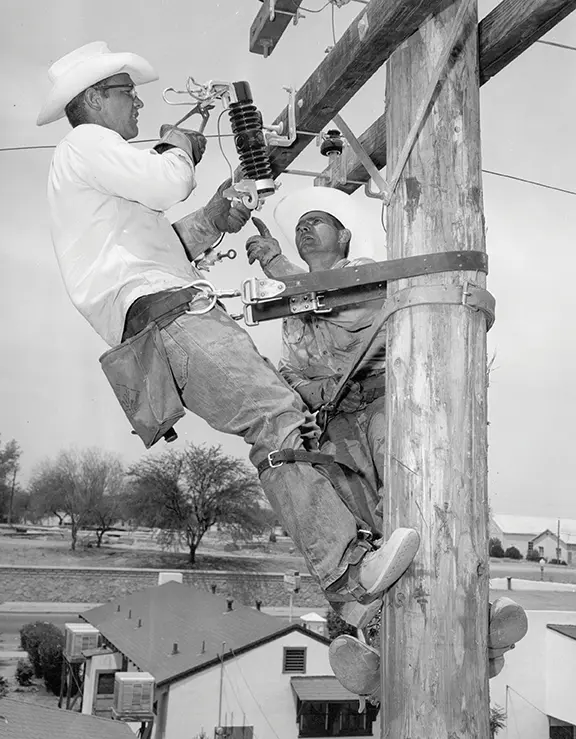
The founding of Arizona’s largest public utility company is, like the origins of many businesses, an immigrant story.
In the 1870s, U.S. Navy cadets in Japan hired a translator named Hachiro Onuki, whom they befriended and offered free passage to the U.S. and citizenship. After landing on the East Coast, Onuki learned about the gold rush and headed west to start a new life. On his way from Nevada to Tombstone in a wagon train, he stopped in Phoenix, where he met two businessmen who wanted to bring illumination to the city.
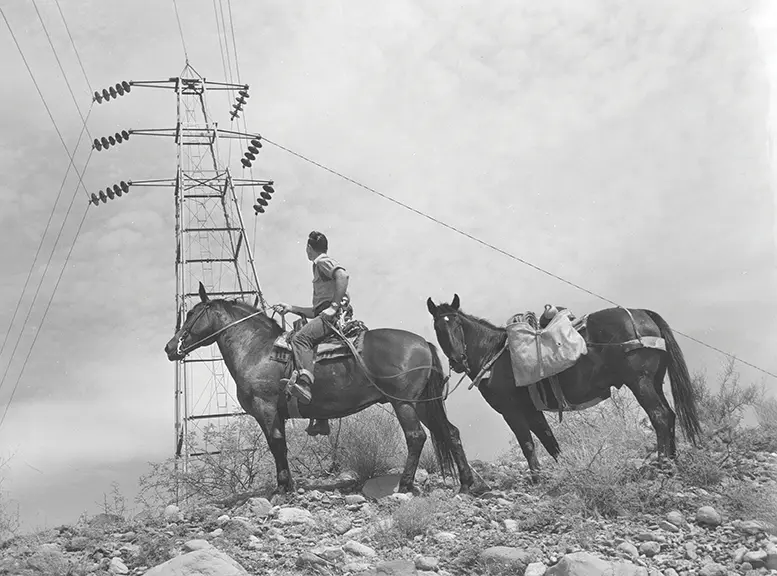
“Long story short, he never made his way down to Tombstone,” says Ted Geisler, current CEO of APS. Onuki – who by then went by the Americanized name Hutchlon Ohnick – partnered with the entrepreneurs, and Phoenix Illuminating Gas & Electric Company was incorporated on April 29, 1886 – only a handful of years after Thomas Edison started the country’s first utility company in New York. “Our first streetlamp was on the corner of Central [Avenue] and Washington [Street], and that’s how the company started. And then over time, we expanded – in part through building out the grid, and in part through merging with other smaller electric utilities that were growing.”
With expansion came a name change: Arizona Public Service (APS). “We go from the bottom of the Grand Canyon all the way down to Bisbee, Douglas and Yuma, half of Phoenix, Prescott, Flagstaff and Snowflake,” Geisler says. “It took us 140 years to get to the peak electric demand that we have today, which is about 8,500 megawatts. We’re going to grow that by 40 percent just in the next six years. So, the history and the grit that it took to be able to serve reliably up to this point is extraordinary… [but] we’re entering an era of the greatest expansion of the grid in the history of our time serving customers.”
Geisler has seen this rapid change firsthand in his nearly 25 years with the company, where he’s worked in construction, energy trading, renewables, transmission and distribution, and served as CIO, CFO and president. “Sometimes I tell people I can’t keep a job around here,” he laughs, before praising APS’s 6,300 employees that work “24/7, 365 on something that is so important… Every day, you know that what you’re doing is so critical to society, particularly in a climate as hot as we live in.”


Serrano’s Mexican Restaurants
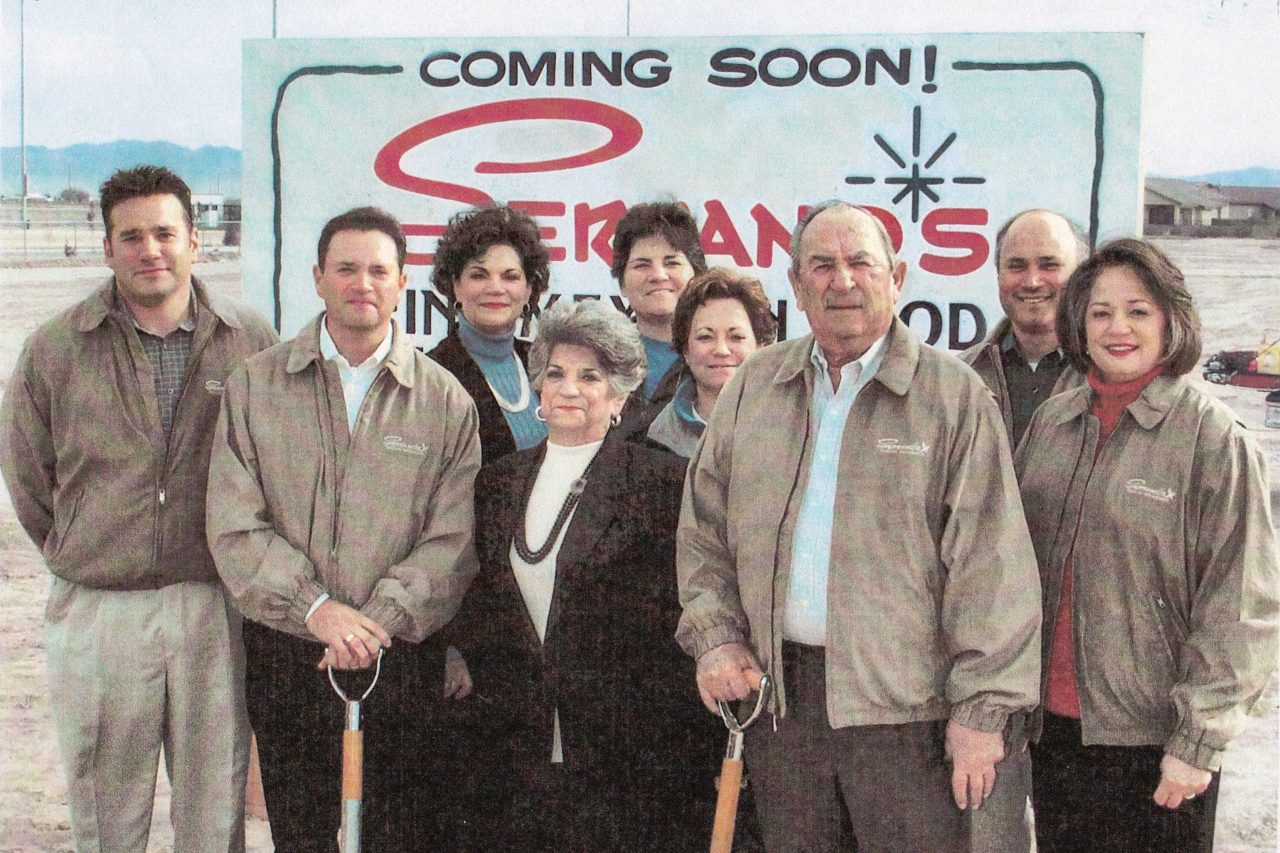
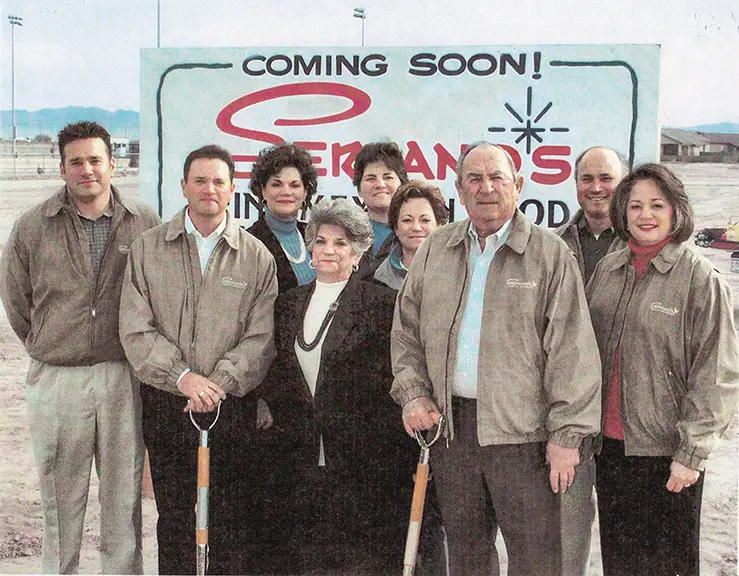
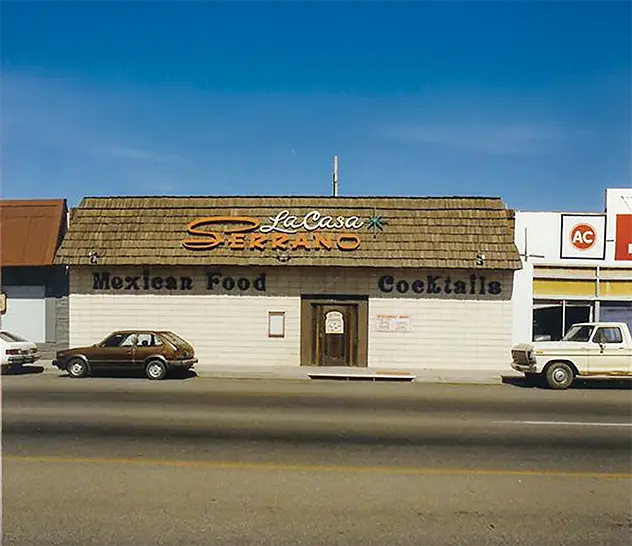
Ask any member of the devoutly Catholic Serrano family the key to their East Valley Mexican restaurants’ success, and they’ll invoke their motto: faith, family and food. But knowing when to pivot is up there, too.
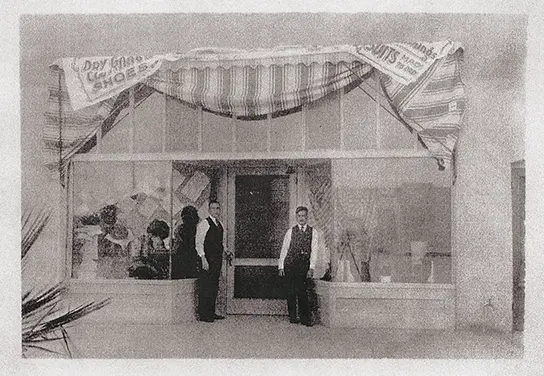
The family business dates back to 1919, when brothers Albert and Luis Serrano opened Serrano Brothers Popular Store in downtown Chandler. That mercantile eventually morphed into a department store, which spawned locations in Phoenix and Casa Grande.
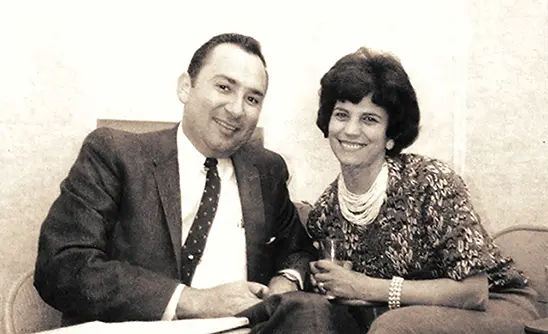
“Sixty years of the clothing business is what we knew,” says Albert’s grandson Ric Serrano, who worked in the stores with his parents, Ernie and Eva Serrano, and seven siblings. “As the malls opened up in the mid-1970s… we started seeing the independents, as in who we were, slow down to a crawl. We started closing stores one by one.”
By 1979, Ernie and Eva “could see the writing on the wall” and jumped at Ernie’s brother’s offer to run a restaurant in the downtown Chandler building he owned. Eva was an incredible cook, Ernie was a savvy businessman, and they had a built-in customer base from their decades in the department store business. “It was the people that they were selling Levi’s to, and Western wear and clothing to, all coming into the restaurant because the name was [beloved],” Serrano says.
Eventually, all the Serrano kids got involved. Business has waxed and waned over the past 45 years, with new locations opening and closing. The four youngest siblings – Ric, Theresa Serrano-Keel, Lorraine Serrano and Billy Serrano – run the remaining three locations in Mesa and Queen Creek. “They call us the Final Four,” Serrano-Keel laughs.
“It has not been easy. And the thing that pulls us through is we all – thank you, dear Lord, and I think it’s because of our mom and dad – get along,” she says. “We all have a certain niche: Lorraine is in the back of the house, Billy’s the IT, Ric oversees everything, and I do the human resources and the financial part of it… It really makes us appreciate small businesses, because we understand what goes into it and the sacrifices these businesses and these families go through. I tell you, the power of prayer. That’s really held us together.”
Serrano’s legendary bean dip doesn’t hurt, either.

The Nile Theater
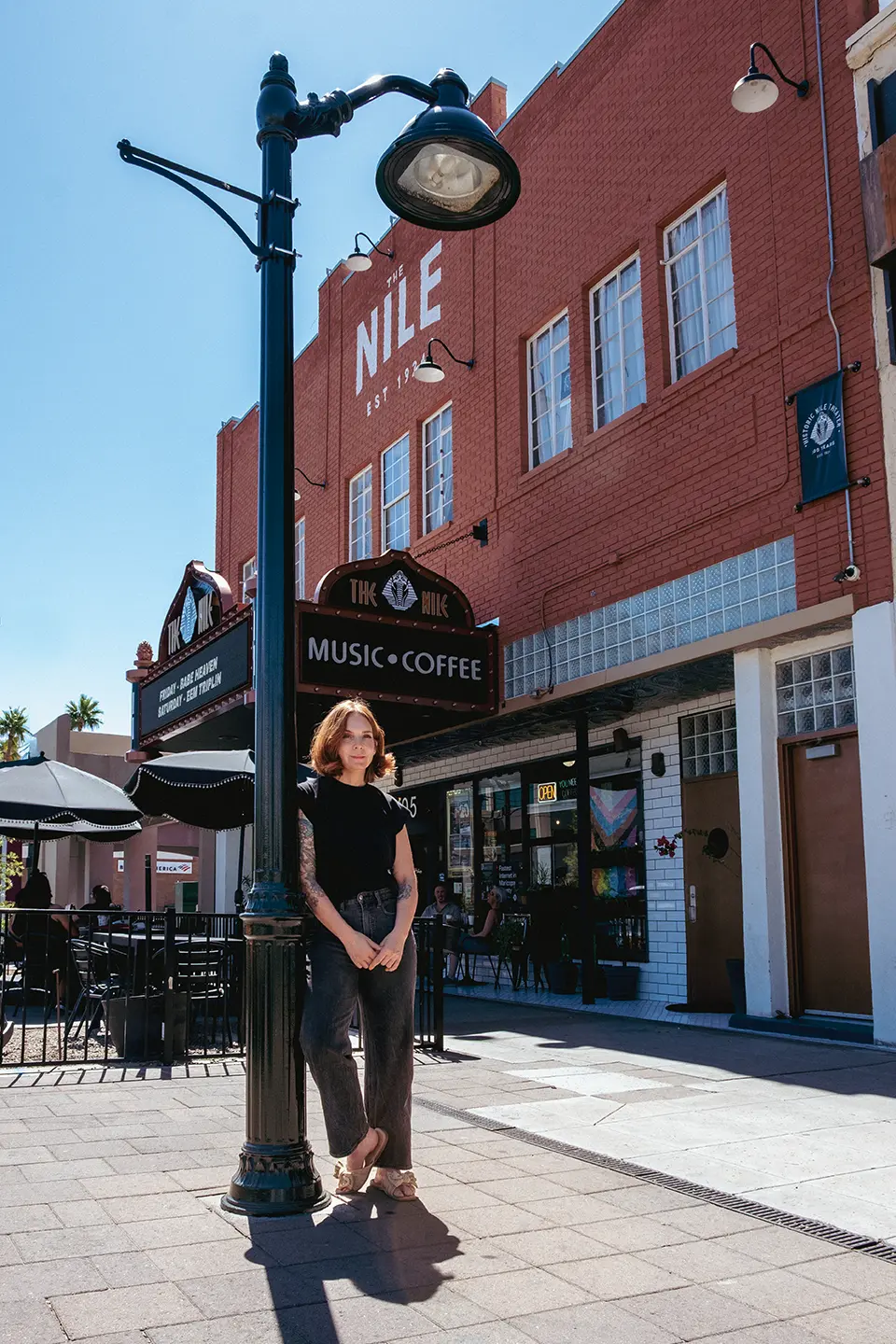
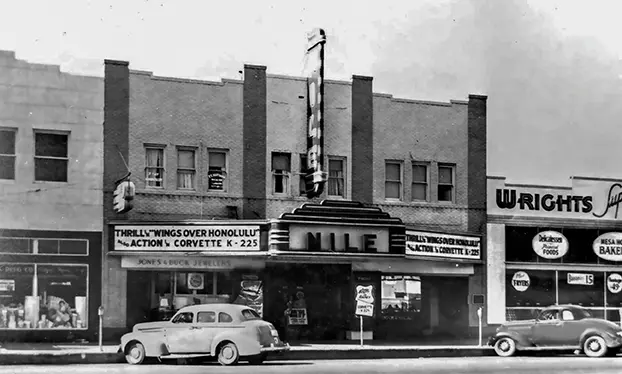
When Michelle Donovan interviewed one of the owners of The Nile Theater for her high school newspaper in the late ’90s, she never imagined she’d one day own the legendary music venue in downtown Mesa.
“The floor used to have a slant to it,” she says. “I showed up the day that he and some people were taking that out and re-laying down the wood. So, it’s kind of a full-circle moment.”
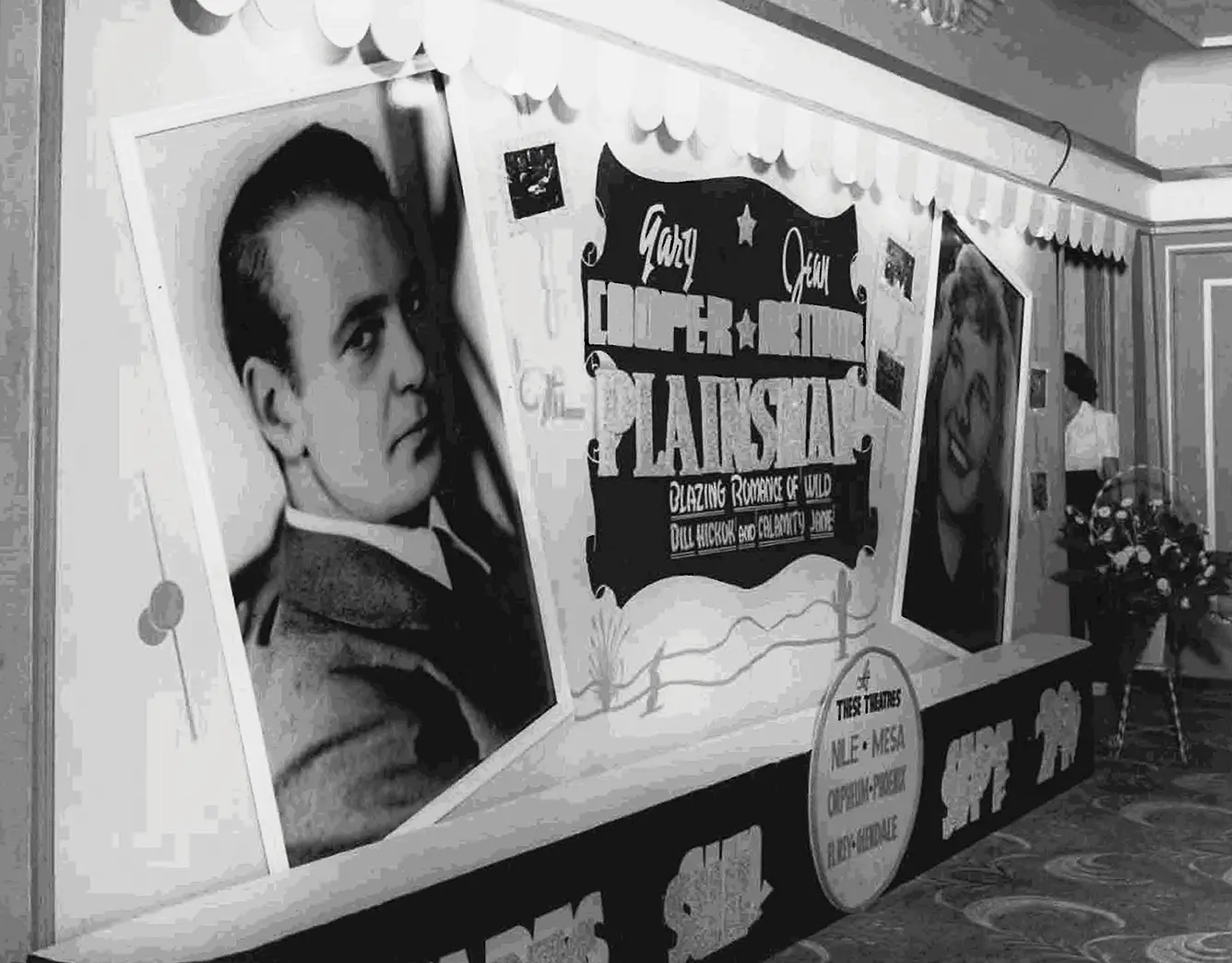
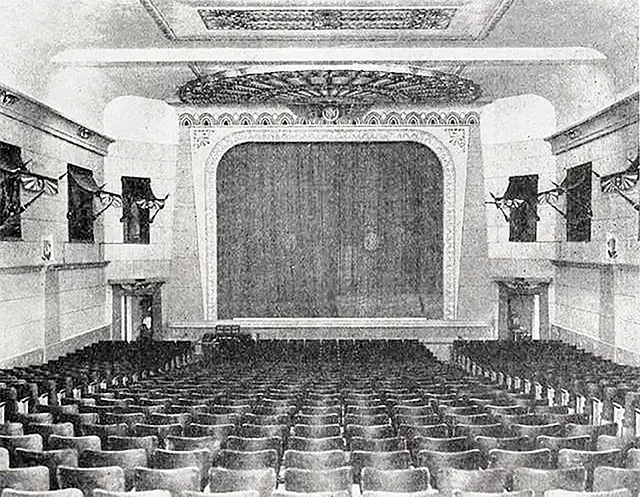
Since taking over in 2009 – after a music venue she had been developing in Tempe fell through – Donovan has spent her fair share of time fixing floors and more in The Nile, which opened in 1924 as a silent movie theater. “It was built during the Art Deco Egyptian craze, because they had just found [King] Tut’s tomb,” she says. “There were pharaoh heads and stuff throughout the building, and that’s why we kept the name.”
After the theater closed, the space went through myriad owners and uses, enjoying stints as a church, a dress factory and a school. “It’s gone through a lot of things, but it’s come back to its original roots, being an entertainment facility,” she says.
While she doesn’t own the building itself, she owns the businesses within it – two stages and a vegan coffee shop with an additional stage – and has done the work of restoring it after an extended period of disuse.
“After getting in here and understanding the history of the building, it felt kind of disrespectful to change it and not pay homage to where she came from, especially because we were doing the same things that were being done in here when it opened,” Donovan says. “It kind of took on a whole other life outside of concerts and community events.”
In honor of The Nile’s 100th birthday in 2024, Donovan and her team had a replica of the original Art Deco/Egyptian Revival marquee fabricated, completed a facade improvement and secured its designation as a National Historic Landmark.
The nod to Egypt will continue in the new music venue Donovan is working on down the street: The Rosetta Room.
A New Leaf’s Phoenix Day
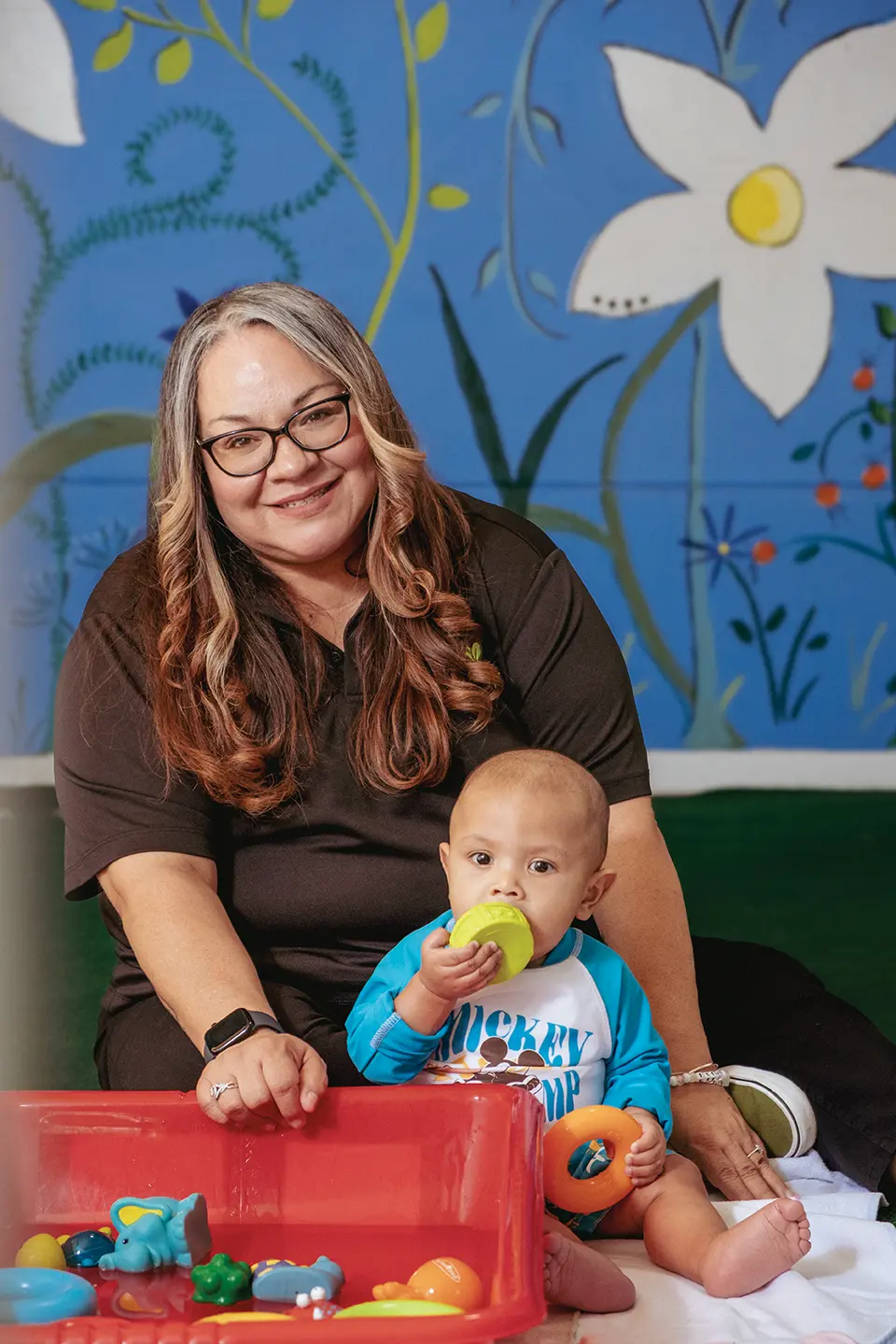
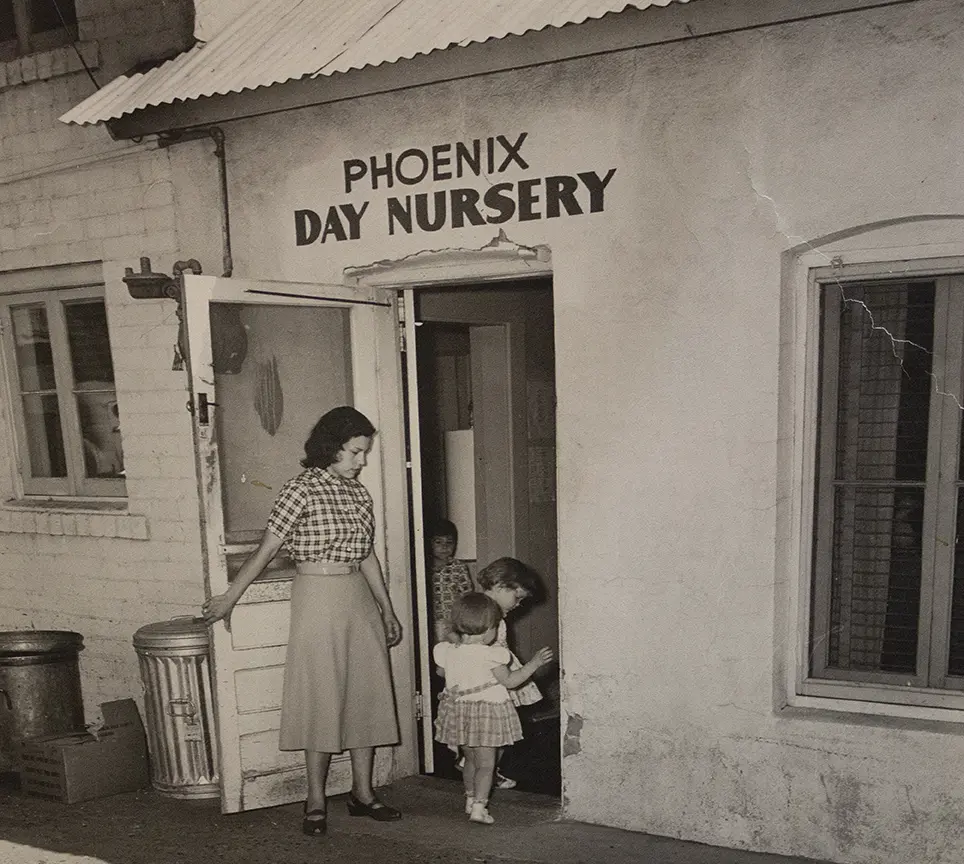
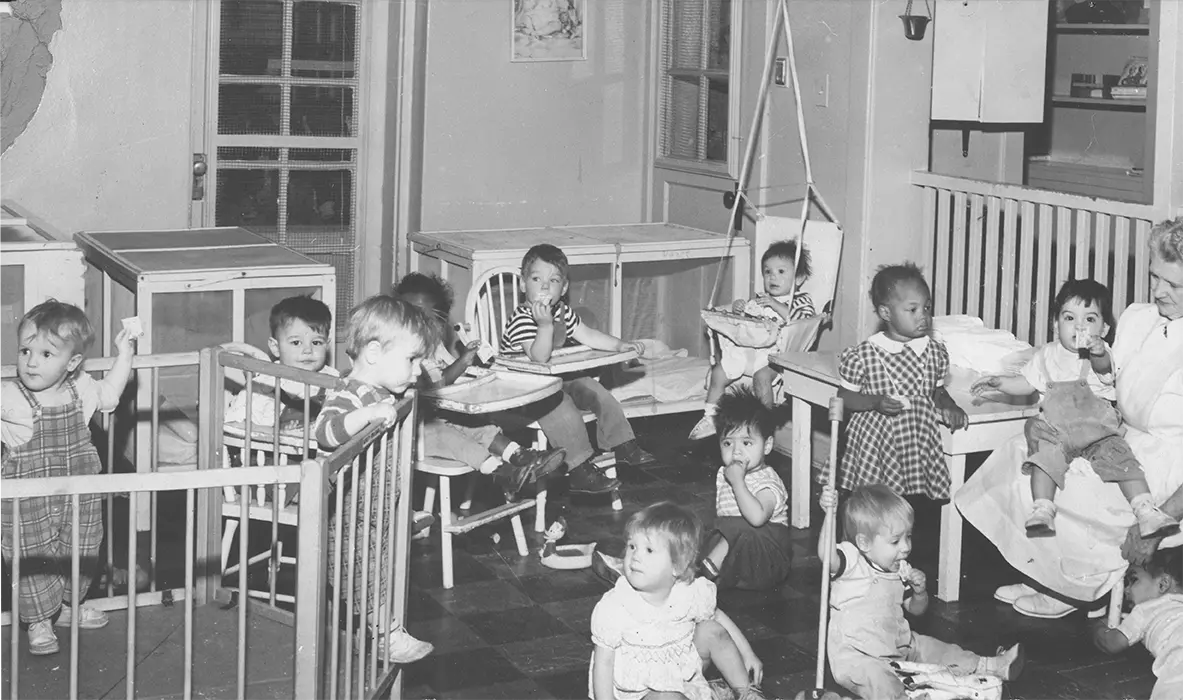
When Sesame Street co-creator Joan Ganz Cooney was developing the pioneering TV show, she looked to her hometown of Phoenix for inspiration. She wanted to find an early childcare center with an ethnically diverse group of kids she could use as a model and a test bed for the program’s educational curriculum. Cooney found her muse in Phoenix Day, a Downtown Phoenix center where classes were taught in English and Spanish and where the economic realities of the families were mixed.
“We have a lot of multicultural families here,” says current education director Mariaelena Rodriguez. “A lot of families come from the neighborhood… we have some that work Downtown, some work at the Capitol or the hospitals.” While some families pay tuition – Mayor Kate Gallego and former Arizona State Representative Reginald Bolding sent their kids there – many others benefit from scholarships or Arizona Department of Economic Security childcare assistance.
Access to quality care and education, regardless of economic status, is a legacy its founders would be proud of. In 1915, the Junior Guild of Trinity Cathedral opened Phoenix Day as a childcare resource for women who had entered the workforce during World War I. It has operated as an early childhood education center – the oldest in the state – ever since, serving children starting at six weeks old through their preschool graduations.
When she interviewed at the school 25 years ago, Rodriguez was touched by the devotion of the educators. “I saw the teachers were here for a purpose. They were here for the children. It was family-oriented,” she says. Many of the little ones were legacy students, so to speak – their parents and grandparents had come to Phoenix Day before them. “I brought my children here,” Rodriguez says. “And they still come here to volunteer. This is our home away from home.”
In 2018, the childcare center/school joined with A New Leaf, a Mesa organization that provides support for people experiencing homelessness, domestic violence and other challenges. Through this partnership and support from other organizations, the school has been able to provide more resources for its eight classrooms and 18 teachers. Still, “more funding” is always needed, Rodriguez says. Despite the challenges, she loves her job.
“I feel honored to be in this position and to be here at Phoenix Day,” she says. “For myself to not even be from Arizona, I feel like I am a part of Arizona. I feel like this is my home now.”


Hinkley’s Lighting
Decades ago, Hinkley’s Lighting ran an advertisement showing a fanciful light fixture with the tagline, “Why would we do this? Just because we can.”
The cheeky boast was meant to convey confidence in the lighting purveyor’s craftsmanship, but it speaks to the heart of the company’s success: creativity, customization and stubborn independence.
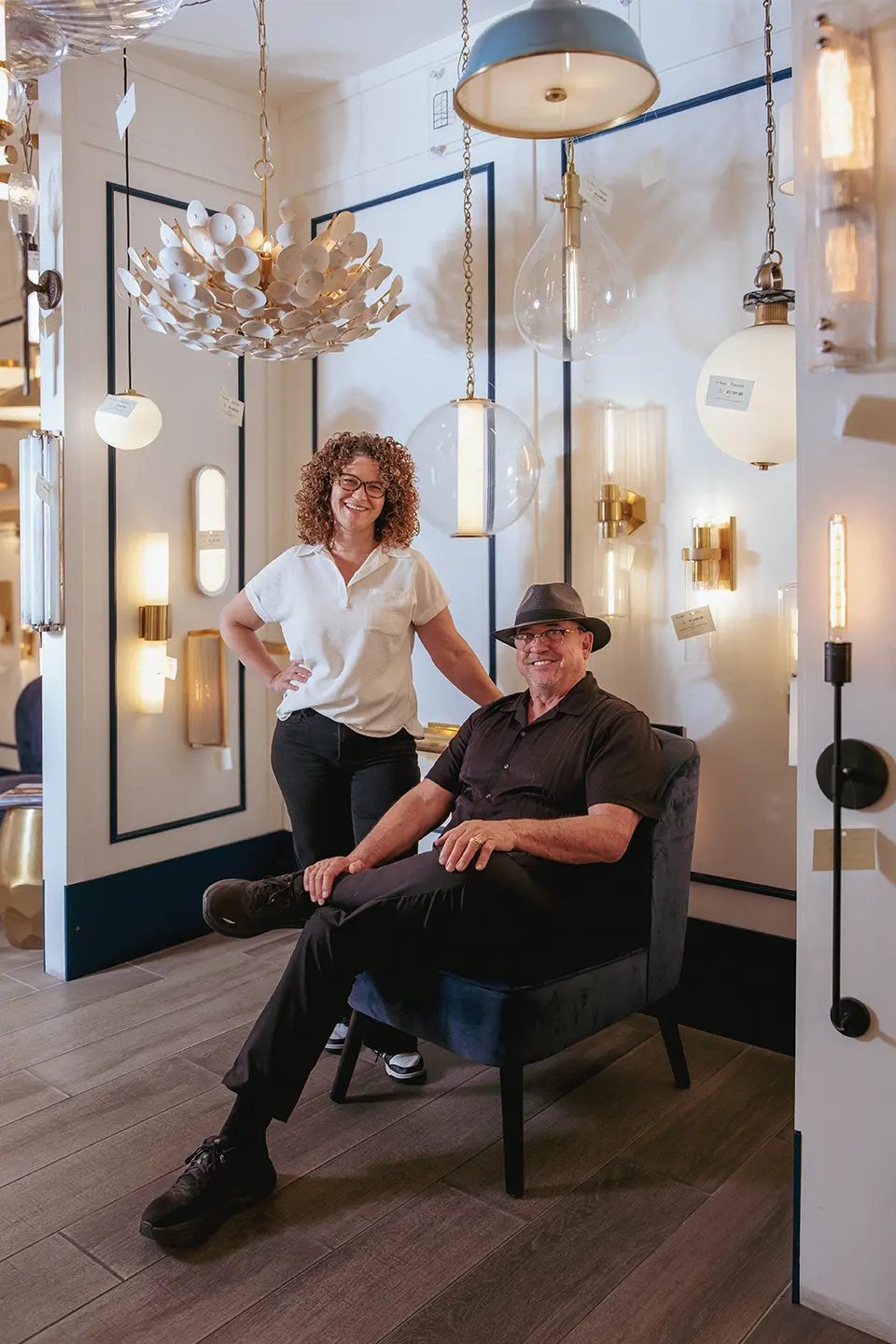
“That’s kind of how our family runs: ‘Don’t tell me no,’” says Michael Jackson, third-generation owner of the custom lighting store. “We beat the drum to our own tune. We don’t worry about what everybody thinks. If this is what you want, this is where you go, right?”
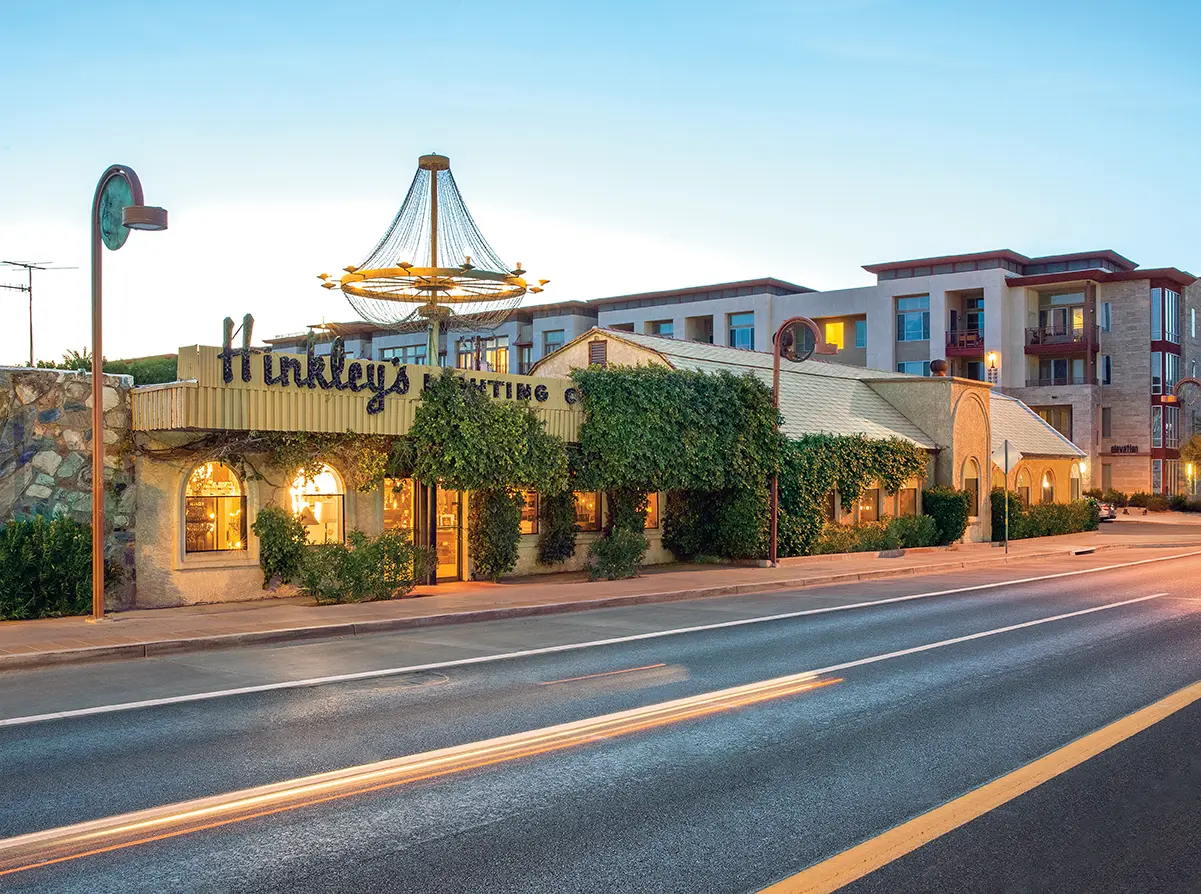
The original drummer: William “Bill” Hinkley, who purchased the lighting department of his father-in-law’s Downtown Phoenix hardware store – in operation since 1910 – and christened it Hinkley’s Lighting Co. In the 1940s, he moved the company to Camelback Road and Central Avenue and slowly bought up the surrounding buildings.
“That whole block ended up being Hinkley’s Lighting,” says Jackson, who went to work for Hinkley when he was a freshman at Central High School. “My sister married into the family,” he says. “I would go and garden for them or sweep the parking lot or whatever to make some money. Minimum wage back then was $1.50.”
He rose up through the ranks – salesman, general manager, vice president, president – before purchasing the company from Hinkley in 1998. Shortly after, Jackson hired a promising young designer – his niece, Shannon Lee Ross, who has since led the company to win countless design awards, including Phoenix Home & Garden’s Master of the Southwest.
“When I was hired, I was 21. I knew nothing about lighting,” Ross says. “You just have to do it and learn it… The only way to make this work is to be able to solve every problem that comes up without sweating.”
Eventually, they moved to a larger showroom with an on-site factory in North Scottsdale. They have another showroom in Gilbert and a warehouse in Phoenix. Jackson’s wife, daughters and sons-in-law have worked at Hinkley’s in various capacities, and the custom factory is still run by two of the three brothers who started it.
“We all work together as a family,” Jackson says. “We all have the same idea, the same feeling and the same drive… We’ve had a lot of fun. Some of it has been very stressful. We’ve had some issues. But we work through them.”
More Centenarians
- Valleywise Health
This health-care giant has been serving the Valley since 1877. - Fennemore
The oldest law firm in Arizona opened as Sloan & Chalmers in Phoenix in 1885. - Kyrene School District
The East Valley’s oldest elementary school district was established in 1888. - O’Neil Printing
The Grand Canyon State’s pioneering printer set up shop in the Valley in 1908. - Valley Machine Works
These machinists and welders have been fabricating and repairing since 1909.