The eephus is an extreme specimen of an off-speed pitch, very slow and very high, designed to throw off the batter’s timing. It’s a fine title for the movie Eephus. Like many elements of young Carson Lund’s disarming, deceptively unhurried baseball comedy, it seems to carry an allegorical resonance. The movie throws off our expectations; it takes its time, and it sails surprisingly high.
It’s about a game played one beautiful early fall afternoon in the 1990s at a ballpark in a small town in southern Massachusetts. Two teams of paunchy, scruffy middle-aged local guys in an amateur “beer league,” one side playing for Adler’s Paint and the other called the Riverdogs, take the field for a final meeting before the park is demolished to make way for a new school.
That’s pretty close to the whole plot, but getting through nine innings proves to be quite the epic saga. There are player shortages, early departures and encroaching twilight – again, irresistible symbolic readability. As the innings grind by, the guys in the dugouts swig beer and engage in deadpan monologues and philosophical colloquies that border, without pretentiousness, on the Beckettesque or Pinteresque.
On the field, they trade aspersions and irritable grousing that suggest love and familiarity, for each other, for the community, for the rhythm and ritual of the game. As the umpires desert them and darkness descends – they can’t turn on the field lights – they talk Franny (Cliff Blake), an elderly scorekeeper, into taking over as the vision-challenged ump, and eventually use car headlights to illuminate the infield.
It’s clear that this is no ordinary game; that the men feel an obligation to complete all nine frames, complete with 7th Inning stretch, as a ceremonial gesture of finality, not only to the park but to their youths. “It’s like baseball,” one guy remarks of his life. “I’m lookin’ around for somethin’ to happen and poof! Game’s over.”
Most baseball movies distill the dramatic tension of the game into highlights (even televised reruns of actual games often do this now). Lund and his cast, however, embrace the game’s dreamy suspension of time, managing to capture the somehow simultaneously boring yet intense, cosmically charged atmosphere of baseball at its best.
The cast radiates authenticity. Most of them were unfamiliar to me, though the great documentary filmmaker Fred Wiseman can be overheard on the radio. Red Sox legend Bill “Spaceman” Lee, still handsome in his late 70s, has a terrific scene as a mystery man who shows up and lets himself get pressed into service pitching an inning; he acts, indeed, as if he had just dropped in from outer space.
But everyone here is a blast to hang out with, doing wonders with the script’s rhetorical poetry: “Is there anything more beautiful than the sun setting on a fat man stealing second base?” The answer might just be: not much at that.
* * *
The word “expendable” can sometimes have an almost romantic connotation in movies; it’s even the name of a franchise featuring aging action stars. It suggests the freedom that supposedly comes of having nothing to lose.
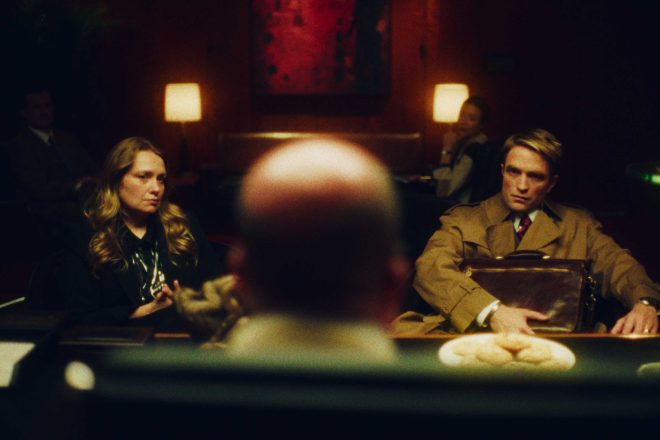
It’s the official job designation of the title character in Mickey 17, played by Robert Pattinson, and of the 16 Mickeys that came before him. This is a decidedly less romantic vision of being expendable. A flunky on a dreary space odyssey to Nilfheim, a colonizable planet, Mickey is assigned the most dangerous chores on the ship or the planet and sometimes serves as the guinea pig in horrible scientific tests. When he dies, they simply “re-print” a new version of him.
Based on Edward Ashton’s novel Mickey 7 and directed by Bong Joon Ho, the brilliant South Korean responsible for The Host and Parasite, this freewheeling yarn plays poor Mickey’s sufferings for laughs, but with an undercurrent of sympathy for the sweet, hapless fellow. It also gives him an offsetting comfort: Nasha, an enthusiastic, devoted lover played by Naomie Ackie.
Trouble strikes – well, worse trouble strikes – when Mickey 17, mistakenly believed dead, returns to the base to find Mickey 18 sleeping comfortably in his bed. Nasha is by no means unhappy with the development, referring to 17 as “mild Mickey” and to the short-fused 18 as “jalapeño Mickey.”
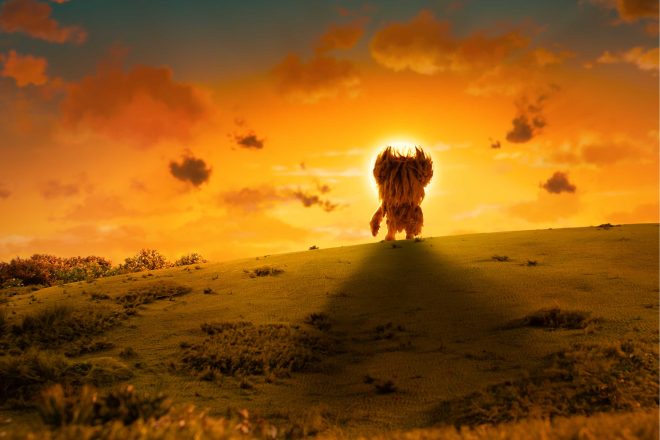
A premise that could work well as a half-hour Twilight Zone episode is spun into imaginative, unpredictable adventures and complications. Some of these involve the Creepers, a race of beings that occupy the wintry new world and resemble a hybrid of a sowbug, a squid and a walrus. They’re grotesque but somehow highly endearing.
Much less endearing are Mark Ruffalo and Toni Collette as the husband-and-wife villains leading the expedition – loathsome theocratic hypocrites surrounded by fawning sycophants. The transparent spoof of our current leadership here, right down to red hats and double-fist dancing, can’t even properly be called satire; it’s simple disgust and vituperation.