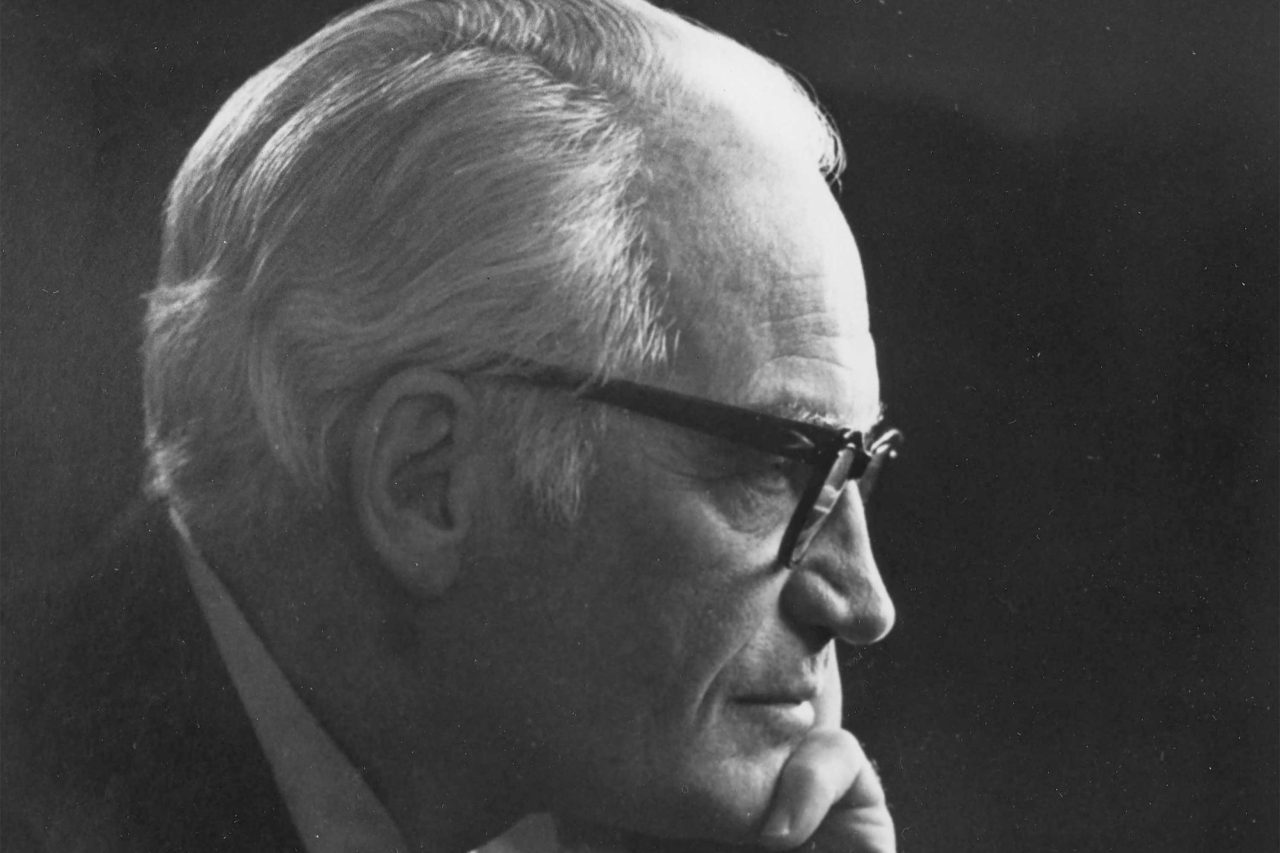
Arizona’s preeminent conservative/libertarian think tank, the Goldwater Institute, is on a roll, riding a national backlash against DEI. Would Barry approve?
By Stephen Lemons
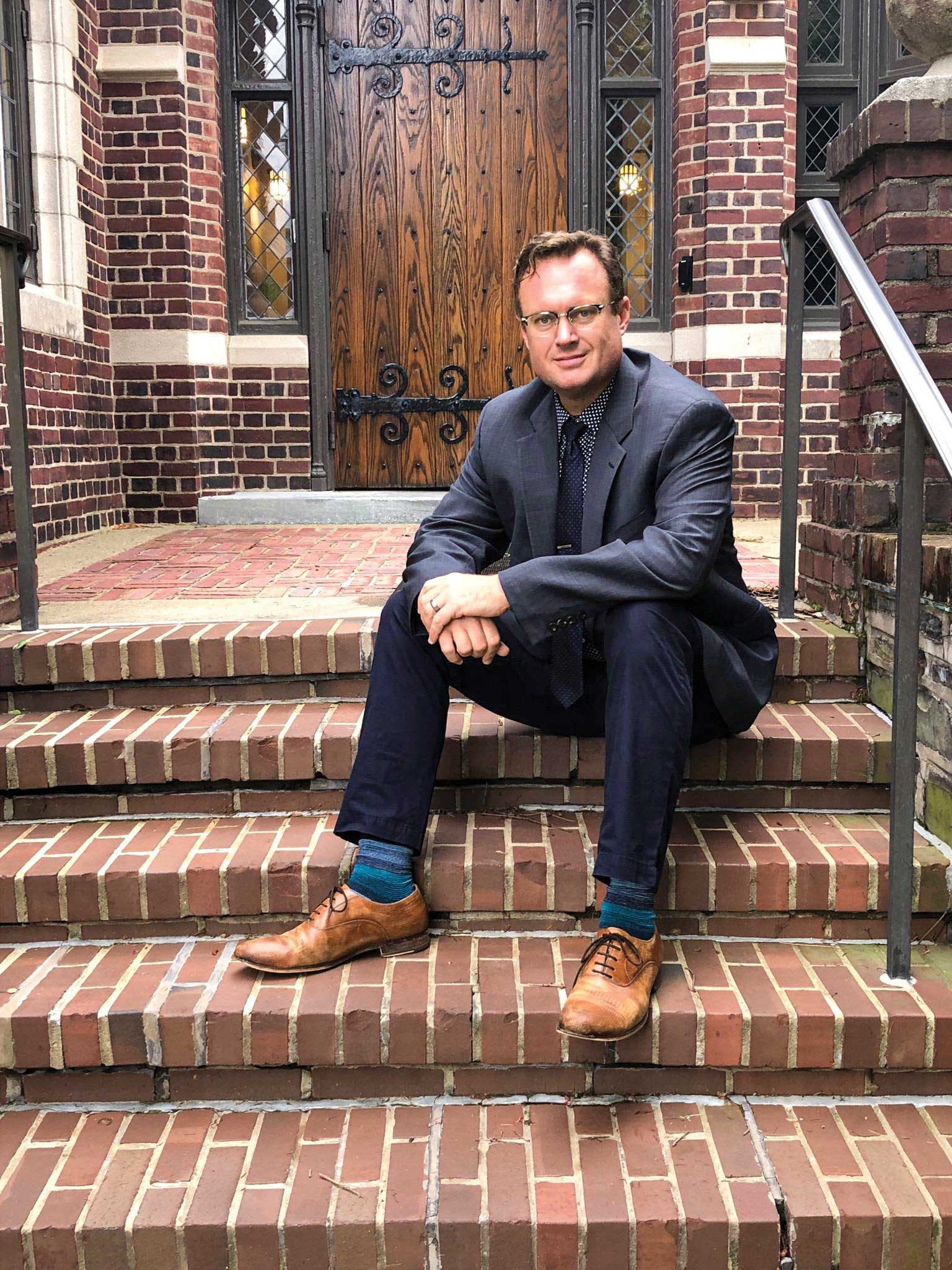
As a conservative Christian in liberal academe, Owen Anderson is often at odds with his progressive colleagues at Arizona State University.
A tweedy, tenured professor of philosophy and religious studies with a beard that would put Nick Offerman to shame, Anderson, 47, says left-wing ideology is often bantered about during twice-monthly faculty meetings, where topics such as which pronouns to use and the problems of “whiteness” are routinely raised.
At one such meeting in 2020, the emphasis was on “decolonizing the curriculum,” a battle cry across college campuses in the U.S. in the wake of the murder that year of George Floyd and the increased influence of the Black Lives Matter movement. Anderson says his fellow academics discussed having workshops on how to decolonize their syllabi.
What does that mean? According to Anderson, “decolonizing” might mean – in the context of a course in the history of Christianity that he teaches – portraying Christian missionaries as “tools of the economic powers of Europe to oppress Indigenous peoples,” rather than followers of Christ focused on bringing the Gospel to the New World, which is his view.
“You basically become aware of whiteness and your own contribution to whiteness,” Anderson explains, describing his understanding of how decolonization is supposed to work.
Anderson told his superiors to pound sand. He sent them an email informing them of his opposition to what he characterized as the idea of dividing society into classes of “oppressed and oppressors.” Suddenly, what started out as a mandate of his department became voluntary, with no one forcing the issue.
“My objection there did cause a change when they realized they can’t require it of anybody,” he says.
Two years later, Anderson had a similar reaction when he received an email from the university, telling him that he was required to take an online course in Diversity, Equity and Inclusion (DEI), which the university euphemistically calls Inclusive Communities.
As detailed in a lawsuit filed this year in state court on Anderson’s behalf by the Phoenix-based, conservative/libertarian advocacy group Goldwater Institute, ASU’s training allegedly covered such subjects as “white fragility,” how “white supremacy is normalized in society” and “explaining white privilege to a broke white person.”
The course also came with a multiple-choice test asking about the definitions of progressive buzzwords like “equity,” “intersectionality” and “microaggressions.” Anderson was given 90 days to complete the training, which apparently remains mandatory for all ASU faculty and staff – though the training’s compulsory nature remains a point of contention for the university’s administration.
Anderson refused to take the test, later filing the lawsuit because he says he fears discipline or retaliation from the university. The Goldwater Institute’s suit names the Arizona Board of Regents (ABOR) as the defendant, claiming that the board and ASU are in violation of a state law, passed in 2021, which forbids state entities from requiring its employees to participate in mandatory training involving “blame or judgment on the basis of race, ethnicity or sex.”
The Board has moved to dismiss the complaint, arguing that Anderson does not have a legitimate fear of being disciplined and, therefore, lacks legal standing to bring the suit. Regardless of whether the suit survives, Goldwater has already forced a concession from ASU, which has since declared that it no longer requires the test portion of the class.
It’s one of several wins the Goldwater Institute has scored lately in its ongoing war on DEI and the so-called “woke” culture that became more prominent in academia and the corporate world following the Floyd protests and the rise of the #MeToo movement. Coincidence or not, ABOR also stopped requiring job applicants to submit DEI statements after Goldwater policy writers issued a 2023 report likening them to McCarthy-era loyalty oaths.
City governments have found themselves in the organization’s crosshairs, too. After a Goldwater report accused her of wielding “Big Brother-style authority” leading the Town of Gilbert’s Office of Digital Government, a longtime city employee resigned earlier this year. More recently, Queen Creek became the first municipality in Arizona to ban DEI training for its employees, a change for which Goldwater claimed credit.
The 36-year-old namesake of legendary Arizona statesman Barry Goldwater is helping to lead a national backlash against DEI policies, making the very term an epithet in some circles. But how far is the organization willing to push its anti-DEI agenda? And could its newfound focus on wokeness be the tail that wags the libertarian dog?
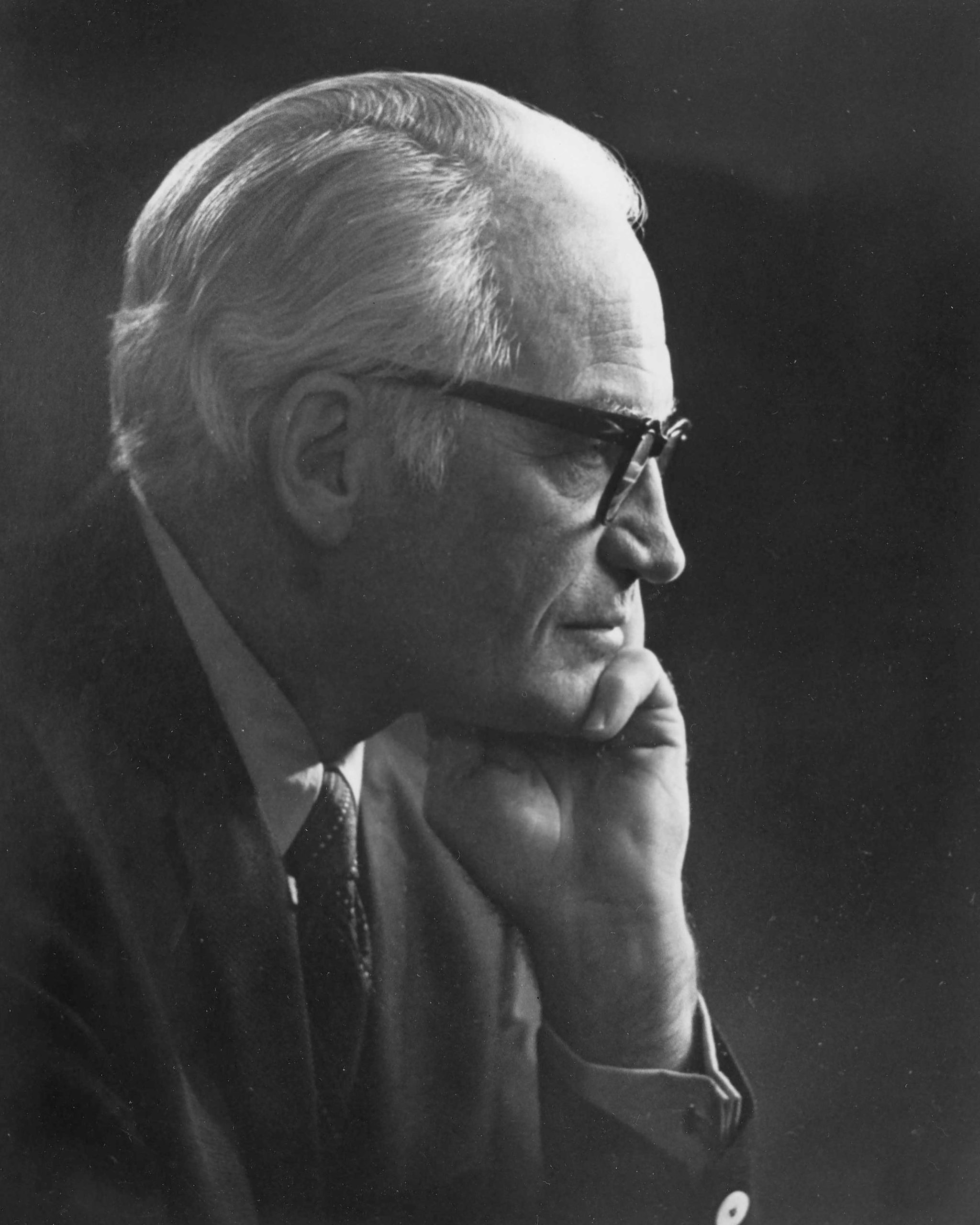
Founded by conservative activists in 1988 with Barry Goldwater’s approval – the retiree had completed his fifth and final term in the U.S. Senate the previous year – the Goldwater Institute mostly confined itself to publishing wonky whitepapers on Republican causes in its formative years.

In 2007, it created a legal arm, the Scharf-Norton Center for Constitutional Litigation, which instigates court actions on free speech, free enterprise and school choice, targeting crony capitalism, government overreach and corrupt politicians, to name a few of its whipping boys.
According to its 2022 tax filing, the 501(c)(3) nonprofit boasted nearly $14 million in assets that year. Its coaching tree includes former U.S. Senator and Ambassador to Turkey Jeff Flake, who once served as the institute’s executive director; Arizona Supreme Court Justice Clint Bolick, the group’s former vice president for litigation; and ex-Arizona Attorney General Mark Brnovich, onetime director of the organization’s Center for Constitutional Government.
Some of its achievements are anathema to the left, such as the creation of Arizona’s controversial Empowerment Scholarship Accounts, essentially school vouchers for K-12 students. Goldwater also boasts of its involvement in the passage of the state’s flat tax, a long sought-after goal of the institute, and the end to the use of matching funds in the voter-approved Arizona Citizens Clean Elections Act.
The Goldwater Institute has also defended (unsuccessfully) the right of Arizona’s pedicurists to use skin-gobbling goldfish and fought (successfully) for a local couple’s bid to open a tattoo parlor in Tempe.
They’ve even done a few things progressives might approve of, such as issuing a report bashing former Sheriff Joe Arpaio for diverting resources from traditional police duties to fund his anti-immigrant sweeps of Hispanic neighborhoods.
But the Goldwater Institute’s new goal is less popular with the left: eliminating the use of DEI policies in public schools, universities and government agencies, claiming that such policies are divisive and impinge on academic freedom and the free speech rights of those who disagree with them.
Even some of its detractors agree that DEI has noble roots, recognizing it as an effort to combat America’s legacy of racism, sexism, segregation and myriad other historical injustices that continue to trouble the country today. It is often linked with the Civil Rights Movement and such landmark legislative efforts as the U.S. Civil Rights Act of 1964, which, in part, forbids employment discrimination based on race, color, religion, sex and national origin.
Definitions of DEI can vary, but according to a June 2021 executive order signed by President Joe Biden in order to bolster DEI in the federal government, diversity is the practice of including, well, everyone in society. Equity means “the consistent and systematic fair, just and impartial treatment of all individuals.” Inclusion regards “the recognition, appreciation and use of the talents and skills of employees of all backgrounds.”
Biden’s order expands the acronym to DEIA, with the last letter standing for “accessibility,” thereby addressing the needs of “people with disabilities.”
But according to Matt Beienburg, the director of education policy at the Goldwater Institute, the policy implementation of these high-minded principles often veers into a form of thought control.
“Americans certainly support the ideal of diversity and celebrating the rich mosaic of backgrounds, but that’s very different from saying we are now going to reduce individuals to one immutable trait that’s beyond their control, such as the color of their skin,” Beienburg says.
For Beienburg, DEI is about imposing a liberal orthodoxy on society in an attempt to “narrow the discourse of the country.” He claims that, in the DEI worldview, questioning the idea of defunding of the police would be considered racist, and “microaggressions” (like commenting on someone’s hair, even approvingly) would be worthy of disciplinary action.
The Goldwater Institute’s ASU lawsuit includes multi-page exhibits purporting to be the actual DEI training required of staff and faculty. It includes video presentations of ASU faculty and graduate students discussing why it’s important to acknowledge “the history of white supremacy and the social conditions for it to exist as a structural phenomenon.”

Another video describes the importance of intersectionality, which the training defines as “how multiple forms of inequality or disadvantage compound themselves and create obstacles that are not often understood within conventional ways of thinking.”
A section of the training addresses the importance of gender pronouns, including gender-neutral pronouns such as ze/zir/zirs and ey/em/eir and the gender-neutral honorific Mx., along with Ms., Mr. and Mrs.
According to Goldwater staff attorney Stacy Skankey, who is the lead counsel on the lawsuit, one of the main issues with the training is that it is mandatory for staff and faculty. “If this was presented in a voluntary format where the professors could opt in, opt out, that’s a lot better,” Skankey says. “But right now it is required as a condition of employment to watch this training.”
Asked about the training, ASU spokesperson Veronica Sanchez stated in an email that, “For context, ASU does not have DEI training or policy.” Via phone, she tells PHOENIX the training they do have is not mandatory.
The issue seems to partly pivot on the words “mandatory” and “required.” Despite the repeated assertions that DEI training at ASU doesn’t exist, the school’s own website includes a page on “workplace inclusiveness training” that reads: “ASU has three required online training modules: Inclusive Communities, preventing harassment and discrimination, and Title IX duty to report. All faculty, staff and student workers must complete these required training sessions within the specified amount of days from hire date.”
Sanchez also provided a statement on behalf of ASU that says the Goldwater lawsuit is “without merit” and “misrepresents both the content and requirements of this training to make an argument that represents a political perspective but is not based on the law.” The statement says that “ASU trains all faculty on its charter commitment to inclusiveness and the success of students from all walks of life.”
She did not respond to follow-up questions about the information on ASU’s website.
For the record, the faculty training cited in the Goldwater lawsuit includes an overview of its first lesson, which states that “you will be introduced to the ASU Charter and other key aspects of Diversity, Equity, Inclusion and Belonging (DEIB) at ASU.”
For Anderson, adding a “B” for “Belonging” doesn’t change the nature of this duck or its particular quack.
“They can argue about the name… but that’s not the issue. The issue is the content the Goldwater suit made public and that teaches that whiteness is a problem and that hetero activities is a problem. Shakespeare was right. A rose by any other name is still a rose. Garbage training by another name is still garbage,” he says.
More than one poll has found that a majority of Americans approve of DEI programs. In June, a Washington Post/Ipsos survey revealed that 61 percent of respondents believed DEI programs were “a good thing.” Twenty-six percent believed them to be “a bad thing.” When given more detailed information on what DEI means, the approval rating rose to 69 percent.
A May 2023 poll by the Pew Research Center found that 56 percent of working Americans viewed DEI positively. Twenty-eight percent found DEI to be neither good nor bad, while 16 percent viewed DEI negatively.
In response to the Pew survey, Karlyn Bowman, a fellow with the conservative American Enterprise Institute, cautioned in a Forbes op-ed that viewing DEI as a good thing did not translate it into being more important than things like wages and health care.
Still, it is not incorrect to say that DEI programs in public and private venues are taking it on the chin. Newsweek, The New York Times, USA Today and various other news outlets have published story after story detailing successful conservative efforts to roll back DEI. And a recent survey of employers by the advocacy group LeanIn and the consulting company McKinsey & Company found support for DEI among corporations to be in significant decline.
The momentum is definitely not on DEI’s side.
In June of last year, the U.S. Supreme Court ruled that affirmative action programs at Harvard College and the University of North Carolina at Chapel Hill violated the equal protection clause of the U.S. Constitution. One year later, both Harvard and MIT ended the practice of requiring faculty applicants to submit DEI statements, explaining how the prospective employee lives up to DEI principles.
Republicans in nearly two dozen states have pushed anti-DEI legislation, with new laws restricting DEI taking effect in Utah, Texas, Kansas, North Carolina, Florida and elsewhere. As a result, colleges and universities in those states have taken a chainsaw to their DEI programs, laying off staffers left and right.
And on X, it seems like all right-wing anti-DEI activist Robby Starbuck, the Ronan Farrow of DEI, needs to do is breathe heavily in the direction of major brands like Ford, Lowe’s, Jack Daniels, Harley Davidson, Molson Coors and most recently, Toyota, to make C-suite suits cower in fear, rolling back DEI policies or at least giving lip service to that effect.
No wonder the Goldwater Institute is having a moment or three.
In January 2023, Goldwater issued a report on the prevalence of Arizona’s universities mandating DEI statements from applicants, calling them, “The New Loyalty Oaths.” ASU was the worst offender, Goldwater said, with “more than four of five (81 percent)” of job postings requiring one.
By August of 2023, ABOR was telling The Arizona Republic that it no longer required DEI statements from applicants. ASU insisted that it “never” required DEI statements.
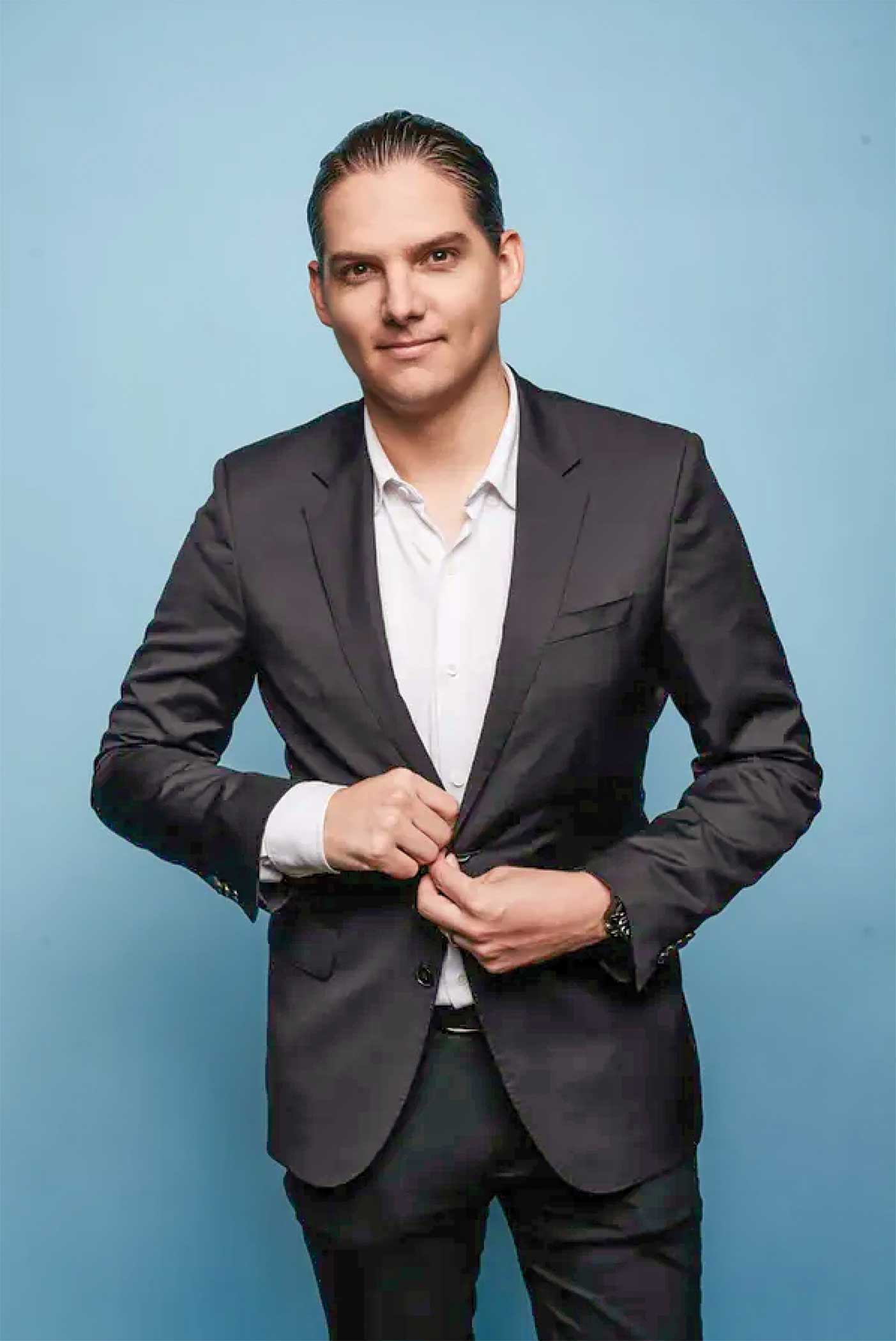
But Republic reporter Ray Stern checked ASU’s job postings and found several job postings live on ASU’s site, demanding that applicants submit DEI statements. As they say: Oops.
Goldwater also takes credit for Queen Creek’s recent decision to declare itself a DEI-free zone. Asked what the organization had to do with Queen Creek’s move, Goldwater spokesperson Joe Seyton says, “Yes, we spoke with councilmembers in Queen Creek about this ordinance. We frequently share legislative solutions with the public and elected officials, and we urge them to adopt those approaches.”
Similarly, Goldwater seemed to draw blood in nearby Gilbert in January 2024 with a story it apparently planted in a local right-wing news source, the website AZ Free News, which is published by a small, conservative nonprofit, the Arizona Freedom Foundation.
The article, One Town Is the Progressive Pioneer of Controlling Online Speech, accused Gilbert’s Office of Digital Government, which coordinates the city’s online footprint, of spying on its employees and elected officials while enforcing a left-leaning speech code.
Dana Berchman, Gilbert’s then-chief digital officer, garnered criticism for her leadership of the department, which was the recipient of several awards over the years for its work in marketing the town’s brand.
AZ Free News cited public records obtained from the town, which it said showed Berchman and other ODG staff monitoring Gilbert employees for speech of which the ODG disapproved.
In one example, the article claimed Berchman “notified Gilbert Fire Department (GFD) leadership that one of their fire trucks drove by and turned on sirens to support Back the Blue protesters.” The article also claimed that in one email Berchman was “tasking her employees with hunting down and tracking the personal social media posts of one town employee critical of them.”
The report dinged Berchman for hypocrisy, citing posts on her personal X account that were supportive of Democrats and critical of former President Donald Trump and his supporters. It suggested that a post to the city’s Facebook page showing video of Gilbert’s iconic water tower lit in rainbow colors for Pride Month was indicative of the ODG’s far-left political slant.
The Goldwater Institute republished the article in full on its website and later took credit for the investigation in a July blog post that said the organization had exposed Gilbert’s digital team for monitoring “town employees’ personal social media accounts to ensure conformity of leftist ideology.”
Asked about the connection between Goldwater and the report, spokesperson Seyton tells PHOENIX, “We were made aware of what was going on in Gilbert and shared it with AZ Free News.”
After 12 years as head of ODG, Berchman resigned her post effective March 7. That same month, she created her own firm, Oh, hi! Communications. The firm’s website describes Berchman as an “Industry Disrupter” and “Innovator.” Berchman did not respond to PHOENIX’s request for comment.
Queried about the AZ Free News article, town spokesperson Kandice Kwan emailed PHOENIX a statement saying that “while the Town recognizes and respects the First Amendment rights of all of its employees, the Town has been clear that it will not tolerate divisive, offensive or culturally insensitive posts from employees purporting to represent the town.”
Still, the Goldwater Institute, Starbuck and other anti-DEI firebrands on the right have made the term DEI so toxic that it is often used online as a pejorative with racist connotations, like the conservative cry that presidential contender Kamala Harris is a “DEI hire.”
A March Newsweek article on the rise of DEI as a racial slur quoted Florida State Senator Shevrin Jones, a Democrat and the first Black LGTBQ+ person elected to that state’s upper chamber, as stating, “I guess DEI is the new ‘N’ word.”
But is this what the Goldwater Institute aimed to achieve with its anti-DEI campaign, the creation of a fresh, new bigoted epithet to cast at African American politicians?
Goldwater’s Beienburg says no. He blames the proponents of DEI for that outcome. He notes that Harris herself previously posted a statement to a social media account supporting one of the core concepts of DEI.

“There’s a big difference between equality and equity,” Harris wrote on the platform then known as Twitter. “Equality suggests, ‘Oh, everyone should get the same amount.’ The problem with that: Not everybody’s starting in the same place.”
Beienburg argues that DEI backers like Harris “want to have it both ways,” using talking points about rolling back systemic oppression and addressing racial disparities with equal outcomes, but then “[bristling] when someone points out that the DEI regime is antithetical to achievement and merit.”
There is evidence that DEI, especially in academia, can greatly impact general hiring practices along racial lines, leading to outcomes that DEI detractors have called discriminatory and unfair.
Between 2016 and 2022, the University of California allowed five of its campuses to use mandatory DEI statements as their “initial screen” of faculty job applicants, rather than traditional metrics like grades, work histories and test scores. The reason: to bolster UC’s ranks of professors and administrators from underrepresented communities. It worked spectacularly well. Almost overnight, hiring of Latino and Black faculty exploded in proportion to those groups’ overall applicant rates, while hiring of white and Asian faculty plummeted in kind, according to a 2023 New York Times report.
According to a study of the phenomenon cited by the Times, UC Berkeley rejected 75 percent of faculty applicants in life and environmental sciences based on their DEI statements alone. Ironically and unmistakably, DEI statements were used as a pretext to exclude certain job seekers.
Nonetheless, Alex Suggs, the co-founder and partner of the San Diego-based consulting firm Different, thinks DEI is getting a bad rap. Suggs’s company does “culture consulting” for Fortune 500 companies, small startups and other groups seeking to make their workforces more diverse and inclusive. Suggs says there’s no one-size-fits-all model to achieving this goal.
“This work is meant to uplift everyone,” Suggs says, adding that the question to ask is, “Are these processes, programs and behaviors helping people feel welcome and able to thrive at an organization, or are they getting in the way of that?”
Asked about ASU’s mandatory training with its discussions of white privilege, Suggs says that Different “doesn’t typically recommend that diversity inclusion training has to be mandatory across an entire organization.” And as far as privilege goes, Different likes to approach it in a wider context. Otherwise, people may “shut down and tap out,” becoming defensive.
“Every single one of us on the earth has privilege, but we also lack privilege in parts of our identities,” Suggs says. “But if people don’t understand all the ways that privilege come together to help or hinder people, going right to white privilege isn’t going to inherently make sense.”
Suggs acknowledges that most people may not want to discuss these issues at work, but believes some type of DEI training is still necessary because “diversity and inclusion” for all has historically been overlooked, with workplaces setting up certain people to succeed and others to fail.
Suggs’s vision of DEI may be a kinder, gentler version of what the Goldwater Institute portrays as being so onerous, but Anderson still believes DEI is harmful, referring to it as “cultural Marxism,” a loaded term often used by the conservative Canadian lecturer Jordan Peterson. Both men use the term to describe what they believe to be a dominant liberal worldview in academia that is being foisted on teachers and students.
Anderson attacks the idea that there’s a problem and DEI is the solution.
“It could be the thing you’re doing is making the problem worse,” the professor says, adding that, “I’m also just not sure that’s a business’s job or a university’s job” to solve the issue of racial and gender inequities.
Whether the courts will agree with Anderson and the Goldwater Institute remains to be seen. A hearing on ABOR’s motion to dismiss Anderson’s lawsuit was scheduled as this issue went to press. Whatever the outcome, an appeal seems likely.
Meanwhile, is the Goldwater Institute seeking new prey in its jihad against DEI? Beienburg says yes, but that the organization largely concerns itself with state actors and state institutions, unlike activists such as Starbuck, who pressure national corporations to nix their DEI policies.
Beienburg says Goldwater’s intention is not to prevent conversations in public spaces about difficult topics, such as slavery and homophobia. He blames DEI’s backers for that misinterpretation. “They’re not the ones that are trying to keep things civil,” he says. “They’re the ones that are trying to police the basic speech and opinions of individuals.”
On the other hand, some of what Starbuck engages in could be seen as reverse political correctness. The LGBTQ+ magazine The Advocate has accused Starbuck of trafficking in conspiracy theories and transphobia, pointing to posts on X in which Starbuck decries what he sees as liberal ideologies.
“There’s a war on our children right now,” he wrote on X in February. “Far left activists will stop at nothing to indoctrinate them, sexualize them, guilt them and punish them until they submit to their woke religion.”
Starbuck’s tactics may be more radical than those of the Goldwater Institute, but their goals are comparable. Both want to end DEI. And for the time being, they’re winning.