Do you think California wine country and our own high-desert vino regions have nothing in common? Think again – and drink again.
By Craig Outhier | Photography courtesy Rudd Estate Winery
“ I can tell you’re from Arizona… you parked in the shade!” the hale blonde calls out from the stoop of the tasting room.
I look back across the long gravel driveway, to the rented Kia wedged unnecessarily between a pair of winery utility vans. Ha, so I did. You can take the man out of Arizona, I guess, but you can’t take the trauma-hardened aversion to direct sunlight out of the man. It’s basic Arizona psychology.
I chuckle at the truth of it and walk up to shake the hand of my winery host, who has a name seemingly borrowed from early DC Comics: Lori Lane. As it happens, she lived in Scottsdale for two decades before starting a new life in California wine country a few years ago, as the tasting room manager at Neyers Vineyards (neyersvineyards.com) in St. Helena.
Suddenly, I’m feeling very at home in this remote, mountainous weald on the eastern cusp of Napa Valley. It’s always “good to be seen,” and naturally I’m glad that Lane sees my Arizona-ness, but the burst of contentment I’m feeling has more to do with the plausibility of the premise that brought me to Napa in the first place.
And that is: exploring the connection between the Arizona and Northern California wine communities, discovering how they might share talent and history, and telling the personal stories therein.


It would be reasonable to question whether such a connection even exists, given the vast oenological gulf between the two regions. In 2023, California produced 89 percent of U.S. wine, Arizona about .02 percent. And the differences don’t end there.
“Here’s the joke: Napa vines look like they just went to the spa,” Arizona dining impresario and winemaker Pavle Milic says. “Go to Arizona, and they karate chop you.”
But anyone who cares to look seriously will dig up a surprisingly deep root system of entangled histories and influences between the two regions. Arizona sommeliers who trained in Napa. Napa winemakers who started in Arizona. Wine-minded restaurateurs with footprints in both regions.
Albeit modest, Napa’s secret Arizona legacy is surprising and delightful, and getting acquainted with it can only enhance any visit to the storied wine valley. Possibly even raise the trip to the level of pilgrimage, as you drive the same iconic roads and admire the same gorgeous, trellised hills as wine professionals who left Napa to make their mark on Arizona – and, sometimes, vice versa.
According to the Arizona Wine Growers Association, there were 159 licensed Arizona wineries at the outset of 2024 – miniscule by Napa standards, but roughly double the number in 2015. More wineries means more demand for winemakers, creating a pipeline of sorts, as experienced talent decamps from California to staff Arizona tasting rooms, cellars and crush pads.
Wineries across Napa have graduated such folk, including Truchard Vineyards (truchardvineyards.com), a spectacular estate laid out over 414 rolling acres in the foothills west of downtown Napa. This was where winemaker Adam Gingrich first interned as a Walla Walla, Washington, winemaking student, shlepping barrels in Truchard’s 11,000-foot wine cave, which is dug into a hillside under some old-vine Cabernet and is fascinating to tour.
Working his way up from the cellar, and eventually into a head winemaking position at White Oak Vineyards and Winery in Alexander Valley, Gingrich retreated from Napa during the fire-ravaged pandemic year of 2020 and hooked on with Oak Creek Vineyards & Winery (oakcreekvineyards.net) in Cornville as head winemaker under owners Nathalie and Gary Carruthers. Wedged between Page Springs Cellars and DA Ranch on Page Springs Road, OCV helps form the backbone of Arizona’s prettiest and most popular wine trail.
Duckhorn Vineyards (duckhorn.com) in St. Helena, located on the northern half of the 30-mile Napa Valley AVA, is another fantastic estate property faintly haunted by the ghosts of winemakers now toiling in Arizona. Gingrich worked there for a bit, and before returning to Arizona to launch Rune Wines, Arizona State University graduate James Callahan trained at Duckhorn sister property Kosta Browne in Sebastopol. Set in a historical farmhouse with a wrap-around veranda, it’s one of the more serene and picturesque tasting experiences in the valley.
Napa’s formative influence on Arizona wine goes well beyond the winemakers themselves – it extends to restaurateurs, sommeliers and other bright human points in the constellation of commercial wine. In 2019, aspiring Valley restaurateur Wesam “Sam” Kawa – a wine expert who holds one of only five “advanced” sommelier certificates in the state of Arizona – was invited to participate in the Rudd Round Table, a prestigious educational program hosted yearly by Rudd Estate (ruddwines.com) in Oakville.
Endorsed by the Court of Master Sommeliers, the U.K.-based foundation that accredits sommeliers worldwide, the intensive course involves tastings, a mock exam and other breakouts designed to expedite the participants’ journey from “advanced” to “master” sommelier status – a process that can take five to 10 years and is so rigorous that only 274 people worldwide currently hold master distinction.
Kawa, who says he “picked up the [wine] bug” as a server at Citizen Public House, and later worked as a sommelier at such elite Valley restaurants as Kai and Café Monarch, wishes to be one of them. To that end, he says being a “Rudd scholar” emboldened him for the long journey.
“What they want you to take away from the experience is that not only are they rooting for you,” Kawa says. “But they’re giving you a nitrous oxide boost to accelerate your journey to the finish line.”
Located on fabled Oakville Cross Road alongside Screaming Eagle, Silver Oak, Opus One and other superstars of the Napa luxury wine set, Rudd Estate has another, deeper Arizona connection: Among his varied business pursuits, late owner Leslie Rudd was a founding partner of PHOENIX magazine parent company Cities West Media.
Before passing in 2018, Rudd handed the reins of the winery to his daughter and only child, Samantha – although, by her estimation, Leslie may have had two offspring.
“I always say that this place was really like my sibling,” says Samantha, who first laid eyes on the 55-acre property after her father purchased it in 1996. Relocating from Kansas, the family made the winery their home.
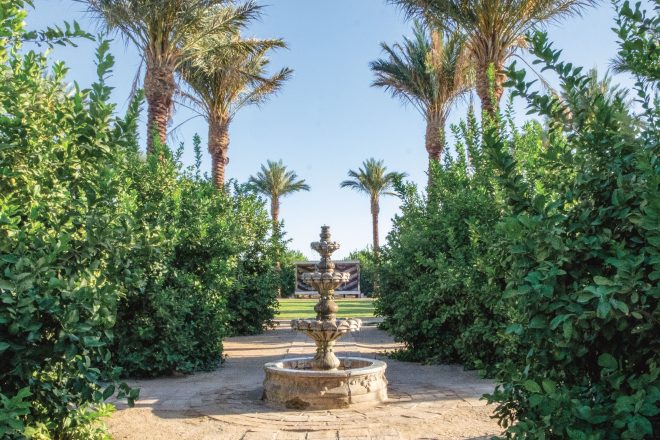
A young child at the time, Samantha recalls her imagination running wild as her father replanted the moldering vineyard and carved out 78,000 tons of rock under the property to create the winery’s awesome labyrinth of wine caves. Meanwhile, her mother, Susan, oversaw the creation of a spectacular, 3-acre winery garden of succulents and exotic plants, with towering, gnarled, 150-foot olive trees standing sentry.
The estate itself became a character in their family narrative, to young Samantha’s reckoning, “someone we thought about and talked about at the dinner table.”
“Obviously, I didn’t know what the [wine] business was or anything, so I didn’t connect to that,” she continues. “It was much more cellular. I was connected to the place.”
Eventually, as Rudd Estate got up to speed, it surrendered its central role in the family narrative. Samantha left Napa to attend high school and college, and her father, whom she fondly recalls as a “gypsy” who relished uprooting himself – and her – as a matter of habit, started throwing energy into other endeavors.
But for Samantha, returning to Napa to make wine was a fait accompli. After college, she went to France to learn the business at Château Margaux, then at Spottswoode in St. Helena, all with the singular focus of taking over Rudd.
Her father initially disapproved, she says. “His attitude was, don’t study wine, I want you to try everything so that you’re sure that this is what you want to do.”
But Samantha has no gypsy in her. Now married with three children that she and her husband are raising in Napa Valley, she loves the rooted, predictable quality of her work, steering the winery’s long-term fortunes and direction as its vigneron.
And she suspects that might have been Leslie’s plan all long. “It’s like, if you want your kid to be a certain way, raise them the opposite,” she says with a laugh.
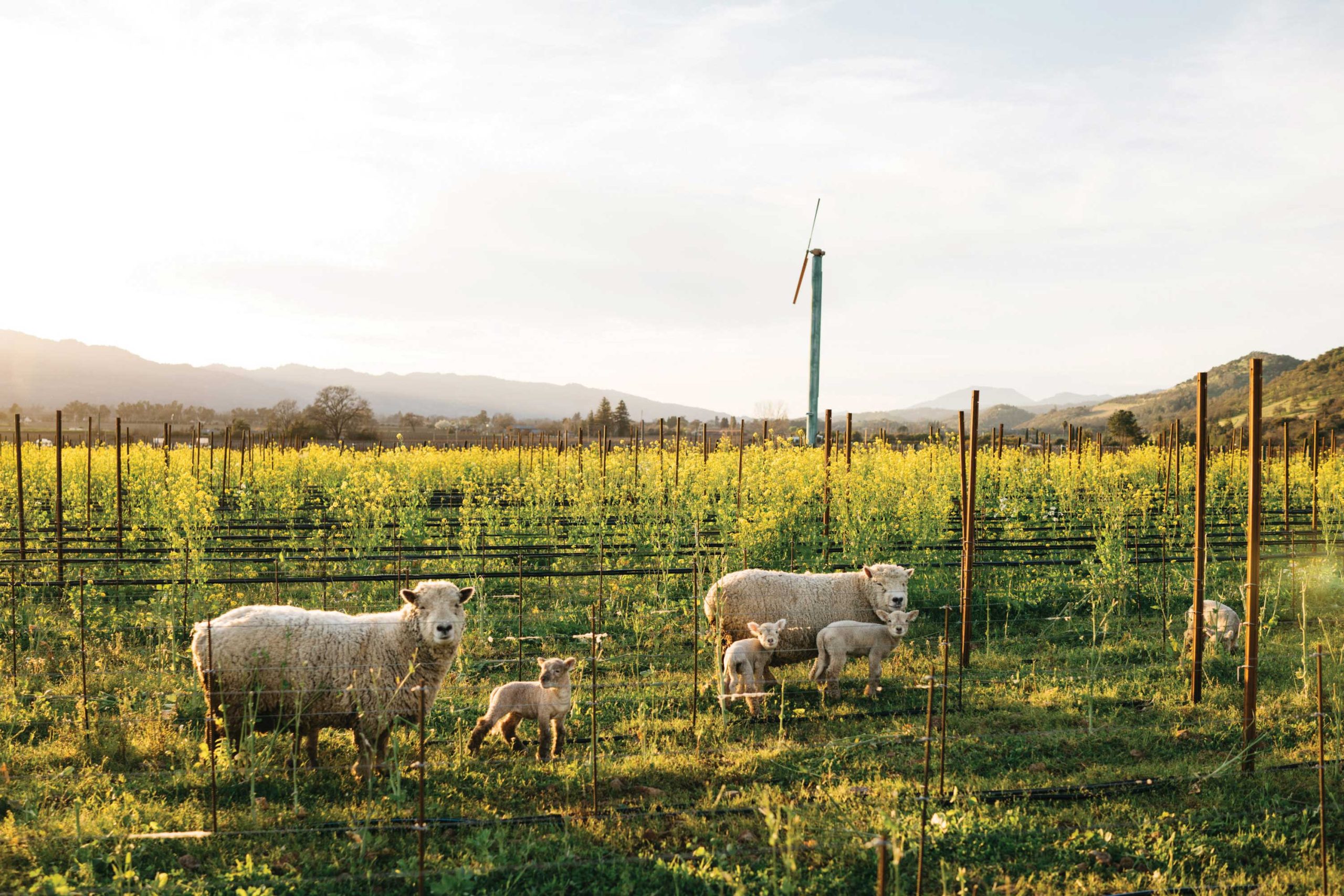
Samantha’s vision for the winery includes a multigenerational commitment to responsible organics and biodynamicism – in short, no pesticides and creative vineyard management to return nutrients to the soil. Rudd’s managing director, Oscar Henquet, points out some of the details on the winery’s tasting and walking tour, including three barn owls that live in custom aeries at opposite ends of the property. At dusk, the noble birds swoop into the vineyard to feed on pests. “Much better than using a rodenticide,” Henquet says. “It’s part of biodynamic vision here… creating a diverse ecosystem.”
It’s such a cool idea I almost giggle – one of those vivid vineyard moments that make winery visits so incomparable.
Besides its Rudd Round Table program and association with a certain Valley media company, Rudd Estate has other tangible connections to Arizona – particularly at Press, a nearby fine-dining restaurant in St. Helena owned by the Rudd family. Helmed by chef Philip Tessier, a molecular master who helped lead the restaurant to a Michelin star in 2023, it also draws wide acclaim for a 10,000-bottle wine cellar that boasts the largest collection of Napa wines in the world. The man in charge of the cellar: master sommelier Vincent Morrow, who grew up in the West Valley – Peoria, to be exact – before enrolling at nearby Sonoma State University on a soccer scholarship, where he quickly developed a fondness for the local tasting rooms. He ultimately majored in wine business, setting a course for stardom in the hospitality industry.

Morrow is not the only Valley kid who moved to wine country, caught the fever and is currently teetering on the verge of international celebrity. After working at Franco’s Trattoria five nights a week as a student at Mountain View High School in Scottsdale, Milic put aside the career he always wanted – broadcasting and television – and spent the 1990s supporting his young family as a server at some of the Valley’s most respected gastronome havens, including chef Chrysa Robertson’s Rancho Pinot. By his recollection, this is where Milic first experienced the “third plane,” a term coined by his friend and future employer Peter Kasperski, where the mingling of food and wine reaches a sort of religious apotheosis.
Before long, Milic answered the siren song and moved to Napa, where he worked at Angèle Restaurant & Bar (angelerestaurant.com) under restaurateur Bettina Rouas, whom he describes as a “badass operator and amazing woman” and regards as his mentor.
He also became “a winemaker groupie out of the closet, big-time,” he tells me in his usual colorful, verbose style, with a lilting Colombian accent that simultaneously suggests Sofia Vergara and The Most Interesting Man in the World. Angèle was something of a “winemaker watering hole” in those days, Milic recalls, affording him the opportunity to rub elbows with the likes of Robert Mondavi and Mike Silacci, the executive winemaker at Opus One.
Winemaking was often the topic of conversation, but it was the esprit de corps of the winemakers, not insights about tannic structure or brix levels, that left the greatest impression.
“If I took a lesson from wine country, it was the idea of inclusion, irrespective of tax bracket,” he says. “The idea that wine has the power to level the playing field when you’re sitting at a table… which extends to how you treat worker bees and labor. There was a great deal of camaraderie [in Napa].”
After making lunch for friends at a winery one afternoon, Milic was driving south on Silverado Trail, the legendary highway that swoops through the eastern foothills of the valley, when realization struck. “It was sunsetting and the middle of harvest, with the aroma of fermentation in the air,” he says. “I was not buzzed or stoned, but I dared tell myself that one day, I’d be in the industry… But it was a very quiet whisper to myself. It was me without knowing that certain things that would lead to that trajectory.”
And the rest is Arizona hospitality history. After a three-year stint in Napa, Milic packed up his car to drive back to Phoenix, with a job lined up as Kasperski’s front-of-the-house manager at Cowboy Ciao. Before he got on the road, Silacci showed up with a parting gift: a bottle of pricy Opus One. “You’re leaving a gaping hole in wine country,” he told the younger man. (“I still have him on my bat phone when I have an oh-shit winemaking moment,” Milic confides.)
Leaving Ciao after a few years, Milic scored a hit with chef Payton Curry as co-owner of Digestif in Old Town, then a bigger hit with chef Charleen Badman at FnB. He also became perhaps the most passionate advocate of Arizona wine in existence, orchestrating the memorable “Arizona Judgment” of 2010 (modeled after the 1976 “Judgment of Paris”) and, later, picking up a James Beard Award nomination for his wine program at FnB. He also quietly bought a piece of land near the Mustang Mountains in Sonoita-Elgin and – together with wife Ita and partners Stephanie and Mo Garfinkle – started laying the table for Los Milics Vineyards. He bottled his first vintage in 2013 (with outsourced grapes), planted the estate vineyard in 2019, opened the winery’s striking, monolith-inspired tasting room and restaurant in 2022, and completed the winery’s long-gestating litter of guest casitas this spring – a wholly singular amenity among Arizona wineries, which will potentially give the state’s wine community an international profile. Los Milics was voted the No. 3 “best new winery experience in the U.S.” in 2023 by USA Today readers.
Though Napa offers very few agricultural analogues to the high-country Arizona growing region (“Their weather is more stable, different soil… just completely different regions”), Milic likes to think its cultural terroir is present at Los Milics: “My pet peeve is apathy, and that region has none of it. And we don’t tolerate it here.”

On rare occasions, the Napa-Arizona pipeline flows in the opposite direction, and the latter supplies the former with talent. During his Napa period, Milic became tight with one such specimen, winemaker Tadeo Borchardt, who was his roommate and general partner in crime. “We did a lot of wine R&D, let’s put it that way,” Milics says.
Borchardt was born in Phoenix and went to college at the University of Arizona, later working at now-defunct Hapa in Scottsdale, where he met restaurateur Roger Roessler, a moonlighting vintner who dispatched Borchardt to Santa Rosa to work on a harvest. Naturally, he never left. Borchardt joined Neyers Vineyards in 2004 and just celebrated his 20th anniversary as winemaker for the winery, crafting firm, Bordeaux-style Cabernets and restrained Syrahs in the winery’s crush facility and barrel room in the Vaca Mountains.
Fellow Arizonan Lane – my parking analyst – also works here, making it one of the most Arizona-centric stops on the trip. Situated off sleepy Sage Canyon Road, it constitutes a nice change of pace from the typical Napa wine-trail tasting room. More rustic and private.
Another prominent Arizona talent now leaving a mark in California wine country: James Beard Award-winning chef Chris Bianco, who recently overhauled the menu at FARM, the flagship restaurant at Carneros Resort and Spa (carnerosresort.com) in the southern extremis of Napa Valley.
Though Bianco endeavored to steer clear of a “cookie-cutter” Tratto clone, the new FARM menu does bear a stronger resemblance to his award-winning farmhouse trattoria than his famed pizza restaurants, aggressively sourcing from Napa-area farms and employing locavore principles. “At Tratto, we always do a house focaccia,” he told Robb Report shortly before the menu debut last winter. “At FARM, I’m thinking that something like a little whole-grain pizzette with local grapes from harvest and some guanciale or burnt ends could make its way onto the menu. It’s like a candy store of ingredients [in Napa].”
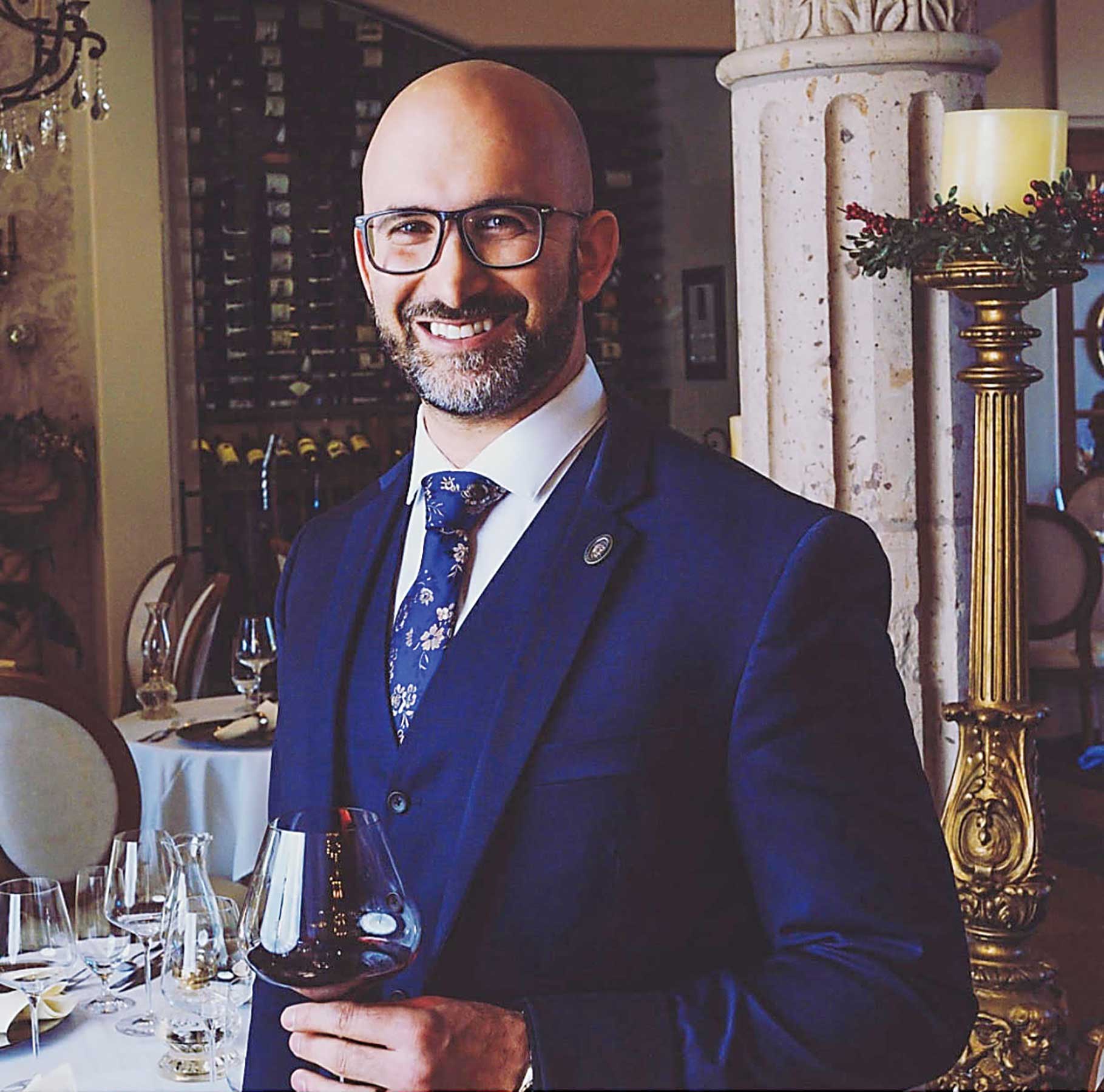
Perhaps the winemaking story that most cleanly distills the Napa-Arizona connection, and upholds my initial premise, belongs to Jesse Giacomelli. The son of an engineering professor, Giacomelli grew up in Tucson and went to the University of Arizona, studying accounting and finance. Ramping up his recreational winetasting after moving to California for work, he boldly pivoted, enrolling in the UC Davis master’s program for winemaking about a decade ago. An industrious worker, he currently runs the custom-crush program for Beckstoffer Vineyards (beckstoffervineyards.com), a large family winery in the town of Rutherford with access to grand cru vineyards all over the Napa Valley.
“It’s the best possible [winemaking] education,” he says. “I have to look at wine critically, take my ego out of it, solve the problem. And importantly, go in directions I might not have gone in otherwise.”
But like all gainfully employed artists, he also has a passion project: a personal wine label that he launched in 2019, using grapes he admires from winegrowers he trusts. His own custom-crush wine.
And the name? Copper Bear Wines (copperbearwines.com), reflecting the full sweep of his life and expertise.
“I thought it was the perfect name,” he tells me as we share a bottle of his 2021 Cabernet Sauvignon over dinner at a popular Calistoga gastropub. “The bear to represent California, as the state animal. And the copper to represent Arizona, where I’m from.”
Produced in ultra-tidy, two- and four-barrel lots, Copper Bear is tricky to find locally, but Giacomelli can ship to Arizona. He also hopes to ramp up production. Acquiring land and growing his own grapes would be one way – but farmland anywhere in California is prohibitively expensive and would require financial gymnastics. For that reason, he sometimes muses about returning to Arizona to grow wine and close the loop.
“I’d be lying if some part of that [idea] didn’t appeal to me.”